





Night view of illuminated white Southern-style houses with wraparound porches beneath Spanish moss-draped oak trees.

Mini Split Installation in Goldsboro, NC

Tell us about the job

Takes about a minute. No obligation.

New system or replacementMini-splitWayne County, NC
Step 1 of 2

What ZIP code is the job in?

Electricity in Wayne County ran 14.61 cents per kilowatt-hour in 2025. That's the rate every kilowatt your mini-split draws gets billed at, no matter the month. A mini-split that moves heat efficiently uses less power to do the same job as one that doesn't. At this rate, that difference shows up on the bill again and again, not just once.

5 months
November through March, your system heats
5 months
May through September, it cools
34°F
the average winter night it heats against
88°F
the average summer afternoon it cools against
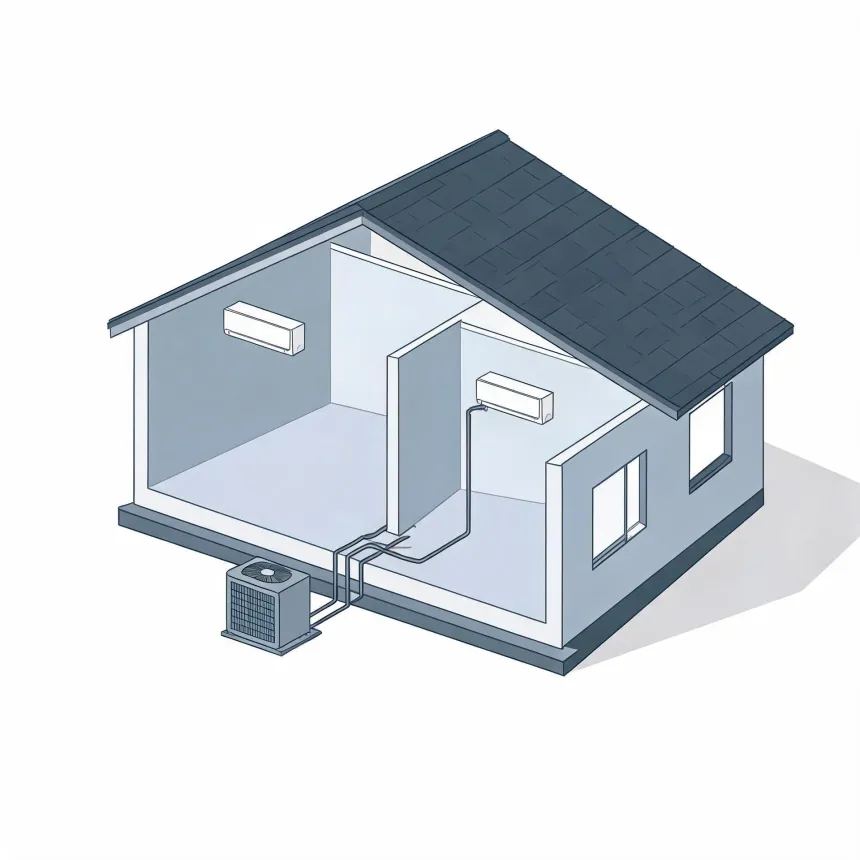
Isometric cutaway illustration of a small house with a dark shingled roof, showing two wall-mounted indoor units connected by lines running to an outdoor condenser unit beside the building.
Your system heats November through March and cools May through September.

NOAA nClimDiv, 1991–2020 normals

A mini-split here runs five months straight once summer sets in, with afternoon highs near 88°F and air thick enough to feel.

A unit sized for that load keeps working at it all season instead of straining through the worst of it.

Most of Goldsboro already heats with electricity, a mini-split just does it better

82% of homes heat with electricity
Cooling runs May through September
Summer afternoons average 88°F
Goldsboro Sees Its Share of Storms82 damaging wind events and 15 hail events hit Wayne County between 2015 and 2024

Wayne County falls under zone 3A in the energy code, a warm zone with a long cooling stretch and a short mild winter. Any mini-split put in here has to meet the federal minimum for that kind of system. A unit manufactured from 2023 on has to pull at least 14.3 Btu of cooling from every watt-hour it draws, and deliver at least 7.5 Btu of heat per watt-hour on the heating side. The standard doesn't carve out a separate class for ductless systems, so a mini-split is held to the same split-system number as anything else. That floor is what any installer quoting a system here has to work above, not toward.

The rating you install is the one you're billed against from here on

The efficiency rating gets decided once, when the unit is picked and installed. After that it's fixed for as long as the system runs. Ask whoever quotes the job what the unit is rated at, and have them install it to match.

Find a contractor
A white outdoor air conditioner condenser unit mounted on metal wall brackets against gray horizontal siding, with a blue sky and white clouds behind it.

Put it in before May, not during it

Cooling runs May through September here, five months once it gets going. April is the month to have a new system in and running, before the first warm stretch hits. An install done in April gets tested and adjusted with nothing riding on it, time to run the unit and check it before the house needs it. Wait until summer and the install happens with the house already hot, and whatever needs adjusting gets found on a day when you're counting on the system, not before.

Ask what size the room load calls for

Square footage alone doesn't size a mini-split. Ceiling height, window placement, insulation, and what's on the other side of each wall all change how much the room gains or loses. A contractor should walk the space and run a load calculation, not quote off a floor plan. A unit sized too big cycles on and off without pulling the moisture out of the air. One sized too small runs constantly and still can't keep up on the hottest afternoons.
Ask who services the brand locally

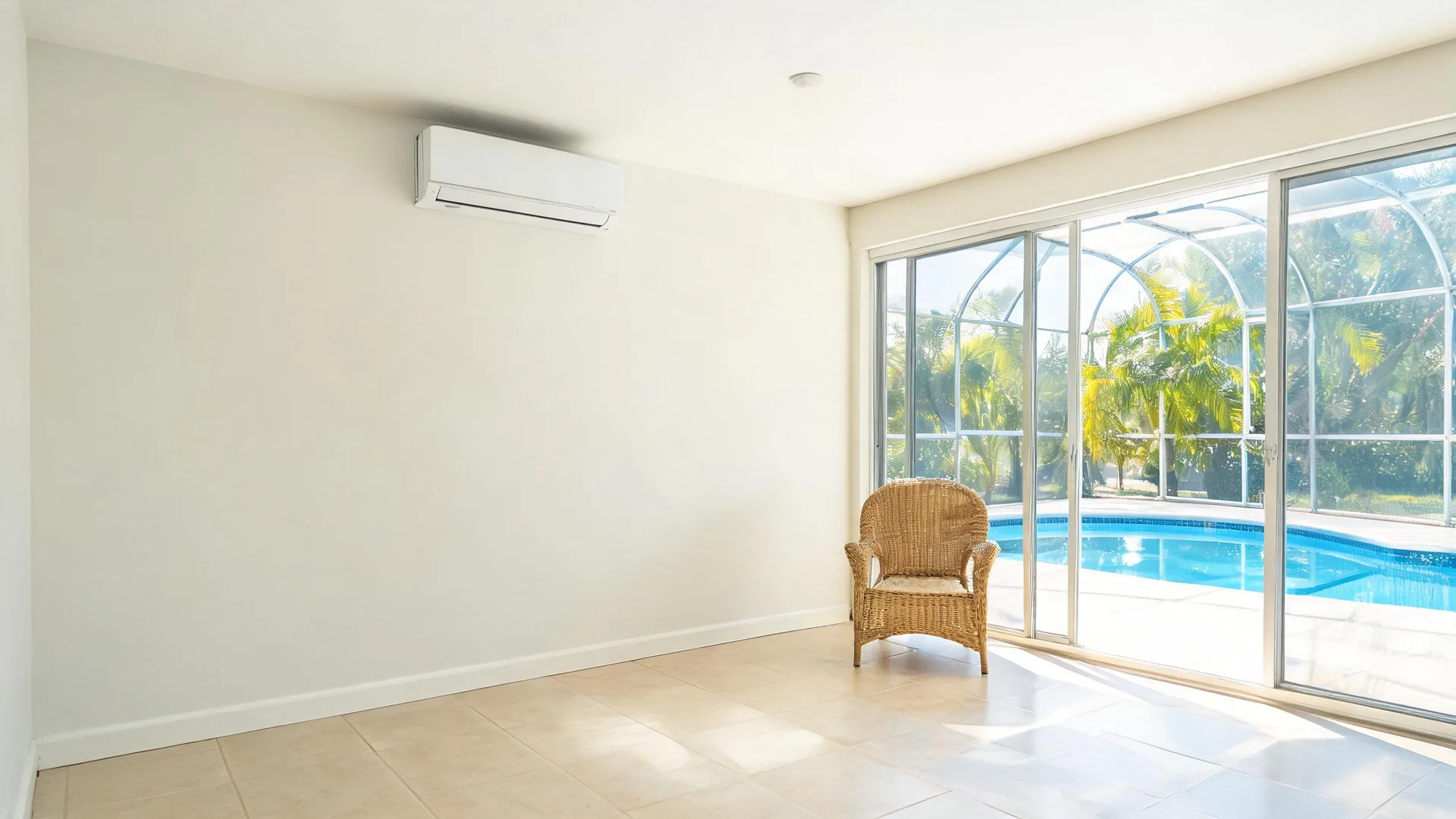
A mini-split needs its filters cleaned, its outdoor coil kept clear, and eventually a refrigerant check or a board replaced. If the installer carries a brand that no other shop nearby services, a warranty claim or a slow leak can turn into a long wait for a part. Ask what happens when something goes wrong in year six, not just what the unit costs going in.

What you pay for a mini-split install comes down to more than the equipment in the box. Running the line set and power to the outdoor unit takes longer in some houses than others, depending on where the condenser can go and how far it sits from the indoor head. Mounting height, wall material, and whether the refrigerant lines run through a chase or get drilled straight through all add or cut time on the job. A single-zone system is a shorter job than a multi-zone one, since each additional indoor head needs its own line set, its own mounting, and its own place on the circuit. The labor to pull a correct vacuum on the lines and charge the system to spec takes real time too, and skipping it is what causes a unit to underperform or fail early. None of that shows up in the price of the equipment itself, only in what it takes to put it in right.

Storms here add their own wear. Wayne County saw 82 damaging wind events between 2015 and 2024, close to one every six weeks. An outdoor condenser sits outside through all of it, exposed to wind-driven debris and the power blips that come with a bad storm. A mounting pad that's solid and a location away from falling limbs matter here more than in a calmer climate. Ask the installer where they plan to set the outdoor unit and why that spot.