Electricity here runs 15.07 cents a kilowatt-hour
That is the average rate Harnett County homes paid in 2025. A mini-split pulling power all summer and most of the winter puts that rate to work every single day it runs.
Takes about a minute. No obligation.
That is the average rate Harnett County homes paid in 2025. A mini-split pulling power all summer and most of the winter puts that rate to work every single day it runs.
A mini-split that moves heat efficiently uses less power to do the same job. At this rate, the difference between a system sized and installed right and one that isn't shows up on every bill, not just the first one.
NOAA nClimDiv, 1991–2020 normals
Cooling season here starts in May.
A mini-split put in during April is already earning its keep before the heat shows up.



A mini-split in Dunn runs cooling five months straight, May through September. Afternoon highs average 89°F through June, July and August, and the air holds more moisture than it does in most of the country, with a dew point near 68°F. That combination keeps the compressor working longer and harder on an average summer day than it would almost anywhere else. The county has also seen tropical storms and hurricanes come through, five of them between 2015 and 2024. None of this is a reason to skip a mini-split. It's a reason to size it for what this place actually asks of it, not for a number off a chart built for somewhere milder.
Get the sizing and installation right and the rate you pay on every bill works in your favor instead of against you. That's worth settling before the unit goes in, not after.
Find a contractor
Five months of cooling adds up to real hours on the compressor, year after year. A contractor sizing this system should be working from Dunn's numbers, not a default off a spec sheet. Ask what load calculation they're running and why they landed on the unit they're recommending. The cheapest quote is often the one sized off a guess, and that catches up with you in July when it's running flat out and still not catching up to the house.
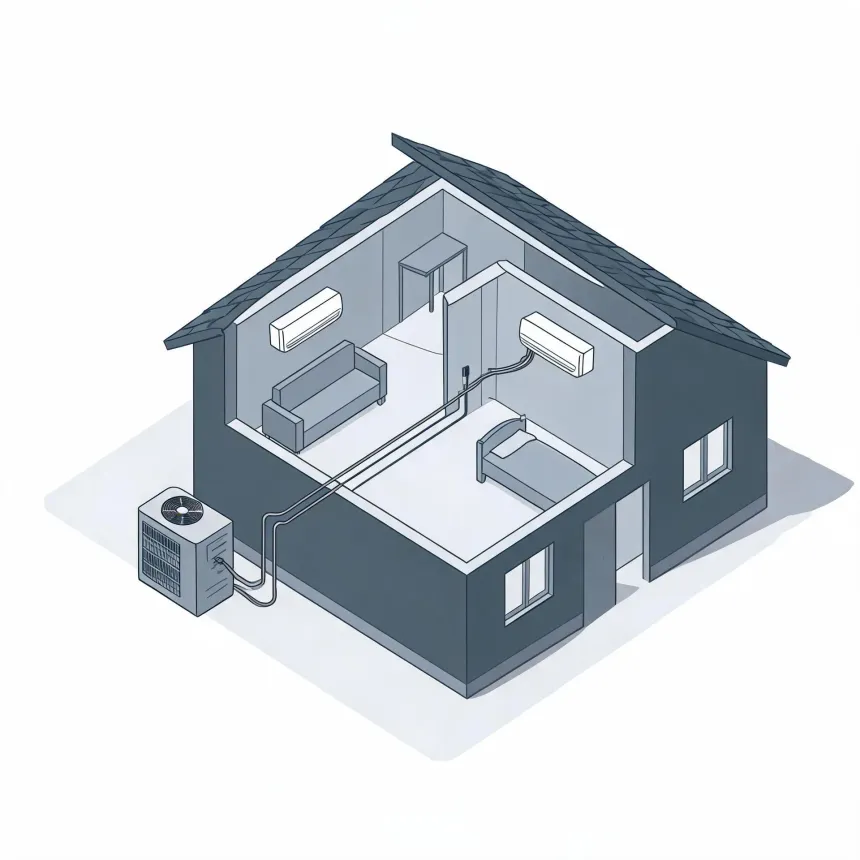
A contractor works out heat load by going through the house: wall and window area, insulation, which way rooms face, how many doors and windows are in each one. Square footage alone leaves out too much to land on the right number. Two houses the same size can need different sized units once that work is done.
A unit too big cools the room fast and shuts off before it pulls the moisture out of the air, so the space feels cold and still damp. A unit too small never shuts off, runs flat out, and still doesn't reach the temperature you set. Either way the compressor is working against the mismatch every time it runs, not just on the hardest days.
The efficiency rating on a mini-split tells you how much heat it moves for the power it uses, nothing more. A higher rated unit pulls less power to deliver the same cooling or heating as a lower rated one running the same hours. That rating is measured under set lab conditions, so it describes the equipment, not what happens on the hottest or coldest day at your house. Two units with the same rating can still run differently once installed, because the rating doesn't account for duct losses, charge level, or whether the unit is sized to the room. A mini-split with a strong rating still has to be installed right, with the right refrigerant charge and the right line set, or it never performs the way the label suggests. The number is a starting point for comparing equipment, not a promise about your bill.
Harnett County logged 107 severe weather events between 2015 and 2024, and 76 of those were damaging wind. Hail hit the county 17 times in that stretch, with two tornadoes and five tropical storms or hurricanes on top of that. An outdoor mini-split unit sits outside through all of it, exposed to wind-blown debris and hail in a way a furnace in a basement never is. Statewide, a quarter of North Carolina households went at least 24 hours without power in 2024, and a mini-split without backup power means no cooling in summer and no heat in winter until the power comes back. Where the outdoor unit goes, and what protects it, is worth deciding before installation, not after a storm.