






Two illuminated white colonial-style houses with wrap-around porches, flanked by oak trees draped in Spanish moss, photographed at night.

Mini Split Installation in Clayton, NC

Tell us about the job

Takes about a minute. No obligation.

New system or replacementMini-splitJohnston County, NC
Step 1 of 2

What ZIP code is the job in?

Johnston County saw 202 severe weather events between 2015 and 2024. Most of that was wind, 164 events, with 14 hail events, 3 tornadoes, 7 tropical storms or hurricanes, and 7 winter storms mixed in. An outdoor condenser sits outside through all of it, exposed to hail and flying debris in a way a furnace in a closet never is. Statewide, a quarter of households lost power for a day or more in 2024. When that happens here, electric heat stops along with the air conditioning, since most homes in this county don't have a gas furnace to fall back on.

7 months
October through April, your system heats
5 months
May through September, it cools
33°F
the average winter night it heats against
89°F
the average summer afternoon it cools against
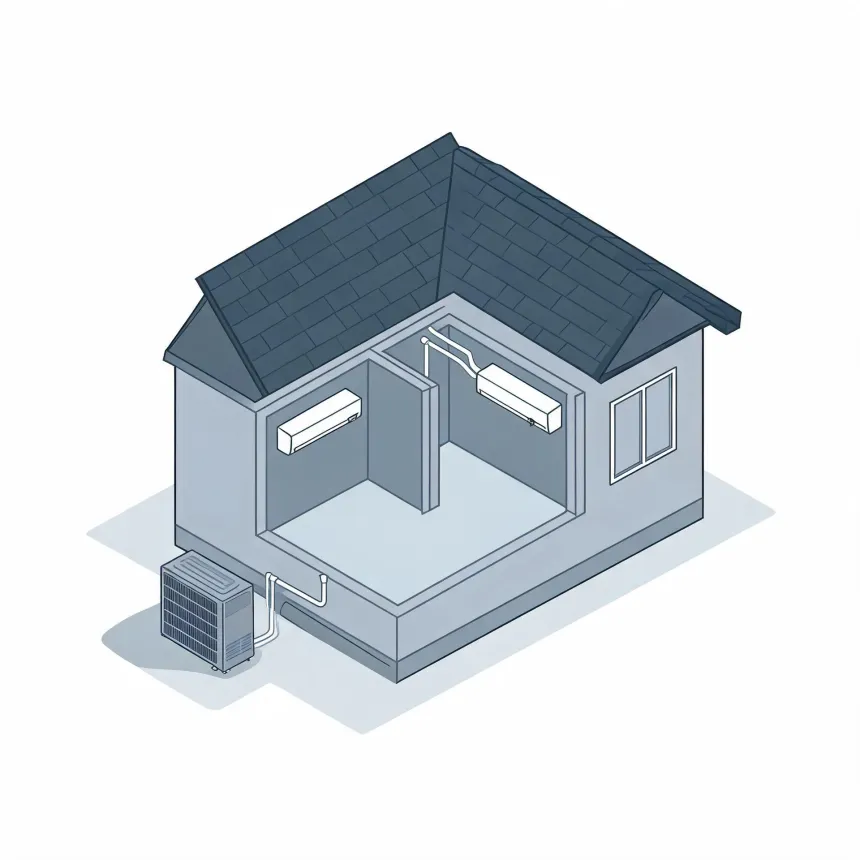
Isometric line illustration of a cutaway house with a shingled gable roof, showing two wall-mounted indoor air conditioning units connected by piping to an outdoor condenser unit on the ground outside.
Your system heats October through April and cools May through September.

NOAA nClimDiv, 1991–2020 normals

Johnston County afternoons average 89°F all through June, July and August, with a dew point of 68°F that makes the air feel heavier than it does in most of the country.

A mini-split working that hard, that often, needs to be sized for this county, not for an average one.

At 14.67 cents a kilowatt-hour, every cent of efficiency comes back to you

Power here costs 14.67 cents per kilowatt-hour
Climate zone 3A
Cooling runs May through September
Electric heat means a mini-split fits right inElectricity already heats 77.8% of homes in Johnston County, more than every other fuel combined.

Johnston County sits in climate zone 3A, warm with a long cooling season and a short winter. A mini-split counts as a split system under federal rules, and any unit built from 2023 on has to clear 14.3 for cooling and 7.5 for heating under that standard's rating. That's the floor. Nothing sold new can fall below it, and a contractor sizing your system has to work above that line, not at it. The zone doesn't change what efficiency a unit has to meet. It changes how much that efficiency gets used, and in a county running cooling most of the year, it gets used a lot.

Plan for the outage before it happens

Plan the outdoor unit's spot with storms in mind, somewhere it isn't catching runoff or sitting under a limb. Ask the contractor what the system does in a power cut, since a mini-split won't run without power any more than a furnace will. Getting that settled now, while the install is being planned, is easier than sorting it out after the next outage.

Find a contractor
A man in a cap, brown jacket and tan pants, seen from behind, carries a canvas tool bag up concrete steps toward an orange front door.
A white mini-split air conditioner outdoor condenser unit mounted on metal brackets against a beige stucco exterior wall, with a blue sky and scattered clouds in the background.

Install before the season needs it

Cooling runs May through September here, five months of the year. April is the month to get a mini-split in, before the first warm stretch hits and everyone else is calling for the same thing. Installed in April, it's set and tested before it has to work. There's time to deal with any snag, a bad line set connection or a condenser pad that needs releveling, without a hot bedroom riding on it. Winter gives you another window. Overnight lows average 33°F through December, January and February, cold but not so cold that heat pump installs are unusual here. Either way, the point is the same: get it done in the slow month, not the first week it's needed.

The old unit doesn't get left behind

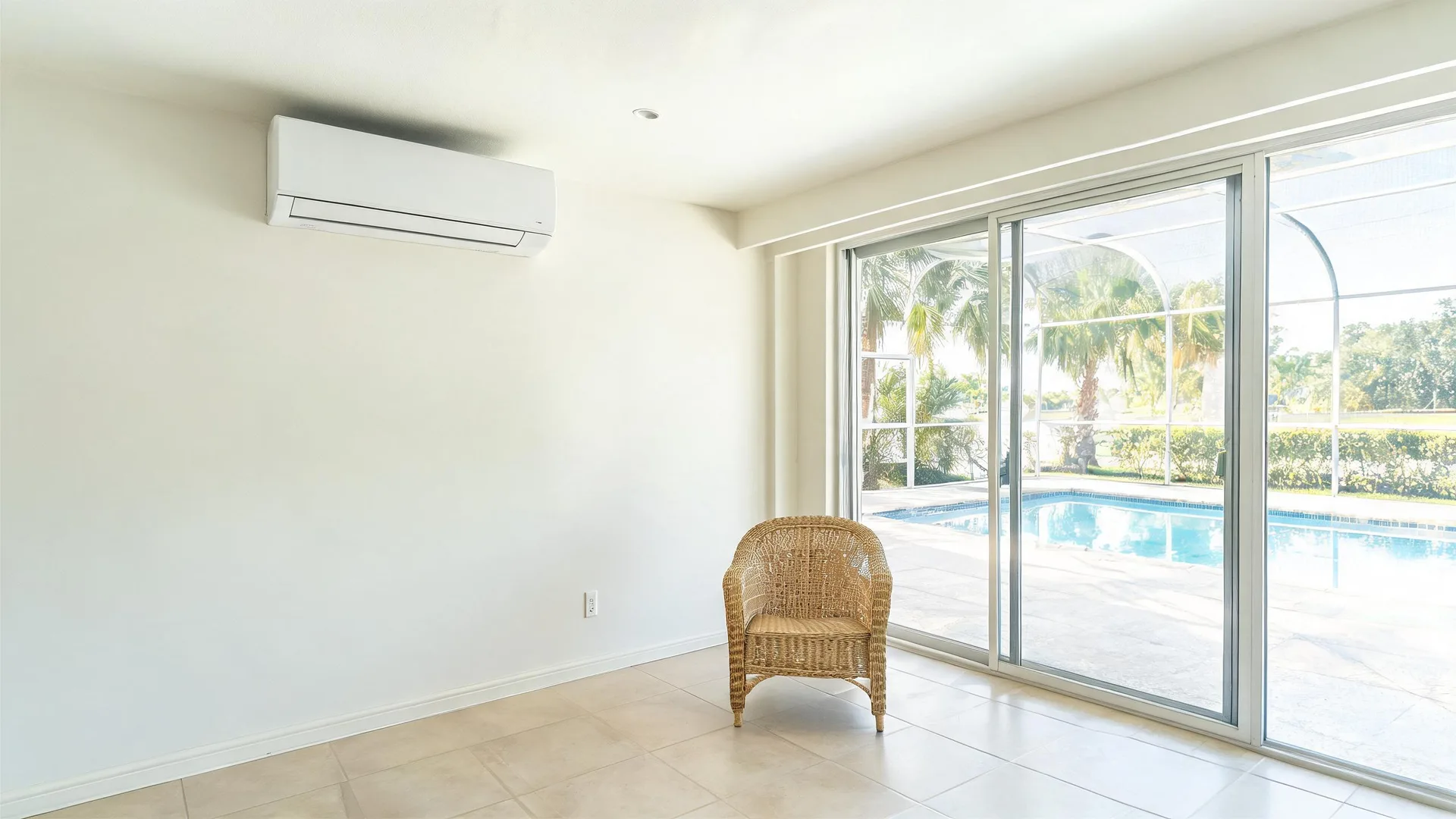
Whoever installs the new system has to deal with the old one too. A window unit or an old split system gets disconnected, the refrigerant recovered rather than vented, since releasing it into the air is against the law. Any old line set or mounting bracket comes down, and the wall gets patched where the lines used to run.
What that means for the job ahead

Walk through what happens to the equipment already in place before the new one goes in. If there's an old condenser outside, ask where it goes and who hauls it off. If there's an old line set buried in the wall, ask whether it gets reused or pulled and replaced. A contractor who has a clear answer for all of it before the install starts is one who has done this enough times to know.

A mini-split's price comes down to what the job actually requires, not just the equipment sitting in the box. How many zones you're running matters most: one indoor head cooling one room costs less to install than a system feeding four rooms off a single outdoor unit, since each zone needs its own line set, its own mounting, its own place on the wall. Where the outdoor unit goes matters too. A condenser with a short, straight run to the indoor head is a simpler job than one that has to snake refrigerant lines through an attic or around the outside of the house. The electrical work can swing the job either way. Some homes have a spare circuit ready for a new unit, and some need a new line run from the panel, which is a different scope of work entirely. Whether old equipment comes out clean or fights you on the way out plays into it as well. None of this is guesswork a contractor should wave off. A straight answer on zone count, line length and panel capacity before the work starts is what separates an honest bid from one that changes halfway through the job.

Wind is what hits this county most, 164 damaging wind events between 2015 and 2024, plus the tropical storms and hurricanes mixed in. That matters for sizing as much as for where the condenser sits. A mini-split that's undersized runs flat out just to keep up on an ordinary August afternoon, and a unit already working at its limit has less room to recover after a storm knocks the power out or debris rattles the outdoor coil. Sizing it right for this county's heat, not for a mild-summer average, gives it that margin. The cheapest bid is usually the one that skipped this step.