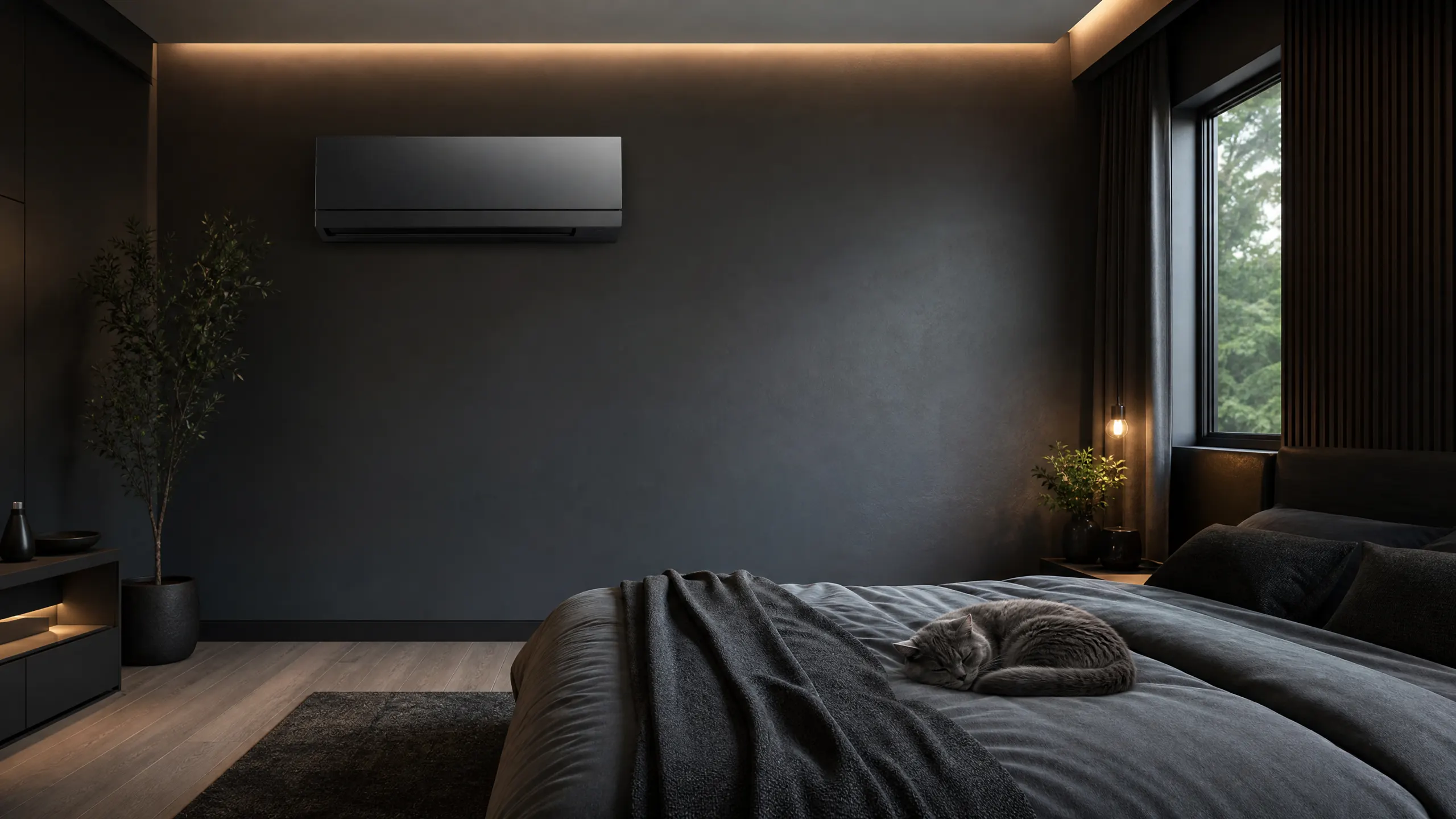






A gray cat sleeps curled up on a dark-made bed in a moody, minimalist bedroom with a wall-mounted air conditioning unit and warm accent lighting.

Mini Split Installation in Chapel Hill, NC

Tell us about the job

Takes about a minute. No obligation.

New system or replacementMini-splitOrange County, NC
Step 1 of 2

What ZIP code is the job in?

Orange County saw 149 severe weather events between 2015 and 2024. Most of that was wind, 121 events, with 12 hail events, 3 tornadoes, 2 tropical storms or hurricanes, and 8 winter storms mixed in. An outdoor condenser sitting against a wall takes that weather directly, and hail dents fins while debris gets pulled into the fan. Statewide, a quarter of households lost power for a day or more in 2024. A mini split won't run without power, and neither will the backup heat strip some systems use on the coldest days. Where the outdoor unit goes and what protects it are worth deciding before anything gets installed.

7 months
October through April, your system heats
5 months
May through September, it cools
31°F
the average winter night it heats against
87°F
the average summer afternoon it cools against
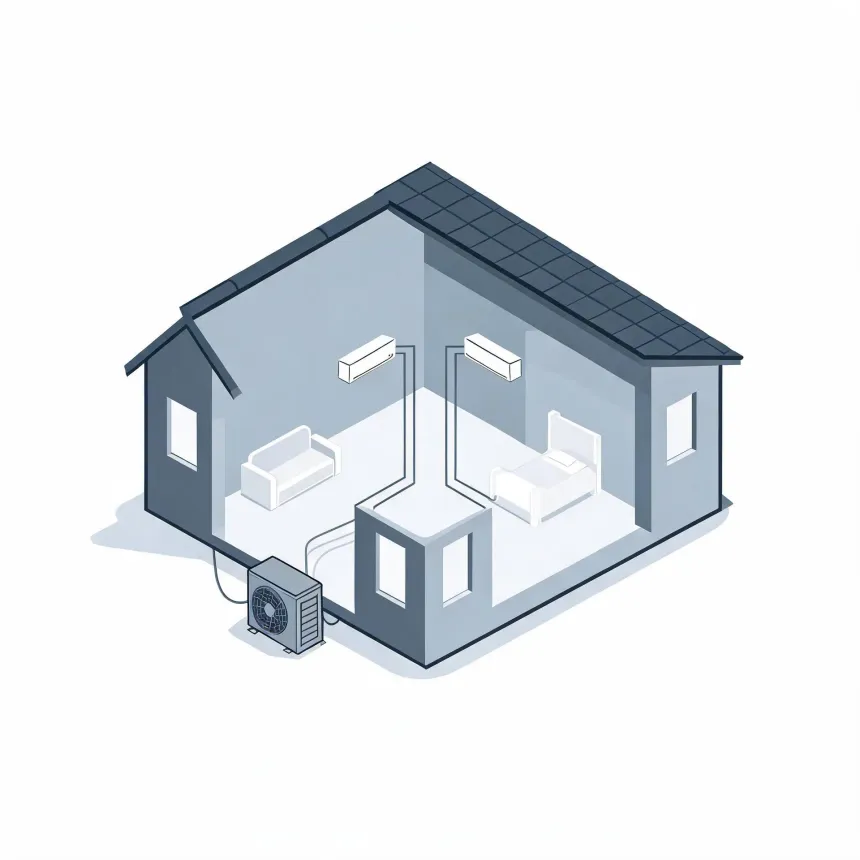
Isometric cutaway illustration of a small house showing two wall-mounted indoor air conditioning units connected by lines to a single outdoor condenser unit beside the building, with a sofa in one room and a bed in another.
Your system heats October through April and cools May through September.

NOAA nClimDiv, 1991–2020 normals

An old condenser or furnace usually comes out once the new line set and lines are run, not before.

A mini split install can often leave the old system running until the new one is tested, so there's no gap with no heat or cooling.

Get it installed before May, before cooling season and hurricane season both start

Cooling runs May through September
Summer afternoons average 87°F
121 damaging wind events from 2015 to 2024
Most Homes Here Run on Electric Heat60.5% of homes in Orange County heat with electricity, more than any other fuel

Orange County falls in climate zone 3A, warm with a long cooling season and only a short mild winter. A mini split counts as a split system heat pump under federal rules, and any unit built from January 2023 onward has to hit at least 14.3 Btu of cooling for every watt-hour it draws over the summer, and 7.5 Btu of heat per watt-hour over the winter. That floor applies everywhere, but it matters more here because the system runs so many months of the year. A unit sitting right at the minimum spends most of its life working, given how long the heat lasts in this zone. There's no separate ductless category carved out, so whatever gets installed has to clear the same bar as any other heat pump sold here.

Plan the outdoor unit's spot before install day

Installers need a location for the outdoor unit before they can run the line set. Pick a spot with cover from wind and falling debris, not just whatever wall is closest to the electrical panel. Ask whether the system can be set up to run on backup power if the panel already has a generator hookup, or what it would take to add one.

Find a contractor
A man in a gray T-shirt and tan work pants, carrying a canvas tool bag, climbs porch steps toward an orange front door beside a potted shrub.
A white outdoor air conditioner condenser unit mounted on metal wall brackets against gray horizontal siding, with a blue sky and white clouds behind it.

Sizing Is Done Room by Room, Not Off the Old System

Sizing a mini split is not about matching the old system or picking the biggest unit available. A tech works out the heat loss and heat gain for the specific room or zone, using the wall area, window area, insulation and ceiling height. Too big and the unit short cycles, running a few minutes at a time, cooling the air fast without actually pulling the moisture out of it. The room feels clammy even at the right temperature. Too small and it runs flat out on the hardest days of summer and the coldest nights of winter, never catching up, and the compressor wears from constant full-load operation instead of settling into the steady lower-speed running these systems are built for. A unit sized right spends most of its time cycling gently, which is also where it holds its efficiency rating. Multi-zone systems add another layer: the outdoor unit has to be matched not just to the total load but to how that load splits across the indoor heads, because a head too small for its room behaves the same as any other undersized unit even if the system as a whole is sized correctly.

Ask How Each Quote Handles the Outdoor Unit

A mini split system lives or dies by the outdoor condenser, and quotes can differ on where it sits and what guards it. Ask whether the mounting location was chosen for protection from wind and falling limbs or just for the shortest line run. Ask what holds the unit down, since a condenser that shifts or tips strains the refrigerant lines and the electrical whip running to it. A quote that names the mounting hardware and the pad or bracket is worth more than one that just lists the equipment.
Ask What Happens When the Power Cuts Out

Every mini split needs power to run, including the indoor head, the outdoor compressor, and any backup heat strip built into the system. Ask whether the system can be wired to a transfer switch or generator interlock, and whether that has to be planned before installation or can be added later. Ask too what the unit does when power comes back: most restart on their own, but some hold a fault code until someone clears it. Knowing that now beats finding out during the next outage.

Installation cost mostly comes down to how much work happens outside the two units themselves. Running the line set between the outdoor condenser and the indoor head takes labor, and that labor goes up with distance and with obstacles like brick, concrete or tight framing to drill through. A multi-zone system costs more to install than a single-zone one because each additional indoor head needs its own line set and its own electrical work, not because the outdoor unit itself is complicated. Electrical work is its own line item: some panels have the capacity for a new circuit already, others need upgrading first, and that difference shows up in the quote before any equipment gets touched. Mounting matters too. A wall bracket is simple, but a pad, a stand, or extra framing to hold the outdoor unit steady and off the ground takes more time than setting one down on flat concrete. None of this shows up in the sticker price of the equipment, and it's usually where quotes for the same system start to differ.

Install day starts outside, not in. The line set has to run from the spot picked for the outdoor unit back to each indoor head, through a wall sleeve drilled for that purpose, and that hole gets sealed and insulated once the lines, the drain, and the wiring are through it. The refrigerant lines get connected, then the whole system is pressure tested before anything is charged, because a leak found after the charge means doing that work twice. Once it holds pressure, a vacuum pump pulls moisture and air out of the lines, since either one left behind ruins the compressor over time. Only after that does refrigerant go in and the system get powered up and run through both heating and cooling to check it actually moves air and holds temperature at each head.