
Running the way it should
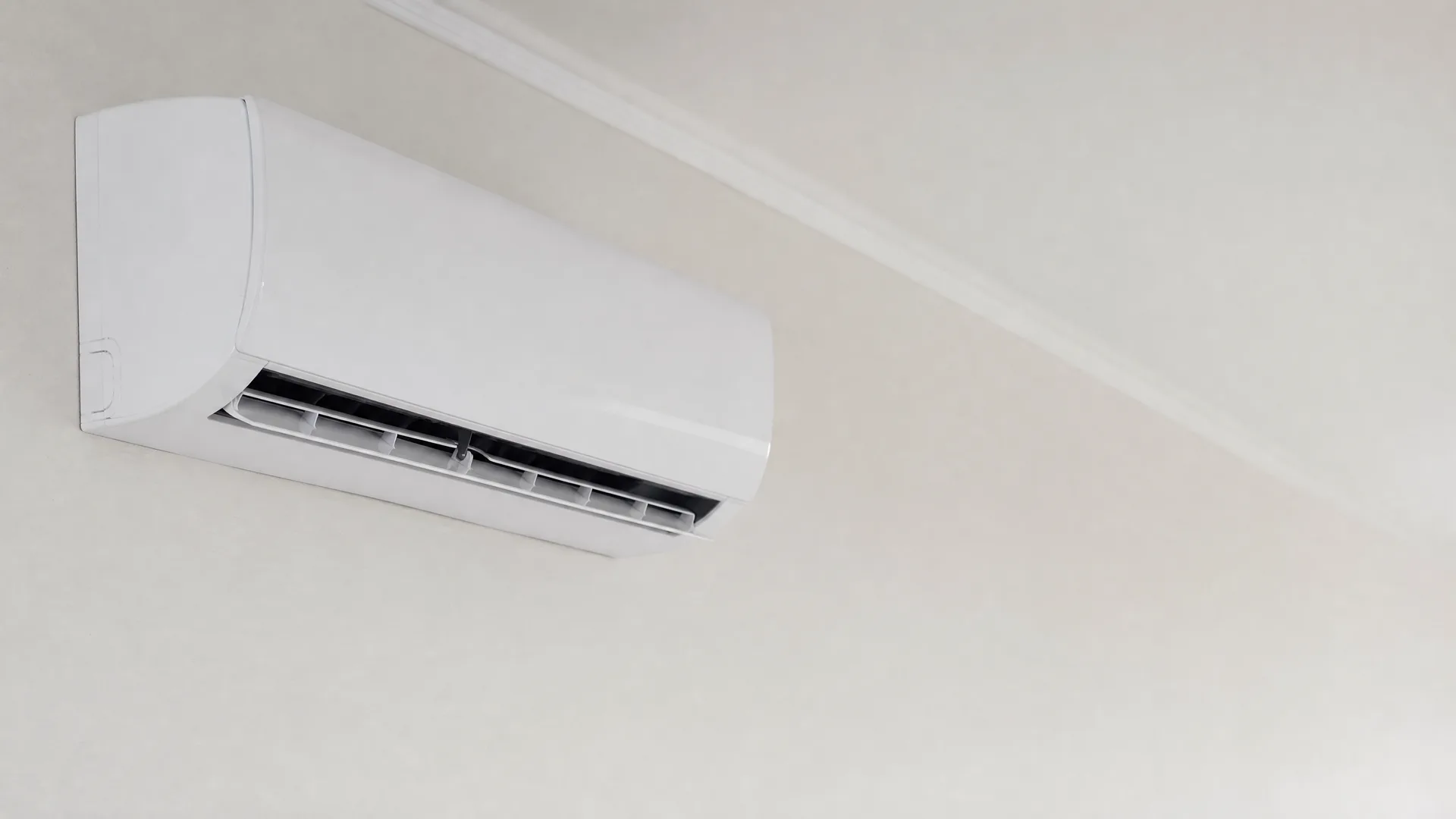
A mini split that's heating right just hums along. The panel stays closed, air moves steadily out of that bottom grille, and the room holds its temperature without the unit straining or short cycling to keep up.
Get the mini split repair search off your mind today.
Hand it offCold weather in Forsyth County puts a mini split through its hardest work of the year, and when it stops keeping a room warm, the people in that room feel it fast. You're probably checking the thermostat settings, listening for the unit to run, maybe feeling the air coming out and finding it cool instead of warm.
A mini split heats by pulling warmth from the outdoor air, even when that air is cold, and moving it inside through the refrigerant line. When the outdoor unit ices over and the defrost cycle doesn't clear it, or when the coil is caked with dirt and leaves, the system can't pull in enough heat to warm the air it blows out. Low refrigerant does the same thing: the unit runs, the fan moves air, but the heat isn't there. On the coldest nights in Winston-Salem, a mini split that's already struggling with one of these problems will fall furthest behind, since it has to work harder just to keep up with the outdoor temperature. A technician can tell which of these it is by checking the coil, the refrigerant charge, and the defrost board.

A mini split that's heating right just hums along. The panel stays closed, air moves steadily out of that bottom grille, and the room holds its temperature without the unit straining or short cycling to keep up.

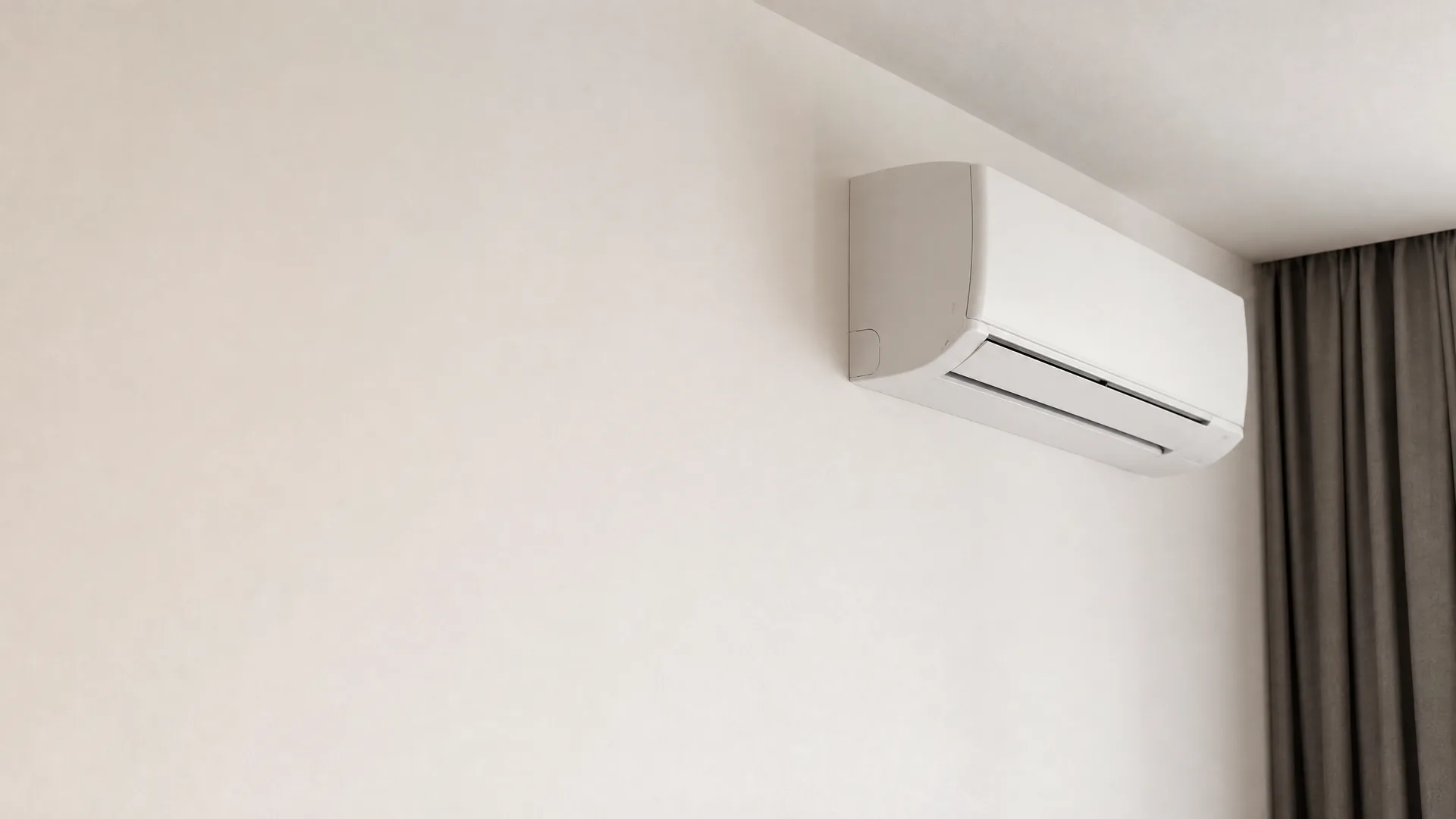
Discoloring and heavy dust on the casing point to a unit that's been running long and hard, maybe for years without the filter or coil getting cleaned. That buildup makes it work harder for less heat, and it's often a sign the problem didn't start this winter.




Cooling runs May through September
Cooling runs May through September. Five months of pulling humidity out of the air, which wears on the same compressor your heat depends on.
Heat runs October through April
Heat runs October through April. Seven months is most of the year, so a mini split that won't heat here leaves you without a backup for a long stretch.
Power here costs 13.43 cents per kilowatt-hour
Power here costs 13.43 cents per kilowatt-hour. Most homes in Forsyth County heat with electricity, so a mini split running right keeps that bill where it should be.
NOAA nClimDiv 1991-2020 · EIA-861 2025

Wrong room for this one, different time of year. It's January, early evening, and you're in the kitchen waiting on dinner. The mini split in the next room has been running since noon and the thermostat still reads five degrees under what you set. You walk over and hold your hand up to the grille. The air coming out is barely warm, not the steady heat you'd expect after hours of runtime. Outside it's close to freezing, the kind of Forsyth County night where the unit should be working hardest. You turn it off, wait a minute, turn it back on. Same weak air. You go back to the kitchen, pull a sweater off the chair, and leave the thermostat where it is.


The thermostat calls for heat and signals the indoor unit.
The reversing valve switches the system into heating mode.
The compressor in the outdoor unit starts pulling in refrigerant.
Refrigerant absorbs heat from the outside air, even when it's cold.


A licensed pro who repairs mini splits in Forsyth County gets your request.
No fee to send it, and nothing to sign.
A mini split pulls heat from outside air even when that air is cold, down well below freezing. The outdoor unit has to keep its coil clear to do that. When frost builds up, the system runs a defrost cycle, and you'll see the outdoor fan stop and steam rise off the unit for several minutes. That's normal. What's not normal is ice that stays past a defrost cycle, or a coil packed solid with frost that never clears. That points to a problem with the defrost control or the refrigerant charge, not the weather.
Ice on the outdoor coil in Forsyth County's cold months is common for a few minutes during a defrost cycle. A coil that stays iced over, or one that's frozen solid enough you can see it through the housing, means the unit isn't shedding that frost the way it should. Low refrigerant charge causes this because the coil runs colder than it's built for. A failed defrost sensor causes it too, since the system never gets the signal to switch out of heating and melt the ice off. Either way, the outdoor unit can't pull heat from air it can't touch.
Five months of cooling means your mini split spends the other seven carrying the heat load, often harder than the compressor was built to handle year after year. That's a long stretch for one system to do both jobs without a break, and it's part of why heating problems show up here.
NOAA nClimDiv 1991-2020
You notice a mini split not heating fast, because the room goes cold within the hour and someone in the house feels it. You're checking the thermostat, maybe resetting the breaker, looking up what the blinking light means. January in Forsyth County doesn't wait. A contractor who works on these units all winter has likely seen your exact fault code before and knows what usually causes it on a cold night like this one.
Some homeowners hold off, hoping the unit resets itself or the problem clears on its own once it warms up outside. Sometimes a breaker trip or a frozen coil does work itself out. But a compressor that's struggling or a reversing valve that's stuck usually isn't going anywhere without a technician's hands on it, and running the system hard against a real fault can turn a small repair into a bigger one before spring.
A mini split that won't heat usually comes down to one of a few things: a reversing valve stuck in the wrong position, a frozen outdoor coil that isn't defrosting the way it should, a refrigerant charge that's dropped, or a sensor sending the system bad information. None of those sort themselves out. A licensed technician working in Forsyth County checks the outdoor unit first, since that's where heating mode does its hardest work pulling warmth from cold air, then works back through the refrigerant line to the indoor coil and thermostat signal. Winter here doesn't let up once it sets in, and a mini split that's lost its heat stays that way until someone with the right gauges and parts gets into it. You've already looked at the thermostat and the breaker. What's left is inside the system, where only a trained eye and the right tools find it. Send the request and a local contractor who works on this equipment all winter takes it from there.


It's off your list after this
The pro who gets in touch is licensed in North Carolina and works in Forsyth County.