Profile view of a bearded man wearing a dark green baseball cap and a dark gray T-shirt against a plain light background.

Is a high-efficiency AC worth it in North Carolina

New system or replacementCentral ACNorth Carolina
Step 1 of 2

What ZIP code is the job in?

Is a high-efficiency AC worth it in North Carolina?

North Carolina summers run hot and sticky, and an air conditioner here works hard for months at a stretch. You've probably seen the high-efficiency units at a higher price and wondered if the extra cost actually pays off in a climate like this, or if it's just a bigger number on the spec sheet that doesn't change much about how your house feels or what you pay to run it.

Yes, in most North Carolina homes

A high-efficiency AC runs longer and harder here than it would in a milder climate, and that's exactly when the efficiency difference shows up most. Most homes in the state heat with electricity, so the same power rate applies to both your heating and cooling, and a unit that uses less electricity to produce the same cooling matters on a bill that already carries the heating load. Power here is priced about the same as the national average, so the gain comes from how much less electricity the unit draws, not from a higher local rate making every kilowatt-hour cost more. A properly sized, well-installed high-efficiency system also tends to run steadier through a humid North Carolina summer, which matters as much as the temperature on the thermostat.

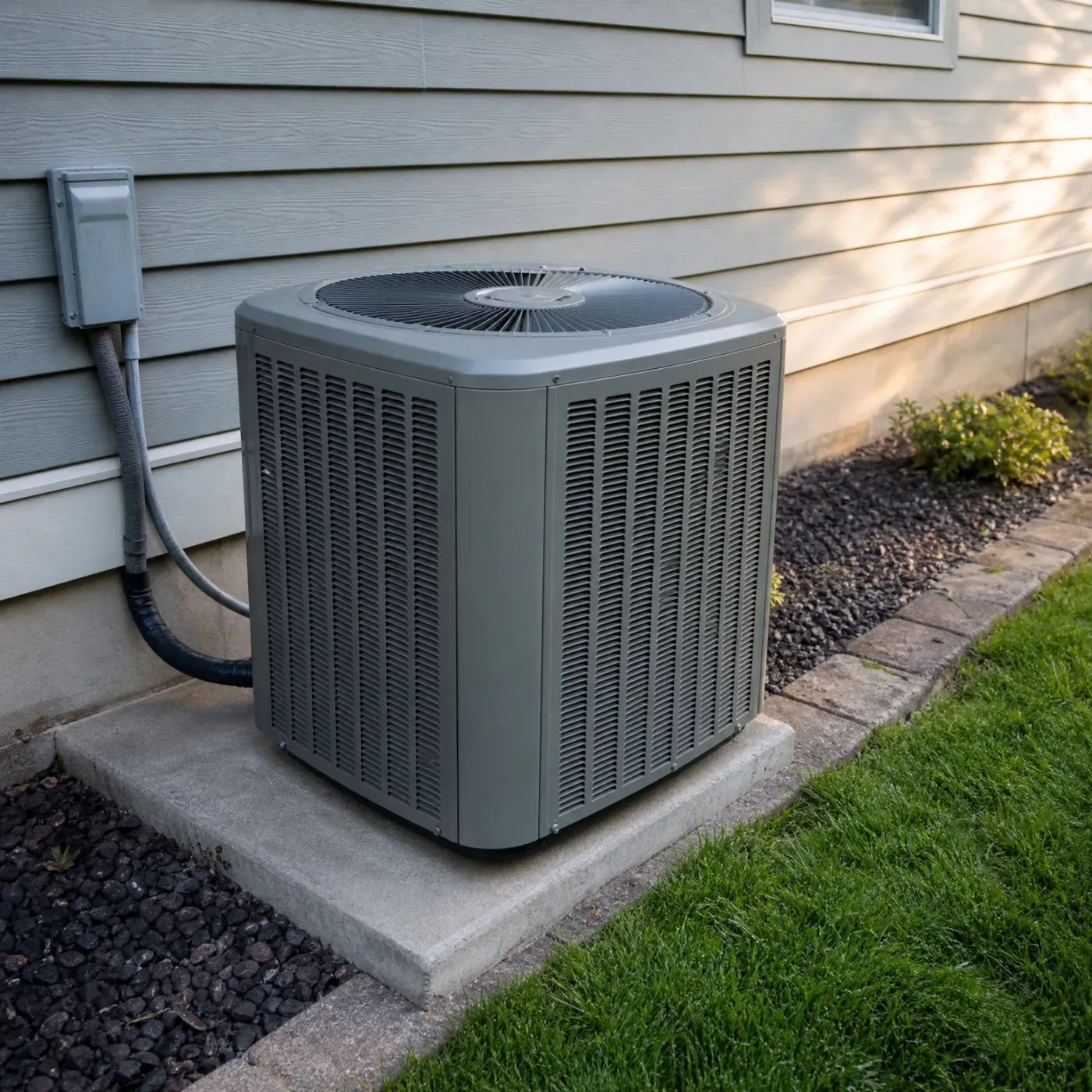
An outdoor air conditioning condenser unit on a concrete pad beside a house with white horizontal lap siding, with an electrical disconnect box and insulated refrigerant line on the wall and a shrub over mulch to the right.

A standard unit running well

A newer standard AC cools your home fine on a 95 degree day and keeps the humidity down. It cycles on and off as the thermostat calls for it, same as any properly sized system. If yours is a few years old and running like this, a high-efficiency replacement isn't solving a problem you have.


An outdoor air conditioner condenser unit on a concrete pad beside a house with light horizontal lap siding, with an electrical disconnect box and conduit on the wall behind it.

An aging unit struggling

An older condenser like this one runs longer stretches to keep up, and the compressor works harder doing it. Weathering on the cabinet and corrosion near the lines often mean the parts inside are just as worn. When a unit gets to this point, replacing it with a high-efficiency model turns those long summer run times into lower electric bills instead of just higher wear.

A gray-haired man in a dark sweater sits on a light gray sofa in a living room, looking toward a sunlit window with trees outside.
A gray-haired man in a dark blue sweater sits on a light gray sofa in a sunlit living room, looking off to the side, with a potted plant, shelving unit, and large glass doors behind him.
A bearded man with graying hair in a dark green sweater sits on a sofa in a living room, looking off to the side, with a sliding glass door and a dim kitchen doorway behind him.
A gray-haired man in a dark knit sweater sits on a light gray sofa in a living room, looking toward a sunlit window, with houseplants, a lamp, and framed art in the background.

SEER2 measures how much heat a system moves over a whole season for the electricity it uses, not how cold the air feels at the vent. A high-efficiency unit gets that rating mostly through the compressor. Instead of running flat out and then shutting off, a two-stage or variable-speed compressor spends most of its time running at a lower output, matching what your house actually needs on a given afternoon. On a 95 degree day it ramps up close to full capacity. On a mild day it throttles way down instead of just clicking off. That longer, steadier run time is also what pulls more humidity out of the air, which matters more here than the temperature does most summer afternoons. None of that holds up on its own. The indoor coil and outdoor condenser have to be matched to each other, and the whole system has to be sized to your ductwork. Charge the refrigerant wrong or install it on ducts that are too small, and a high-efficiency system can end up running longer than a standard one would, without the humidity control it's supposed to deliver.

How the efficiency actually works

  • A SEER2 rating tells you how much heat a system moves per unit of electricity over a full season, not how cold the air coming out of the vent feels.
  • High-efficiency systems usually run a two-stage or variable-speed compressor, so they spend more time running at a lower output instead of cycling fully on and off.
  • That longer, slower run time pulls more moisture out of the air than a standard unit's on-off cycling does, which matters in North Carolina's humidity.
  • A variable-speed system matches its output to the actual heat load, so it runs near full capacity on a 95 degree afternoon and throttles down on a mild day instead of just stopping.
  • The indoor coil and the outdoor condenser have to be matched to each other and sized to your home's duct system for the rated efficiency to hold up in practice.
  • A high-efficiency unit installed with the wrong refrigerant charge or undersized ductwork will run more than a correctly installed standard system and won't deliver the humidity control either.
A middle-aged woman with shoulder-length dark hair, wearing a gray cardigan over a cream top, sits in an upholstered armchair and looks toward a sunlit window, with a shelf holding framed pictures and a plant behind her.
A woman with her hair in a bun holds a sleeping young child against her chest, both wrapped in a textured beige knit blanket on a sofa in a dimly lit room with a lamp, framed picture, and bookshelf behind them.

A two-stage or variable-speed compressor cycles less and runs longer at lower output, which pulls more moisture out of the air than a standard unit cycling on and off.

In North Carolina, where the air itself feels heavy for months, that steadier airflow is often the difference people notice first, before they ever look at the power bill.

Power costs 14.00 cents per kilowatt-hour statewide

At 14 cents a kilowatt-hour, every stage your compressor skips matters on the bill, since an AC running steady at lower output all afternoon uses less power than one kicking on at full blast again and again. A unit that moves more heat per kilowatt-hour earns that back fastest in a state where the system runs for months straight.

EIA-861 2025 statewide residential average

An outdoor air conditioning condenser unit on a concrete pad beside a house with white horizontal vinyl siding, with a gray electrical disconnect box and refrigerant lines on the wall behind it.
Before you get your air conditioner installation
A gray outdoor air conditioner condenser unit on a concrete pad beside a house with white horizontal siding and a brick foundation, with a wall-mounted disconnect box and conduit, and a green shrub with mulch at left.
After you get your air conditioner installation

One form, no calling around

Once you've weighed a high-efficiency unit against a standard one for your house, the next job is finding someone to put it in right, and that part eats time on its own. Getting quotes usually means calling around, explaining your attic space and your ductwork to each one, then waiting on paperwork to compare what they actually priced out. Submitting here sends your request to one licensed contractor working in North Carolina, someone who installs these systems in homes like yours every summer and knows what a two-stage or variable-speed unit needs to run the way it's supposed to. You're not fielding calls from five companies trying to win the job. Whether you've decided on high-efficiency or you're still weighing it against a standard replacement, getting a contractor looking at your actual system is the next real step.

An outdoor air conditioner condenser unit on a concrete pad beside a house wall, with a gray electrical disconnect box and conduit above it and grass in the foreground.

What a sticky house feels like

If your AC is undersized or cycling too fast for the heat load, you notice it in the rooms farthest from the thermostat. The air feels cool but the house still feels damp, floors tacky, bedsheets not quite dry to the touch. A system that runs longer at lower output pulls that moisture out instead of just chilling the air and shutting off. In a North Carolina summer that runs week after week, that difference shows up in how the house feels at 9 at night, not just what the thermostat reads.

A gray outdoor air conditioner condenser unit on a concrete pad beside a house with horizontal lap siding, surrounded by white gravel and a lawn, with a white wall at left.

What shows up on the bill

Since most homes here heat with electricity too, your power bill already carries a load most of the year. Add a summer where the AC runs long hours most days, and the compressor's efficiency is doing real work on that number. With power priced typical for the state, a unit that moves more heat per kilowatt-hour costs less to run through July and August than one working harder to do the same job. You won't see it in one bill. You'll see it over a full summer.

A high-efficiency AC earns its keep in North Carolina because the compressor runs longer at lower output through a long, muggy season, pulling out more moisture than a unit that just kicks on and off. Whether that's worth it for your house depends on your current system, your attic and ductwork, and what you want out of the next ten or fifteen years of summers. Getting it installed right matters as much as which unit you pick, since even a high-efficiency compressor underperforms if it's sized wrong or set up wrong. A contractor local to North Carolina who works on these systems every summer has seen what tends to go wrong with both standard and high-efficiency installs here, from a unit oversized for the square footage to ductwork that chokes the airflow a variable-speed compressor needs. You'll be matched with one licensed contractor for your situation, not a handful of companies competing for the callback, so you can ask about your specific house and get a straight answer instead of a sales pitch.

A gray outdoor air conditioning condenser unit on a concrete pad beside a house with horizontal lap siding, with a wall-mounted disconnect box and conduit, lava rock mulch, a shrub, and grass nearby.

Skip the search

Fill out one form

Your request stays with one local pro.

No charge to send it. You decide if you hire them.