A gray outdoor heat pump unit with a circular fan grille sits on a concrete pad beside a dark wood-clad house, next to a gravel bed with ornamental grasses and a stepping-stone path.

A pro who works on heat pumps

Is a heat pump worth it with typical power in North Carolina

Most homes in North Carolina heat with electricity already, so the question isn't whether a heat pump beats a furnace on fuel cost. It's whether one holds up through a humid summer and a cold snap without your power bill swinging hard. That depends on the unit, the setup, and the home it's going into. Answer those and you'll know what to look for, and if you want a contractor to walk through your specific situation, one can get in touch once you ask.

Match me with a pro

A heat pump is worth it in North Carolina, because most homes here already heat with electricity, so you're not comparing it against cheaper gas. You're comparing one electric system against another: a heat pump against baseboard or resistance heat. A heat pump moves heat instead of generating it, so it uses less electricity to produce the same warmth, and that gap matters most on the cold nights that push resistance heat to run flat out. In summer it does the cooling job a straight electric furnace can't, which counts for something once the humidity sets in. Where it can fall short is on the coldest mornings, when a heat pump's output drops off and it needs backup heat to keep up. Sized right for your house and installed by someone who accounts for that, it holds up through both seasons without surprising you on the bill.

A gray outdoor condenser unit on a concrete pad beside a beige vinyl-sided house, with a wall-mounted disconnect box, flexible conduit, mulch bed, shrubs and a concrete walkway in front.
A heat pump sized and installed right keeps pulling moisture out of the summer air and keeps the house warm into the colder nights, without big swings on the power bill.
An outdoor air conditioning condenser unit on a concrete pad beside a house with horizontal siding above a brick foundation, with a flexible conduit running to a wall-mounted disconnect box.
A heat pump that's struggling shows it here: dust caked on the coil, weathering on the cabinet, and a power bill that climbs because it's working harder for less heat or cooling.

A heat pump doesn't burn anything to make heat. It moves heat that's already in the outside air into your house, which is why it still works on a cold morning even though that air feels freezing to you. There's a limit to that, though. Once the outdoor temperature drops far enough, the unit can't pull enough heat to keep up, and a backup heat strip switches on to cover the difference. Come summer, the same system runs the other direction, pulling heat out of your house and pushing it outside through that same outdoor coil. A part called the reversing valve is what flips the system between those two modes, and it's usually the first thing to wear out after years of switching back and forth. You'll also see the outdoor unit pause on its own in winter. That's the defrost cycle clearing ice off the coil, and it's normal. What's not normal is the system turning on and off every few minutes. That points to either the wrong size unit for your house or a refrigerant charge that needs checking.

How a heat pump actually runs

  • A heat pump moves heat instead of making it, pulling warmth from outside air and pushing it indoors even when it's cold out.
  • Below a certain outdoor temperature a heat pump loses capacity, so a backup heat strip kicks in to carry the rest of the load.
  • In summer the system runs in reverse, pulling heat out of the house and sending it outside through the same coil.
  • The reversing valve is what switches the system between heating and cooling, and it's the part most likely to fail over time.
  • A heat pump that short cycles, turning on and off in quick bursts, usually points to a sizing problem or a refrigerant charge that's off.
  • Defrost cycles are normal in winter: the outdoor coil ices up, the system pauses to melt it, then goes back to heating.
A gray-haired bearded man in a dark coat and scarf dusted with snow stands smiling in a dimly lit entryway with a white front door, a side table with a lit lamp, an oval mirror, and a patterned rug.
An older bearded man in a dark snow-dusted coat and gray scarf stands just inside a dimly lit home entry, with a framed picture, lit table lamp, and an adjoining room with a fireplace behind him, and snow visible through the open door.
A gray-haired, bearded man in a dark snow-dusted coat stands smiling in a dimly lit entry hall with a staircase, a lit table lamp, a framed picture, and a living room visible through a doorway.
An older man with gray hair and a beard, wearing a dark jacket dusted with snow, stands smiling in a dimly lit hallway with lamps and a living room visible behind him.
A gray outdoor condenser unit on a concrete pad beside a house with horizontal lap siding, a conduit and disconnect box on the wall, a shrub with white flowers at right and evergreen foliage at left.

Running clean

A heat pump that's keeping up looks like this: clear fins, a steady fan, lines free of frost in mild weather. It pulls moisture out of the muggy air all summer and keeps the house even when a cold snap moves through, without the power bill jumping.


A gray outdoor air conditioning condenser unit on a concrete pad beside a house with light vinyl siding, with a gray electrical disconnect box and conduit on the wall to the right.

Falling behind

Dirt and weathering on the fins block airflow, so the unit works harder to move the same heat. It struggles to keep up on the hottest and coldest days, and the power bill climbs even though the house doesn't feel any more comfortable.

Heat Pump or Resistance Heat

Heat pump

  • It heats and cools from the same unit, so you're not running a separate furnace through the winter.
  • On a mild Carolina winter day it moves heat instead of generating it, which costs less than resistance heat for the same warmth.
  • It pulls humidity out of the air all summer, which matters here more than in a dry climate.
  • Below a certain outdoor temperature its capacity drops, so a backup heat strip has to carry part of the load on the coldest nights.
  • Sized and installed wrong, it runs long cycles and still leaves rooms uneven.
  • It needs a technician who sets up both the cooling charge and the heating defrost cycle correctly, not just one or the other.

Resistance heat

  • It makes heat directly from electricity, so it never loses capacity in cold weather the way a heat pump can.
  • It costs more to run for the same amount of heat, since it isn't moving heat from outside, it's generating all of it.
  • It does nothing for summer humidity, since baseboard and strip heat have no cooling function at all.
  • It has fewer moving parts to maintain, since there's no outdoor unit, no refrigerant charge, no defrost cycle.
  • It heats a room evenly as long as it's sized to the space, with no ramp-up delay.
  • It leaves you needing a separate air conditioner for summer, which is its own installation and its own upkeep.
An outdoor heat pump unit on a concrete pad beside a house corner, with a small electrical box and conduit on the wall, gravel border, grass, and a plain light-colored wall filling the right side.

Sizing decides how it performs

A heat pump has to be sized to the house, not just the square footage. One that's too small runs constantly during a July heat wave and still can't pull enough moisture out of the air. One that's too large cools the house fast, shuts off, and leaves the humidity behind, so the air feels damp even when the thermostat says it's satisfied. The sizing is a load calculation, not a guess based on the last unit.

A grey outdoor heat pump unit on a concrete pad beside a white stucco wall and dark siding with a downpipe, with gravel and grass in the foreground.

The backup heat matters too

Below a certain outdoor temperature, a heat pump alone can't keep up, and a backup heat strip carries the rest of the load. How that backup is set up affects what you pay on the coldest nights of the year. If it's wired to kick in too soon, or stays on longer than it needs to, a cold snap shows up on the power bill in a way it shouldn't. Getting that balance right at installation is what keeps a cold week from costing more than it has to.

Power costs 14.00 cents per kilowatt-hour statewide

At 14 cents per kilowatt-hour, every degree your heat pump has to make up costs money the moment it runs. Because it moves heat instead of generating it, it uses less power than baseboard or resistance heat to hold the same temperature, so that rate works in your favor more than it would with a straight electric system.

EIA-861 2025 statewide residential average

A woman wrapped in a thick beige fleece blanket sits on a sofa with an open book on her lap, beside a lit table lamp, with a frost-covered window behind her.
A gray-haired woman in a cream knit sweater stands in a dimly lit kitchen at night, looking to her right, with a round loaf of bread in the foreground and a dark window and potted plant behind her.

Get your heat pump to the right pro

You already know what a bad match costs you here. A heat pump that's undersized spins all through a July stretch and never quite dries the air out, so the house feels damp even while it runs. One that's oversized or wired wrong leans on the backup strips every time a cold snap hits, and those strips use power fast. Either way the symptom shows up on your bill before you can name the cause. Getting the sizing, the refrigerant charge and the backup heat setup right the first time is what separates a heat pump that earns its keep from one that just adds a line to what you owe. That part isn't something to guess at or leave to whoever's cheapest. If yours is new, struggling, or you're not sure it was set up right for a North Carolina summer and winter both, a contractor who installs these for a living can look at your situation and tell you where it stands.

A heat pump that fits your house runs quietly through the summer and keeps carrying the load when a cold night hits, and you'd barely notice it working at all.

One that doesn't fit shows up on your power bill first, then in a house that's damp in July and never quite warm enough in January.

An outdoor air conditioner condenser unit on a concrete pad beside a house with beige horizontal siding, with conduit running from an electrical box on the wall.
Before you get your heat pump installation
A beige outdoor air conditioning condenser unit on a concrete pad beside a house with horizontal vinyl siding, with refrigerant lines and a disconnect box on the wall, surrounded by dark mulch and a green shrub at left.
After you get your heat pump installation
An outdoor condenser unit on a concrete pad beside a gray lap-sided house, with an electrical disconnect box and conduit on the wall and shrubs with mulch to the right.

Working the way it should

This one sits clean on its pad, lines and conduit run neat to the disconnect, fins clear. A heat pump like this pulls the damp out of the air all summer and still carries the house through a cold night without the backup strips doing all the work.

An outdoor air conditioner condenser unit on a concrete pad beside a house with horizontal vinyl siding, with refrigerant lines and an electrical disconnect box on the wall and dry leaves on the ground.

Falling behind

Dirty coil fins choke airflow, and the unit has to run longer to move the same heat. Leaves piled against the base block the air it needs to pull in. A heat pump working this hard shows it on the power bill before anyone notices the house feels damp or the rooms run cold.

How does a heat pump switch between heating and cooling?

You see your heat pump keep running when the seasons change and wonder how it knows to stop warming the house and start cooling it. There's no separate switch you flip, and nothing about the outdoor unit looks different in January than it does in July, so it's fair to ask what's actually happening inside it.

A reversing valve flips the refrigerant flow

Inside the outdoor unit sits a reversing valve, and that's the part doing the work. In heating mode it routes refrigerant one direction so the outdoor coil pulls heat from the air and the indoor coil releases it into the house. Switch the thermostat to cool, and the valve shifts, sending refrigerant the other way so the indoor coil pulls heat out of the house and the outdoor coil dumps it outside. The compressor and fans keep running the same as always. Nothing about the physical equipment changes, just the direction the refrigerant travels through it. If a heat pump gets stuck blowing cold air in winter or warm air in summer, a stuck reversing valve is often the reason why.

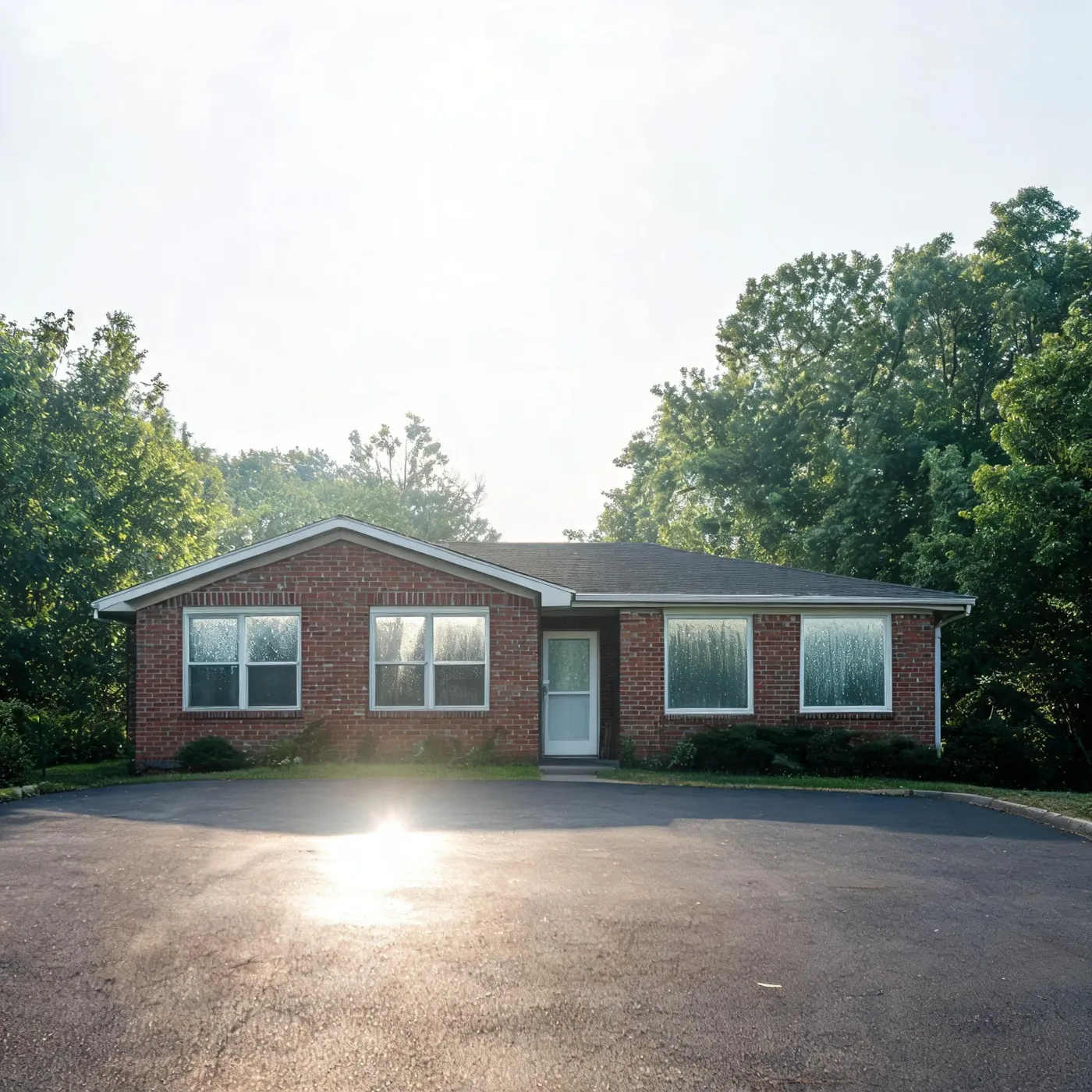
A single-story red brick ranch house with white-framed windows and a white storm door, fronted by a large asphalt parking area and backed by leafy green trees under a bright hazy sky.

A dew point of 67°F is what NOAA's summer average for North Carolina works out to, and that's the sticky range where air feels heavy even in the shade. Your heat pump has to pull that moisture out while it cools, not just drop the temperature. If it's sized and charged right, you'll feel the difference the moment you walk in from outside, the air feels lighter, not just cooler. If it's struggling, the house stays clammy even with the thermostat satisfied, and the unit runs longer to chase a humidity problem it isn't built to solve alone.

NASA POWER T2MDEW county cells weighted by homes

A woman in a cream cardigan and jeans stands with one hand raised facing an open front door of a gray horizontal-siding house, with a black lantern wall light, a potted shrub with yellow flowers, and a stone-faced porch column.

A heat pump is worth it here, if it's sized and installed right

Most homes in North Carolina already heat with electricity, and a heat pump does that job for less than baseboard or resistance heat while also pulling the damp out of summer air. The sizing and the install decide whether it actually does that. Done right, it runs quiet through a muggy July and carries the house through a cold snap without leaning on the backup strips. Done wrong, you feel it on the power bill and in a house that stays sticky.

You don't have to work out whether your install was done right on your own. A contractor who knows how heat pumps perform in North Carolina's climate can look at what you have, check how it's sized against your house, and tell you where it stands. Once you send the form, that part stops being something you have to figure out yourself. Someone who works on these day to day reaches out and takes it from there.

A living room corner with a light beige sofa holding a textured taupe cushion, a large ceramic vase of olive branches by a window, a framed neutral artwork on the wall, and a dark bowl with stacked books in the foreground.
A gray outdoor condenser unit on a concrete pad beside a house with horizontal lap siding, bordered by mulch, shrubs and a mowed lawn.

The right pro for this job

New system or replacementHeat PumpNorth Carolina
Step 1 of 2

What ZIP code is the job in?