

What SEER rating makes sense for a North Carolina home

New system or replacementCentral ACNorth Carolina
Step 1 of 2

What ZIP code is the job in?

What SEER rating should I get for a new AC in North Carolina?

You're pricing out a new air conditioner and keep seeing SEER numbers thrown around in ads and quotes, with no clear sense of which one actually fits a house in North Carolina. Summers here push the system hard for months at a time, and electric heat means your bill already leans on that equipment. You want a number that makes sense for your climate, not just whatever rating a salesman pushes.

Look for at least 15 SEER2

Federal rules set the floor at 14.3 SEER2 for new central air conditioners installed in North Carolina, but 15 SEER2 or higher is worth the look. North Carolina summers run long and humid, so your AC isn't cycling on for a few weeks and resting. It's running from spring into fall, and a higher SEER2 unit uses less electricity to move the same amount of heat out of your house over all those months. With electric heat already drawing power in winter, a more efficient AC keeps your year-round electric use from stacking up on both ends. Going higher than 15 can make sense too, depending on how long you plan to stay in the house and what the equipment costs upfront.

  1. Your contractor sizes the unit to your home's square footage and layout.

  2. The new system must meet SEER2 minimums set for the Southeast region.

  3. A higher SEER rating means the compressor works less to cool the same space.

  4. Installers check refrigerant charge and airflow to hit the rated efficiency.

15 SEER2 or Go Higher

15 SEER2

  • Meets the minimum efficiency now required for new AC installs in North Carolina.
  • Costs less upfront than a higher-efficiency unit of the same size.
  • Still cuts your electric bill compared to an older unit running at 10 or 12 SEER.
  • Parts and service are widely available since most installers work with this tier every day.
  • A reasonable fit if you don't plan to stay in the house long enough to recover a bigger investment.

18 to 20 SEER2

  • Runs the compressor less over a long, humid summer, which shows up on the power bill month after month.
  • Costs more to install than the 15 SEER2 minimum.
  • Pays back faster where electric heat already keeps your winter bills high and the house runs on power year-round.
  • Often pairs with a variable-speed compressor, which handles humidity more evenly than a single-stage unit.
  • Makes more sense if you plan to stay in the home long enough to recover the higher install cost through lower summer bills.
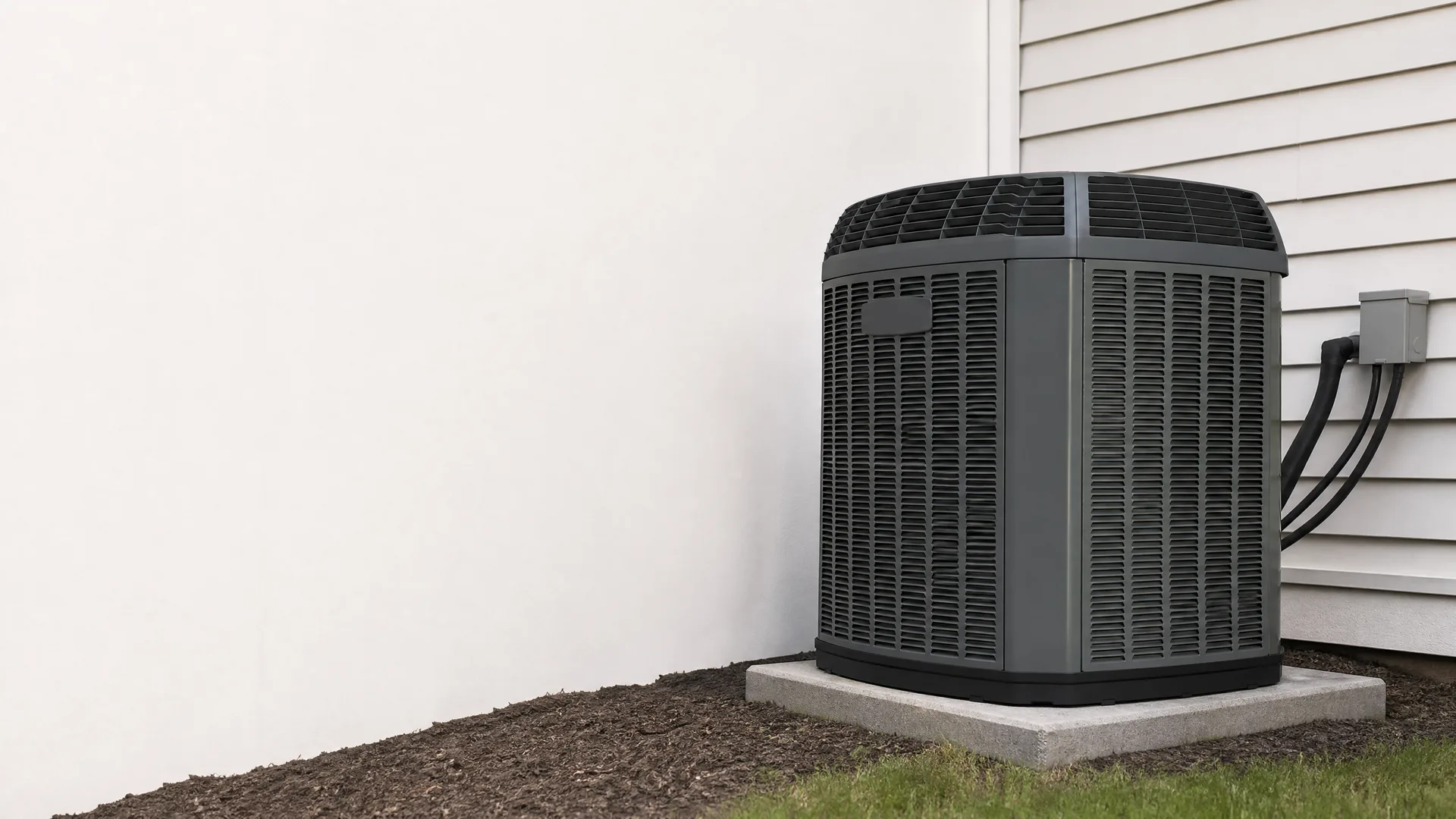
A gray outdoor air conditioning condenser unit on a concrete pad beside a house with horizontal vinyl siding, a brick foundation, downspout, electrical disconnect box, mulch bed and a green shrub.

A unit that's kept up

A clean condenser moves heat out of the house the way it's supposed to. The coils stay clear, the fan pulls air through without strain, and the compressor isn't fighting to hit the temperature on your thermostat. A new system installed at the right SEER rating runs like this from day one.

An outdoor air conditioning condenser unit with a dirty mesh coil guard sits on a concrete pad beside a house with horizontal lap siding, a wall vent, and conduit running to an electrical disconnect box.

A unit losing ground

Dirt packed into the fins blocks airflow, so the coil can't shed heat the way it needs to. The compressor runs longer to make up for it, your bill climbs, and an aging unit pushed this hard in a North Carolina summer is closer to its last season than its first.

Why does my AC run almost nonstop all summer?

If your outdoor unit is running most of the afternoon and your electric bill climbs every July and August, the SEER rating on your current system is probably the reason. An older unit at 10 or 12 SEER has to run longer to pull the same heat and moisture out of your house as a new 15 SEER2 system would. You might also notice the house never quite feels dry inside, even with the thermostat set low, or that upstairs rooms stay warmer than the rest of the house. None of that means something is broken. It means the equipment is working harder than it has to, and every hour it runs longer shows up on the bill.

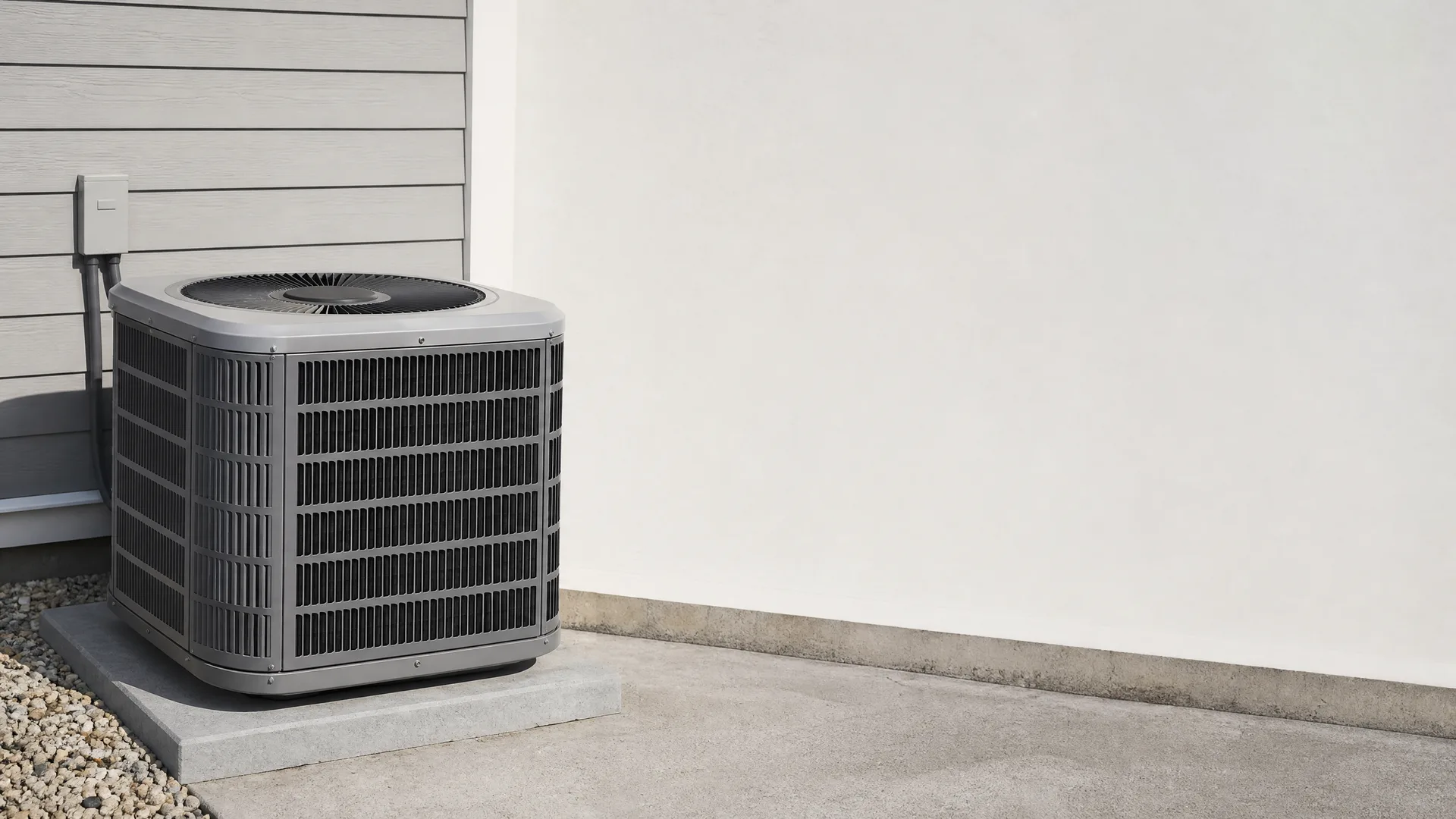
An outdoor air conditioner condenser unit on a concrete pad beside a light-colored stucco wall, with horizontal siding and a small electrical box to the left and gravel at lower left.

How SEER2 gets tested

A SEER2 number comes from lab tests that run the unit through a range of outdoor temperatures and measure how much cooling it produces for the electricity it uses. The rating reflects that full range, not just the hottest day. Since North Carolina summers push a unit hard for months at a time, the gap between a 15 SEER2 system and an 18 SEER2 system shows up on the electric bill more clearly here than it would somewhere with a shorter, milder summer.

A dark gray outdoor air conditioning condenser unit on a concrete pad beside a house with light siding and a stucco wall, with mulch and grass in the foreground.

What the compressor actually does

The compressor is the part that uses the most electricity in the whole system, and a higher SEER2 rating usually means it can run at a lower stage instead of full blast. On a 95 degree day, a two-stage or variable-speed compressor can hold the house at temperature without maxing out the way a single-stage unit has to. That matters in a state where the outdoor unit can be working from April into October.

Power costs 14.00 cents per kilowatt-hour statewide

At 14 cents per kilowatt-hour, every point of SEER you skip on shows up on your July and August bill. A low-efficiency unit running most of the afternoon at that rate adds up fast over a summer this long. Paying a bit more for a higher SEER2 unit now is what keeps those bills from climbing every year you own it.

EIA-861 2025 statewide residential average

Staying close to code minimum

A 15 SEER2 unit costs less to install and still clears the bar required in North Carolina. If you're watching the upfront number closely, or you don't plan to stay in the house long enough to recover a bigger investment, this is a reasonable place to land. It will cool the house through a long summer and cost less to buy than anything above it. The tradeoff shows up on the electric bill every July and August, since the compressor is working harder than a higher-rated unit would to hold the same temperature.

Paying more to install once

Moving up to 17 or 18 SEER2 means a larger check at install, but the compressor does less work to cool the same square footage all summer. With most homes here heating by electric resistance or a heat pump, a higher-rated AC doesn't touch your winter bill, only summer's. If you expect to be in the house for years and want the equipment settled before next season, this is the side that pays you back in July and August rather than at the register when the installer leaves.

A woman in a grey knit sweater leans back with closed eyes in an armchair beside a window, with a ceramic mug on a round wooden side table and a yellow-leaved tree outside.
A gray-haired man in a blue sweater over a checked collared shirt sits in an armchair with his eyes closed and head tilted back near a bright window, with a houseplant and lamp nearby.

Matched to your air conditioner job

You've read through the numbers and the tradeoffs. What's left is matching the SEER2 rating to your house, your roof line, your ductwork, the heat your home actually holds through a Carolina summer, and getting a quote that reflects that instead of a generic install price. That's the part that takes calls. Most homeowners end up ringing four or five contractors, describing the same house and the same system each time, then trying to line up quotes that aren't quite answering the same question. One contractor pricing a 15 SEER2 unit, another pushing 16 or 17 without explaining why, and you're stuck comparing numbers you can't fully check against each other. Handing this off means one contractor who installs AC systems in North Carolina gets your details once and follows up with you directly. You're still the one deciding what goes in, but you're not the one chasing quotes down or repeating yourself to get there.

A 15 SEER2 unit keeps your upfront cost down and still passes code, but you'll feel that compressor working hard on the stretch of July and August days that sit in the 90s.

A unit rated higher than 15 SEER2 costs more going in, but it cycles less on those same afternoons, and that shows up on the bill for every summer you're in the house.

A gray-haired woman in a dark sweater sits with a blanket on her lap near a window, looking out at autumn-colored trees, in a living room with a sofa, built-in shelves, and a potted plant on a side table.
A woman with long gray hair in a knit sweater sits on a sofa with cushions and a blanket, looking out a large window toward yellow autumn foliage.
A gray-haired woman in a cream knit sweater sits on a light sofa with a blanket, looking out a window toward yellow autumn trees, with a framed picture and potted plant in the background.
An older woman in a cream knit turtleneck sweater sits on a sofa with a blanket, looking out a window with autumn-colored trees outside, in a dimly lit living room with a lamp, framed art, and a patterned rug.
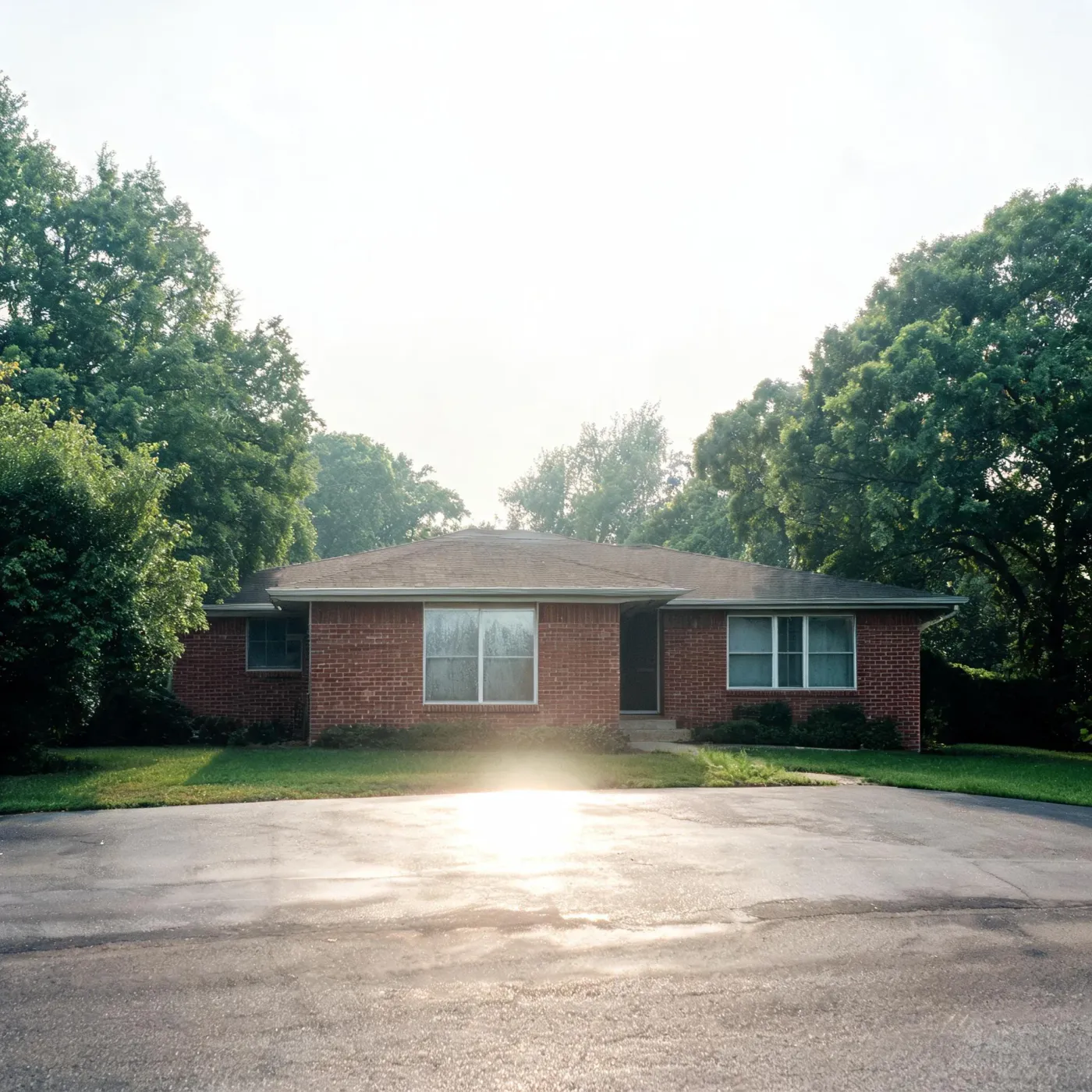
A single-story red brick ranch house with a shingled hip roof, large front window and recessed entry, surrounded by mown grass and mature deciduous trees, fronted by a wide asphalt driveway with sun glare in the foreground.

NOAA puts the summer dew point across North Carolina at an average of 67°F through June, July and August. That's the sticky, heavy air that makes your AC pull moisture as hard as it pulls heat. A low-SEER unit can cool the room and still leave the air feeling damp, because it's not running long enough in a given cycle to wring that moisture out. Higher-efficiency units tend to run longer, steadier cycles, which does more of that work. At 67°F dew point, that difference shows up as a house that feels cool but not clammy, instead of one where the thermostat says 72 and it still feels like a swamp.

NASA POWER T2MDEW county cells weighted by homes

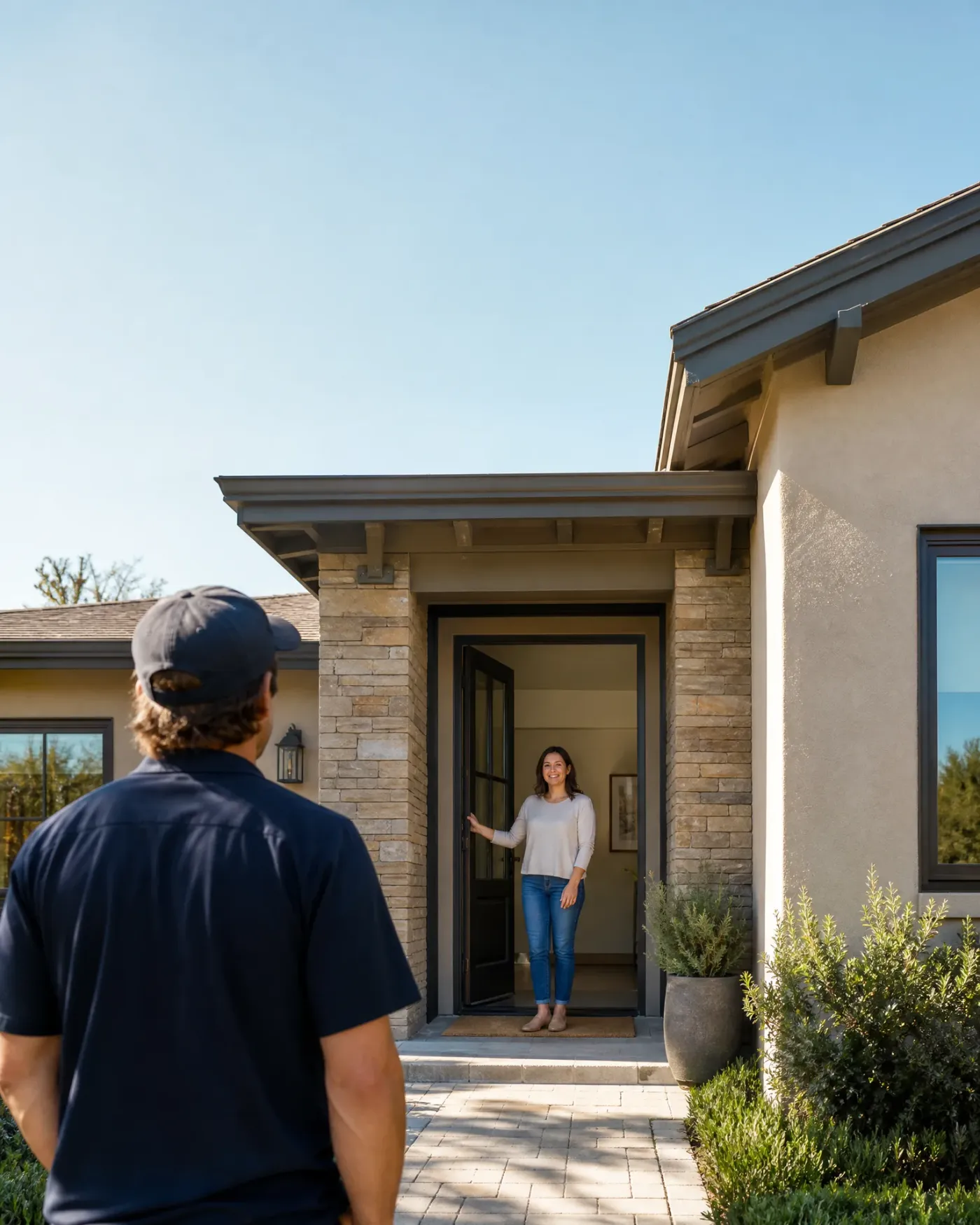
A man in a dark polo shirt and cap, seen from behind, walks up a paver path toward a woman standing in the open front doorway of a single-story stucco and stone house.

What a mismatched SEER rating costs you at home

A unit sized and rated wrong for your house shows up in ways you can feel. Rooms upstairs stay warmer than the thermostat says. The system cycles on and off more than it should, or it runs long stretches without catching up. Your electric bill in July and August tells you plainly if the unit is working harder than it needs to for the space you have.

There's also the part you can't see from inside the house: whether the SEER2 rating, the duct layout, and the size of the unit actually match what your home holds onto through a long Carolina summer. That's not something you can price out from an ad or a flyer. Getting matched with a contractor who looks at your house, your attic, your ductwork, and your roofline means the rating you land on fits your home instead of a general recommendation, and you skip the round of calling multiple companies just to get someone to look.

A living room corner with a light beige sofa holding a textured taupe cushion, a large ceramic vase of olive branches by a window, a framed neutral artwork on the wall, and a dark bowl with stacked books in the foreground.
An outdoor air conditioning condenser unit on a concrete pad beside a house with horizontal lap siding, with a gray electrical disconnect box and conduit on the wall, mulch bed and shrub to the right, and mown grass in the foreground.

Running clean

This is what a condenser should look like doing its job. The coil guards are clear, air moves through without resistance, and the compressor inside isn't straining to hit the temperature on your thermostat. A unit like this holds whatever SEER2 rating it was installed at.

An outdoor air conditioning condenser unit on a concrete pad beside a house with light blue horizontal siding, with a shrub to the left and a conduit and disconnect box on the wall to the right.

Choked with debris

Dust and yard debris have packed into these coil guards until the unit can barely pull air through them. Whatever SEER2 rating this system was rated for on install day, it isn't getting it now. A new install is only as good as what happens to it afterward.

A 15 SEER2 unit clears code and costs less to put in. Something higher cycles less through the stretch of 90-degree days North Carolina gets every summer and costs more up front. Which one makes sense comes down to your house, your ductwork, and how long you plan to stay in it, not a number in an ad. Getting there usually means calling a few installers, explaining your house and your situation to each one, and then sitting down to compare quotes that are never quite built the same way. That part is the slow part, more than the decision itself. Matching with a contractor who already works on homes like yours in North Carolina skips that. You describe your house once, and the quote that comes back is built around what your home actually needs, not a generic number pulled from an ad.

A dark standing-seam metal roof and stone gable end with a capped chimney in the foreground, with trees draped in hanging moss and misty mountain ridges under a cloudy sky behind.

An air conditioner pro near you

Find an air conditioner pro

It costs nothing to send, and you don't have to hire anyone.

Getting quotes on your own means calling a handful of installers, explaining your square footage and ductwork each time, then trying to compare bids that aren't even rated the same way. One request here gets you matched with a contractor who already knows what SEER2 means for a North Carolina summer.