What size heat pump a North Carolina home needs

Get in touch with a local installer about a new heat pump.

New system or replacementHeat PumpNorth Carolina
Step 1 of 2

What ZIP code is the job in?

What size heat pump do I need for my house in North Carolina?

You want a straight answer before a contractor ever sets foot in your house. Heat pump sizing isn't one-size-fits-all, and a wrong guess shows up fast on summer afternoons or on your power bill. You're not looking for a rule of thumb from a box store. You want to know what actually applies to a house like yours.

It depends on a load calculation, not your square footage alone

A contractor sizes a heat pump by running a Manual J load calculation, which looks at your home's square footage, insulation, window count and orientation, and ceiling height. Two houses the same size can need different tonnage because of those details. Getting this right matters more in North Carolina than in milder climates, since most homes here rely on the heat pump for both summer cooling and winter heat. A unit that's too small will run constantly on humid summer days and struggle on cold mornings. One that's too big will cycle on and off without pulling the moisture out of the air, which matters here given how sticky summers get. The only way to know your number is to have someone measure your house, not guess from its size.

An outdoor air conditioning condenser unit on a concrete pad beside a dark horizontal-siding wall and a brick wall, with flowering shrubs and grass nearby.

You go out to check the unit after seeing a spot of rust on the concrete pad. It's a mild spring afternoon, the kind before the real heat sets in, and the outdoor unit looks tired. The base is rusted along the bottom edge, the paint gone chalky on top. You crouch down and press a thumb against the metal near the rust line and it gives a little. Nothing is leaking, nothing is loud, the thing still runs. But you know what's coming in a few months, the kind of stretch where this unit won't get a break from early morning to past dinner. You stand back up, brush off your hands, and head inside thinking you should get someone to look at it before it has to prove itself again.


Undersized vs. Oversized

Undersized

  • It keeps up on a mild day but falls behind once the afternoon sun hits the house in July or August.
  • The outdoor unit runs almost nonstop in the heat, and you'll still find the house a few degrees warmer than the thermostat setting.
  • In January it leans harder on the backup electric heat strips to make up the difference, which costs more to run.
  • Rooms farthest from the air handler are the first to feel too warm in summer and too cool in winter.
  • It still cools and heats the house, just not fast enough on the hardest days of the year.

Oversized

  • It cools the house fast, then shuts off before it's pulled the humidity out of the air, so the house feels clammy even at the right temperature.
  • Short cycling like this means the system starts and stops more often, which puts more wear on the compressor over time.
  • It won't run long enough in one stretch to dry the air the way a sticky North Carolina summer calls for.
  • Rooms near the air handler can feel cold and overcooled while rooms farther away are still catching up.
  • A bigger unit costs more to install than the house actually needs.
A gray-haired, bearded man in a dark coat dusted with snow stands smiling in a dimly lit room with a lamp, mirror, framed art, and a sofa in the background.
An older man with white hair and a beard, wearing a dark snow-dusted coat and scarf, stands in a warmly lit interior hallway with a framed landscape picture, a table lamp and a potted plant behind him, and a snowy view through a window at left.
An older man in a dark snow-flecked overcoat and scarf stands smiling in a warmly lit home entryway, with a glass-paned door showing darkness outside and a lamp-lit room visible through a doorway behind him.
An older man with gray hair and a beard, wearing a dark snow-dusted jacket and scarf, stands smiling in a warmly lit interior hallway with a lit table lamp, a vase of dried branches, and a framed picture in the background.
A gray outdoor condenser unit on a concrete pad beside a light-green sided house, surrounded by mulch, ornamental grasses and a shrub, with mowed lawn in the foreground.
The unit here sits clear and clean, with room around it for air to move through the coil.
An outdoor condenser unit on a concrete pad beside a horizontal-sided house, with insulated refrigerant lines running to a wall-mounted box, surrounded by bare dirt.
A correctly sized heat pump cycles on and off through the day instead of running flat out.

Is your heat pump actually keeping up with your house?

Walk through your house on a July afternoon. Some rooms feel fine, others feel warm, and the thermostat says it's satisfied. That gap is often a sizing problem, not a broken unit. You might also notice the outdoor unit running almost the whole time the sun is out, short-cycling on and off in mild weather, or the house taking a long time to cool back down after you've had the door open. In winter, a heat pump that's too small leans harder on backup electric heat, and since most homes here heat with electricity, that shows up on your bill before it shows up anywhere else. Left alone, a system working against its size wears out faster than it should.

A gray outdoor heat pump unit on a concrete pad beside a house with horizontal lap siding, connected by conduit and a flexible line to a wall-mounted disconnect box, with low shrubs and mulch nearby.

Right-sized and running clean

This unit sits level on its pad with clear space around the coil. It cycles on and off through the day instead of grinding away nonstop, and the lines and disconnect box show no strain from carrying more than the system was built for.

An outdoor air conditioner condenser unit on a concrete pad beside a house with horizontal siding above a concrete block foundation, with insulated refrigerant lines and a vertical white pipe on the wall.

Worn down and overworked

Rust creeps along the base and the paint has gone chalky. A heat pump pushed past its size ages like this faster, running long hours against a load it can't quite match, and the wear shows up on the cabinet before it shows up on the bill.

A woman wrapped in a cream textured blanket sits in an armchair beside a lit lamp and a dark window, with an open book in the foreground.
An older woman with gray hair in a bun and glasses, wearing a beige knit sweater, smiles while looking to the side in a warmly lit kitchen, with a loaf of bread on the counter in the foreground and a snowy scene outside the window.
  1. A contractor measures every room and window for heat gain.

  2. That load calculation sets the tonnage your house actually needs.

  3. The outdoor unit and indoor coil get matched to that number.

  4. Ductwork gets checked to see if it can carry that airflow.

An outdoor air conditioning condenser unit with dusty coils sits on a concrete pad against light horizontal siding, with an electrical disconnect box and refrigerant lines on the wall and a shrub and mulch at left.
Before you get your heat pump installation
A gray outdoor heat pump unit on a concrete pad beside a house with horizontal lap siding, with a conduit running to a wall-mounted disconnect box and a green shrub to the left.
After you get your heat pump installation
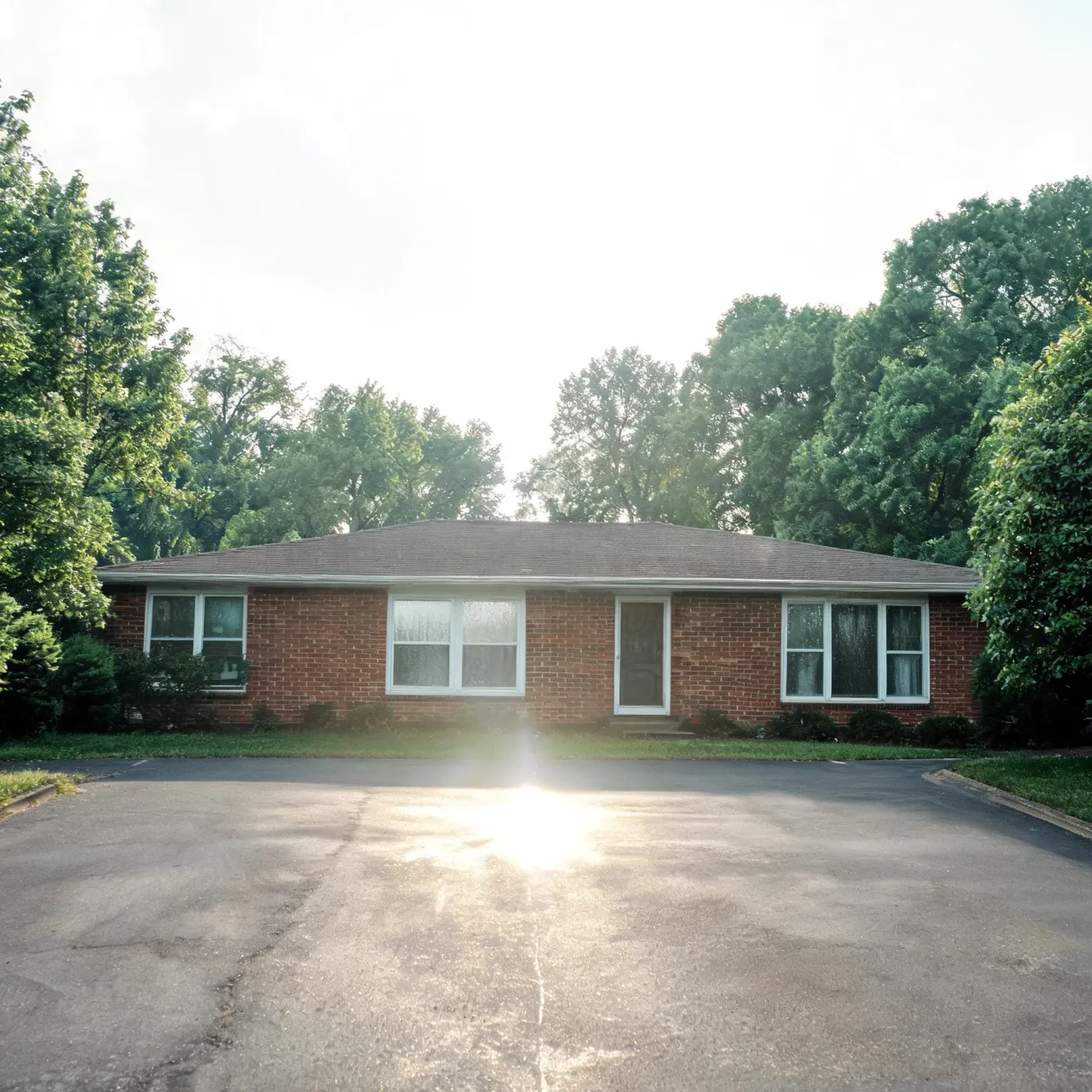
A single-story red brick ranch house with a low shingled roof, white-framed windows and a central door, fronted by a large asphalt parking area with sun glare, surrounded by leafy green trees.

A National Weather Service summer average puts the dew point at 67°F across North Carolina, and that's the number that wears on a heat pump more than the temperature on the thermostat. Above a dew point of 65 or so, air feels heavy no matter what the high is that day, and your system has to pull that moisture out before the house feels dry and comfortable. A unit sized right for your square footage handles that. One sized off the mark either runs long stretches pulling moisture and still leaves rooms feeling damp, or cools fast and shuts off before the air's been wrung out. Getting the tonnage matched to your house, not just a guess off a chart, is what a load calculation is for.

NASA POWER T2MDEW county cells weighted by homes

Matched to your heat pump job

Skip the round of in-home estimates for a new heat pump.

You're not committing to anything by asking.

A gray outdoor air conditioner condenser unit on a concrete pad beside a house with horizontal siding and an electrical disconnect box, surrounded by grass.

What a load calculation checks

A contractor doing this right measures square footage, but that's only the start. Window count and orientation matter. A wall of west-facing glass picks up heat all afternoon that a shaded north wall never sees. Insulation and ceiling height change how fast a room gains or loses heat. Two houses the same size can need different tonnage because of how they're built, which is why a contractor walks the whole house instead of asking for the address.

A white outdoor heat pump unit on a concrete pad beside a house with horizontal lap siding, with a plain light wall and grass lawn to the left.

Why tonnage runs in half steps

Heat pumps come in half-ton increments, from 1.5 tons up through 5. There's no in-between size, so a house that calculates out just over 2 tons gets bumped to 2.5. That's normal and it's not padding. The goal is matching the equipment to the number the load calculation produced, not rounding up for a margin of safety, since too much capacity causes its own problems with short cycling and uneven comfort.

A man in a dark blue shirt stands in an open front doorway of a stucco and wood-clad house, facing a blond woman seen from behind in the foreground on a stone walkway.

What a wrong-sized heat pump does to your house, day to day

If your heat pump is undersized, you'll feel it in the rooms farthest from the unit first. A bedroom at the end of the hall stays a few degrees warmer all August, no matter where you set the thermostat. If it's oversized, the opposite problem shows up: the house cools fast but feels clammy, because the system shuts off before it pulls the moisture out of the air. Either way, your electric bill carries the cost, since most homes here heat with electricity and a mismatched system runs longer or cycles harder than it should to do the same job.

Figuring out which one you've got, and what size would actually fix it, means someone has to measure your house, not guess from its square footage. That's the part most homeowners put off, because it means tracking down a contractor, explaining the rooms that run warm, and waiting on a quote that may or may not reflect what your house needs. Getting matched with a contractor who handles sizing and installation in North Carolina skips the sorting and the repeat explaining. You describe the problem once, and the right person follows up.

A living room corner with a beige sofa and cushion, a round wooden coffee table holding a pale ceramic vase of eucalyptus stems and a wooden bowl, and a curtained window with a potted plant above a latticed radiator cover in the background.

Power costs 14.00 cents per kilowatt-hour statewide

At 14 cents a kilowatt-hour, an oversized heat pump costs you more than an undersized one ever would, since it short cycles and burns power without finishing a dehumidifying run. Getting the tonnage right is what keeps that rate from turning into a bigger bill than it has to be.

EIA-861 2025 statewide residential average

The Size That Fits Your House

  • The right size comes from a load calculation, not the square footage of your house alone.
  • An undersized unit runs nonstop on hot afternoons and still leaves the house a few degrees warm.
  • An oversized unit cycles off too soon and leaves the air in your house feeling damp.
  • A correctly sized heat pump cycles on and off through the day instead of running flat out or short cycling.
  • Getting the tonnage right from the start protects both comfort in your house and your power bill.
  • A contractor matched to your house can confirm the number instead of you guessing from a chart.

There's no chart or rule of thumb that replaces a load calculation done for your specific house. Square footage alone misses too much: how many windows you have, which way they face, what the attic insulation looks like, how much shade the house gets in July. Two homes the same size on the same street can need different tonnage once a contractor accounts for all of that. Guess low and you'll feel it on the hottest afternoons, with the unit running nonstop and the house never quite catching up to the thermostat. Guess high and the unit shuts off before it pulls the moisture out of the air, so the house feels damp even when it's cool. The right size sits in between, cycling on and off through the day rather than straining at either extreme. That balance protects the two things you actually care about: a house that stays comfortable through a North Carolina summer, and a power bill that doesn't creep up from a system working harder than it needs to. Getting there means someone measuring your house, not you working from a chart or trusting whatever size the last unit happened to be. Finding that contractor is the part you don't have to do alone, the calls, the comparing quotes, the explaining your situation over and over to different companies. A contractor matched to your house can give you the number instead of leaving you to estimate it yourself.

A wooden front door with six small glass panes and a narrow sidelight, set in a shingled house entry with white trim, reached by stone steps flanked by a planted urn with purple flowers and leafy branches in the foreground.
Exterior corner of a house with beige horizontal lap siding and a black-framed window, with white hydrangeas, ornamental grasses and low plantings along a flagstone patio.
Corner of a house with tan lap siding and a window, a brick step edge, flowering white hydrangeas and green shrubs beside a flagstone walkway leading to a white picket fence and a tree in backlit sunlight.
House exterior with cream horizontal lap siding, a dark-framed window, a black wall lantern beside a wood door, potted shrubs on stone steps, and white and pink hydrangeas in the foreground garden.
Corner of a cream lap-sided house with a white-framed window and dark shingled roof, beside a white-flowering hydrangea shrub, a clipped hedge, mulched bed and lawn.

A heat pump pro near you

Describe the project once instead of to every installer.

Skip the calls

It costs nothing to send, and you don't have to hire anyone.