
Is a heat pump enough for winter in Burlington, NC

Get matched

A heat pump in Burlington has to work through real cold, not just a chilly week here and there. Whether yours keeps up depends on its size, its age, and whether it still matches what your house needs now. That's not something you can tell from the thermostat alone. Most homes in Alamance County run on electric heat, so a heat pump that's struggling doesn't just mean cold rooms, it shows up on the power bill too. Figuring out if yours is sized right, or if it needs a backup source for the hardest nights, takes someone who can look at the actual unit and the actual house. Finding that person usually means searching around, calling a few companies, and repeating the same questions until someone gives you a straight answer. This connects you instead with a contractor who installs heat pumps in this area and knows what the winters here ask of them. They'll reach out to you directly about your situation.

Can a heat pump handle winter in Burlington, NC?

Winters in Alamance County get cold enough that a heat pump is working hard, not just coasting, and most homes here run on electric heat. You want to know if the heat pump is actually built for this or if you're going to be reaching for a space heater by January. The answer depends on more than just the brand on the unit outside.

Yes, if it's sized right and still has backup heat that kicks in

A heat pump moves heat from outside air into your house, and that gets harder as the temperature drops. Below freezing, most heat pumps lose some of their capacity, which is why they're built with a backup heat strip that switches on when the outdoor unit can't keep up alone. In Burlington, winters bring enough nights near or below freezing that this backup isn't a rare event. It runs. A heat pump sized correctly for your house, with that backup working, will keep you warm through the coldest stretch. One that's undersized, old, or missing a working backup will leave you cold or running up the electric bill trying to compensate.

A gray outdoor heat pump unit on a concrete pad beside a house with horizontal lap siding, connected by conduit and a flexible line to a wall-mounted disconnect box, with low shrubs and mulch nearby.

Running the way it should

A heat pump that's keeping up looks just like this: steady on its pad, fan turning, lines running clean to the disconnect. On a cold morning it should be blowing warm air, not lukewarm, and it shouldn't be icing over or struggling to keep the house at the set temperature.


An outdoor air conditioner condenser unit on a concrete pad beside a house with horizontal lap siding, with a shrub to the left, bare dirt in front, and conduit and a metal disconnect box on the wall.

Signs it's falling behind

If yours is working harder than this and still losing ground, something's off. A unit that runs constantly without catching up, frosts over and stays that way, or leans hard on backup heat is telling you it can't carry the house through a Burlington winter on its own anymore.

How cold does it actually get, and how long does your heat pump have to run?

  • Winter nights average 31°F

    Overnight lows this cold mean your heat pump is making real heat, not just taking the edge off, on most winter nights.

  • Heat runs October through April

    Seven months of heat means the system logs more hours here than in places with a short winter. Wear shows up accordingly.

  • Cooling runs May through September

    Five months of cooling against seven of heat tells you which side of the unit works harder over a year, and which to watch first.

NOAA nClimDiv 1991-2020

When a heat pump in your house is sized right and running well, you won't think about it much. Set the thermostat and the air coming out stays warm. When it's not, you'll know it in the parts of the house farthest from the unit, the rooms that stay a few degrees cooler no matter what the thermostat says. You'll hear it run longer than it used to, cycling on again not long after it shuts off. Your electric bill in January will climb past what it was the winter before, even with the same habits. If the outdoor unit is icing up and not clearing on its own, or if you're reaching for a space heater some mornings, that's the system telling you it's not keeping pace with what your house needs from it. None of that means it's broken. It can run every day and still be the wrong size or too old to handle what a cold snap here asks of it.

An older man with gray hair and a beard, wearing a dark coat dusted with snow, stands in a home entryway with a lit lamp, a staircase railing, and a living room with large windows behind him.
An older man with gray hair and a beard, wearing a dark snow-dusted coat and plaid scarf, stands smiling in a warmly lit hallway with a lamp, side table and glass-paned doors behind him.
An older man with gray hair and a beard, wearing a dark snow-dusted jacket and scarf, stands smiling in a dimly lit entry hall with a lamp, wooden front door and staircase behind him.
An older man with gray hair and a beard stands in a dimly lit entryway wearing a dark hooded coat dusted with snow, with a lit table lamp, framed picture, and front door with glass panels behind him.

The right pro for this job

Describe the project once instead of to every installer.

Asking costs nothing, and the choice to hire stays yours.

What a heat pump does below freezing

A heat pump pulls heat out of outdoor air even when that air is cold. Below freezing it has less heat to work with, so it runs longer to put out the same warmth, and in Alamance County that means long stretches where it's drawing on whatever reserve capacity it has. Frost will build up on the outdoor coil on these nights. The unit should clear that on its own with a defrost cycle, cutting to cooling mode briefly to melt the ice before going back to heating. If it can't keep the coil clear or keep up with the heat you're losing, that's the system telling you it's undersized or aging out.

Where backup heat comes in

Most heat pumps serving electric homes here pair with strip heat or a furnace that kicks in when outdoor temperatures drop far enough that the heat pump alone can't keep the house at temperature. That backup is supposed to be a backstop for the coldest nights, not a daily crutch. If you notice the auxiliary heat light on more often than a handful of nights a winter, or your electric bill climbs hard in January, the heat pump itself is falling short of the load and backup is covering for it more than it should.

An outdoor air conditioning condenser unit on a concrete pad beside a house with horizontal siding above a brick foundation, with a flexible conduit running to a wall-mounted disconnect box.
Before you get your heat pump installation
A gray outdoor heat pump unit on a concrete pad beside a house with horizontal lap siding, with a conduit running to a wall-mounted disconnect box and a green shrub to the left.
After you get your heat pump installation

When the original unit still fits

A heat pump sized for your house when it was installed can still be the right size now, especially if you haven't added square footage or swapped out windows and insulation since then. If it was matched correctly to begin with, cold mornings in Alamance County shouldn't be a problem. You'll get a slow, steady run through the night and warm air at the vents by morning. The system might run longer in January than it did in October, but that's the heat pump doing what it's built to do, not a sign something's wrong. In this case, the honest answer is that what you have is enough, and the better move is keeping it maintained rather than replacing it.

When the house has outgrown it

A heat pump that was right for the house at install can fall short later. An addition, a finished basement, or just a system that was undersized from the start all show up the same way: rooms that won't hold temperature, a unit that runs constantly without catching up, or a thermostat set high just to feel warm. Seven months of heat in this area means an undersized system is working against itself the whole winter, not just on the coldest nights. If that's what you're seeing, the fix isn't a thermostat adjustment or a quick repair. It's a system sized for what the house actually needs now, which means ruling out undersizing before assuming the unit itself is failing.

Power here costs 14.20 cents per kilowatt-hour

At 14.20 cents per kilowatt-hour, every hour your heat pump runs on backup electric heat instead of the outdoor coil shows up on the bill. That gap is why a unit sized wrong for your house costs more to run here than one that's matched to it.

EIA-861 2025

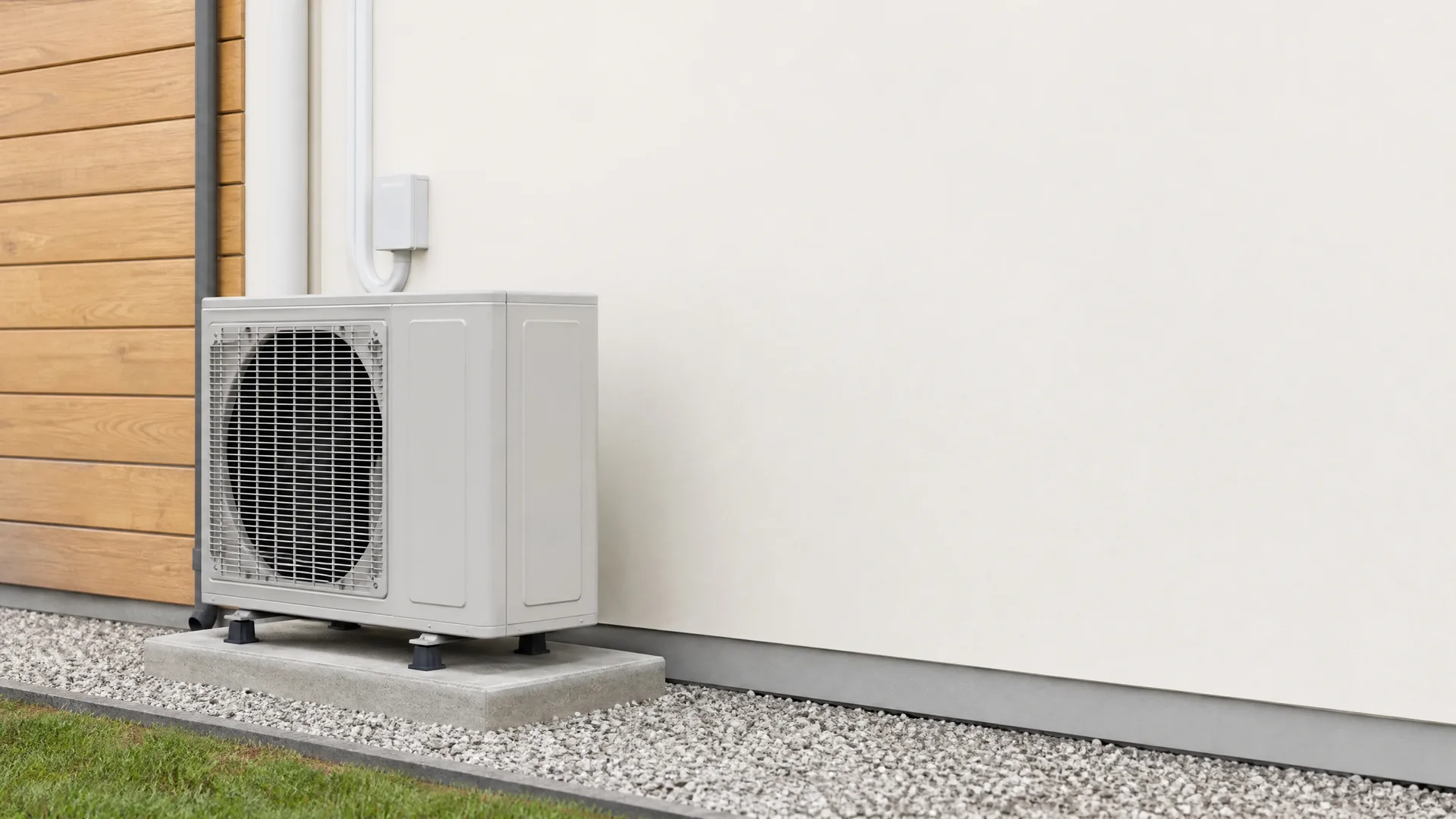
An outdoor heat pump unit on a concrete pad set in gravel beside a cream rendered wall with a wood-clad section at left and grass in the lower left corner.

When backup heat kicks in too much

Every heat pump has backup electric heat strips for the coldest nights, but they're meant to be a supplement, not the main source. If yours leans on them most of the winter, you're paying to heat with straight electric resistance, which costs more per hour than the outdoor coil doing the work on its own. A unit that's undersized or losing capacity will lean on those strips more than it should.

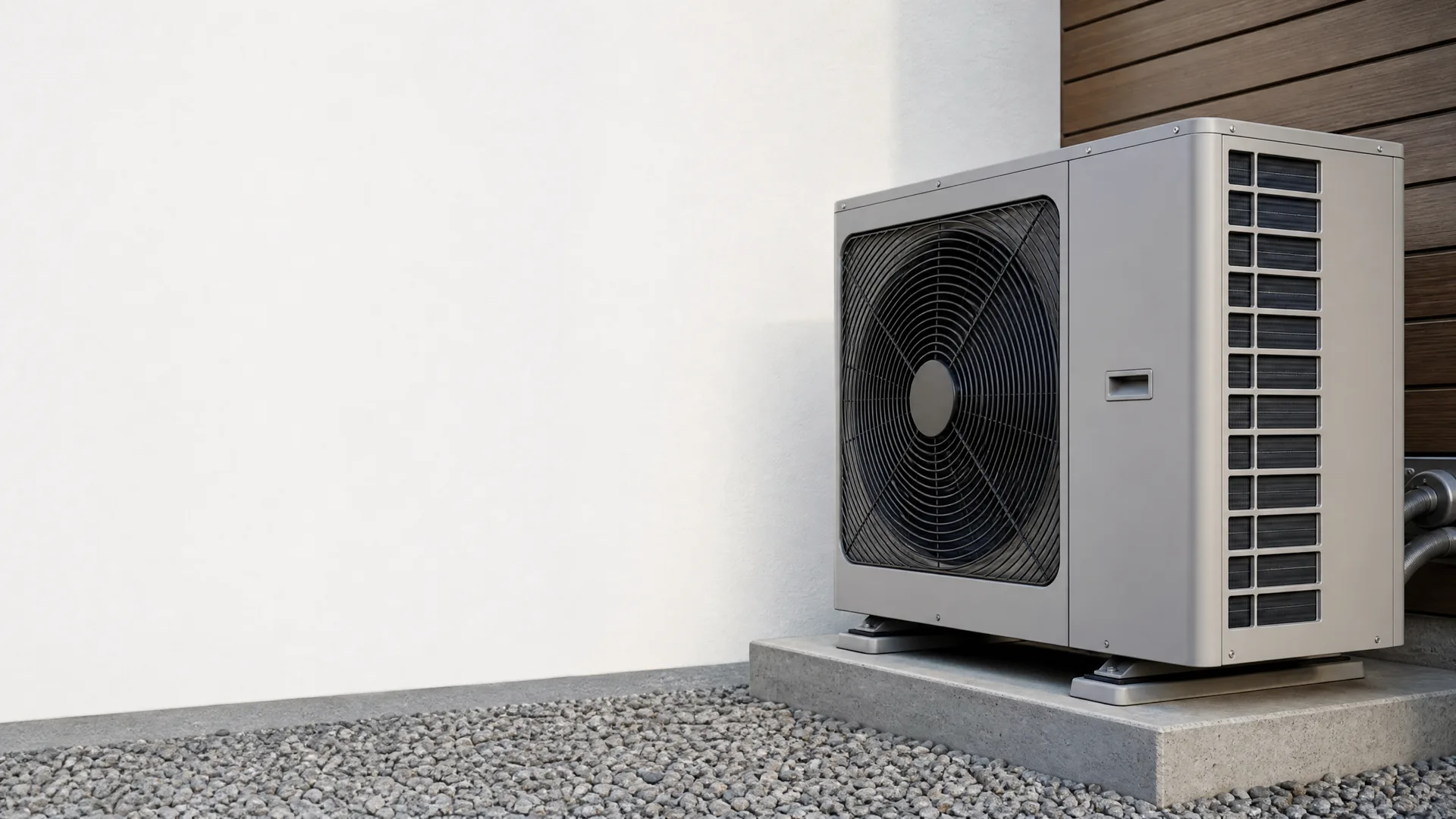
A gray outdoor air-source heat pump unit with a large circular fan grille, mounted on a concrete pad beside a white wall and wood-clad facade, with gravel in the foreground.

When the heat pump carries the load

A heat pump matched to your house handles most of a Burlington winter on its own, calling on backup strips only during the hardest cold snaps. You'll notice the difference on the power bill and in how the house feels, warm air at a steady pace instead of long runs that never quite catch up. That's the setup worth confirming before the next cold stretch arrives.

A woman stands in the open front doorway of a single-story house with stone and wood siding while a man in a dark polo shirt and cap walks toward it along a concrete path.

Where that leaves you

A heat pump can handle winter in Burlington. Whether yours does comes down to size, age, and how much it's leaning on backup heat on the cold mornings. You've got what you need now to look at your own system and see which side of that line it falls on.

If something you noticed doesn't sit right, a local contractor can look at the unit itself and tell you where it stands. That saves you from calling around, explaining the same thing to three different companies, and sorting through quotes to figure out who's worth trusting with it.

A gray upholstered sofa with a matching cushion sits beside a potted plant and a wooden table holding a small green plant in a stone pot, near a curtained window.
At dusk, a white clapboard house with black shutters and a dark front door is lit from within, with a wet stone walkway leading to the steps past low path lights, hydrangeas, and a clipped hedge beside a lawn.

Heat Pump Installation

Matched to your heat pump job

New system or replacementHeat PumpAlamance County, NC
Step 1 of 2

What ZIP code is the job in?

  • A corner of a room with an upholstered wood-framed armchair holding a floral pillow, a round side table with a ceramic lamp, books and a vase of greenery, a framed landscape painting on the wall, a patterned rug, and a sunlit multi-pane window.
    • Your request goes to an Alamance County pro who takes heat pump jobs.
    • Get in touch with a local installer about a new heat pump.
  • Interior corner with a wood-framed window showing green foliage outside, a framed landscape print on a beige wall, and a rounded stone vase of leafy branches on a wooden cabinet.
    • One request ends the search for a heat pump installer.
    • Send the form and the search for an installer is over.
  • A pale ceramic vase holding olive branches sits on a dark wooden countertop beside a carved wooden dough bowl, next to a wood-framed window and a light painted plank wall.
    • Skip the round of in-home estimates for a new heat pump.
    • Fill out one short form instead of calling around.
  • A dark wood round side table holding a brass lamp with a cream shade, a blue-and-white patterned bowl, and a white textured pot of greenery, beside an upholstered chair with a gray patterned cushion and a white-framed window showing green trees and flowering shrubs.
    • A licensed installer who works in Alamance County gets your project.
    • One installer gets your project, so there's no bidding war over it.