How to keep your AC running in a North Carolina heat wave

Tune-up, service, or cleaningCentral ACNorth Carolina
Step 1 of 2

What ZIP code is the job in?

How do I keep my AC running during a NC heat wave?

A heat wave in North Carolina pushes an AC system harder than almost anything else it does all year, and a unit that was running fine in June can start struggling once July and August turn muggy and the temperature sits high for days in a row. You want to know what actually keeps the system going when it matters most, not just what to do if it already failed.

Keep the airflow clear and the system serviced before the heat sets in

Your AC keeps up with a heat wave by moving air freely and running on parts that are clean and properly charged. A dirty filter or a coil caked with dust makes the system work harder to pull the same heat out of your house, and in a stretch of 90-plus degree days that extra strain is what causes a breakdown. The outdoor unit needs clear space around it too, since anything blocking it traps the heat it is trying to get rid of. Maintenance done before summer catches a low refrigerant charge or a weak capacitor while they are small problems, so the system is not meeting the hottest week of the year already behind.

An outdoor air conditioner condenser unit beside a house with horizontal siding and stucco, its coil fins covered in white cottonwood fluff that also collects on the surrounding grass and mulch.

You're out in the side yard in May, coiling the hose, and you notice the condenser fins look gray-white, almost furry. Cottonwood seed has been drifting across the yard for days, catching in the screen door, piling along the fence line, and most of it ended up here. You run a hand over the unit and the fluff comes away in clumps, packed into the fins like lint in a dryer trap. The system is still running, you can hear it, but the air coming off the top feels weaker than it did last week. You make a note to call someone before the first real heat wave hits, because the unit will need to breathe through this a lot harder in July.
Skip Maintenance or Schedule It

Skip maintenance

  • A dirty condenser coil can't shed heat as well, so the system runs longer to hit the same temperature on a 95 degree day.
  • A refrigerant leak that goes unnoticed through spring will show itself as weak cooling right when the heat wave hits hardest.
  • A clogged filter restricts airflow across the indoor coil, and that coil can ice over during the exact week you need the system most.
  • A capacitor that's been weakening all year is more likely to fail under the extra load a heat wave puts on the compressor.
  • Without a technician checking the charge and the electrical connections, small problems stay invisible until the system shuts itself down.

Schedule maintenance

  • A technician cleans the condenser coil so it can reject heat the way it's supposed to, even when it's 95 outside.
  • Checking refrigerant charge before the worst heat catches a slow leak while the system is still cooling, not after it quits.
  • A fresh filter and a clean indoor coil keep air moving through the system during the hours it runs longest.
  • Testing the capacitor and contactor catches the parts most likely to fail under the strain of a long stretch of heat.
  • Having someone look at the whole system ahead of a heat wave means fewer surprises during the week you can least afford one.
A smiling man with dark curly hair in a dark green henley shirt sits on a light sofa in a living room with large windows, a lamp, shelving, a stone fireplace, and a bowl of popcorn in the foreground.
A smiling man in a dark long-sleeved henley shirt sits on a beige sofa in a living room, with a bowl of popcorn and a remote on the table in the foreground and shelves, a lamp, and a doorway behind him.
A smiling man with graying hair and stubble in a blue henley shirt sits on a gray sofa with cushions in a living room, with a bowl of popcorn on a wooden table in the foreground.
A smiling man in a dark green long-sleeve shirt reclines on a sofa in a dimly lit living room, with a bowl of popcorn on a side table in the foreground and a bookshelf, lamp, and houseplant behind him.
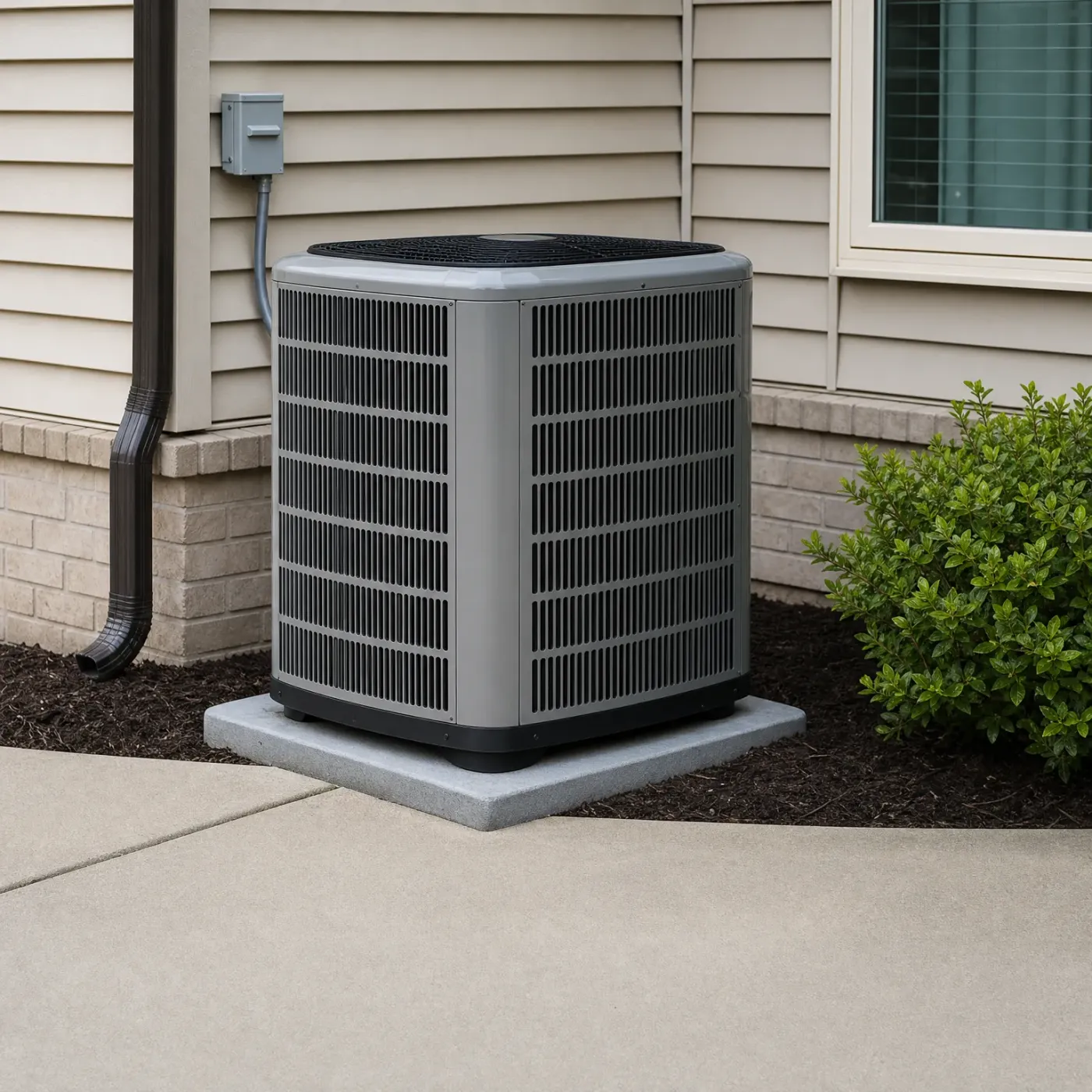
A gray outdoor air conditioning condenser unit on a concrete pad beside a house with horizontal vinyl siding, a brick foundation, downspout, electrical disconnect box, mulch bed and a green shrub.
A clean condenser like this one has clear fins and open airflow, so it can shed heat on a 95 degree day without straining.
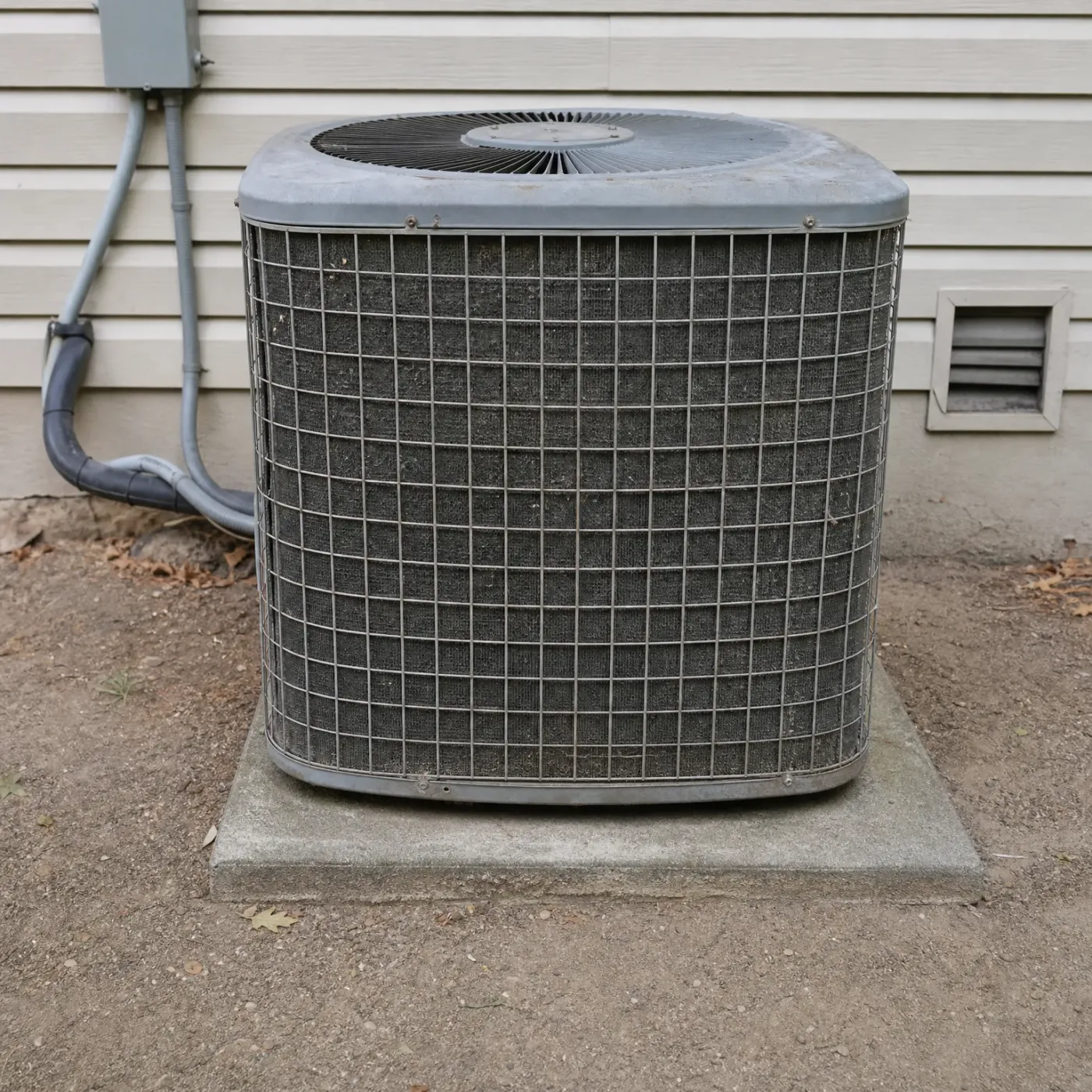
An outdoor air conditioning condenser unit with a dirty mesh coil guard sits on a concrete pad beside a house with horizontal lap siding, a wall vent, and conduit running to an electrical disconnect box.
A coil caked with dirt and yard debris traps heat in the unit, and on the hottest afternoon it may not keep up at all.

Is your AC keeping up with this heat, or just barely holding on?

Walk past the thermostat a few times today and check what it says against what you set it to. A system that's struggling runs long stretches without shutting off, and the air coming out of the vents feels cool but not cold the way it should on a 95 degree day. You might notice the house holds onto heat upstairs, or the return air grille feels warm to the touch. Outside, the condenser may be running nearly nonstop, and the unit itself can feel hot even from a few feet away. None of that breaks the system today, but a unit working that hard through a heat wave is the one most likely to quit when you need it the most, often on the afternoon you can least afford it.

An outdoor air conditioning condenser unit on a concrete pad beside a house with horizontal lap siding, with a gray electrical disconnect box and conduit on the wall, mulch bed and shrub to the right, and mown grass in the foreground.

Running clean

This is what a condenser should look like going into a heat wave: fins clear, the disconnect box accessible, nothing blocking the sides. Air moves through it the way it was built to. On a 95 degree afternoon it can shed heat and keep up without running every minute of the hour.

An outdoor air conditioning condenser unit on a concrete pad beside a house with light blue horizontal siding, with a shrub to the left and a conduit and disconnect box on the wall to the right.

Choked with debris

This coil has months of dust and yard debris packed into the guards. Air can't pass through it the way it needs to. The unit will run longer to move less heat, and on the worst afternoon of the summer it may not keep the house at the set temperature at all.

A woman in a dark knit turtleneck sweater reclines on a couch under a cream knit blanket, looking down at an open book, with a lit table lamp and framed pictures behind her.
A smiling middle-aged man in a dark green sweater sits at a candlelit table with wine glasses and a plate of greens in a dimly lit interior.

Stop chasing an air conditioner pro

Fill out one form instead of calling around for an air conditioner tune-up.

There's no charge for the request.

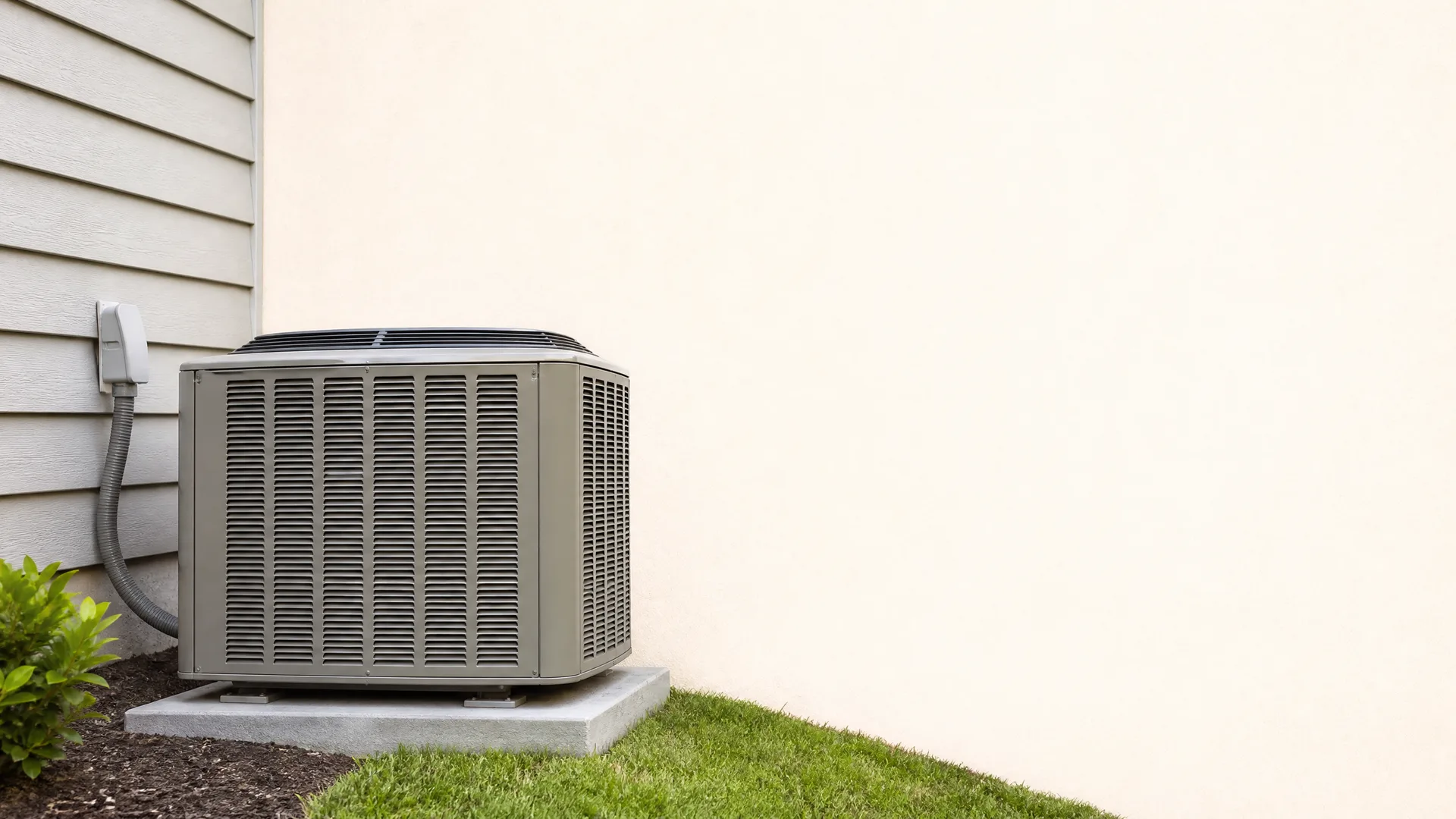
An outdoor air conditioning condenser unit on a concrete pad at the corner of a house, next to vinyl siding and a plain light-colored wall, with grass and a mulch bed in the foreground.

What the condenser fan does

The fan on top of the outdoor unit pulls air across the condenser coil and pushes the heat it collected out into the yard. It runs every time the compressor runs, which on a 95 degree day in North Carolina can be most of the afternoon. If the fan motor is weak or the blade is caked with grime, less heat leaves the coil, the refrigerant stays hotter than it should, and the system works longer to cool the same rooms.

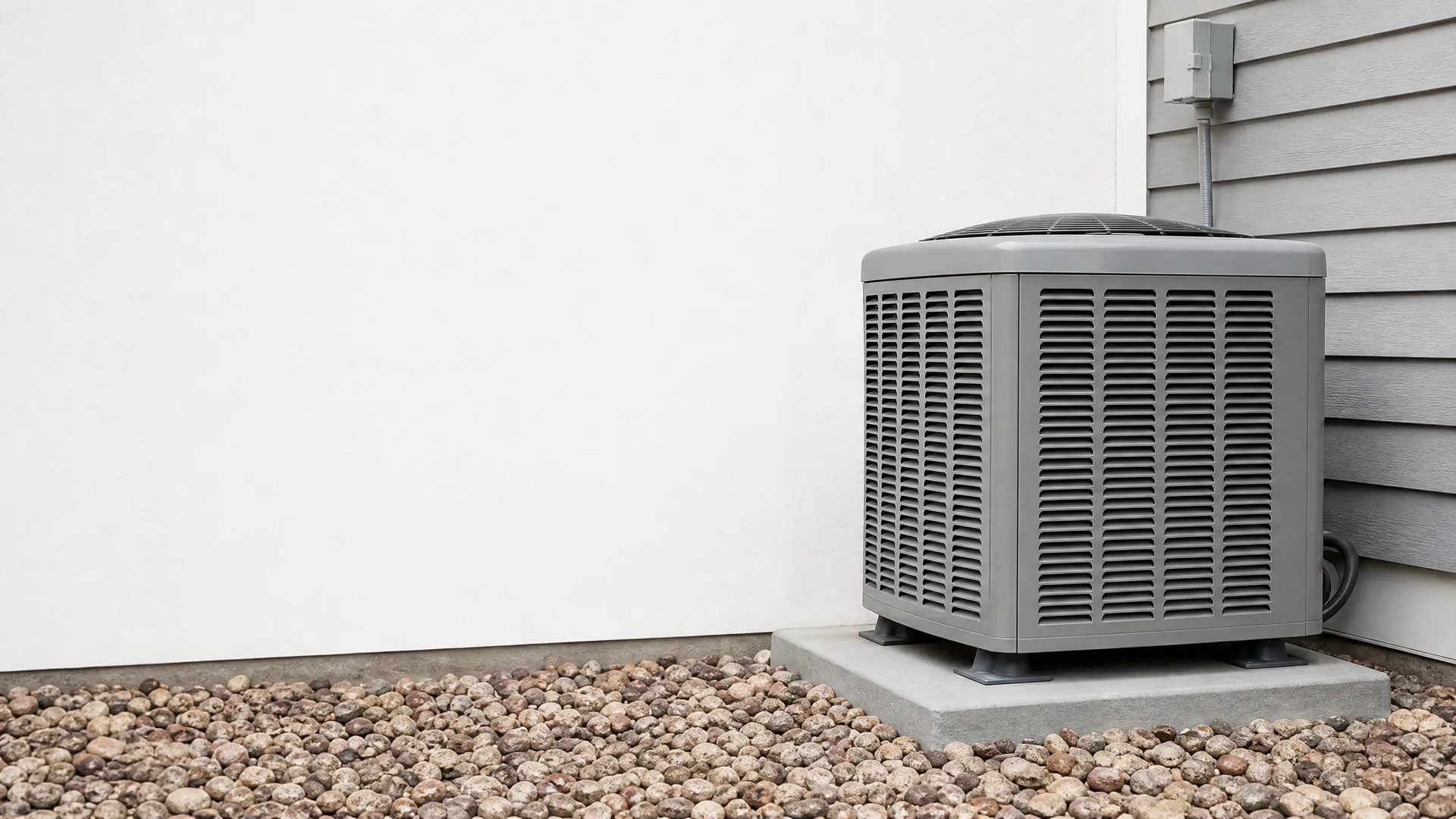
A gray outdoor air conditioning condenser unit sits on a concrete pad beside a white stucco wall and gray horizontal siding, surrounded by rounded landscaping gravel, with an electrical disconnect box mounted on the siding above.

Why the charge matters most now

Refrigerant doesn't get used up, but a slow leak that was minor in April can leave a system noticeably short by the time a heat wave hits in July or August. A unit running low still cools, just not as much per cycle, so it runs longer to make up the difference. At 95 degrees outside there's no slack left in the system, and low charge is often the difference between keeping up and falling behind.

A closed silver laptop and a white cup of coffee on a saucer sit on a wooden table in front of a wooden chair, a plain beige wall, a potted leafy plant and a window with greenery outside.

What happens inside the unit when the heat won't let up

The compressor is what does the real work, squeezing refrigerant so it can give up heat outside and pick up heat inside. On a 95 degree day it runs longer and harder than it does in April, and if anything inside the system is already marginal, a weak contactor, a motor bearing starting to wear, this is when it quits rather than during a mild stretch. The system doesn't fail because it's hot out. It fails because the heat wave is the first real test the weak part gets all year.

A yearly maintenance visit catches the small stuff before a heat wave turns it into a no-cool call. That matters more than it sounds like, because once your AC does quit on a 95 degree day, you're the one calling around to find a contractor who can even come out, explaining the same problem to two or three different companies, trying to sort who's reliable from who just answered the phone first. Getting someone out ahead of time, on your schedule instead of an emergency one, means that part of it never has to happen.

Interior corner with sheer white curtains at a window, a brown upholstered sofa in the foreground, and a wooden multi-drawer cabinet holding a round ceramic vase with leafy branches.

Power costs 14.00 cents per kilowatt-hour statewide

At 14 cents a kilowatt-hour, a struggling system costs you more than a healthy one, because every extra hour it runs to fight a 95 degree afternoon shows up on the bill. A unit that's kept up with maintenance just doesn't have to run as long to get there.

EIA-861 2025 statewide residential average

Parts that fail under heat

  • The capacitor gives the compressor and fan motor the jolt they need to start, and heat wears it down faster than mild weather does.
  • A low refrigerant charge makes the system pull colder air across the coil than it should, so ice can build even when it's 95 degrees outside.
  • The contactor is the switch that sends power to the outdoor unit, and its contacts pit and burn a little more with every cycle in a long heat wave.
  • A dirty blower wheel inside the air handler moves less air, so the coil can't give up heat as fast as the compressor is collecting it.
  • The condensate drain line clogs with algae over the summer, and when it backs up some systems shut themselves down rather than overflow.
  • Thermostat wiring that's worked loose can cause short cycling, which looks like a dying compressor but isn't.

Six things tend to go wrong on a system working this hard, and most of them don't announce themselves until the unit is already behind. The capacitor is a small part, but it does the job of kicking the compressor and fan motor into motion every time the thermostat calls for cooling. In April that might happen a dozen times a day. In a stretch of 95 degree afternoons it happens far more, and a capacitor that was weak but working in spring can fail outright in July. Low refrigerant works differently than most people expect. It doesn't just mean weaker cooling, it can mean ice forming on the coil in the middle of a heat wave, which sounds backward but isn't. The contactor is the switch that energizes the outdoor unit, and its contacts arc a little every time it closes. Enough cycles and it starts sticking or failing to close at all. Inside the air handler, a blower wheel caked with dust can't move enough air across the coil, so the compressor keeps collecting heat the coil can't release fast enough. The condensate line clogs with algae that builds up over the summer, and a lot of systems are wired to shut down rather than let that water back up into the house. Loose thermostat wiring causes short cycling that can look exactly like a failing compressor without being one.

An outdoor air conditioner condenser unit on a concrete pad beside a house with light gray horizontal siding, with mulch and green shrubs on either side and a concrete walkway in the foreground.
Before you get your air conditioner maintenance
A gray outdoor air conditioning condenser unit on a concrete pad beside a house with horizontal siding and a stone veneer base, with refrigerant line and electrical disconnect box on the wall and flowering shrubs to the left.
After you get your air conditioner maintenance
A single-story red brick building with a dark hipped roof, white-framed windows and a white front door, fronted by a large asphalt parking area with sun glare, surrounded by dense green trees under a pale sky.

The weather service puts the summer dew point across North Carolina at an average of 67°F for June, July and August. That's the number that decides whether sweat dries off your skin or just sits there, and it's also what decides how hard your AC has to work. A system doesn't just drop the temperature, it has to pull that moisture out of the air too, and at 67°F there's a lot of it to pull. That's why the house can hit 72 on the thermostat and still feel damp, and why the unit outside keeps running well past when the number says it should stop.

NASA POWER T2MDEW county cells weighted by homes

A heat wave doesn't change what your AC needs, it just raises the stakes on it. A clean coil, a sound capacitor, the right charge of refrigerant, those matter every day of summer, but on a 95 degree afternoon they're the difference between a system that keeps up and one that runs itself into the ground. Maintenance catches the weak capacitor before it fails at 4pm on the hottest day of the year. It catches the low charge before ice forms on the coil. You could spend an evening searching for a contractor, calling around to see who's available, explaining the same problem three or four times, and comparing quotes that are hard to tell apart. Or you could send one form and let someone else carry that part. The heat wave is coming either way. What happens to your AC when it gets here depends on what's already been checked, cleaned and tightened before that first 95 degree day shows up on the forecast.

A white gabled house with a dark metal roof and chimney seen among dense trees draped with Spanish moss, with a tall pine and layered hazy mountain ridges in the background under a pale cloudy sky.

Send one request and you're done looking

Hand it over

You only hire the pro if you want to.

Once you send the request, you're done calling around and describing the same problem twice. No searching through contractors, no comparing quotes while the house sits at 82 degrees. Someone qualified takes it from here, so you can stop managing the search and just wait for cooler air.