






A grey heat pump outdoor unit mounted on a concrete pad against the exterior wall of a house with grey siding and stone veneer.

Heat Pump Repair in Burlington, NC

Tell us about the job

Takes about a minute. No obligation.

RepairHeat PumpAlamance County, NC
Step 1 of 2

What ZIP code is the job in?

Winters here stay short and mild, and that's easy work for a heat pump compared to colder parts of the country. It isn't running flat out trying to heat a house through months of hard freeze. The strain that wears down a compressor or a coil over time just isn't the same burden here. So when a heat pump in Burlington starts acting up, age and wear are less often the reason than you'd think. More often it's a part that failed or something that got missed on a service call. That's usually a straightforward repair, not a sign the system is done.

7 months
October through April, your system heats
5 months
May through September, it cools
31°F
the average winter night it heats against
87°F
the average summer afternoon it cools against
Isometric illustration of a cutaway single-family house showing interior ductwork and an air handler, with an outdoor condenser unit connected by lines along the exterior wall.
Your system heats October through April and cools May through September.

NOAA nClimDiv, 1991–2020 normals

Half the homes in Alamance County were built in 1988 or later.

A heat pump that came with a newer house still has years left in it, and that's worth knowing before anyone tells you to replace it.

Burlington sees its share of storms. If the outdoor unit took a hit, that's worth ruling out before anything else.

131 severe weather events from 2015 to 2024
25% of homes statewide lost power a day or more in 2024
105 damaging wind events from 2015 to 2024
October is when a weak part gets foundHeat pump season starts in October here, and the first cold snap puts load on whatever part was already failing.

A compressor failure is the one that usually ends the conversation. It sits sealed inside the outdoor unit, and replacing just that part often costs close to a new system, so most homeowners replace the whole unit instead. Almost everything else is a different story. A bad capacitor, a failed contactor, a low refrigerant charge from a slow leak, a reversing valve stuck in one mode, a fan motor that's seized. Those get fixed on their own, and the system runs the same as before. The age of the unit matters less than which part actually failed. An older heat pump with a bad capacitor is a quick repair. A newer one with a cracked compressor is a different conversation entirely.

In Burlington, most heat pump problems are worth fixing

A heat pump that's spent its life in a mild climate, on a house with no wind or hail damage, is usually in good enough shape to fix rather than replace. Get the part that failed looked at before deciding anything else.

Find a contractor
A gray outdoor HVAC unit mounted on a concrete pad beside a house with gray lap siding and a stone foundation.

The signs don't wait for a season

A heat pump runs in both directions, so it never really gets a season off the way a furnace does. That means the signs of a failing part show up at different times depending on what's going wrong. A weak capacitor tends to show up on start up, the outdoor fan or compressor struggling to kick on, maybe a clicking or humming sound before it catches. A low refrigerant charge shows up as reduced output over time, the air at the vents feels less warm or less cool than it used to, and ice starts forming on the outdoor coil. A stuck reversing valve shows up as the system blowing the wrong temperature entirely, or blowing warm air when it should be cooling. Short cycling, where the system turns on and off in quick bursts instead of running a full cycle, points to a different set of problems, often electrical. None of these wait for a particular month to show up. They show up when the part gives out, and the part gives out when it gives out.

A weak part pulls down what's around it

A heat pump with one failing part doesn't stop there if it keeps running. A compressor working against a low refrigerant charge draws more current than it's built for, and that heat builds up with nowhere to go. A fan motor straining to turn draws more amps too, and amps are what burn out a motor winding before its time. The part that failed first usually isn't the only part that pays for it.
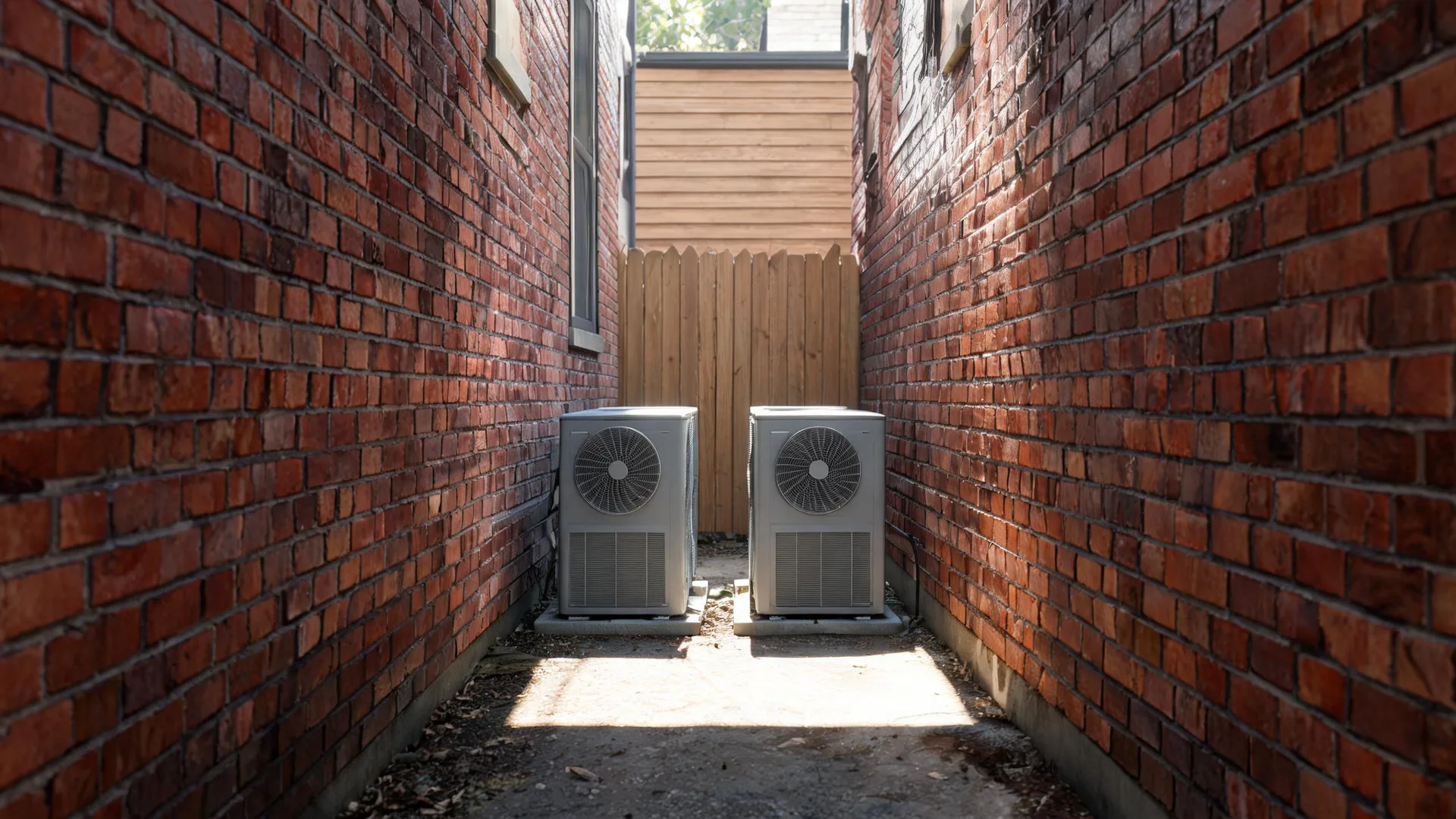
Some damage only happens while it's running

A system sitting off isn't making anything worse. One that keeps cycling with ice on the outdoor coil, or refrigerant leaking past a bad seal, or a compressor laboring against the wrong pressures, is doing damage it can't undo. Shutting it down and getting the part looked at stops that. Letting it run through the problem is what turns a repair into something bigger.

Before anyone comes out, there are a few things worth checking yourself. Look at the outdoor unit. If the fan isn't spinning at all, or the whole unit is silent when it should be running, check the breaker first. A tripped breaker is nothing to do with the heat pump itself. Check the thermostat is actually set to call for heat or cool, not sitting in a mode it got bumped out of. Look at the outdoor coil for ice buildup, especially along the bottom or the fins. Ice there points to a refrigerant or airflow problem, and running the system more won't clear it. Check the air filter. A clogged filter starves the system of airflow and can be behind weak output at the vents. None of this tells you which part failed, but it rules out the things that aren't a repair at all.

A diagnostic visit starts outside, at the unit itself. A tech checks the readings, the pressures, the amp draw on the compressor and fan motor, and compares what the system is actually doing against what it should be doing at that outdoor temperature. Electrical connections get checked too, since a loose or corroded connection can mimic a failing part. Inside, the indoor coil and airflow get a look, because a problem that seems like a refrigerant issue is sometimes just restricted airflow from somewhere else in the system. The thermostat's call gets tested against what the unit actually does when it receives it. Most of this takes longer to explain than it does to do. By the end, the failed part has a name, and that's what gets quoted before anything gets replaced.