AC smells like burning in Mooresville, NC

RepairCentral ACIredell County, NC
Step 1 of 2

What ZIP code is the job in?

Why does my AC smell like something's burning?

You walked past the vent and caught it, that sharp hot smell that doesn't belong. Maybe the air coming out feels fine otherwise. Maybe the unit outside is running like normal. But a burning smell is one of those things you can't just leave alone, especially with how long your AC runs through a Mooresville summer. You want to know if this is a quick fix or something that should stop you from running it at all.

A burning smell usually means something electrical is overheating

Most of the time that smell is coming from a motor or an electrical connection working harder than it should, like a blower motor bearing or a wire connection that's loosened and started to heat up where it shouldn't. Dust burning off a coil that just kicked on after sitting idle can smell similar but fades fast. A smell that lingers, or gets stronger, usually doesn't. With an Iredell County summer running the system for months at a stretch, parts like the blower motor log a lot of hours, and that kind of steady use is what wears out a bearing or loosens a connection in the first place. If the smell is sharp and electrical, like hot plastic or scorched wire, turn the system off at the thermostat and don't run it again until someone's looked at it.

A gray outdoor air conditioner condenser unit on a concrete pad beside a house with horizontal vinyl siding, surrounded by mulch, flowering shrubs, and lawn.

Running clean

A condenser that smells like nothing is doing its job the way it should. Air moves through clean, clear fins, the fan turns without strain, and nothing inside gets hot enough to give off an odor. This is what your unit looked like before whatever's burning started.

A weathered outdoor air conditioning condenser unit on a concrete pad beside a house with light horizontal siding, an electrical disconnect box and conduit on the wall, and mulched soil on either side.

Burning smell

Dirt and grime packed into the coil fins trap heat that should be escaping outside. The motor and wiring inside work harder against that buildup, and a wire insulation or a seized motor can scorch long before the unit shuts itself down. That's the smell reaching your vents.

Is this smell coming from the vents or outside?

Stand near the thermostat and figure out where the smell is strongest. If it's at a vent, something is burning near the air handler, maybe dust baked onto a coil or wiring in that cabinet. If it's near the outside unit, the compressor or a wire out there is the likely source. You might notice the smell comes and goes with the cycle, strong when the system kicks on and fading after. Some homes get a light haze near a vent, or the circuit breaker for the AC trips on its own. If the breaker won't stay on, leave the system off. Running it again can turn a wiring problem into a fire risk, and that's not worth the wait.

A gray outdoor air conditioner condenser unit on a concrete pad beside a house with horizontal lap siding, with a wall-mounted disconnect box and conduit to its right and shrubs to the left.

What normal looks like

This is a condenser that isn't the problem. The coil guard is clean, the pad is level, and the wiring into the disconnect box is tucked in neat. Nothing here gives off heat or smell when it runs.

An outdoor air conditioning condenser unit on a concrete pad beside a house with horizontal lap siding, with a conduit and electrical disconnect box on the wall at right.

What trouble looks like

Dirt has built up across the coil guard and the unit shows its age. Grime like this blocks airflow, makes the compressor work harder, and on an older unit that strain is often where a burning smell starts.

Keep running or shut it off

Safe to run

  • A musty smell for the first few minutes on a humid day is normal, especially after the unit has sat off overnight.
  • A faint dusty smell the first time you turn the AC on for the season usually clears within an hour as dust burns off the coil.
  • If the smell fades once the system has been running a while and doesn't come back, it's not usually worth shutting the system down over.
  • A plastic smell from a brand new unit or after a repair can be leftover manufacturing residue and often goes away after a day or two of running.

Shut it off

  • A sharp, hot smell like an electrical fire means something inside the unit is overheating, and running it longer risks the damage spreading.
  • A burning rubber smell can mean a belt or motor mount is wearing through and failing under load.
  • If the smell gets stronger the longer the unit runs instead of fading, that's a sign the problem is active, not residue burning off.
  • A smell paired with the breaker tripping, the unit shutting off on its own, or visible smoke means stop running it and call for repair before trying it again.
  • If the smell shows up at the vents and the air handler is in a closet or attic near wood framing or insulation, treat it as urgent.
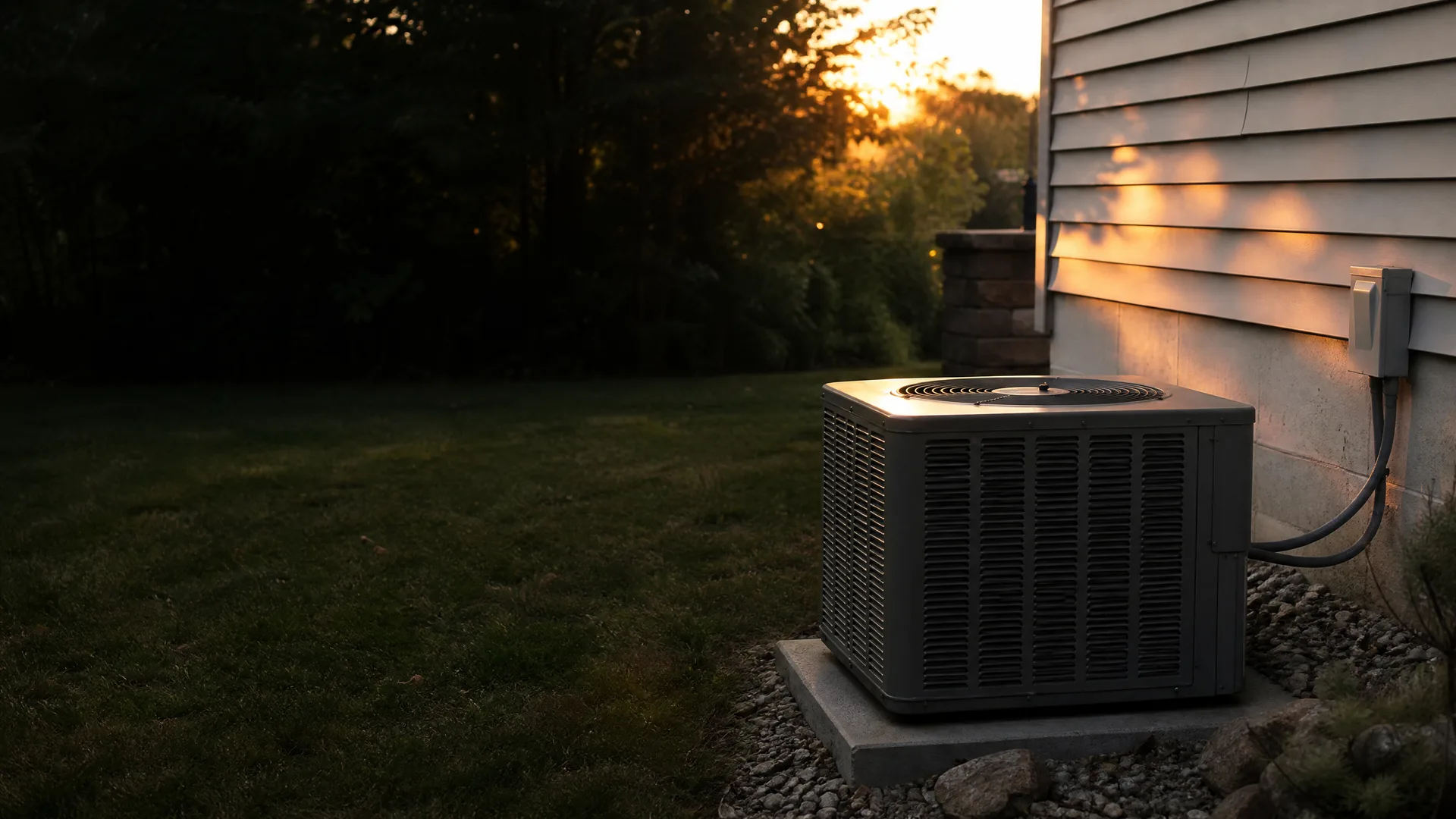
An outdoor air conditioning condenser unit on a concrete pad beside a house with horizontal lap siding, with a gravel bed, refrigerant lines and an exterior electrical disconnect box on the wall, and a lawn and trees at sunset in the background.

You'd just finished grilling and the plates were still on the table when you noticed the air felt heavier than it should, even with the AC running. You walked over to the side yard to check on it and the fan wasn't moving. The condenser sat there humming low, the sun almost down behind the fence line, and that's when you caught the smell, faint but sharp, drifting off the unit itself. Your neighbor's unit two yards over was still running fine, blades turning, no smell at all. You crouched down near the disconnect box but didn't touch anything. The evening had gone from ordinary to something you'd be thinking about once you went back inside.


Cooling runs May through September

Your AC runs about five months straight here, May into September, with barely a break some years. That's a long stretch for a motor or a wire connection to run hot before anything gets looked at. A burning smell now is worth catching before July puts the system under real load.

NOAA nClimDiv 1991-2020

An electrical fire inside a condenser or air handler can start in minutes once insulation on a wire gets hot enough to char.

That's why a burning smell gets treated differently than a musty one. It means heat is building somewhere it shouldn't, right now, not sometime down the road.

A smiling woman with long brown hair in a dark sweater sits at a light stone kitchen counter with a glass of red wine, with a dimly lit living room in the background.
A smiling woman with dark hair pinned up, wearing a beige sweater, sits looking off to the side in a kitchen with a glass of red wine in front of her, a stainless steel refrigerator, marble counter and a potted plant behind her.
A smiling woman with dark shoulder-length hair in a navy sweater sits at a kitchen counter with a glass of red wine, with a lit living room and pendant lights behind her.
A woman in a dark gray sweater laughs while seated at a white marble counter with a glass of red wine, with a blurred living and dining room behind her.

Skip the search

A burning smell from your AC isn't something to sit on while you ask around Mooresville for someone who can look at it today. Finding a contractor who works on condensers and air handlers, getting them on the phone, explaining what you smelled and where, then doing it again with the next company so you have something to compare, all of that takes time you don't have when a wire is already running hot. One request here puts this in front of a contractor local to Iredell County, someone who's out working on these systems every summer and has seen what a burning smell usually means before they even pull the panel. You're not fielding calls from five different companies trying to win the job. You get looked at by someone who knows this equipment, so you can stop checking the vent for smoke and let someone qualified figure out what's actually burning.

A capacitor that's failing is one of the more common reasons for that burning smell outside. It's a small cylinder inside the condenser cabinet that stores a charge and gives the compressor and fan motor the kick they need to start. When it starts to go bad, it can't deliver that charge cleanly, so the motor draws more current than it should and strains to turn over. That strain shows up as heat, and heat on the motor windings or on the capacitor's own casing is what you're smelling. Sometimes the capacitor swells or bulges on top before it fails outright, though you'd only see that with the panel off. A contractor checks it with a meter, reading the microfarad rating against what's printed on the side. If it's reading low, the capacitor gets replaced before it takes the motor down with it. Left alone, a motor that keeps straining to start on a weak capacitor runs hotter each time, and that's how a smell turns into a motor that won't start at all.

An outdoor air conditioner condenser unit on a concrete pad beside a house with light gray vinyl siding, with a gray electrical disconnect box and conduit on the wall, gravel beds and dried plants nearby, and a concrete sidewalk in the foreground.
Before you get your air conditioner repair
A gray outdoor air conditioning condenser unit on a concrete pad beside a house with horizontal siding and a stone veneer base, with a wall-mounted disconnect box and conduit, next to a shrub bed and a concrete patio.
After you get your air conditioner repair
A single-story red brick house with a hipped shingle roof, white-framed windows and a dark front door, fronted by a large empty asphalt lot and flanked by dense green trees under a bright hazy sky.

Summer air in Iredell County carries a dew point around 66°F on average, according to NOAA climate records for the area. That's heavy, sticky air, the kind that makes your AC run long stretches without shutting off because it's pulling moisture out along with the heat. The longer a unit runs, the more heat builds in the motor windings and wire connections inside the condenser. A connection that's already a little loose or corroded gets hotter than it should on a short cycle, and on a long one it can get hot enough to smell like something's burning.

NASA POWER T2MDEW

A smiling bearded man in a dark green sweater sits at a dinner table with a glass of red wine, plates of food and a lit candle, with a lamp and houseplant in the dim background.
A woman with dark hair tied up reclines on a sofa with her eyes closed under a gray blanket, with a lit floor lamp, framed picture, and a book beside her in a dim room.

Call around yourself

You're explaining the same burning smell to every company that picks up, waiting on callbacks, then sorting through quotes from people who've never seen your unit.

Find a licensed air conditioner pro

One local contractor

A contractor licensed in North Carolina who works on condensers and air handlers all over Iredell County looks at yours, and you're not fielding calls from three other companies.

Find a licensed air conditioner pro
A kitchen interior with a wooden table in the foreground holding a closed laptop, a ceramic mug and a potted plant, with a wood-fronted counter, sink with black faucet, bowl of green fruit, vase of branches and a window showing a sunset sky behind.

A burning smell means something is overheating and running your AC until it's found isn't worth the risk

A burning smell from your AC comes down to a part running hotter than it should, a capacitor going bad, a motor straining, wiring somewhere in the cabinet taking on heat it wasn't built to handle. Where you smell it, at the vents or out by the condenser, points to which end of the system it's coming from. Either way it's worth shutting the unit off and getting it looked at rather than waiting to see if it passes.

Instead of calling around Mooresville, describing the smell over and over, and weighing quotes from companies who've never seen your unit, you'd be connected with one local contractor who works on condensers and air handlers all summer and knows what tends to fail first. They show up knowing what you told them, not starting from scratch. Your system gets checked, whatever's overheating gets found, and you're not the one running down leads to make that happen.

Living room interior with a light sofa holding a dark green cushion and a brown knit throw, a tall leafy plant by a black-framed window, a wooden coffee table with a round tray, and wooden shelves holding vases and books.
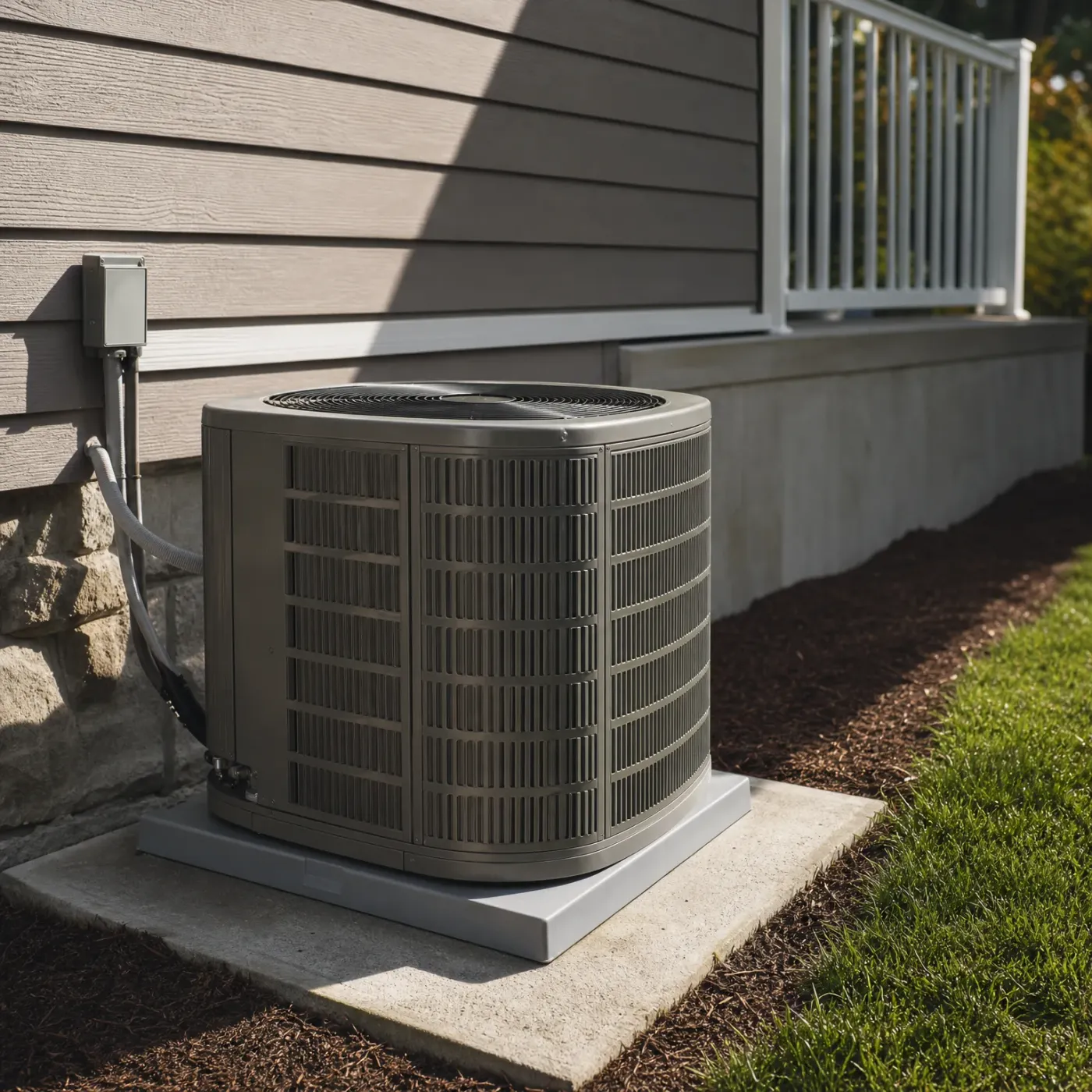
An outdoor air conditioner condenser unit on a concrete pad beside a house with horizontal lap siding, a stone foundation, an electrical disconnect box on the wall, mulch bed and lawn to the right, and a white railing above a concrete retaining wall in the background.

Skip the calls to every shop

Get one local pro

The pro who gets in touch is licensed in North Carolina and works in Iredell County.

There's no charge for the request.