




An outdoor air conditioning condenser unit positioned beside a blue-sided house at sunset.

AC Maintenance in Clayton, NC

Tell us about the job

Takes about a minute. No obligation.

Tune-up, service, or cleaningCentral ACJohnston County, NC
Step 1 of 2

What ZIP code is the job in?

Electricity in Johnston County ran 14.67 cents per kilowatt-hour in 2025. That is what you are paying every time the compressor kicks on. A dirty coil or a low charge makes the system run longer to hit the same temperature, and every extra minute shows up on the meter at that rate. Your air conditioner is not a small draw in a Clayton summer. It is one of the biggest things you run, for months at a stretch, which means a small drop in how well it runs turns into a real add on the bill.

5 months
May through September, your air conditioner is on duty
89°F
the average summer afternoon it cools against
14 hail events
in ten years, and hail bends the fins on outdoor coils
164 wind events
in ten years, and wind drives debris into outdoor units
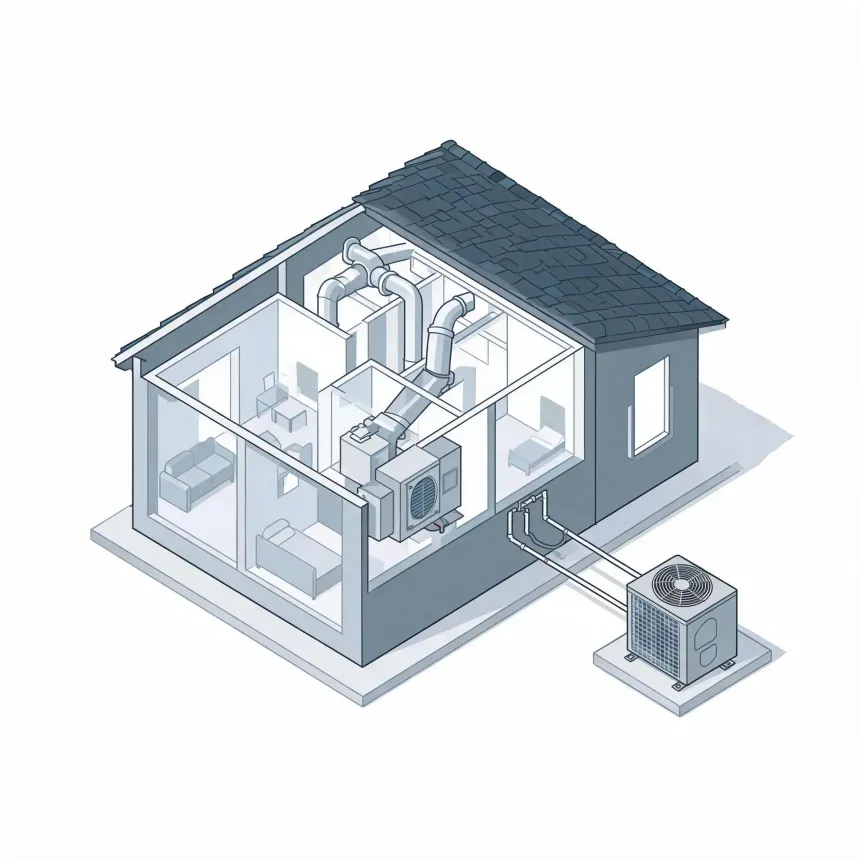
Isometric cutaway illustration of a small house showing interior rooms with furniture, an indoor air handler with ducts in the attic space, and refrigerant lines running to an outdoor condenser unit on a pad.
Your air conditioner works hardest from June through August.

NOAA nClimDiv, 1991–2020 normals

May is the first full month of cooling season in Johnston County.

Get the AC checked in April, before that first hot stretch asks anything of it.

Storms here put outdoor units to the test before summer does

202 severe weather events from 2015 to 2024
25% of homes statewide lost power a day or more in 2024
164 damaging wind events from 2015 to 2024

Five months of cooling is a lot to ask of one machine, and Clayton asks for it at 89°F most summer afternoons. That heat is only half the load. The dew point here runs near 68°F in June, July and August, higher than most of the country sees, and a system has to pull that moisture out of the air on top of cooling it. A unit working against both wears sooner than one that only has to drop the temperature. Once that first hot stretch sets in, a weak part that held on through spring won't hold anymore.

A system running clean costs less to run all summer

A tune-up gets the coil clean and the charge right before summer runs the compressor for months straight. That is the difference between a system that costs what it should on your power bill and one that quietly costs more every day it runs.

Find a contractor
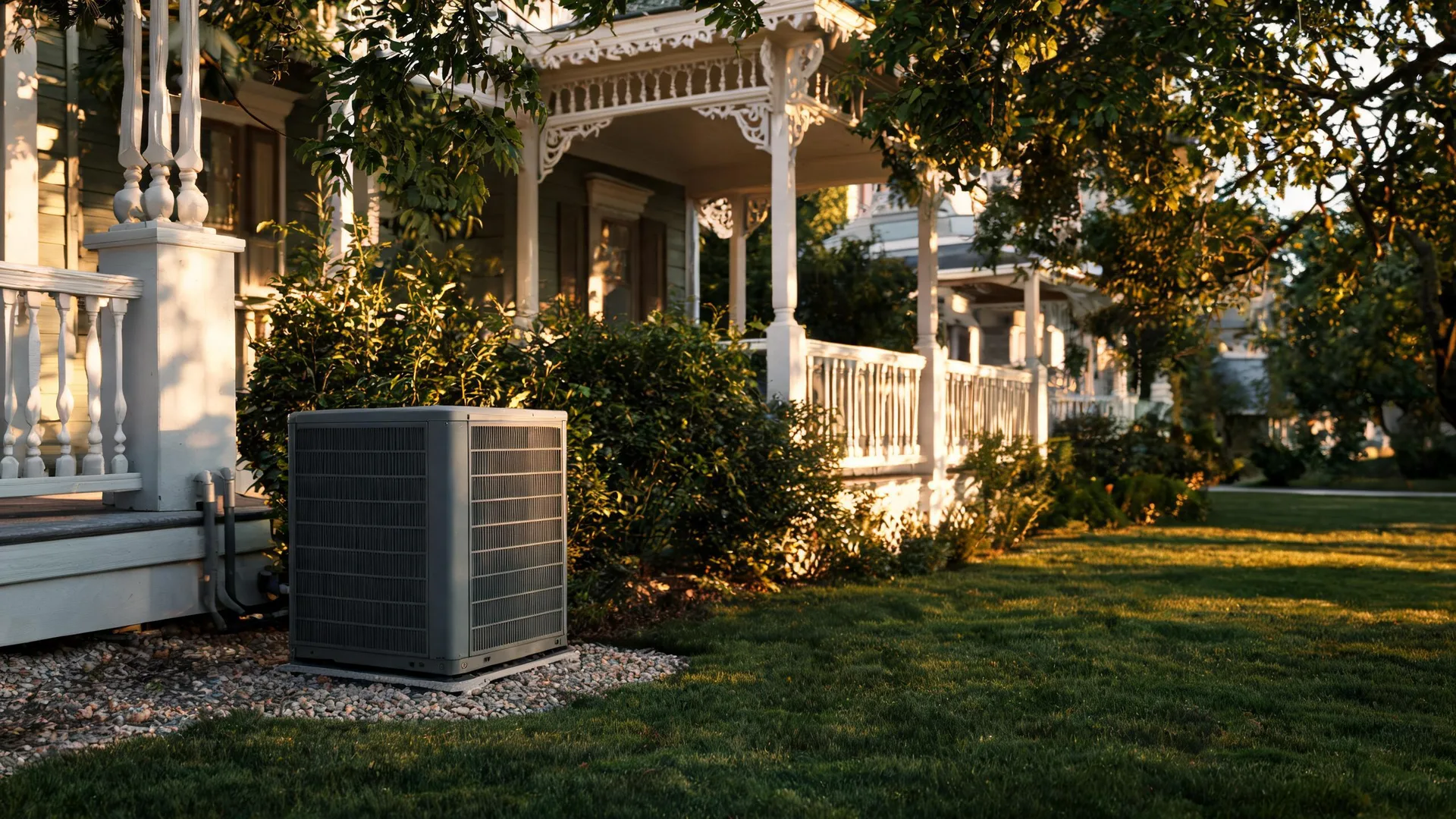
A gray residential air conditioning condenser unit mounted on a concrete pad outdoors, surrounded by green grass under a partly cloudy blue sky.

A newer system still needs a yearly look to stay that way

Half the homes in Johnston County were built in 2000 or later. If yours is one of them, the system could be original to the house or a replacement put in a handful of years ago, either way still well inside its working life. A yearly check is what keeps it there. The coil stays clean, the charge stays right, and the parts that would wear out early get caught while they're still cheap to fix. A system that starts out well maintained holds that condition a lot longer than one that only gets looked at once something quits.

A real tune-up means tools, not a glance

A thorough check involves pulling the panel, measuring refrigerant pressure with gauges, and checking the temperature of the air coming off the coil against the air going into it. The tech should wash the outdoor coil, not just hose off the grille, and check the capacitor's output against what it is rated for. Tightening electrical connections and checking amp draw on the compressor are part of it too. Skip any of that and you are guessing at the parts most likely to fail.

A quick one treats the visit as a formality

A rushed visit looks like a once-over: a glance at the filter, a listen for noise, maybe a squirt of water on the coil, done in a few minutes. Nothing gets measured, so nothing gets caught. A refrigerant charge that is a little low or a capacitor that is weakening will not show up by looking at the unit, only by testing it. The system runs fine the day of the visit either way. The difference shows up later, when the part that was never checked gives out.

Overhead view of a gray residential air conditioning condenser unit mounted on a concrete pad beside a house with asphalt shingle roofing.

Book your AC tune-up in April, before homes here start needing cooling in May.

  1. Jan
  2. Feb
  3. Mar
  4. Apr
  5. May
  6. Jun
  7. Jul
  8. Aug
  9. Sep
  10. Oct
  11. Nov
  12. Dec

A tune-up checks the refrigerant charge, cleans the coils, tests the capacitor and tightens the electrical connections.

A tune-up is really a short list of checks that each catch a different failure. The refrigerant charge gets measured with gauges, because a system low on charge cools poorly and strains the compressor to make up for it. The coils get cleaned, since a coil caked with dirt or dust cannot transfer heat the way a clean one does, and the system runs longer to do the same job. The blower and the fan motor get checked for wear, the electrical connections get tightened, because a loose connection heats up and burns before it ever trips a breaker. The condensate drain gets cleared too, since a clogged one backs up and puts water where it does not belong. None of these parts fail on a schedule. A tune-up is how a failing one gets caught while it is still working.