

Running quiet
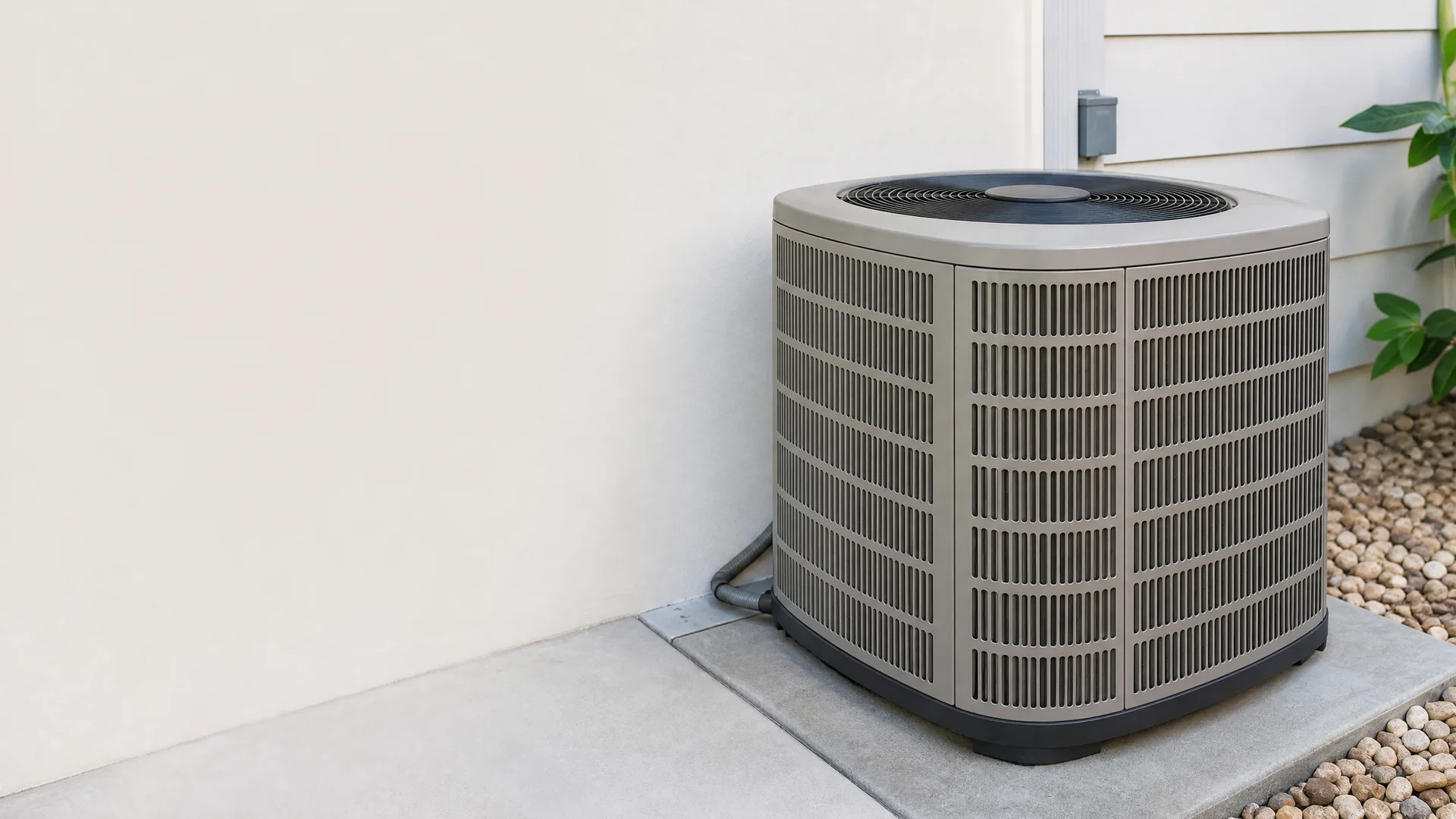
A healthy condenser hums at a steady, low pitch you stop noticing after a minute. The fan spins free, the cabinet sits level on the pad, and the refrigerant lines run straight up to the disconnect without rattling against the siding.
A loud noise from your AC usually means something loose, worn, or hitting metal it shouldn't. A high-pitched squeal often points to a worn blower motor bearing or a belt, though most systems here run belt-free, so that squeal is more likely the motor itself. Banging or clanking from the outdoor unit can mean a loose fan blade or a part inside the compressor has broken free. A rattle that comes and goes might just be a stick or acorn caught in the fan cage, something worth a quick look before you assume the worst. In Clayton, your AC runs hard for months at a stretch, and that steady workload is exactly what wears a bearing down or shakes a screw loose over time. The noise itself won't go away on its own, and running the unit while something is grinding or loose usually turns a small repair into a bigger one.
A healthy condenser hums at a steady, low pitch you stop noticing after a minute. The fan spins free, the cabinet sits level on the pad, and the refrigerant lines run straight up to the disconnect without rattling against the siding.

Grime packed into the grille and top cover means airflow has been restricted for a while, and a unit working that hard will start telling you with sound. A grinding or rattling noise here usually means a fan blade hitting debris or a motor mount worn loose.

A grinding or metal-on-metal sound from the outdoor unit usually means the fan motor bearing is failing or the fan blade is hitting the housing. Once a bearing wears enough to let the shaft wobble, the blade can shift out of true and start catching metal on every turn. Left alone, the motor keeps working harder against that friction until it seizes, and a seized fan motor means the compressor overheats with nowhere for that heat to go.
Indoors, a rattle that follows the blower on and off is often a loose panel screw on the air handler or a fan wheel with debris caught in it. The blower wheel spins at a set speed every cycle, so even a small piece of insulation or a stray screw inside it will tap against the housing the same way each time. That steady tap is different from a one-time rattle, and it tends to get louder over weeks rather than staying the same.
You're probably hearing it most on the hot stretch of the day, when the unit outside is working its hardest to keep the house livable. Maybe it's a bang when the compressor starts, or a rattle that picks up as the afternoon goes on and the system runs longer to keep up. You might notice it from the patio, or through a bedroom wall if the unit sits close to the house. If the noise has been getting worse over days or weeks rather than staying the same, that usually means a part is wearing down, not just sitting loose. Left alone through a Johnston County summer, a loose part can wear faster under the long hours the system runs, and a failing motor or bearing can go from noisy to broken.




A noise that's new usually means something wore out, worked loose, or shifted out of line, and the sound alone won't tell you which. That takes someone standing next to the unit with it running. Finding that person is the part that eats your afternoon: searching, calling a few numbers, describing the same clank or squeal three times, then waiting on quotes to compare. Submit the request above and it goes to one licensed contractor working in Clayton and around Johnston County, someone who hears this exact unit in this exact heat every summer and knows what a grinding fan motor sounds like versus a loose panel screw. You won't be fielding calls from five companies trying to win the job. With the heat Clayton gets from spring through fall, a noisy AC isn't something to sit on, and the unit outside your house right now is telling you something specific. Let someone who knows the sound figure out which part it is.
A loud noise doesn't always mean the unit quits today. If the sound is new and mild, a rattle or a hum that wasn't there last week, you can often run the system through the afternoon while you line up someone to look at it. Keep an ear on whether it gets worse or changes character. A steady rattle that stays a rattle is a different problem than one that turns into a grind or a bang over a few hours. Waiting costs you nothing extra if the noise holds steady, and it means you're not stuck home for a same-day visit you didn't need. The risk is in the systems that go from loud to not running at all, usually with little warning between the two.
Some sounds mean stop running the system before anything else. A hard metal-on-metal grind, a repeated bang on startup, or a noise paired with the smell of something hot are all reasons to cut power at the thermostat or the disconnect and leave it off. Running a unit through a bearing failure or a loose fan blade turns a repair into a bigger one fast, since the parts around the failing one take damage too. This matters more on the hottest days, when the system is already working its hardest and has the least room to limp along. If you're not sure which kind of noise you have, treating it as the second kind costs you a few hours of discomfort against the cost of a compressor.


Summers in Johnston County run muggy, with a dew point that averages 68°F across June, July and August, according to NOAA climate data. Air that heavy makes your AC work through two jobs at once, pulling the moisture out before it can even start cooling the air itself. That's when a loud unit gets louder. A fan motor bearing already wearing out has to spin longer each cycle to keep up, and a loose panel or rattling line set shakes more on a long run than a short one. If the noise gets worse by August, the dew point is why.
NASA POWER T2MDEW

A loud AC usually comes down to one thing: a part that's loose, worn, or hitting something it shouldn't. Which part it is depends on the sound, where it's coming from, and whether it shows up at startup or runs the whole cycle. You've got enough now to know whether this is worth watching or worth a call this week.
What you don't have to do is spend your afternoon finding out who can look at it. That usually means searching around, calling a few places, describing the sound over the phone to someone new each time, then sitting on quotes trying to tell them apart. Get matched instead with one licensed contractor near Clayton who works on these systems all season and can tell you, standing next to your unit, exactly what's making that sound.






A licensed pro who repairs air conditioners in Johnston County gets your request.
Sending the form costs nothing.