Storms come through often
Mecklenburg County logged 178 severe weather events between 2015 and 2024, 122 of them damaging wind and 38 hail. Five tornadoes touched down in that span, and hurricanes or tropical storms reached the county four times.
Takes about a minute. No obligation.
Mecklenburg County logged 178 severe weather events between 2015 and 2024, 122 of them damaging wind and 38 hail. Five tornadoes touched down in that span, and hurricanes or tropical storms reached the county four times.
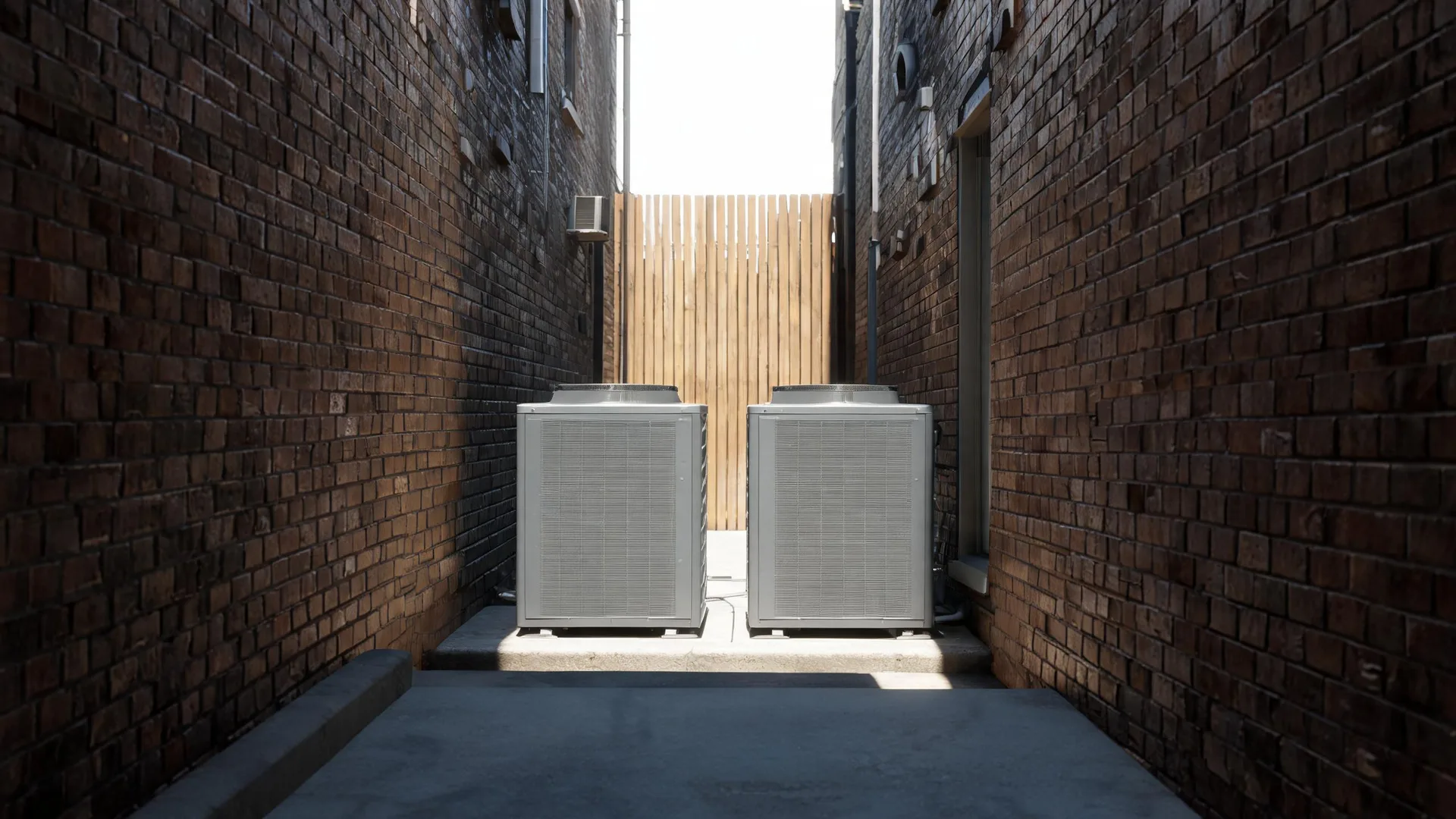
The outdoor unit takes whatever comes off the roofline or the yard in a windstorm, and hail dents coil fins and bends the cabinet. A unit that was running fine before the storm season can come out of it worse, and the damage is easiest to catch before summer puts it under full load.

NOAA nClimDiv, 1991–2020 normals
A warm room doesn't always mean the thermostat is lying.
Weak airflow or a low charge can let the house drift a few degrees off target before anyone notices.



Half the homes in Mecklenburg County were built in 1997 or later, which means a lot of the AC units running here are still well inside their expected working life. That's worth something. A system in good shape doesn't stay that way on its own. The coil gets dirty, the refrigerant charge drifts a little low, the blower wheel picks up dust, and each of those makes the unit work harder to do the same job. None of that shows up as a breakdown right away. It shows up as a system that's aging faster than it should, in a county where most houses still ask electric heat and air to do the work.
Before the next storm comes through, have the outdoor unit checked for dented fins, a cracked cabinet or anything caught in it from the last one. A quarter of North Carolina households lost power for a day or more in 2024, so if a cutout is coming, better to know the system was in good shape going into it.
Find a contractor
A yearly check is what keeps a newer system in that range. The tech cleans the coil, checks the charge, and clears the blower wheel before summer puts real load on the unit. That's the same half hour of work every year, not a bigger job once something gives out. If your system came with the house, ask what's been done on it since. A system that gets that check every spring has a real shot at running its full stretch instead of coming up short.
The compressor is the most expensive part in the system, and it's the part that pays for a dirty coil or a low charge. When the coil can't shed heat or the charge isn't right, the compressor runs hotter and longer to hit the same temperature. Heat is what wears it down. A compressor that runs hot for a few summers in a row can fail years before it should have.
A refrigerant charge that's a little low doesn't fix itself. It gets a little lower every season as the leak that caused it keeps leaking. A blower wheel caked with dust doesn't clean itself either. Left alone, a problem that would have been a quick fix turns into a part failure, and the part failure can take other parts down with it when it goes.
A tune-up checks the refrigerant charge, cleans the coils, tests the capacitor and tightens the electrical connections.
A tune-up is a set list of checks, not a quick look under the cabinet. The tech checks refrigerant charge against what the system calls for, since too little or too much makes the compressor work harder either way. The coil gets cleaned, because a coil caked with dirt can't shed heat and that heat load lands on the compressor. The blower wheel gets cleared of dust so the system moves the air it's supposed to move. Electrical connections get checked and tightened, since a loose connection is what takes out a contactor or a capacitor mid-summer. The condensate drain gets cleared too, because a clogged drain backs up and can shut the system down or let water sit where it shouldn't. Each of these is small on its own. Skip enough of them for enough seasons and the compressor is the part that pays for it.