




A dark, minimalist bedroom featuring a sleeping cat on a grey-quilted bed, a wall-mounted air-conditioning unit, warm cove ceiling lighting, and a pendant lamp illuminating the bedside table.

Mini Split Installation in Burlington, NC

Tell us about the job

Takes about a minute. No obligation.

New system or replacementMini-splitAlamance County, NC
Step 1 of 2

What ZIP code is the job in?

Alamance County logged 131 severe weather events between 2015 and 2024. Most of that was wind, 105 events strong enough to count, along with 12 hail events and a handful of tornadoes and tropical storms passing through. A mini split's outdoor unit sits outside through all of it, exposed to whatever the wind throws at it or whatever hail falls. Winter storms hit too, 8 of them in that same stretch, ice and snow included. Across North Carolina, a quarter of households lost power for a day or more in 2024. None of this means your home will take a direct hit. It means the odds of a bad storm or a dead grid reaching your street are real enough to plan around before the unit goes in, not after.

7 months
October through April, your system heats
5 months
May through September, it cools
31°F
the average winter night it heats against
87°F
the average summer afternoon it cools against
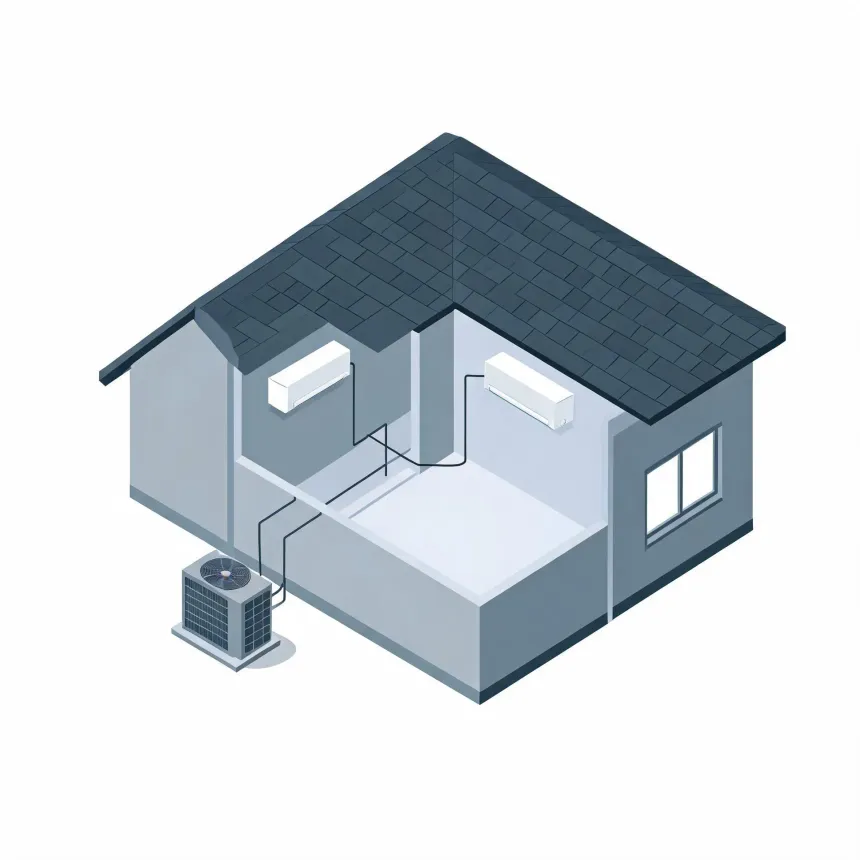
Isometric illustration of a cutaway gray house with a dark shingled roof, showing two wall-mounted indoor air conditioning units connected by lines to an outdoor condenser unit on the ground outside.
Your system heats October through April and cools May through September.

NOAA nClimDiv, 1991–2020 normals

Electricity heats 51.5% of homes in Alamance County, more than gas, propane and oil combined.

A mini split works alongside that setup already in most homes here, so it's a straightforward swap or addition rather than a rework of how the house is heated.

May counties get sticky fast. Get the unit in before then.

Cooling runs May through September
Climate zone 3A
Power here costs 14.20 cents per kilowatt-hour

Alamance County falls in climate zone 3A, warm and humid with a long cooling season. Any new mini-split has to meet the federal minimum for that kind of system, which is the same number everywhere regardless of climate zone: at least 14.3 Btu of cooling for every watt-hour it draws, and at least 7.5 Btu of heat the same way, measured across a full season rather than at a single moment. That's the floor, not a target, and it applies to units built from 2023 on. A contractor sizing a system for this house will land on a unit that clears that bar. Some qualify for a federal tax credit on top of meeting it, worth checking before you settle on a model.

Pick the install that can take a hit and keep the heat on

Where the outdoor unit goes and what guards it matters as much as the unit itself. A contractor can set it where wind and hail do less damage, and talk through backup options for the times the power just goes out. Worth settling before install, not after a storm already found the gap.

Find a contractor
A white mini-split air conditioner outdoor condenser unit mounted on metal brackets against a beige stucco exterior wall, with a blue sky and scattered clouds in the background.

The number on the label is an average, not a guarantee

The number on the label, SEER2 for cooling and HSPF2 for heat, is a seasonal average, not a reading you'll ever see on the unit while it runs. Some hours it pulls less than that, some hours more, depending on how hard the compressor has to work to hit the temperature you set. A mini split holds that average by running long and slow instead of cycling on and off like an old system does. The compressor ramps down when the load is light and ramps up when it isn't, rather than shutting off completely. That steady run is what the rating is measuring, and it's also easier on the parts than constant starting and stopping. The rating holds up over the life of the system only if the coils stay clean and the refrigerant charge stays correct. A dirty coil or a slow leak drags the real performance below what the label promised, even though the label doesn't change.

The old unit comes out first

A mini split install usually means pulling the old system out entirely, whether that's window units, baseboard heaters, or a different split system. The indoor head, the outdoor unit, the line set running between them, all of it comes down before the new equipment goes up. If the old system used a different refrigerant, none of those lines get reused. New line sets get run to match what the new unit needs.
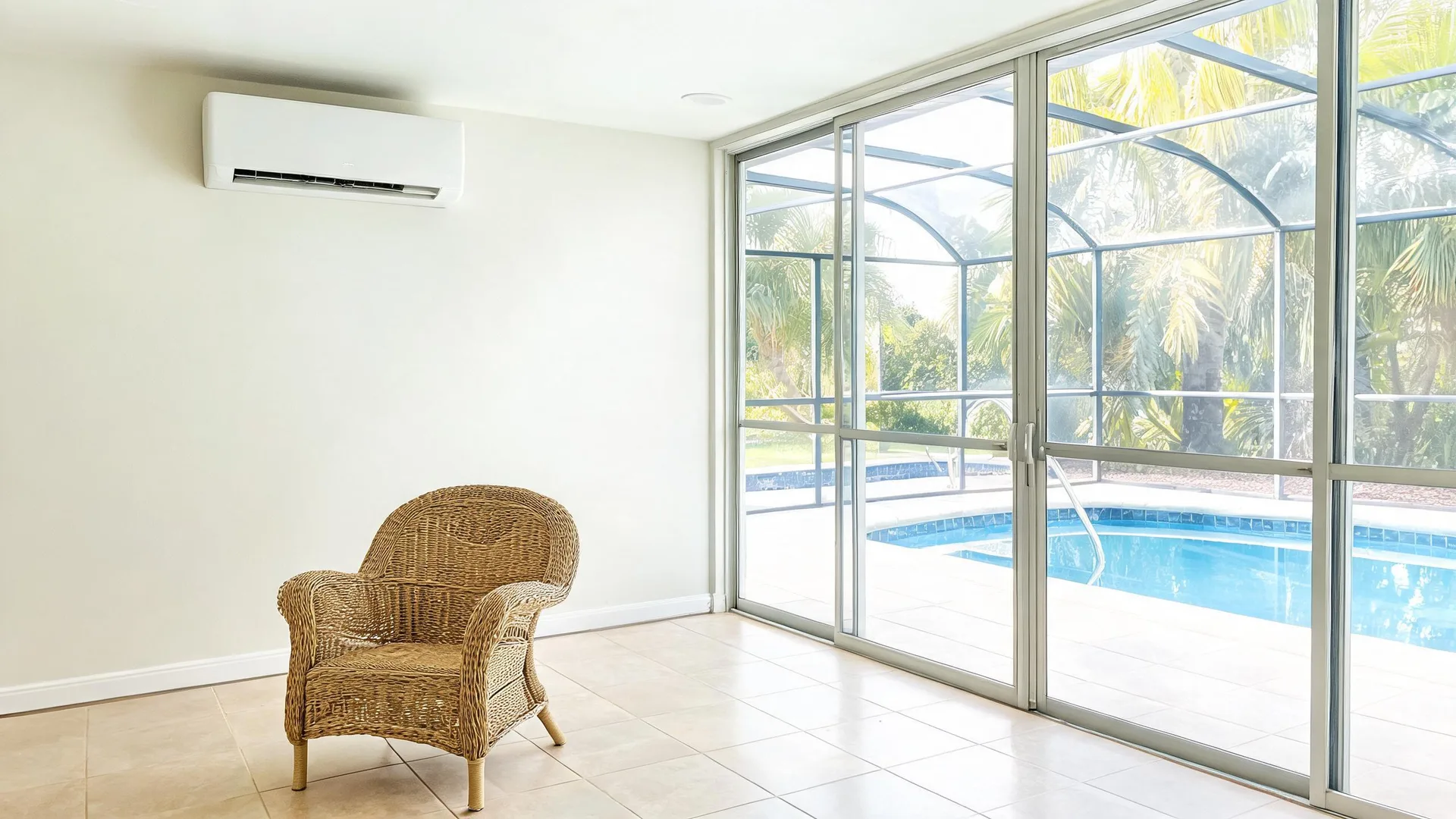
Old mounting points rarely line up

Where the old equipment sat, bolted to a wall or sitting on a pad, doesn't always work for the new unit. Mounting brackets and pad placement are often sized and positioned for the equipment they were built for. A new outdoor unit may need its own pad, its own clearance from the wall, its own path for the line set and drain to reach the indoor head without a bend the system can't handle.

Sizing a mini split comes down to matching the unit's output to the heat gain and heat loss of the specific room or space it's serving, not the square footage alone. A contractor works through a load calculation that accounts for insulation, window area and orientation, ceiling height, and how many walls face outside. Too big and the unit short cycles, reaching temperature fast and shutting off before it pulls enough moisture out of the air, which leaves the room cold and clammy instead of comfortable. Too small and it runs flat out all day without ever catching up on the hottest or coldest hours. Either mistake shortens the life of the compressor, since neither short cycling nor constant full-load running is what the equipment was built to do. The right size runs long and steady, which is also the quietest and most efficient way for a mini split to operate.

Install day starts with the walk-through, confirming where the indoor head and outdoor unit are going before anyone picks up a tool. Once that's settled, the indoor mounting plate goes up first, and a hole gets drilled through the wall for the line set, the wiring, and the drain line to pass through together. The outdoor unit goes on its pad or bracket, and the line set connecting the two gets run, cut to length, and flared on site so the fit is tight at both ends. The lines get connected, the system gets pulled into a vacuum to clear out any air and moisture before refrigerant ever flows, and only then does the charge go in. A tech checks for leaks at every joint before closing anything up. Once it's sealed, the system gets powered on and run through both heating and cooling to confirm the head is reading temperature right and the compressor is cycling the way it should.