Finding a pro stops being your job
How often to clean a mini split in North Carolina
A mini split that runs hard all summer and carries most of the heating load come winter needs its filters checked more than once a year. This page covers how often that cleaning should happen in North Carolina and what gets skipped when it isn't. Send the form below and a local contractor who services this equipment all year takes it from there.
Hand off the searchClean the filters every two to four weeks when the mini split is running, and have the coils and blower wheel cleaned by a contractor once a year. That filter schedule is shorter than most people expect, but a mini split pulls air through a screen that sits right behind the front cover, and in North Carolina it's working most months of the year between the humidity it has to wring out all summer and the heating load it carries all winter. A clogged filter makes the indoor coil work harder to move the same air, and that coil can start icing over or losing capacity long before anyone notices the house feels wrong. Since most homes here heat with electricity, a mini split that's losing efficiency in January shows up on the bill right alongside the one it already caused in July. Checking filters monthly during the heaviest stretches catches that before it costs you comfort or money.




The filter screen sits right behind the front grille, and in a lot of homes it's within reach without tools. Checking it takes less time than it takes the unit to cycle on.
A dirty filter doesn't just block air. It makes the coil behind it work harder and colder, and that's how a mini split starts icing up in the middle of July.


Running it on a dirty filter
A mini split with a clogged filter still runs. It just costs more to do it. The blower has to work harder to push air through a screen that's packed with dust and pet hair, and that shows up on the electric bill before it shows up anywhere else. Set against the price of power in North Carolina, a few months of that drag adds up to real money for no comfort gained. The room it serves will feel less cold in July and less warm in January, so you end up nudging the thermostat further than you should need to. None of this breaks the unit right away. It just makes it work worse while costing more to run.
Keeping the filter clear
A mini split with a clean filter moves the air it's built to move. The blower doesn't strain, so it uses less power to deliver the same cooling or heat. The coil behind the filter stays dry and clear instead of collecting the dust the filter should have caught, which is what keeps the whole unit working the way it did when it was installed. You'll notice the room responds faster, both when the AC kicks on in a sticky stretch of summer and when it's carrying the heat on a cold morning. It's a small habit, checking a screen every few weeks, set against a unit that keeps doing its job without asking more from the electricity to do it.

Let someone else find the pro
A licensed local pro takes the request for your mini split tune-up.
Send the form, and lining up the mini split tune-up stops being yours to chase.
No fee to send it, and nothing to sign.
Filter Cleaning vs. Annual Service
Cleaning it yourself
- You can pull the filter and rinse it under the tap, and most people have it back in within a few minutes.
- Doing it every two to four weeks catches dust before it packs into the screen and starts choking airflow.
- It costs you nothing but a little time, since there's no part to buy and no one to schedule.
- You can see the filter with your own eyes, so you know right away if it's dirty instead of guessing.
- It doesn't reach the coil or the blower wheel behind the filter, where buildup still collects even if the filter is clean.
Having it serviced
- A contractor opens the unit up and cleans the coil and blower wheel, the parts you can't get to from the front grille.
- Someone who services mini splits all summer in North Carolina knows which parts tend to foul first in this kind of heat and humidity.
- It catches buildup that's already past the filter, which a rinse at home won't touch.
- Once a year is enough for this part of the job, so it isn't something you have to think about between visits.
- One licensed local contractor handles it, so you're not fielding calls from several companies over the same request.
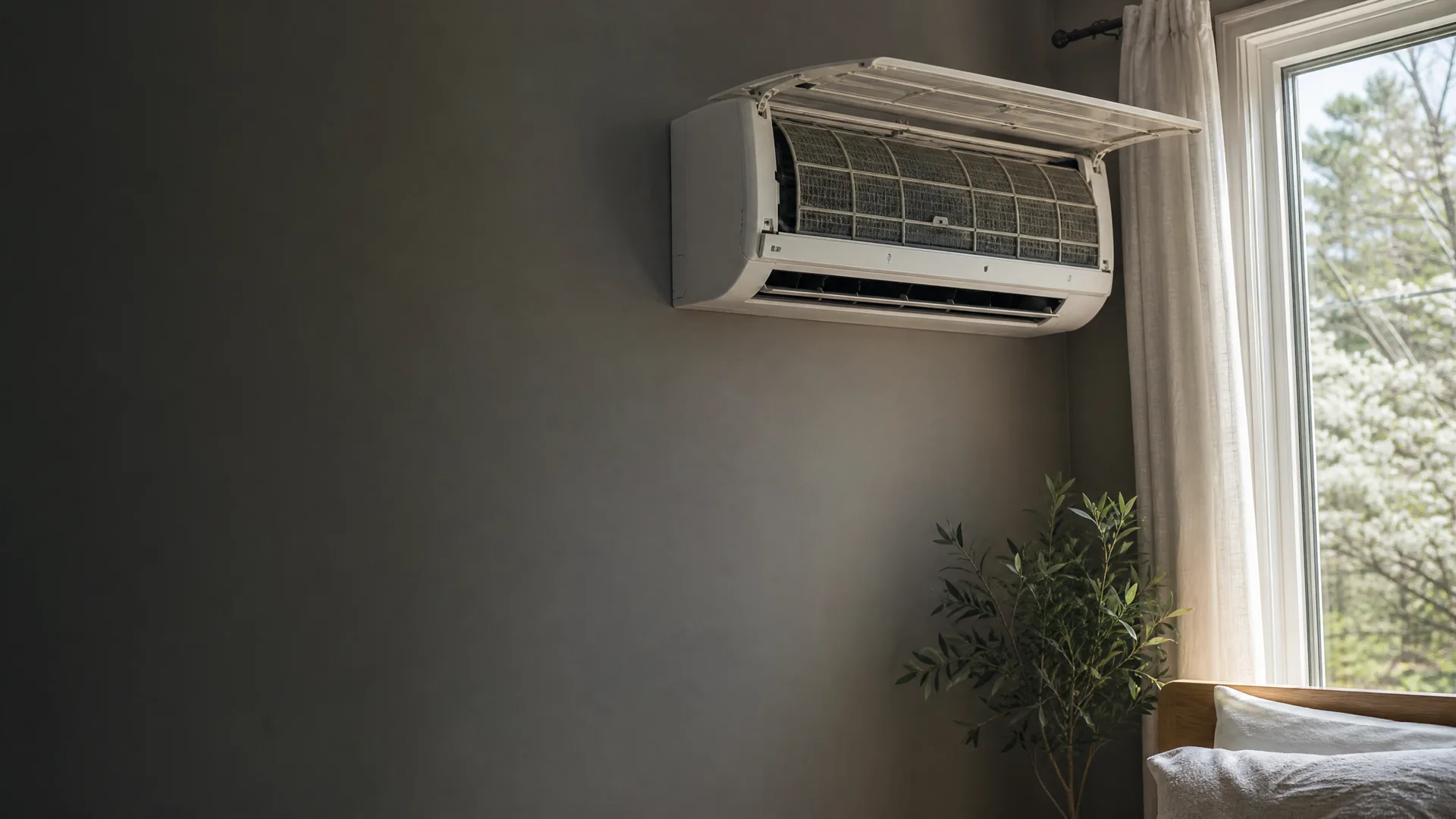
You pop the front cover up on a Saturday afternoon in April, before it gets hot enough to need the thing every day. Light's coming in low through the bedroom window. The filter screen slides out grey, matted with enough dust that you can't see through it to the coil fins behind it. You haven't run the unit since sometime last fall, and it shows. You carry it to the bathroom sink, already thinking about how this is the last easy week to deal with it before North Carolina gets sticky again and the unit's running most of the day. The cover stays propped open on its hinge, waiting.


Power costs 14.00 cents per kilowatt-hour statewide
At 14 cents a kilowatt-hour, a dirty filter doesn't hide in the bill the way it might somewhere power costs less. Your mini split pulling harder through a clogged screen shows up fast. Keeping it clean is one of the cheaper ways to keep that number in check.
EIA-861 2025 statewide residential average
What the schedule comes down to
- Filters every two to four weeks while the mini split is running, coils and blower wheel once a year by a contractor.
- A dirty filter raises the electric bill before it shows up as warm air or weak airflow.
- Skipping filters long enough shortens what the coil and blower wheel can handle before they need cleaning too.
- A local contractor who services mini splits all season already knows which models in North Carolina clog fastest and why.
- Sending one request puts you in touch with one licensed contractor instead of a handful of companies calling at once.
- The unit keeps running on a dirty filter, it just works harder and costs more to do the same job.
Pull the filter every two to four weeks while the mini split is running, and have a contractor clean the coils and blower wheel once a year. That is the whole answer. Everything else on this page is what happens when that schedule slips: higher bills first, then warm air out of the vents, then a coil and blower wheel doing a job they were not built to do on their own. North Carolina summers push a mini split hard enough that a skipped month shows up fast, and at 14 cents a kilowatt-hour you feel it before you see it.
The yearly cleaning is where a local contractor earns the call. Someone who services these units all summer in North Carolina has already seen which models clog fastest here and why, whether it is pollen in April or the unit running flat out by July. That is not guesswork. It is the kind of thing you only know from doing the coil cleaning on the same models, in the same heat, every season.
Send one request and it goes to one licensed contractor local to you, not a list of companies competing for the job. You get someone who already knows the equipment, not a stranger learning it on your wall unit. Once that request is sent, the part that was yours to figure out is done.
One request and it's handed off
Your request stays with one local pro.