An outdoor HVAC condenser unit on a concrete pad in front of a two-story suburban house.

Heat Pump Repair in Winston-Salem, NC

Tell us about the job

Takes about a minute. No obligation.

RepairHeat PumpForsyth County, NC
Step 1 of 2

What ZIP code is the job in?

What the age and history tell you

A heat pump that's needed a few repairs over the years isn't necessarily on its way out. What matters more is whether the compressor is involved. A failed capacitor, a bad contactor, a blown fan motor, those are normal wear parts and fixing them is usually worth it. A compressor that's failing or a coil that's leaking refrigerant is a different question, since those repairs cost more and don't always extend the unit's life by much.

What to ask before you decide

Find out what actually failed and why, not just that the system stopped working. A refrigerant leak that gets found and sealed is a straightforward repair. A system that's low on charge with no leak found, or one that short cycles even after a repair, points to a deeper problem that will likely cost you again. Ask the contractor what part failed and whether that part failing is common for this unit or a sign of something else going wrong.

7 months
October through April, your system heats
5 months
May through September, it cools
30°F
the average winter night it heats against
86°F
the average summer afternoon it cools against
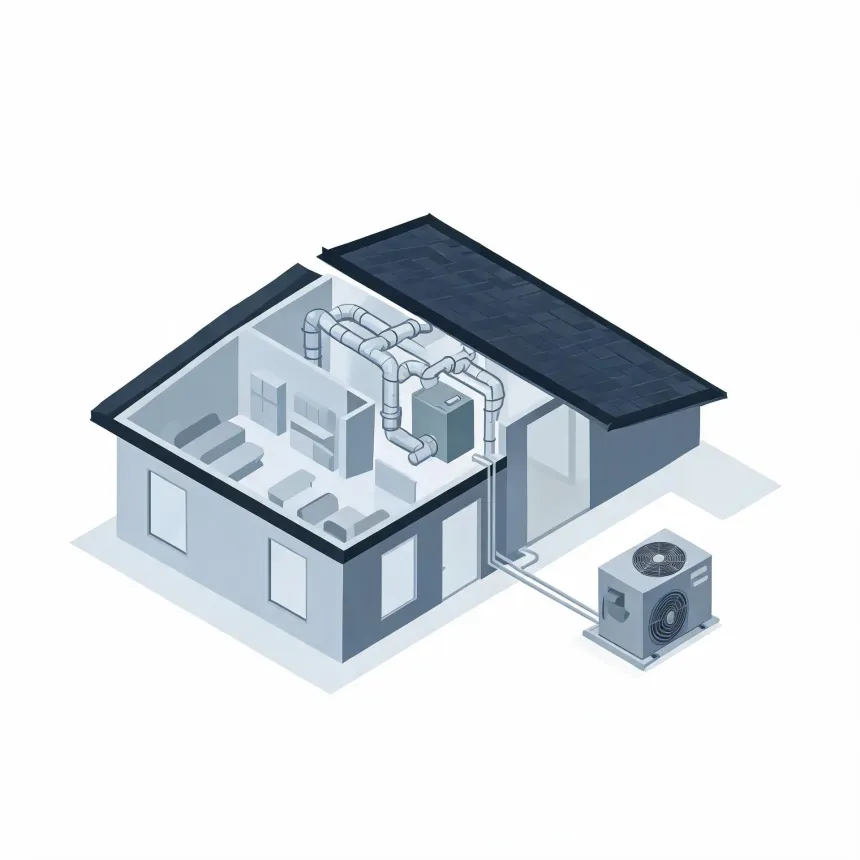
Isometric illustration of a cutaway single-story house showing interior ductwork and an air handler connected by lines to an outdoor condenser unit on a pad beside the building.
Your system heats October through April and cools May through September.

NOAA nClimDiv, 1991–2020 normals

Half the houses in Forsyth County were built in 1984 or later.

A heat pump that came with a newer house still has working life left in it, so repairing it is usually the right call.

October through April is seven months of load on this heat pump, and trouble usually shows up early

Cooling runs May through September
Heat runs October through April
Climate zone 3A
Winters here barely test a heat pumpNights average 30°F in December through February, nothing like the cold further north

Most heat pump failures trace back to a handful of parts, and they fail for ordinary reasons. The capacitor that kicks the compressor or fan motor into motion weakens over time and eventually can't deliver the jolt needed to start. Contactors pit and burn from the arcing that happens every time they close, until one day they don't make contact at all. The reversing valve, the part that switches the system between heating and cooling, can stick in one position, and when that happens the unit blows cold air when it should be heating. Fan motors wear out their bearings from years of spinning. None of these are failures of the whole system, they're parts that have a working life and reach the end of it. The compressor is the one part you don't want hearing bad news about, since a failing compressor usually means the unit itself is done, not just a repair.

A mild winter means repair is usually the right call

Nights only average 30°F through the worst of winter, so the heat pump isn't working as hard as units further north. That means less wear on the compressor, and it's more often a single failed part behind the problem, not the unit itself. Get it looked at before deciding it's done.

Find a contractor
A gray heat pump outdoor unit mounted on a concrete pad next to a residential house with lap siding and stone accents.

A newer house usually means a newer heat pump

If the system has been in since the house was built, check the install date on the unit's nameplate before you assume it's old. A heat pump still within its working life is worth repairing first and replacing only if the shop finds the compressor itself has failed.

A frozen coil gets worse by the hour

A heat pump that can't defrost right will keep building ice on the outdoor coil every cycle it runs. That ice blocks airflow across the coil, so the system pulls in less heat each time, and it compensates by running longer. Left alone, the coil ices over solid and the compressor ends up working against a unit that can't exchange heat at all.

A refrigerant leak doesn't stay small

Running a heat pump low on refrigerant forces the compressor to work outside the pressures it was built for. That strain shows up as heat, and heat breaks down the oil that's supposed to keep the compressor's moving parts protected. A leak caught early is a sealed fitting and a recharge. The same leak ignored long enough can take the compressor with it.

Before anyone comes out, there are a few things worth checking yourself. Look at the thermostat first. Make sure it's set to heat, not just on, and that the set temperature is actually above room temperature. Go outside and check the outdoor unit. If the coil is caked in ice or buried under leaves and debris, that alone can stop a heat pump from working right. Check the indoor air filter too, since a clogged filter chokes airflow and can make the whole system struggle. Walk around the house and see if the breaker for the unit has tripped. None of this takes special tools, and ruling these out first means that when a tech does show up, the time gets spent on the actual problem instead of the basics.

A diagnostic starts outside, not with a part swap. The tech checks the pressures on both the suction and liquid lines first. That tells them whether the system has the right charge and whether the compressor is pumping the way it should. Inside, they check the air temperature coming off the vents against the air going into the return, since that split says a lot about whether the system is actually moving heat. They check the defrost board and sensor too, especially if ice on the outdoor coil was part of the complaint. Then come the electrical readings, amp draw on the compressor and fan motor, resistance checks on anything that looks burned or loose. None of this is guesswork. Each reading rules something in or out, and by the time the tech is done, they can tell you what failed and why, not just that something did.