30°F
That's about where nighttime lows sit for months here, cold enough for frost to keep forming on the coil faster than a defrost cycle can clear it.

Get matched with a heat pump pro in Forsyth County
Some ice on the coil during a defrost cycle is normal. A unit coated in frost that won't clear, or one blowing cold air while it's iced up, is not. This page gets into why that happens in cold weather and what it means for your heat pump. Send in your details and a contractor who works on heat pumps in Forsyth County will reach out to sort out yours.
Get my matchA frozen heat pump usually means it's stuck trying to defrost itself and can't finish the job. In normal operation, your outdoor unit runs a defrost cycle every so often in cold weather, melting off a thin layer of frost that builds up as it pulls heat from the air. A unit that's fully coated and staying that way has lost the part of that cycle that's supposed to end it: the reversing valve may not be switching back, the defrost control board may not be sensing the frost correctly, or a fan motor may have stopped clearing warm air across the coil. On a cold night in Forsyth County, that frost just keeps building instead of melting off. Left alone, it blocks airflow across the coil entirely, and the system will keep running without actually heating your home. Shutting it off and letting it thaw won't fix what caused it. It needs a contractor to find which part of the defrost cycle stopped working.




Winter nights average 30°F
Nights sitting at 30°F for months give frost plenty of chances to build on the coil before a defrost cycle can catch up.
Heat runs October through April
Seven months of heat means your outdoor unit is cycling through defrost that whole stretch, not just on the coldest nights.
Cooling runs May through September
Five months of cooling rest the outdoor unit, but icing problems almost always show up on the heating side here.
NOAA nClimDiv 1991-2020
Some homeowners keep the heat pump running while they wait for help, figuring warm air, even a little, beats none. If the outdoor unit is icing but still cycling, this can hold the house at a livable temperature for a while. It also keeps strain on a system that's already struggling to defrost, and in a hard freeze the ice only builds further with each cycle that fails to clear it. The backup heat strip, if your system has one, may carry more of the load than usual, which shows up on the power bill before the ice is ever dealt with.
Switching the thermostat to off, or to emergency heat if your system has that setting, stops the outdoor unit from running against the ice. The coil gets a chance to thaw on its own if temperatures allow, and a contractor arriving later has a system that isn't fighting itself, which makes the real problem, whatever is keeping defrost from finishing, easier to find. The tradeoff is heat. Emergency heat, where available, keeps the house warm without the outdoor unit; without it, the house relies on whatever other heat source you have until the unit is back in service.


That's about where nighttime lows sit for months here, cold enough for frost to keep forming on the coil faster than a defrost cycle can clear it.
A working defrost cycle runs this often in cold weather. If frost keeps building instead of melting off, something in that cycle has stopped working.
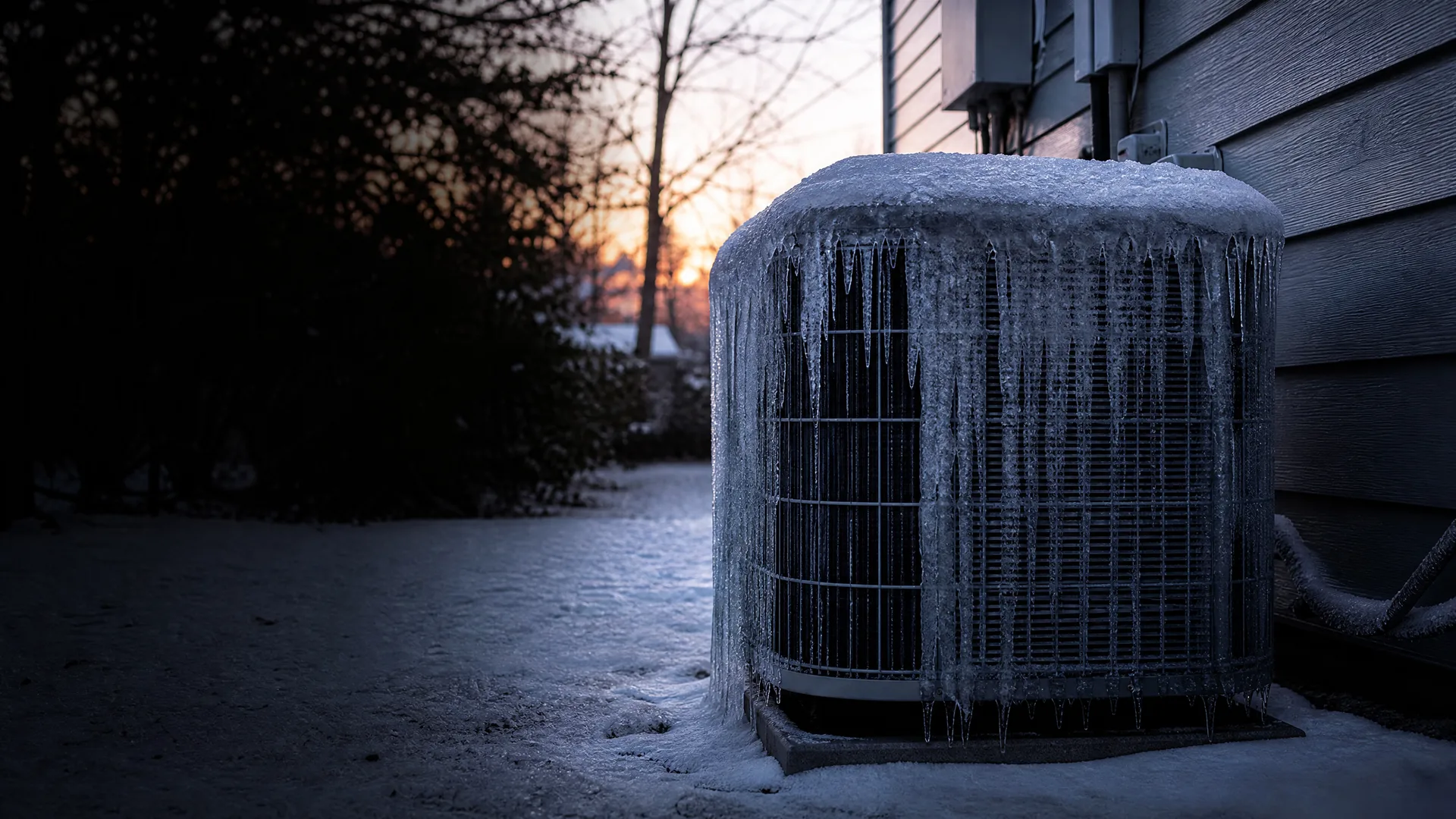
The sun isn't up yet when you go out for the trash and see it. The outdoor unit sits in the side yard under a coat of ice thick enough to hide the fan blades. It's cold out, the kind of 30-degree night Forsyth County gets used to come January, and the unit isn't humming the way it should. Inside, the air coming through the vents feels cooler than it did last night. You crouch down and look at the coil through the ice. Nothing is moving. You go back inside, check the thermostat, and start looking for someone who can come take a look at it.
A frozen outdoor unit does not fix itself by waiting it out. The ice holds, the defrost cycle keeps failing to catch up, and the compressor keeps drawing power while delivering less heat than it should, which costs you on the bill before it costs you the system. Forsyth County winters give a struggling defrost cycle months to fail, not days, so a unit that iced up once this week will likely ice up again next week unless someone gets into why the cycle isn't finishing. That takes a look at the defrost board, the sensor, or the reversing valve, not another night of hoping it clears on its own. You can send in what's going on with your unit and get matched with a contractor who handles heat pumps in this area. Once that's sent, you're not the one tracking down who's available or waiting on hold. That part is off your plate, and you can get back to keeping the house warm while it gets looked at.
Calling in a repair now means a technician finds the stuck defrost cycle or failed sensor before the compressor has spent days working against a block of ice.
Waiting it out means the ice stays put, the unit keeps drawing power without heating the house, and whatever caused the freeze in the first place is still there when someone finally looks.



This is what a healthy outdoor unit looks like. The coil is bare, the fan spins free, and the refrigerant lines run clear to the house. Air moves through it the way it's built to.

Dirt and debris packed into the coil block the airflow it needs to pull heat from the outside air. A coil in this shape can't shed frost the way it should, and that's often where the freezing starts.
You'll see it from the window before you get close: the cabinet white all over, not just a strip near the bottom. The fan may be stuck behind a sheet of ice, or still spinning while the coil stays caked. Sometimes you can hear it labor, a different pitch than usual, or notice the air coming through your vents has gone cool instead of warm. If the unit sits there iced up for a day or more, the compressor is working harder for less heat the whole time, and that shows up on your power bill before anything else does. Left alone long enough, that strain is what wears a compressor down early.

This is what sits beside the house most of the year. The coil is clear, the cabinet is clean, and the lines running up to the disconnect box are doing their job out of sight. You'd walk past it without a second look.

This one's caked in dirt and debris across the coil guard and fan grille. Airflow can't move through buildup like that, and a unit working that hard against its own grime is a unit closer to freezing over on a cold night.
At 13.43 cents per kilowatt-hour, running the heat pump isn't what strains the bill when it ices over. It's the compressor working for hours against a frozen coil, pulling power the whole time while barely any heat reaches the house.
EIA-861 2025
A heat pump that clears itself during a normal defrost cycle is doing what it's built to do. One that stays coated in ice, with the fan stuck or barely turning, has a defrost cycle that started and didn't finish. That's the whole problem in one line: the unit is stuck partway through a job it does on its own dozens of times a winter, and something, a sensor, a control board, a reversing valve, isn't letting it complete.
Forsyth County's winters give that failure plenty of room to happen. Nights sitting near 30°F for months mean frost keeps building on the coil, and if the defrost cycle can't keep pace even once, the ice has all night to thicken. A unit in that state isn't resting. It's drawing power and running the compressor while the coil underneath stays blocked, which means less heat reaching the house for the electricity going into the unit. That shows up on the bill before it shows up as a bigger repair.
None of this clears on its own by waiting. The ice holds, the cycle keeps failing the same way, and the compressor keeps working against it. A technician who gets out to the unit can find where the cycle is breaking down, whether it's a sensor reading wrong or a valve not switching, and get the coil back to running clear.
Once your details are in, the part that's yours to handle is done. Finding the right contractor for your situation stops being something you have to manage from here.

After this form, you can stop searching for a heat pump pro.