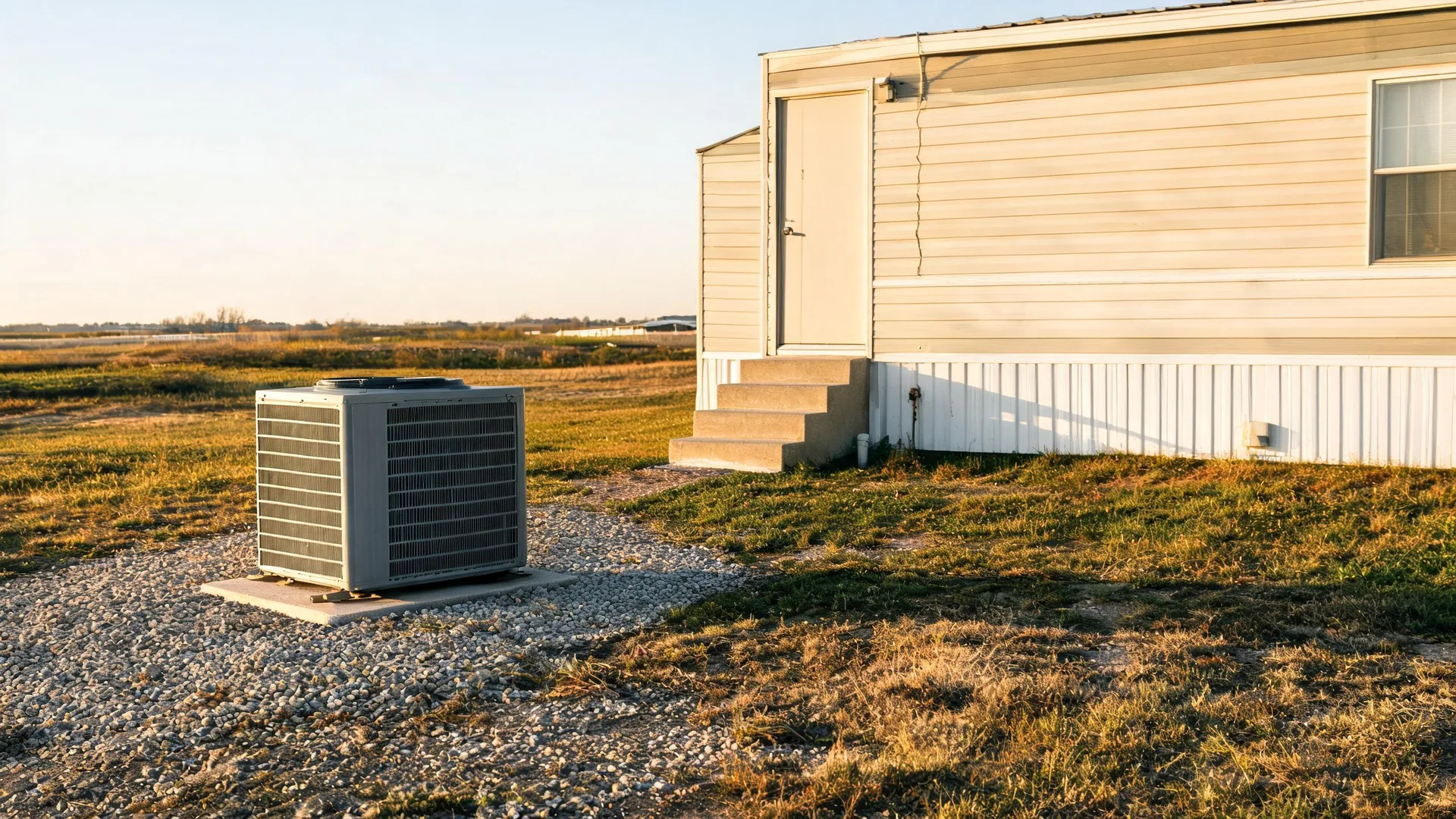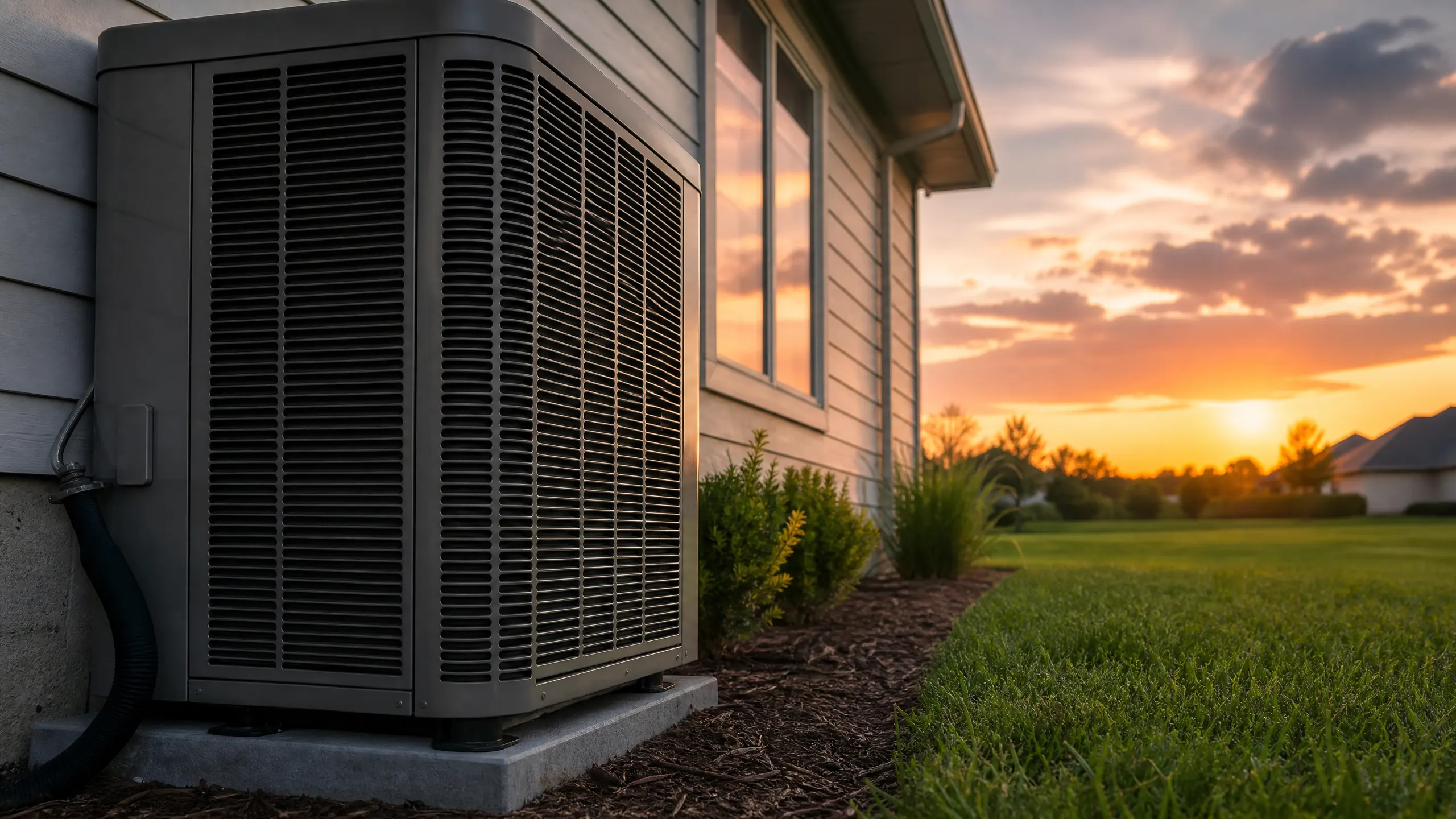
An outdoor air conditioning condenser unit mounted on a concrete pad beside a house at sunset.

Heat Pump Repair in Wilson, NC

Tell us about the job

Takes about a minute. No obligation.

RepairHeat PumpWilson County, NC
Step 1 of 2

What ZIP code is the job in?

An easier climate for the heat pump

Wilson County stays warm most of the year, with a short, mild winter. A heat pump here never has to fight through weeks of hard freezes. That's a steadier workload than this equipment carries in colder parts of the country.


What that means for the repair call

A heat pump that hasn't been pushed hard usually isn't worn out underneath. If something's gone wrong, age or a skipped service visit is a more likely cause than years of strain. That's usually good news for fixing it rather than replacing it.

7 months
October through April, your system heats
5 months
May through September, it cools
33°F
the average winter night it heats against
88°F
the average summer afternoon it cools against
Isometric line illustration of a cutaway single-story house showing interior rooms, ceiling ductwork, an indoor air handler unit, and an outdoor condenser connected by a line set.
Your system heats October through April and cools May through September.

NOAA nClimDiv, 1991–2020 normals

Half the houses in Wilson County were built in 1986 or later.

A heat pump that came with a newer house still has years left in it, which usually makes repair the right call.

Worth a repair call before it gets worse

A heat pump that's had an easier life is usually a heat pump worth fixing. Get the diagnosis before you decide it's not.

Find a contractor
A man in a dark sweatshirt and brown work pants, seen from behind, climbs porch steps toward an orange-red front door while carrying a canvas tool bag, with a potted shrub in a terracotta planter to the right.
A gray outdoor HVAC unit mounted on a concrete pad beside a house with gray lap siding and a stone foundation.

What to check before you pick up the phone

Start at the thermostat. Make sure it is set to heat, not cool, and set a few degrees above room temperature so it actually calls for heat. Walk outside and look at the unit. Ice on the coil or leaves packed around the cabinet will stop it cold, and that is something you can clear yourself. Check the breaker panel too. A heat pump trips a breaker sometimes with no other warning, and a flipped switch is the easiest thing to rule out before anyone comes out. Pull the air filter and hold it up to a light. If you cannot see through it, air cannot get through it either, and nothing else about the system will work right until that is fixed. Last, pay attention to what the indoor unit is actually doing. Air blowing but never warming up points to the outdoor unit or the refrigerant side. No air movement at all points somewhere else. Knowing which one you have got before the call helps the tech get to the real problem faster.

Age is the real question, not the symptom

A compressor that's past its working life gives you the same complaints as one that just needs a capacitor. Weak heat, short cycling, a unit that won't start. The symptom doesn't tell you which one you've got. What the compressor has already been through does.

A repair that holds is worth more than one that doesn't

Fixing a failed part on a unit near the end of its life sometimes just buys a few months before the next part goes. Fixing that same part on equipment with years left means the money goes toward a system that's actually going to use them.

A heat pump that's struggling will keep trying to do its job unless something stops it, and that's often the problem. A weak capacitor makes the compressor strain to start each cycle, and every cycle it survives leaves it weaker for the next one. A slow refrigerant leak gets worse simply because the system keeps running on less charge than it needs, and low refrigerant makes the compressor run hotter than it was built to handle. Ice on the outdoor coil is the clearest case. Once ice starts building, it blocks airflow, which makes the coil colder, which grows more ice. Left alone, that cycle ends with a compressor that's overheated or seized rather than a simple coil that needed defrosting. A part that fails early and gets ignored usually takes a bigger part down with it.

A diagnostic call starts with the tech asking what the system is doing, not with tools out. Blowing cold air, not turning on at all, running nonstop, or icing over all point somewhere different, so that answer narrows things down before the cabinet even comes off. From there the tech checks the thermostat call, the breaker, and the air filter first, the same things worth ruling out before anyone was called. Once those are cleared, gauges go on the refrigerant lines and a meter goes on the electrical components, the capacitor, the contactor, the reversing valve. That's how a tech tells a low charge from a bad run capacitor from a stuck valve, since more than one of those can make a heat pump blow the wrong temperature air. The visit ends with the tech naming the failed part and what it takes to fix it, not a guess.