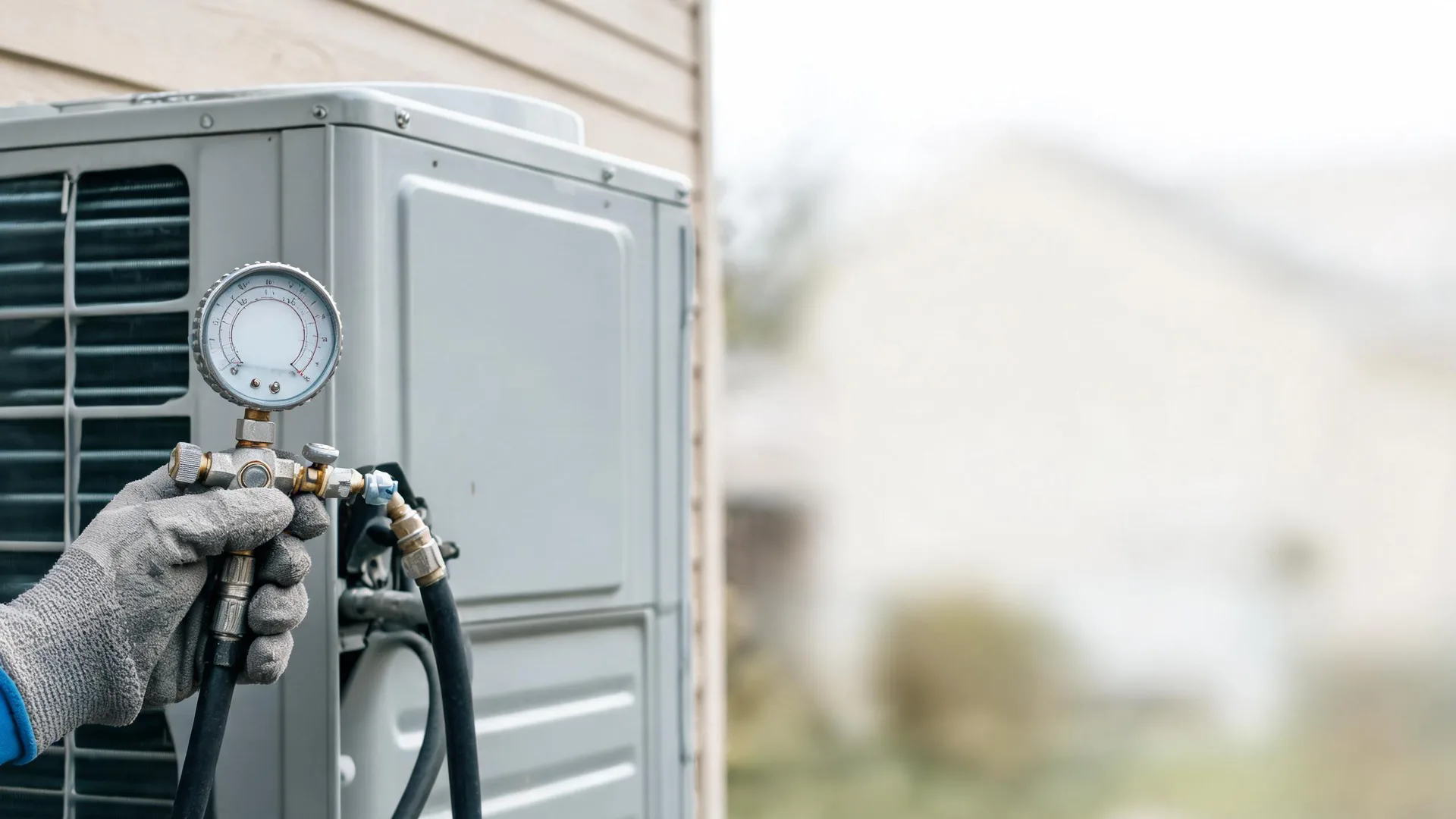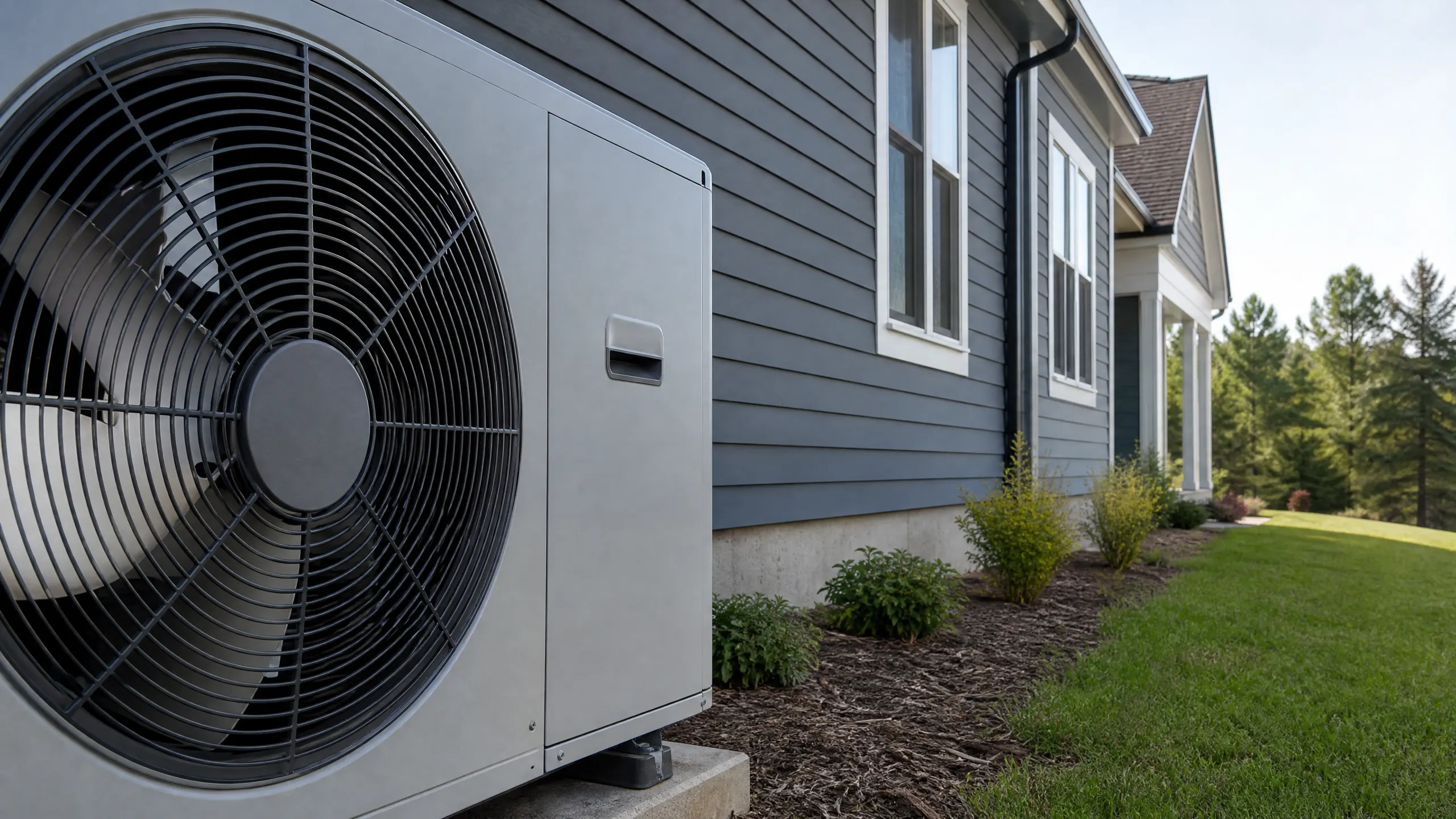
A heat pump outdoor unit mounted on a concrete pad next to the gray-sided exterior wall of a residential house.

Heat Pump Repair in Thomasville, NC

Tell us about the job

Takes about a minute. No obligation.

RepairHeat PumpDavidson County, NC
Step 1 of 2

What ZIP code is the job in?

What the repair history tells you

A heat pump that keeps needing the same kind of repair has a problem the last fix didn't actually solve. Maybe it's a capacitor that keeps failing. Maybe it's a compressor that keeps tripping its overload. Replacing the part again usually just buys another short stretch before it happens again. A unit that's run for years with nothing but filter changes and the odd sensor swap is a different situation, even when the current problem looks serious.


What a dying compressor changes

The compressor is the one part that can't be swapped out cheaply. It's also the part most likely to fail once a heat pump gets old. A capacitor, a contactor, a control board, these are all built to be serviced over the life of the system. The compressor is built to last as long as the system does. If a contractor traces the problem to the compressor itself, that changes the math on repair versus replacement.

7 months
October through April, your system heats
5 months
May through September, it cools
31°F
the average winter night it heats against
87°F
the average summer afternoon it cools against
Isometric line illustration of a cutaway single-story building showing interior rooms, ceiling ductwork, an indoor air handler, and an outdoor condenser unit connected by refrigerant lines.
Your system heats October through April and cools May through September.

NOAA nClimDiv, 1991–2020 normals

Thomasville winters stay mild, with overnight lows averaging 31°F through December, January and February.

A heat pump here isn't fighting single-digit nights every winter, so the compressor sees less strain over its life.

Half the homes in Davidson County were built in 1985 or later

Half the homes here were built by 1985
129 damaging wind events from 2015 to 2024
26 hail events from 2015 to 2024
Heat pump trouble in ThomasvilleHeat runs October through April here, and September is when a weak part tends to give out first.

A heat pump that's icing up or short cycling will keep running if you let it, and that's the problem. A frozen coil blocks airflow, so the system pulls harder to move the same amount of heat, and the ice just builds further. A compressor tripping its overload and restarting on its own is doing that because something is already asking too much of it, a low charge, a failing capacitor, a dirty coil. Each restart under those conditions heats the windings a little more. None of this fixes itself by running longer. It just moves the system closer to the one failure that isn't worth repairing.

A mild climate makes most heat pump problems worth fixing

Less strain on the compressor over the years means a repair here is more likely to hold. If yours is acting up now, get it looked at before the cold months put more demand on whatever is already struggling.

Find a contractor
A man in a dark long-sleeve shirt and tan work pants walks up concrete steps toward an orange front door, carrying a waxed canvas tool bag in his right hand, with a potted shrub beside the gray-sided house.
A white mini-split heat pump outdoor unit mounted on a concrete pad beside a gray-sided house, surrounded by gravel and green shrubs.

Know the age before you decide anything

If your heat pump came with the house, check the paperwork or ask whoever installed it how old it is. A system installed within the last several years is still early in its working life, and that's reason enough to get a diagnosis before you think about replacing anything. Even a compressor issue is worth having looked at, since the part itself might be under warranty.

What wears out first

A contactor pits from arcing every time it opens and closes, and after enough cycles it sticks or stops making contact. A capacitor loses its charge over time and can't give the compressor and fan motors the kick they need to start. Both are small parts, both are common failures, and neither one means the system itself is in trouble.

What outdoor coil neglect leads to

The outdoor coil has to shed heat in summer and pull heat from the air in winter, and it can't do either if it's coated in dirt or buried in leaves and ice. A blocked coil makes the compressor work harder to move the same amount of heat, and that extra strain is what eventually takes the compressor down with it.

Short cycling is one of the clearest signs something's wrong. The system kicks on, runs for a short stretch, then shuts off before it's finished a full cycle, and starts again soon after. A heat pump that keeps switching between heat and defrost, or blows air that isn't warm when it should be, is usually struggling with the reversing valve. Ice on the outdoor unit that doesn't clear during the defrost cycle points the same direction. Strange sounds matter too. A hum with no fan movement usually means a capacitor. Grinding or screeching points to a motor bearing giving out. None of these get better by waiting.

A diagnostic visit starts outside, at the unit itself, before anything gets taken apart. A tech checks the refrigerant charge, reads the pressures, and watches how the compressor is pulling amps against what it should be drawing. Electrical parts get tested under load, not just looked at, since a capacitor or contactor can look fine sitting still and still fail the moment it's asked to do its job. Airflow gets checked too, because a coil that's dirty or a filter that's clogged will throw off every other reading and point a tech toward a problem that isn't really there. Only once all that lines up does the tech say what's actually wrong, and what it'll take to fix it.