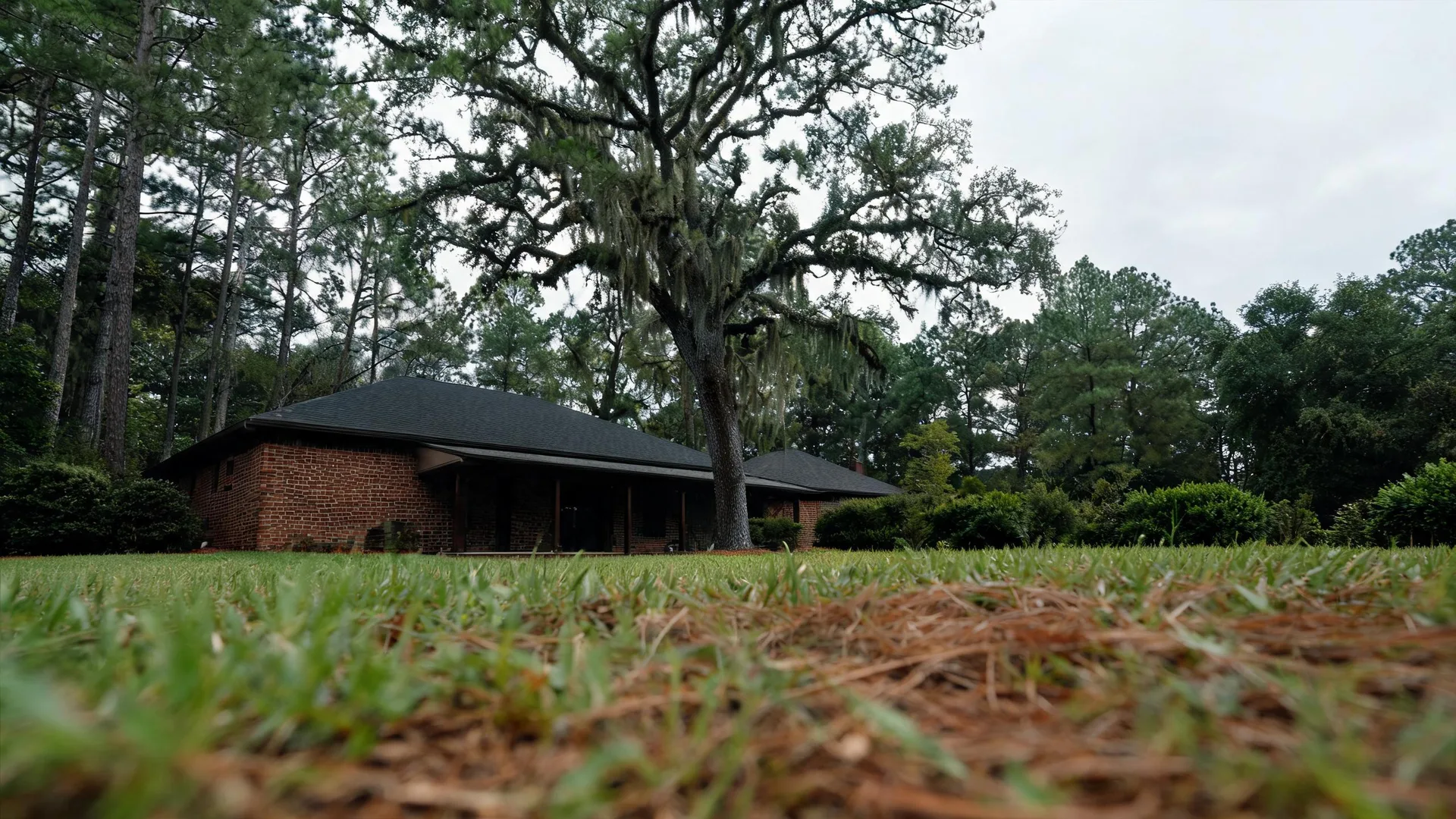






Low ground-level view across a lawn toward a single-story brick house with a dark shingled roof, framed by a large moss-draped oak and tall pine trees under an overcast sky.

Heat Pump Repair in Siler City, NC

Tell us about the job

Takes about a minute. No obligation.

RepairHeat PumpChatham County, NC
Step 1 of 2

What ZIP code is the job in?

Chatham County saw 149 severe weather events between 2015 and 2024. Most of that was wind, 125 events, with 12 hail events and a tornado mixed in. An outdoor heat pump unit sits outside through all of it, and wind-blown branches or hail can bend the fins or crack the fan housing without stopping the unit from running. A heat pump that still turns on after a storm isn't necessarily fine. If yours took a hit, or you just heard it rattling during the last one, it's worth having someone look at the coil and the fan before the next system comes through.

7 months
October through April, your system heats
5 months
May through September, it cools
32°F
the average winter night it heats against
88°F
the average summer afternoon it cools against
Isometric line illustration of a cutaway house showing interior rooms with furniture, ceiling ductwork under a dark shingled roof, and an outdoor condenser unit connected by lines on the right.
Your system heats October through April and cools May through September.

NOAA nClimDiv, 1991–2020 normals

A heat pump has a fan running outside in every storm that comes through.

Bent fins and a cracked housing don't always stop it from running, but they stop it from running right.

Half the homes here were built in 1998 or later, yours may be one of them

Half the homes here were built by 1998
Climate zone 3A
Power here costs 14.86 cents per kilowatt-hour
Built for Seven Months of WorkHeat runs here October through April. A weak part fails fast once that load starts.

A heat pump that came with a newer house has a lot of working life ahead of it. That makes a repair call worth having before anyone talks about replacement. A failing capacitor or a bad control board doesn't mean the unit is at the end of its life, especially if it was installed along with the house. If you don't know the install year, ask whoever comes out to check it. That one detail tells you more about whether to repair or replace than how the unit is acting right now.

If the last storm shook your unit, have it checked before the next one

A heat pump that rattled in a storm, or took a branch, can keep running for weeks before it shows a problem. Have the coil and fan checked now, while someone can still look at it before trouble, not after.

Find a contractor
A dark gray heat pump unit mounted on a concrete pad next to a house with gray siding and a stone veneer wall.

What You Can Check First

Before calling anyone, go outside and look at the unit. Check that the outdoor fan spins freely and isn't rubbing against the housing. Look at the fins on the coil. If they're caked with leaves, grass clippings or dirt, that's worth clearing by hand or with a hose, since a blocked coil makes the whole system work harder than it should. Inside, check the air filter and swap it if it's gray or clogged. Look at the thermostat and make sure it's set to the right mode and the batteries aren't dead, since a heat pump stuck in the wrong mode can blow air that feels wrong without anything being broken. Check the breaker box for a tripped breaker before assuming the unit itself has failed. If there's a disconnect box mounted on the wall near the outdoor unit, make sure it's pushed in all the way. None of this fixes a bad capacitor or a failed control board, but it rules out the simple causes first, and it gives whoever comes out a clearer picture of what you saw and when.

What a failing heat pump sounds and feels like

A heat pump in trouble usually tells you before it quits outright. Air coming from the vents that's cooler than it should be in summer, or barely warm in winter, often means the system is low on refrigerant or a component like the reversing valve has failed. Short cycling, where the unit kicks on and off every few minutes instead of running a full cycle, wears down the compressor fast. Ice forming on the outdoor coil when it shouldn't, grinding or clicking from the outdoor unit, or a breaker that keeps tripping are all signs something inside has failed, not signs to wait out.
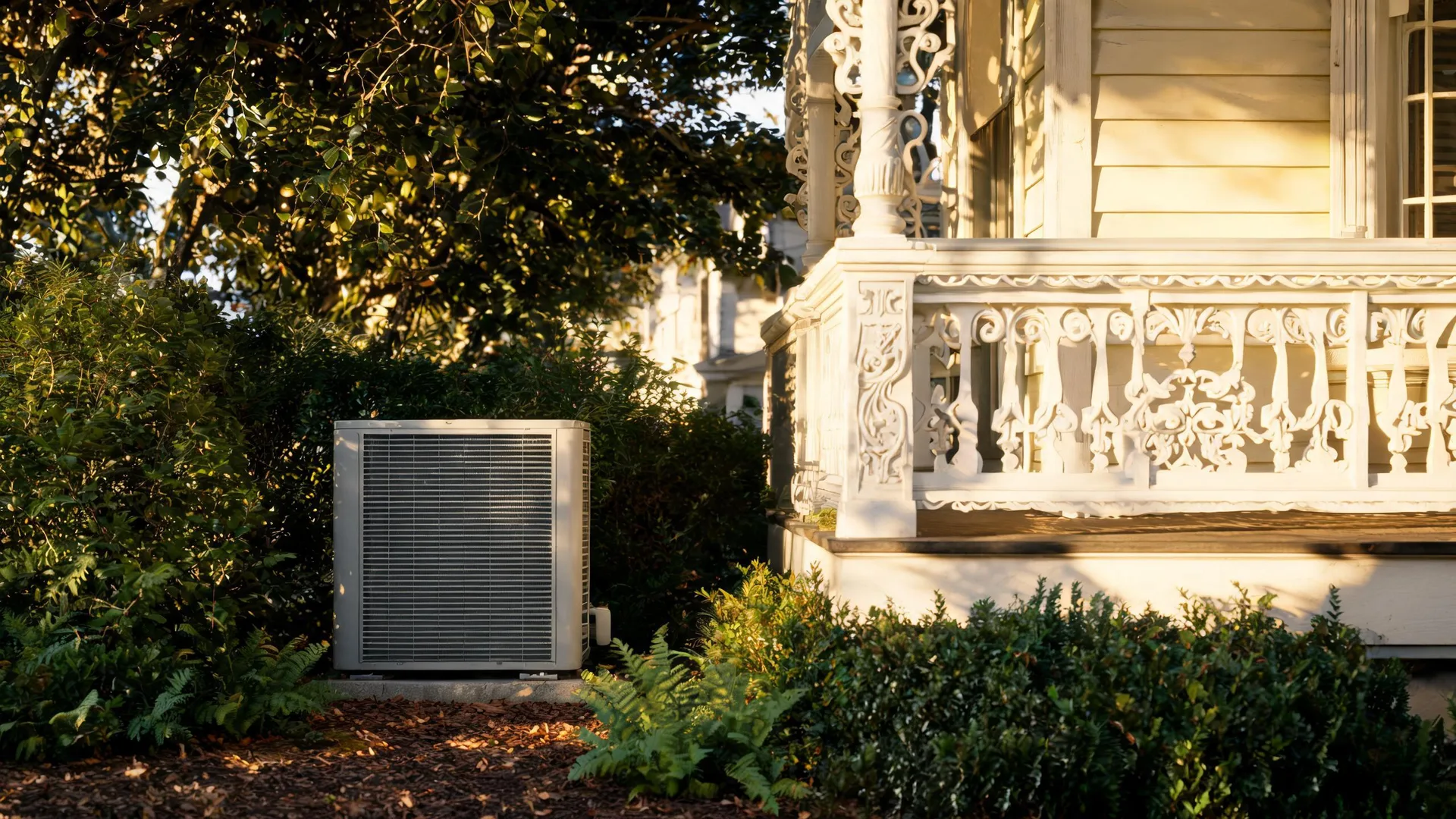
Why waiting costs more than the repair itself

A heat pump rarely fails all at once. A weak capacitor makes the compressor work harder to start, and a compressor that strains every cycle burns out sooner than it should. A dirty coil makes the whole system run longer to do the same job, which puts hours on parts that were only built to run so many. Catching a bad capacitor or a clogged coil early is a small job. Letting it run that way until the compressor fails turns a repair into a replacement.

A reversing valve that's sticking will still move air. A compressor running low on refrigerant will still run. That's the trap. The unit keeps working, just worse, and every hour it runs that way asks parts that were fine to cover for the one that isn't. A compressor starting against a weak capacitor strains a little more each cycle until it doesn't start at all. A coil running iced over blocks its own airflow, so the system runs longer to move less air, and the compressor behind it logs hours it was never meant to log. None of this shows up as the unit shutting off. It shows up as a bigger repair a few weeks later, built entirely out of the small one nobody caught.

The decision usually comes down to the compressor. That part carries the real cost of a heat pump, and most of what fails around it, a capacitor, a contactor, a fan motor, can be swapped out on its own without touching the compressor at all. Those are repairs, plain and simple, and they're worth making on almost any unit. It's a different question when the compressor itself is the thing that failed, since replacing just that part can cost close to what a new outdoor unit runs, and a tech will usually say so plainly rather than let you sink money into an old compressor. Age matters too, but less than people think. A unit that's been maintained and sees one part fail isn't the same as a unit where parts have started failing one after another. The second pattern is the one that means the system's worn out generally, not just unlucky.