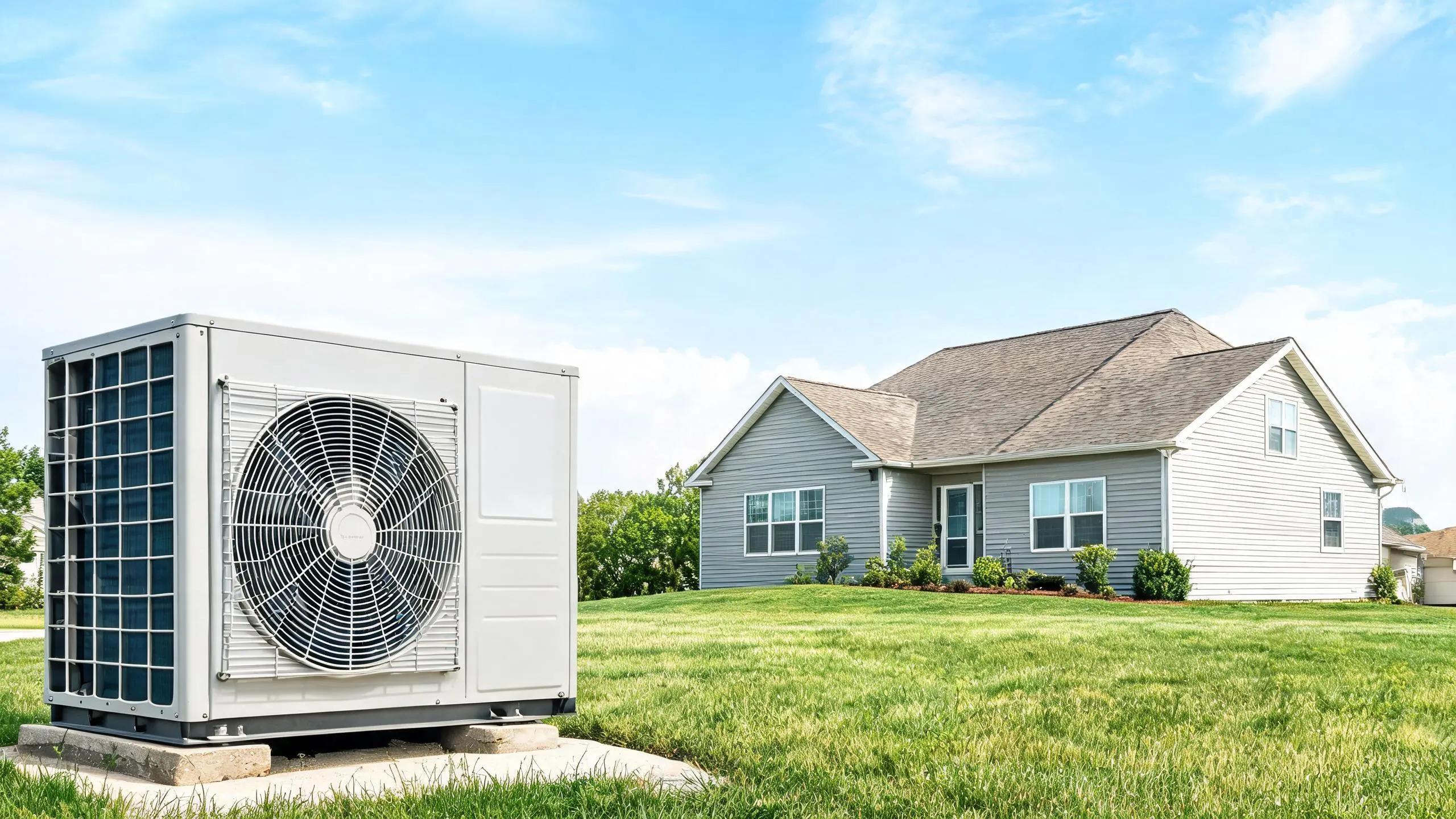





An outdoor HVAC condenser unit on a concrete pad in front of a single-story house with gray siding and a shingle roof.

Heat Pump Repair in Shelby, NC

Tell us about the job

Takes about a minute. No obligation.

RepairHeat PumpCleveland County, NC
Step 1 of 2

What ZIP code is the job in?

Cleveland County saw 117 severe weather events between 2015 and 2024. Most of that was wind, 70 events, with 28 hail events and 9 tornadoes mixed in. A heat pump's outdoor unit sits outside through all of it, and hail dents the fins while wind throws branches and debris into the coil. A unit that still runs after a storm can be running on a damaged coil or a bent fan blade, and that shows up as higher bills or a slow decline months later. Power cuts matter too. A quarter of North Carolina households went at least a day without power in 2024, and a heat pump that loses power and comes back on doesn't always come back right.

7 months
October through April, your system heats
5 months
May through September, it cools
31°F
the average winter night it heats against
87°F
the average summer afternoon it cools against
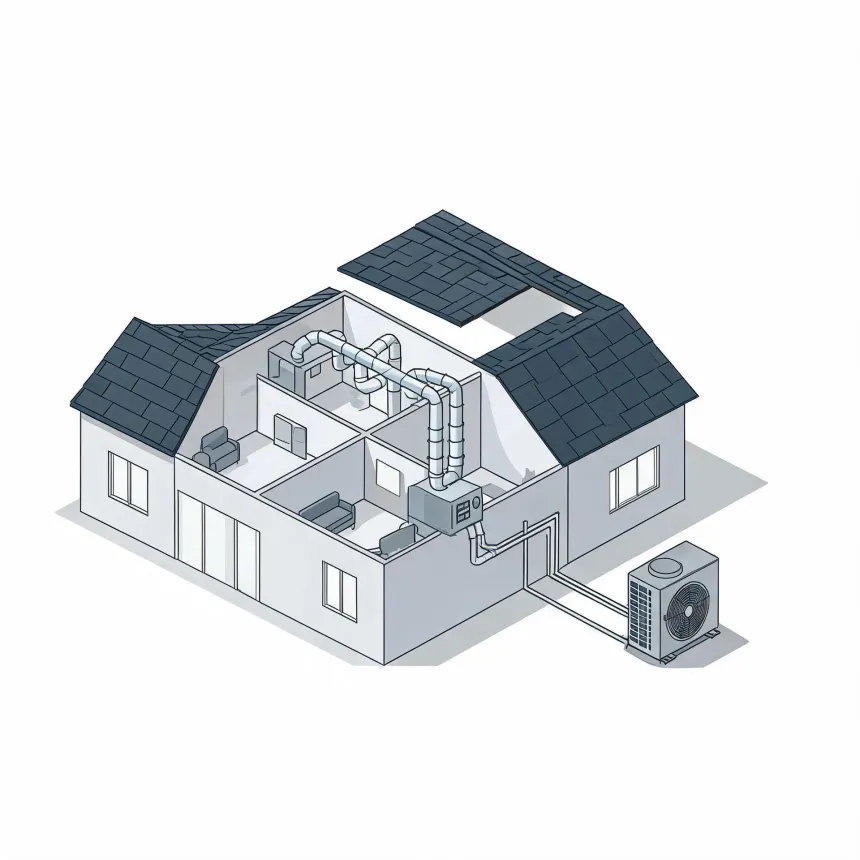
Isometric line illustration of a cutaway single-story house showing interior rooms, ceiling ductwork connected to an indoor air handler, and refrigerant lines running to an outdoor condenser unit on a pad.
Your system heats October through April and cools May through September.

NOAA nClimDiv, 1991–2020 normals

A heat pump that trips its breaker twice in one day has a fault worth finding, not resetting again.

Flip it back on once. If it trips again, leave it off and get someone to look at the compressor and wiring before it trips a third time.

Mild weather is easy on this heat pump, even if storms aren't

70 damaging wind events from 2015 to 2024
28 hail events from 2015 to 2024
Climate zone 3A
October is when a weak heat pump gets found outHeat here runs October through April, and the first cold mornings put the first load of the season on parts that sat idle since spring.

Given that, a repair call here is usually about fixing one worn part, not replacing a system that's been run into the ground. A heat pump that's spent most of its life in short mild winters and a long but moderate summer hasn't been pushed the way one in a harsher climate has. So if yours is cycling oddly or not keeping up, the compressor underneath has likely had an easier road than the dent count or the breaker trips suggest. Get the actual cause checked before you assume the worst. Wind and hail explain a lot of what goes wrong with these systems around Shelby, and that kind of damage is often fixable without touching a compressor that still has good years left in it.

If your outdoor unit took a hit this storm season, get it checked

If a storm came through recently and the outdoor unit took wind or hail, running fine right now isn't proof it came through clean. A bent fan blade or a dinged coil can keep a system going for months before it shows up as a bill you notice. Have it looked at while the fix is still small.

Find a contractor
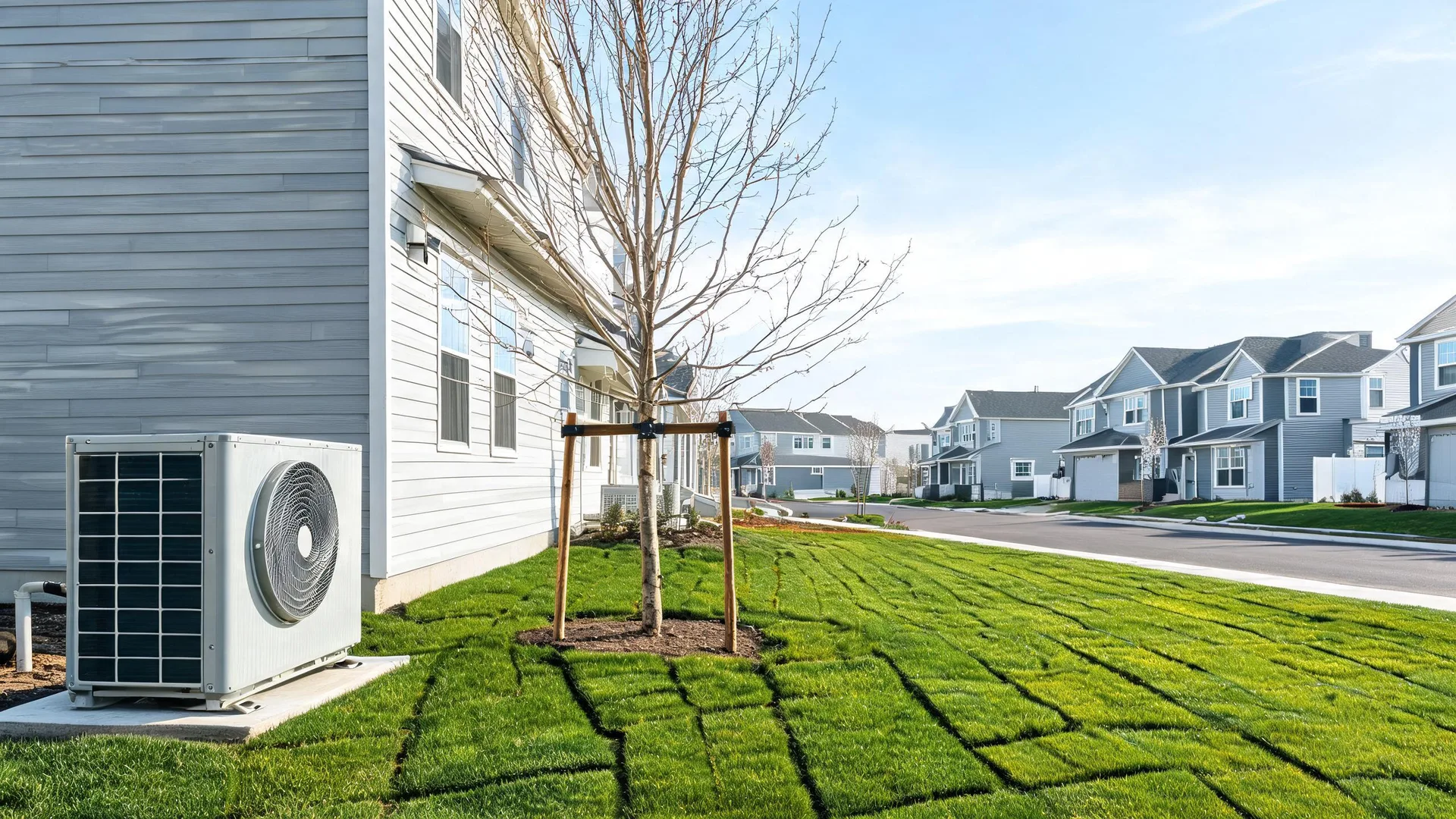
A gray outdoor HVAC unit mounted on a concrete pad beside a house with gray lap siding and a stone foundation.

What a failing heat pump sounds and feels like before it quits

A heat pump that's struggling announces itself in a few ways. It runs longer than it used to without the house feeling any warmer or cooler. It cycles on and off in short bursts instead of settling into a steady run. The air coming out of the vents feels lukewarm instead of properly hot or cold. You might hear it too: a clicking at startup that wasn't there before, a rattle from the outdoor unit, a hissing sound that points to refrigerant escaping somewhere it shouldn't. Ice building up on the outdoor coil in weather that isn't cold enough to explain it is another one worth paying attention to. None of these mean the whole system is done. A dirty coil, a failing capacitor, a low refrigerant charge or a worn contactor can all cause exactly this kind of behavior, and all of them get fixed without a replacement. What matters is not waiting once you notice it. A heat pump running hard to make up for a small problem puts strain on the compressor, and the compressor is the one part you don't want to lose.

A refrigerant leak doesn't fix itself

If a heat pump is low on charge, every hour it keeps running pulls the compressor through cycles it wasn't built to handle with that little refrigerant moving through it. The compressor depends on refrigerant to stay cooled and lubricated. Run it low long enough and it overheats, and a compressor failure usually means pricing out a new system instead of a repair.
A dirty coil makes the whole system work harder

A coil caked with dirt or matted with debris can't move heat the way it should, so the system runs longer to do the same job. That longer runtime shows up on the power bill before it shows up as a breakdown, and it keeps raising the load on the compressor and fan motor every day it's left alone. Cleaning a coil early is simple. Replacing the parts that wore out compensating for it isn't.

Most heat pump failures trace back to a handful of parts, and they wear out the same way in any system. The capacitor that kicks the compressor and fan motor into motion weakens over years of starts until one day it can't deliver the jolt needed, and the unit hums but doesn't start. Contactors pit and burn from repeatedly making and breaking the circuit, until contact gets unreliable and the outdoor unit stops responding to the thermostat at all. The reversing valve, the part that switches a heat pump between heating and cooling, can stick from age or a bad solenoid, leaving the system blowing the wrong temperature air or stuck in one mode. Fan motors seize up when their bearings wear out, and a motor that's struggling to turn draws more current until it trips a breaker or burns out. None of these are failures you can predict by age alone. A heat pump is made of parts that fail on their own schedule, and the only real defense is catching the early signs, the hard starts, the odd noises, the short cycling, before the strain spreads to the compressor.

A diagnostic visit starts outside at the unit itself, not with a clipboard checklist. A tech checks the refrigerant charge, because too little or too much changes how hard the compressor works and how well the system heats or cools. They'll pull the electrical readings on the compressor and fan motor, since a motor drawing more current than it should is usually a motor on its way out. The capacitor gets tested directly rather than eyeballed, because a weak one can still look fine sitting in the unit. Inside, the coil gets checked for dirt or ice, and the contactor gets checked for pitting, since a burned contact can cause the same no-start symptom as a dead capacitor. None of this takes guesswork once the readings are in front of someone who knows what they're looking at. The point of the visit is to find which part is actually failing before it takes something bigger down with it.