





Two white Southern-style homes with wraparound porches lit by landscape lighting at night, flanked by live oak trees hung with Spanish moss.

Heat Pump Repair in Pinehurst, NC

Tell us about the job

Takes about a minute. No obligation.

RepairHeat PumpMoore County, NC
Step 1 of 2

What ZIP code is the job in?

Moore County saw 167 severe weather events between 2015 and 2024. Most of that was damaging wind, 136 times in that same stretch, along with 15 hail events, a tornado, four tropical storms or hurricanes, and 7 winter storms. The outdoor unit sits outside through all of it, exposed to wind-blown debris and hail with nothing to shield it. A unit can take a hit and keep running, at least for a while, with a bent fin or a cracked panel doing damage you won't see from the kitchen window. Statewide, a quarter of households went at least a day without power in 2024, and a heat pump that's already stressed is the one that won't come back cleanly when the power does.

7 months
October through April, your system heats
5 months
May through September, it cools
33°F
the average winter night it heats against
89°F
the average summer afternoon it cools against
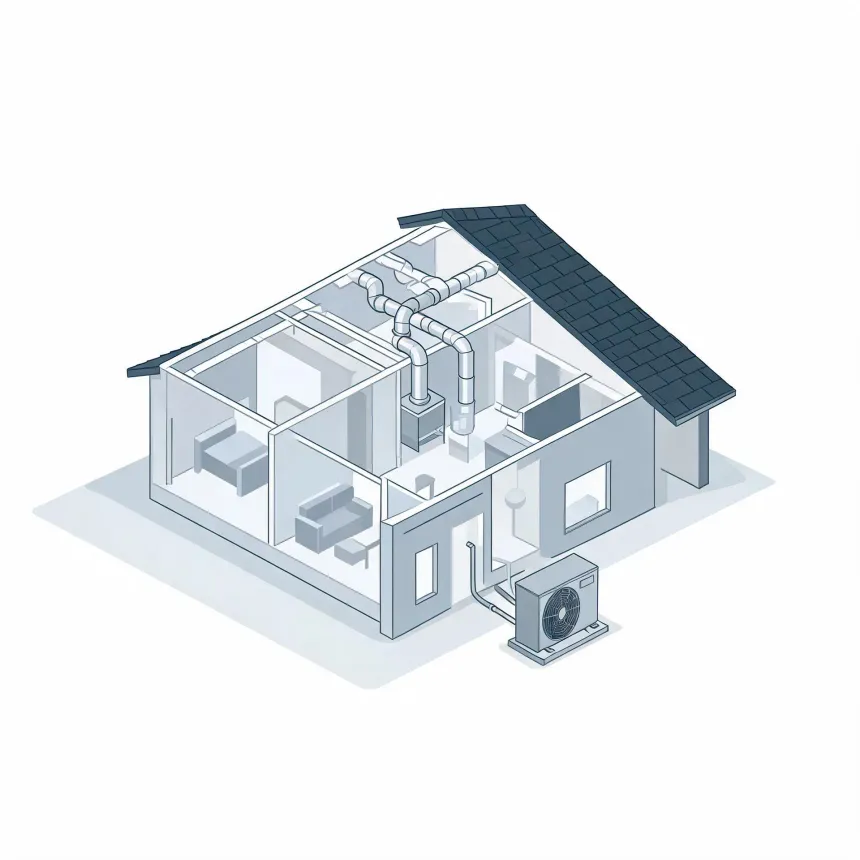
Isometric line illustration of a cutaway house showing interior rooms with furniture, ceiling ductwork connected to an indoor air handler, and an outdoor condenser unit linked by refrigerant lines.
Your system heats October through April and cools May through September.

NOAA nClimDiv, 1991–2020 normals

A heat pump that short cycles or runs constantly is already working harder than it should.

Catch it at the strange noise or the weak airflow, before the compressor takes the damage that ends in a full replacement.

Half the homes here were built in 1994 or later, so the heat pump in yours is probably worth fixing

Half the homes here were built by 1994
136 damaging wind events from 2015 to 2024
Power here costs 15.23 cents per kilowatt-hour
September is when a weak heat pump gets found outHeat here runs October through April, and the first cold push after months of standing idle is what finds the part that was already failing.

If your house falls on the newer side of that line, the heat pump in it has probably got years left, and that's worth knowing before you decide anything. Call a repair tech out first. A bad capacitor or a stuck reversing valve is a straightforward fix on a unit that age, and there's no reason to pay for a replacement when a repair gets you the rest of its working life. Mobile homes make up a smaller share of housing here, and those systems tend to carry more wear for their age, so if that's your setup the math can look different. For most homes around Pinehurst, though, get the unit looked at before anyone talks replacement.

If your unit has taken a hit, get it checked before it fails on you

If your outdoor unit has taken wind or hail this year, get it looked at even if it still runs. A bent fin or a cracked panel won't always show from the kitchen window, and it's the unit already carrying that damage that tends to fail when the power comes back on after an outage.

Find a contractor
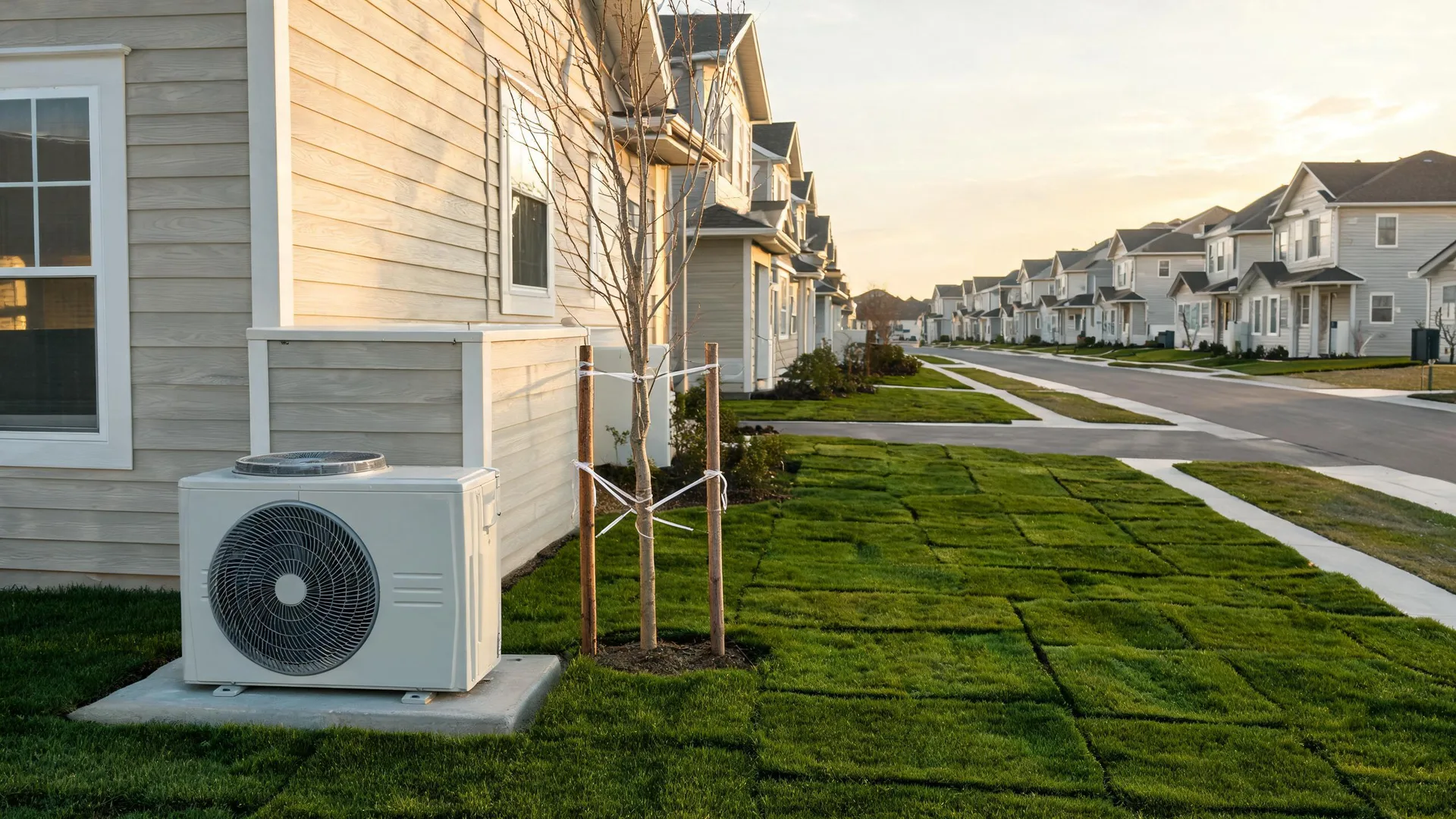
A white mini-split heat pump outdoor unit mounted on a concrete pad beside a gray-sided house, surrounded by gravel and green shrubs.

A heat pump that's struggling doesn't fix itself by staying on

A reversing valve that's sticking will still move air. A compressor running low on charge will still cool, a little, or heat, a little. None of these failures stop the machine outright, so the easy thing is to let it ride and see if it sorts itself out. It doesn't. A valve that sticks does it because the coil that moves it is wearing down, and every cycle it fails to shift is another cycle the compressor pushes refrigerant the wrong way through parts of the system built for the opposite direction. Low charge works the same way in reverse. The compressor is supposed to pump liquid and gas. Starved of refrigerant, it starts pumping mostly gas, and gas doesn't carry the oil that keeps the compressor's internal parts from grinding on each other. A machine with a cracked panel or a bent fin from a storm has airflow it wasn't designed to have, so the coil behind that damage runs colder or hotter than it should, and the compressor on the other end of the line is the part that pays for it over time. None of this looks urgent from inside the house. The air still comes out, the thermostat still satisfies, and the strange noise it started making last week is easy to live with. But a compressor is the one part in the system that can't be replaced on its own for what a repair should cost. Every other part exists to keep the compressor from being asked to do something it can't recover from, and a machine that keeps running past the point where something's clearly wrong is asking it to do exactly that.

What you can check yourself

Look at the thermostat first. Make sure it's set to the right mode and the temperature is actually past where the house is sitting. Check the breaker for both the indoor air handler and the outdoor unit, since a tripped breaker on either side will stop the system cold. Pull the air filter and hold it up to a light. If you can't see through it, swap it, because a clogged filter starves the indoor coil of airflow and can shut the whole system down on its own. Walk outside and look at the unit itself. Leaves, pine straw, or a fallen branch packed against the coil fins block airflow the same way a dirty filter does, and clearing that away is safe to do by hand.
What to leave alone

Don't pull panels off the outdoor unit or touch anything inside it. The capacitors in there hold a charge even with the power off. If the outdoor unit is coated in ice, don't chip at it or run a hose on it. Most heat pumps defrost themselves on a timer, and forcing it can bend fins or crack the coil. If the system is making a grinding or screeching noise, turn it off at the thermostat rather than letting it run while you wait for someone to come out. A compressor that's already struggling can do itself real damage in the time it takes to get a tech there.

A heat pump fails for a short list of reasons, and most of them trace back to one part doing a job it wasn't built for anymore. Contacts and relays wear out from the sheer number of times the system cycles on and off over its life, and when they go, the unit stops responding to the thermostat at all. Capacitors weaken slowly, so the compressor or fan motor starts struggling to kick on, stalling instead of spinning up clean. Refrigerant leaks are another common one, usually at a joint or a coil, and they don't fail the system outright so much as rob it of capacity over time until it's running constantly and still not keeping up. The reversing valve is the part unique to a heat pump, the one that switches it between heating and cooling, and when the coil that drives it wears out, the valve sticks in one position or stops moving cleanly between the two. Outdoor coils get dirty or physically damaged over years of sitting outside, and a coil that can't transfer heat properly forces the compressor to work harder for the same result. None of these start as a dead system. They start as small signs, a noise, weak output, longer run times, and the compressor is what eventually absorbs the cost of each one being ignored.

Repair makes sense as long as the parts that failed are the parts built to fail first. A capacitor, a contactor, a fan motor, a reversing valve coil, these wear out on a schedule and get swapped out on their own without touching anything else in the system. Replacement starts to make more sense when the compressor itself is the thing that's damaged, since a compressor swap costs enough that it changes the math against putting in a new system outright. Age matters less than what's actually broken. A unit that's been maintained and just lost a capacitor isn't in the same position as one where neglect let a small problem run long enough to take the compressor with it. Ask what failed before asking how old the unit is. That answer tells you more than the birth year on the nameplate ever will.