A row of single-story houses, one of red brick and others with light siding and a covered porch, behind a mown lawn and a trimmed hedge, under large moss-draped tree branches and an overcast sky.

Heat Pump Repair in North Wilkesboro, NC

Tell us about the job

Takes about a minute. No obligation.

RepairHeat PumpWilkes County, NC
Step 1 of 2

What ZIP code is the job in?

A struggling compressor can wear out fast

When refrigerant charge is low or airflow is restricted, the compressor works harder to move heat and runs hotter than it should. Keep it running in that state and the windings can break down or the bearings can seize. A compressor is the most expensive part in the system, and most of the time it can't be repaired, only replaced.


A frozen coil needs the system off, not on

Ice on the outdoor or indoor coil means airflow or refrigerant flow is already wrong. Running the unit anyway pushes liquid refrigerant back toward the compressor instead of letting it do its job, and that can flood and damage it. If you see frost or ice building up, shut the system down and get it looked at before turning it back on.

7 months
October through April, your system heats
4 months
June through September, it cools
29°F
the average winter night it heats against
85°F
the average summer afternoon it cools against
Isometric cutaway illustration of a single-story house showing interior ductwork, an indoor air handler and furnace unit, and an outdoor condenser connected by a line, on a white background.
Your system heats October through April and cools June through September.

NOAA nClimDiv, 1991–2020 normals

A tech traces the problem before touching anything else

Pressures, temperatures and airflow get checked first so the part that's actually failing gets fixed, not just the one that's easiest to reach

This county sees weather that outdoor units have to survive

194 severe weather events from 2015 to 2024
25% of homes statewide lost power a day or more in 2024
147 damaging wind events from 2015 to 2024
Built to take what October through April bringsHeat pumps here run about seven months a year, and overnight lows average 29°F through December, January and February.

A repair call is worth asking one more question on: how old is the unit, and has this happened before. A system that's needed a few different repairs over a couple of years is telling you something the next repair can't fix. Age matters too, because a heat pump nearing the end of its expected life is more likely to have a second part fail soon after the first one gets fixed. The compressor is the one that tips the decision hardest. If that's what's gone, replacing it can cost close to what a new system runs, and a tech should walk you through that math rather than just quote the repair. A single broken capacitor or a bad control board on a unit that's otherwise been reliable is a different story, and fixing it is usually the right call.

Get it checked after a storm

Storms hit hard here. If the outdoor unit took hail or debris, have it checked even if it still runs.

Find a contractor
A man in a cap, dark shirt and tan work pants, seen from behind, carries a worn canvas tool bag up porch steps toward an orange front door, with a potted shrub beside the entry.
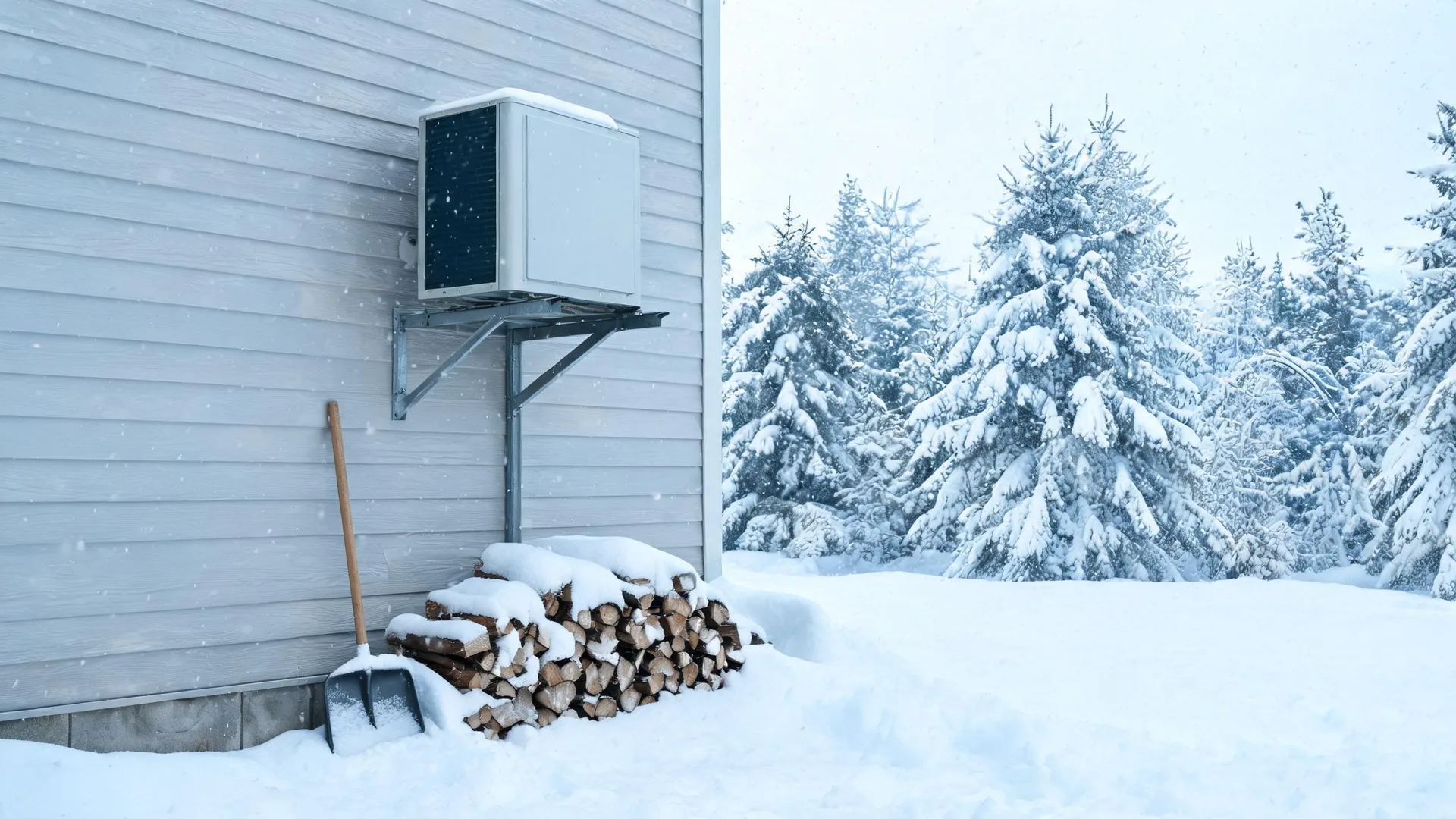
A gray outdoor HVAC unit mounted on a concrete pad beside a house with gray lap siding and a stone foundation.

Every cycle adds a little wear

A heat pump does the same job every time it runs, just in different directions, and that steady duty is what wears it down over the years. The outdoor fan motor and the compressor both carry bearings and windings that weaken a little each time they start up and shut off. Contactors pit from the arcing every time they close. Capacitors lose their charge-holding ability with age and heat exposure, and a weak one makes the compressor or fan motor strain to start, which shortens its life further. Reversing valves can stick in one position after years of switching between heating and cooling, leaving the system stuck blowing the wrong temperature air. None of these parts fail on a schedule. They fail from accumulated cycles, and a unit that runs more months out of the year earns its wear faster than one that sits idle most of the time.

A quick look after the storm passes

Walk out to the outdoor unit after any hail or high wind and check it before you assume it's fine. Bent fins, dents in the cabinet, or debris pulled in around the fan are reasons to get it looked at even if it's still blowing air.

Running doesn't mean undamaged

A heat pump can keep cycling for weeks after hail thins the coil fins or wind drives debris into the cabinet. The strain shows up later as a refrigerant leak or a motor that fails early, so a check now costs less than waiting for that call.

Before you call, there's a few things worth checking yourself. Look at the thermostat first. Make sure it's set to heat or cool as intended and the batteries aren't dead, because a blank or unresponsive display sometimes isn't the heat pump at all. Check the circuit breaker for both the indoor air handler and the outdoor unit, since a tripped breaker will shut the whole system down without any other sign of trouble. Pull the air filter and hold it up to the light. If you can't see through it, swap it or clean it, because restricted airflow is behind a lot of calls that turn out not to be a real breakdown. Walk outside and look at the unit itself. If the fan isn't spinning but you hear a hum, or the whole cabinet is caked in ice, turn the system off at the thermostat and leave it off until a tech gets there.

Most calls start with something the homeowner noticed days before deciding to pick up the phone. Air coming out lukewarm instead of hot, or the system running long stretches without ever quite catching up to the thermostat setting. A hissing or bubbling sound near the indoor coil usually means refrigerant escaping where it shouldn't. Short cycling, where the unit kicks on and off every few minutes instead of running a full cycle, strains the compressor and points to an electrical or airflow problem. A clicking that repeats without the system ever starting is often a failed capacitor or relay, not something that fixes itself. Any burning smell from the air handler means stop and call, not wait and see.