Storms come through often
Craven County logged 135 severe weather events between 2015 and 2024. That includes 101 damaging wind events, 19 hail events, and 7 tornadoes. Five tropical storms or hurricanes hit the county in that same stretch.
Takes about a minute. No obligation.
Craven County logged 135 severe weather events between 2015 and 2024. That includes 101 damaging wind events, 19 hail events, and 7 tornadoes. Five tropical storms or hurricanes hit the county in that same stretch.
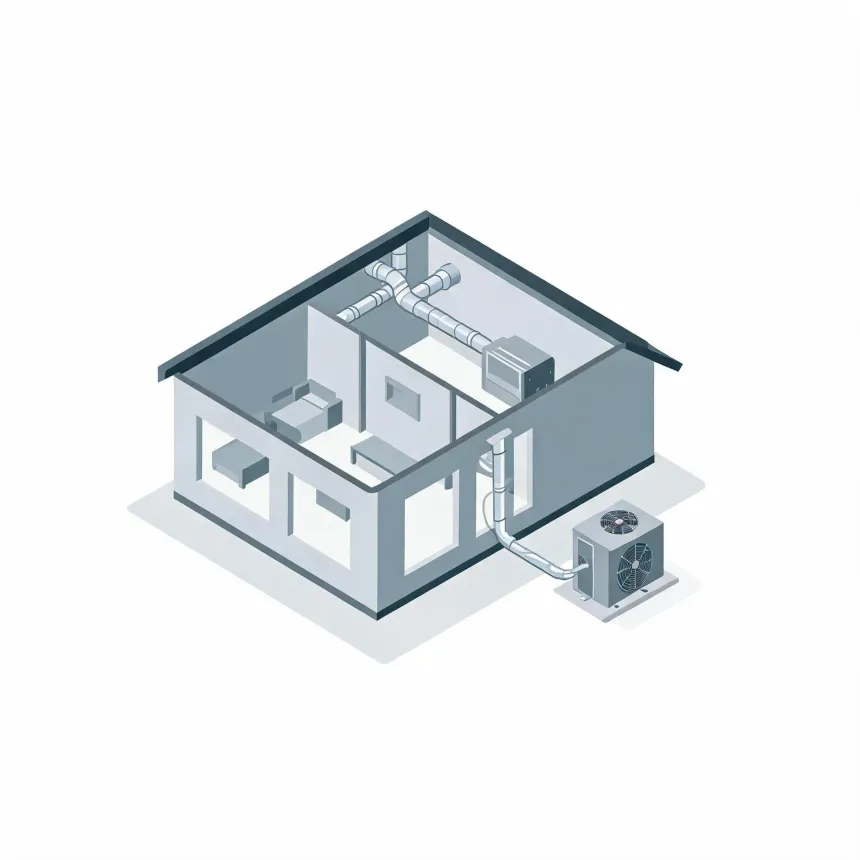
A heat pump's outdoor unit sits outside year round, exposed to wind and hail. A storm can bend the fins or crack a line without stopping the system from running. If your unit went through a storm, it's worth having someone look even if it still turns on.
NOAA nClimDiv, 1991–2020 normals
Electricity in Craven County runs 14.74 cents per kilowatt-hour.
A heat pump that's struggling pulls more power every day it goes unfixed.




That wind count isn't just about the storms passing through. It's what the outdoor unit sits through the rest of the year, too, and summer here adds its own strain. The dew point averages 71°F across June, July and August, which is higher than most of the country sees. A heat pump pulls moisture out of that air on top of cooling it, so on a muggy July afternoon it's doing more work than a unit in a drier county ever has to. That kind of load adds up faster here, and it's often why a part gives out sooner than you'd expect. When something does go wrong, it's worth finding out what actually wore down before just swapping the part that failed.
A storm doesn't always stop a heat pump from running, it just leaves it weaker. If yours has been through wind or hail, a check now can catch a bent coil or a slow leak before it turns into a system that won't heat or cool at all.
Find a contractorIf your house is one of the newer ones here, the heat pump may well be original to it, and that's worth factoring in before anyone talks replacement. A unit that's still within its working life is usually worth fixing when something goes out, a failed capacitor or a stuck reversing valve included. Ask whoever comes out to look to check the age on the unit itself. If the house changed hands at some point, the system may have been swapped before you owned it, so it's worth knowing for sure rather than guessing from the house.
A heat pump that needs attention usually tells you before it quits. Air coming from the vents that's warm when it should be cool, or barely warm at all in the winter, points to a refrigerant leak or a failing compressor. Short cycling, where the unit kicks on and off every few minutes instead of running a full cycle, wears down parts fast and drives up strain on the compressor. Ice building up on the outdoor coil when it shouldn't be there, a reversing valve that won't switch between heat and cool, or a sound that wasn't there before, grinding, clicking, a hum with no airflow behind it, all mean something inside has started to give.
A heat pump rarely fails all at once. A weak capacitor makes the compressor work harder to start, and a compressor that works harder every time it starts doesn't last as long. A dirty coil makes the whole system run longer to do the same job, and that extra runtime is what pushes a small problem into a bigger one. The part that finally fails is often not the part that caused the trouble. Getting a system looked at when something first seems off, instead of after it stops working, is usually what keeps one repair from turning into two.
Most heat pump failures start small and build. The reversing valve is a common point of trouble since it switches direction every time the system moves between heat and cool, and that constant switching wears the valve's seals over years of use. The capacitor that helps the compressor start is another part that degrades slowly rather than all at once, so the system keeps running on a weak one until the day it can't start at all. Low refrigerant almost always means a leak somewhere in the line set or coil, not the system using up refrigerant the way a car uses gas. The outdoor coil picks up dirt and debris just from sitting outside, and once airflow across it drops, the compressor has to work harder to move the same amount of heat. A motor bearing that's run dry for months usually gives itself away with noise before it seizes. None of these fail on a schedule, which is why a system that's run fine for years can still have a part close to the end of its life.
When a storm knocks out power for a stretch, a heat pump doesn't just pause and pick back up on its own. The compressor needs a moment before it restarts, and a unit that gets cut off and restarted over and over during a bad outage season takes more wear than one that runs straight through a mild year elsewhere. If your power has been flickering on and off during storms, that's worth mentioning to whoever comes out, not just what the system is doing now. A tech checking a heat pump after storm season should be looking at what the outages did to it, not only what the wind and hail did.