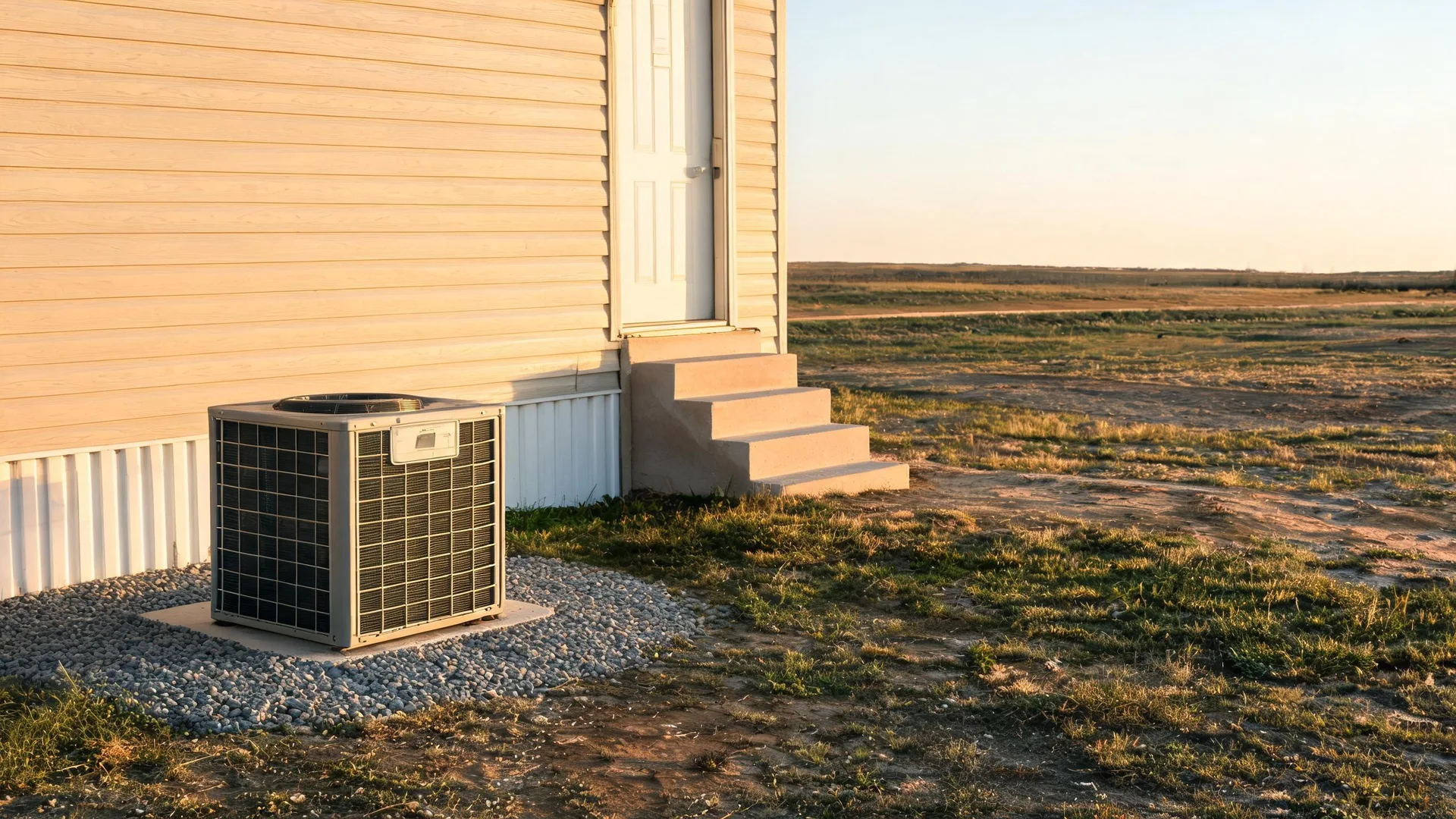
An outdoor air conditioning condenser unit mounted on a concrete pad next to a residential house at sunset.

Heat Pump Repair in Morganton, NC

Tell us about the job

Takes about a minute. No obligation.

RepairHeat PumpBurke County, NC
Step 1 of 2

What ZIP code is the job in?

How old the compressor is matters more than how old the unit looks

A heat pump can have a clean cabinet and a tired compressor, or the reverse. What matters is whether the compressor and reversing valve are still sound, since those are the expensive parts to replace. A failing capacitor, a bad contactor, a stuck reversing valve, those are worth fixing on almost any unit still running. A compressor on its way out is a different conversation.

A repair that keeps failing is telling you something

One breakdown is just a breakdown. The same symptom coming back after it was fixed means the real problem is somewhere else, often the compressor or a refrigerant leak that was never fully sealed. At that point another repair just buys a little time before the next call, and it's worth asking the tech straight out whether this is a pattern or a one-off.

7 months
October through April, your system heats
4 months
June through September, it cools
30°F
the average winter night it heats against
86°F
the average summer afternoon it cools against
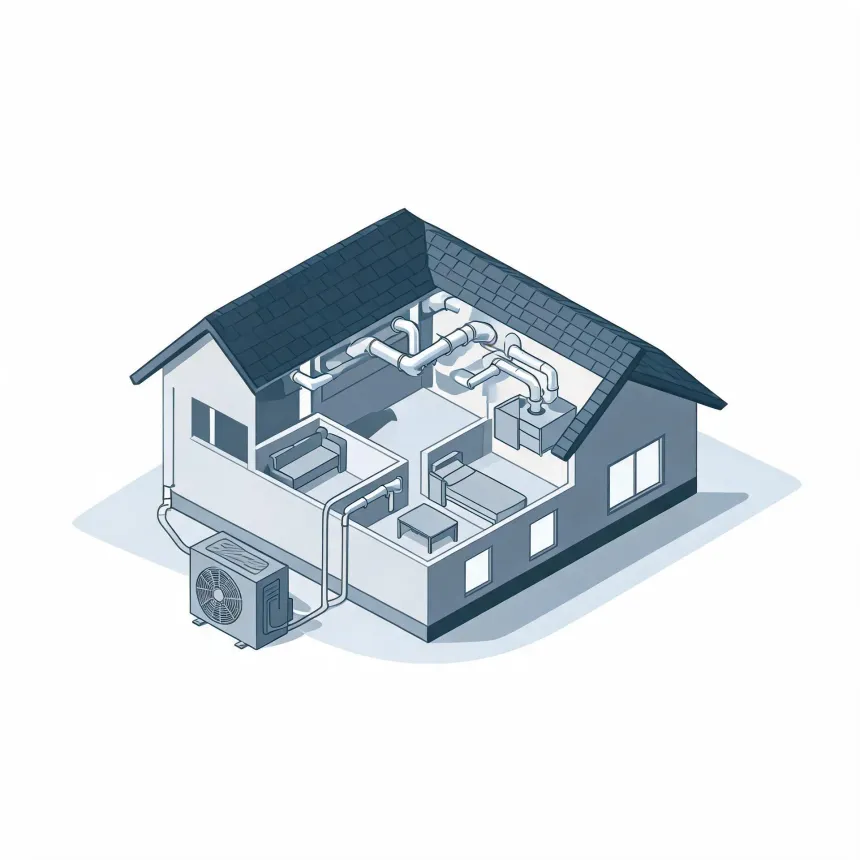
Isometric cutaway illustration of a house showing attic ductwork, an indoor air handler, furnished rooms, and an outdoor condenser unit connected by lines along the exterior wall.
Your system heats October through April and cools June through September.

NOAA nClimDiv, 1991–2020 normals

Air blowing from the vents that isn't warm or isn't cold enough means the heat pump is running but not doing its job.

Weak output points to low refrigerant, a failing compressor, or a reversing valve stuck between modes, and only a gauge set tells you which.

Your Heat Pump Works Through a Burke County WinterHeat runs here from October through April, and a weak part usually shows itself in the first cold snap.

Before calling anyone, check the thermostat is set to the right mode and the temperature actually calls for heat or cool. Check the breaker for the outdoor unit and the one for the air handler, since a tripped breaker on either side will stop the system cold. Look at the outdoor unit itself. If the coil is packed with leaves, grass clippings or ice, clear what you can reach by hand and see if that changes anything. Check the air filter. A filter choked with dust chokes airflow everywhere downstream of it, and that alone can mimic a much bigger problem. If the outdoor unit is caked in ice and it isn't actively defrosting, that's worth noting for the tech but not something to chip off yourself. Anything involving the refrigerant lines, the electrical panel inside the unit, or the reversing valve is past what's safe to check without the right tools.

Get it looked at early

Problems tend to show up in the first weeks of the season, when the load hits a part that was already weak.

Find a contractor
A gray heat pump condenser unit mounted on a concrete pad against the gray lap-siding exterior wall of a house.

What a Diagnostic Visit Actually Checks

A diagnostic visit starts outside, at the outdoor unit, with gauges on the service ports to read suction and head pressure. That tells the tech whether the charge is right, low, or overfull, and a charge that's off points toward either a leak or a failing metering device. From there it's a check of the compressor amp draw against what the nameplate calls for, since a compressor pulling too much current is wearing out even if it's still running. The reversing valve gets tested next, forcing a switch between heating and cooling to see if it actually moves or hangs halfway. Inside, at the air handler, the tech checks the temperature split across the coil and looks at the capacitor and contactor, since those two fail more often than almost anything else in the system. None of this takes guesswork once the gauges are on. The pressures and the amp draw either match what a healthy system looks like or they don't, and that's what tells the tech whether this is a quick part swap or something bigger.

This county sees more storms than most

Burke County recorded 203 severe weather events between 2015 and 2024, including 112 cases of damaging wind, 57 hail events and 3 tornadoes. An outdoor heat pump unit sits outside through all of it, exposed to wind-blown debris and hail that a furnace or indoor coil never has to face.

A unit that still runs can still be damaged

Hail can dent fins and bend the cabinet without stopping the unit from running that day. If a storm has hit your outdoor unit, it's worth having a tech check the coil and fan blade even if the heat pump seems to be working fine right now.

A heat pump that's struggling still tries to do its job, and that's the problem. A compressor low on charge will keep running and keep pulling current, and it heats up more than it should doing less work than it should. Run it that way for weeks and a part that might have been repairable burns out completely. The same goes for a motor with a failing bearing. It'll keep spinning, louder every day, until it seizes. A reversing valve that's half stuck can get forced the rest of the way by its own solenoid, turning a stuck valve into a valve that doesn't work in either direction. None of these fail faster because someone was careless. They fail faster because the system doesn't know it's hurt, and nothing shuts it off until something breaks.

A heat pump fails the same handful of ways, year after year. The capacitor loses its charge and the compressor or fan motor can't get started, even though the motor itself is fine. A contactor pits and burns from switching on and off thousands of times until it stops making contact at all. Refrigerant leaks out slowly at a fitting or a coil pinhole, and the system keeps running on less charge than it needs until the compressor overheats trying to make up for it. Bearings in the outdoor fan motor wear down and the motor seizes or starts dragging. The defrost board or sensor misreads the coil temperature and either skips defrost when it's needed or runs it when it isn't. Most of these give some warning first, a breaker that trips more than once, a hum with no start, ice that won't clear. None of them get better left alone.