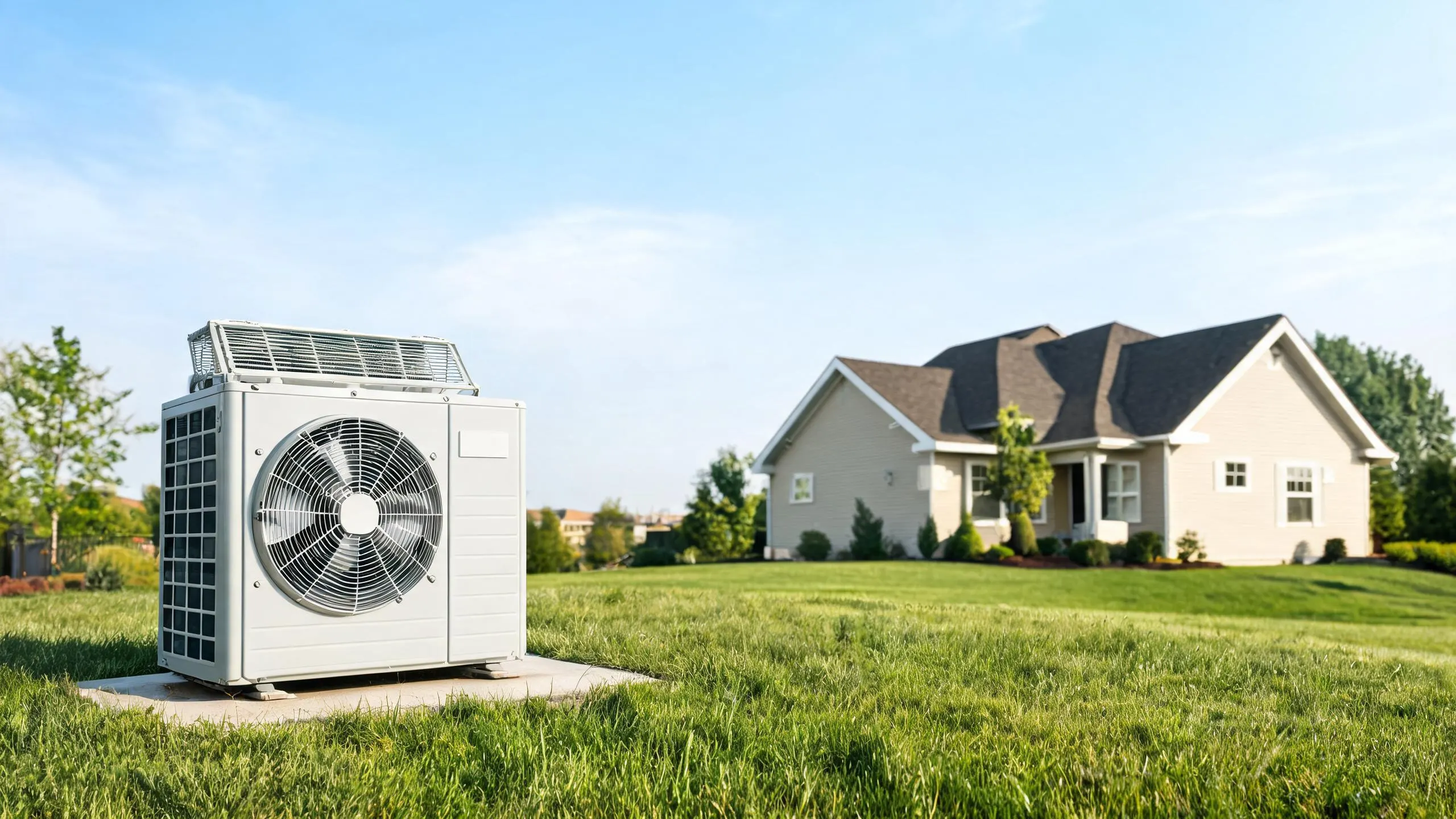

An outdoor air conditioning condenser unit mounted on a concrete pad in front of a single-story suburban house.

Heat Pump Repair in Mooresville, NC

Tell us about the job

Takes about a minute. No obligation.

RepairHeat PumpIredell County, NC
Step 1 of 2

What ZIP code is the job in?

Half the homes in Iredell County were built in 1997 or later. If yours is one of them, your heat pump probably isn't that old either. A unit installed within the last couple decades still has working parts worth fixing rather than replacing outright. Mobile homes make up about 12 percent of the housing stock here, and those systems get sized and installed differently, so what's normal for a site-built home nearby may not apply. Worth checking when your system went in, especially if you bought the house without replacing it yourself.

7 months
October through April, your system heats
5 months
May through September, it cools
30°F
the average winter night it heats against
86°F
the average summer afternoon it cools against
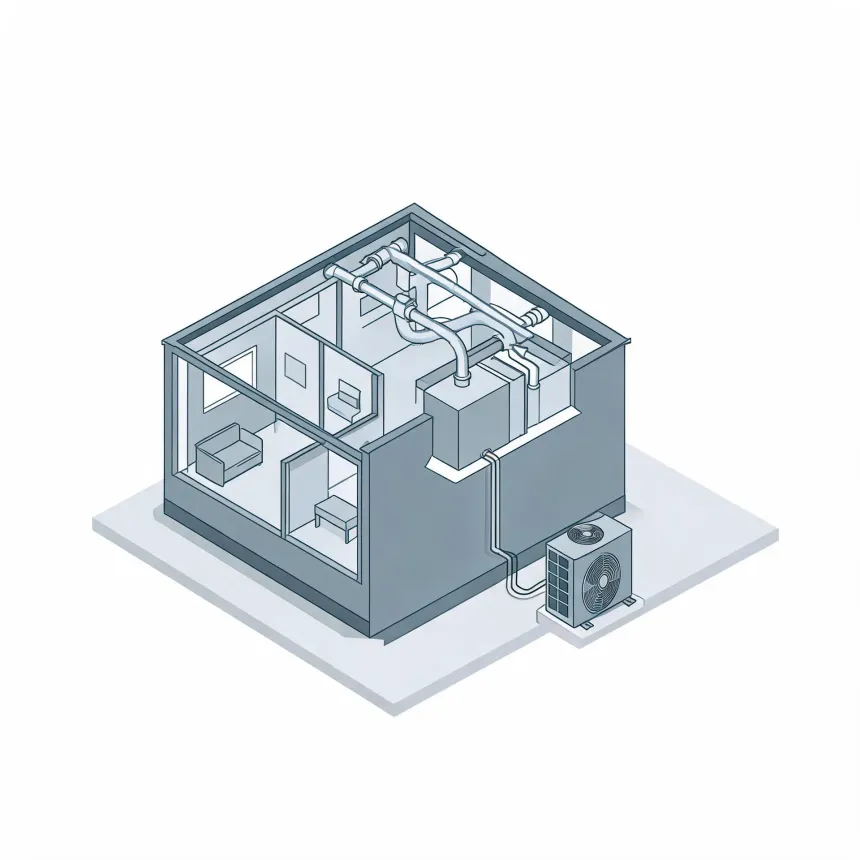
Isometric line illustration of a cutaway house showing interior rooms with furniture, ceiling ductwork connected to an indoor air handler, and refrigerant lines running to an outdoor condenser unit on a pad.
Your system heats October through April and cools May through September.

NOAA nClimDiv, 1991–2020 normals

Winter here stays mild, with overnight lows averaging 30°F across December, January and February.

A heat pump in Mooresville isn't fighting hard freezes most of the season, so a repair now is more likely to hold.

September is worth paying attention to. That's the month before heat kicks in here, and it's when a part that coasted all summer gets asked to work again. A capacitor or a reversing valve that was already weak can fail outright the first cold morning in October. If your heat pump struggled back in May when cooling started, or ran all summer but never quite kept up, get it looked at now rather than waiting for the first cold snap to force the issue. Heat here runs October through April, seven months, so a repair done in September has to hold through the whole stretch.

Worth a repair call before anything else

A repair call gets you an answer either way. If the unit's original to the house, there's a good chance it's got years left in it worth fixing for. Find out what's going on before deciding anything.

Find a contractor
A gray heat pump outdoor unit mounted on a concrete pad next to a residential house with lap siding and stone accents.

What to check before you call

Before anyone comes out, a few things are worth checking yourself. Look at the thermostat first. Make sure it's set to the mode you want and the temperature is actually past where the house is sitting, since a setting bumped by accident looks exactly like a system failure. Check the outdoor unit for anything blocking it, leaves, a fallen branch, ice built up around the base. Airflow across that coil matters, and it's the one thing you can clear yourself. Pull the filter and hold it up to light. If you can't see light through it, it's choking airflow and that alone can make a heat pump struggle. Check the breaker panel for a tripped breaker, especially if the system isn't responding at all rather than just running poorly. If the outdoor unit is dead quiet and the indoor side is too, that's worth ruling out before assuming the worst. None of that fixes a bad capacitor or a stuck reversing valve, but it rules out the causes a homeowner can actually see for themselves.

What you'll actually notice first

A heat pump in trouble rarely just stops. More often one side gives out first. The house heats fine but won't cool, or cools fine but blows cold air when it should be warm. Sometimes the outdoor unit runs constantly without the house catching up, or it frosts over and stays that way instead of defrosting on its normal cycle. Short cycling, where it kicks on and off every few minutes, is another one worth paying attention to rather than waiting out.
What those signs tell a tech

Stuck in one mode almost always points to the reversing valve, since that's the part doing the switching. Ice that won't clear can mean the defrost control isn't firing or airflow across the outdoor coil is blocked. Constant running with weak output often traces back to refrigerant charge or a failing compressor. Each of those is a different repair, which is why the symptom you describe matters more than a guess at what's wrong before anyone's looked at it.

A heat pump fails the same handful of ways in almost every home. The capacitor weakens over time and stops giving the compressor or fan motor the jolt it needs to start, so the unit hums instead of running. Refrigerant charge drops when there's a slow leak somewhere in the line set, and once it's low the system runs longer and heats or cools worse the whole time. The reversing valve sticks, usually from a buildup of debris or a coil that's lost its magnetism, and the house gets stuck in one mode no matter what the thermostat asks for. Contactors and relays wear out from the constant switching a heat pump does across a full year, and when they fail the outdoor unit just doesn't respond. A dirty outdoor coil or a clogged filter forces the system to work harder than it should, and that strain is what pushes a weak part past the point of holding on.

A diagnostic visit starts outside, at the outdoor unit, before anyone touches the thermostat. A tech checks refrigerant pressures, pulls the panel to look at the capacitor and contactor, and watches how the system responds when it's told to switch between heating and cooling. That last part matters more for a heat pump than for a straight air conditioner, since the reversing valve only shows a problem when it's asked to move. Airflow gets checked too, both at the outdoor coil and back at the filter, since restricted air can look like a refrigerant problem until someone actually measures it. Most of what's wrong shows up in that sequence. What takes longer is confirming it, running the system through a full cycle to see whether the fix holds before calling the job done.