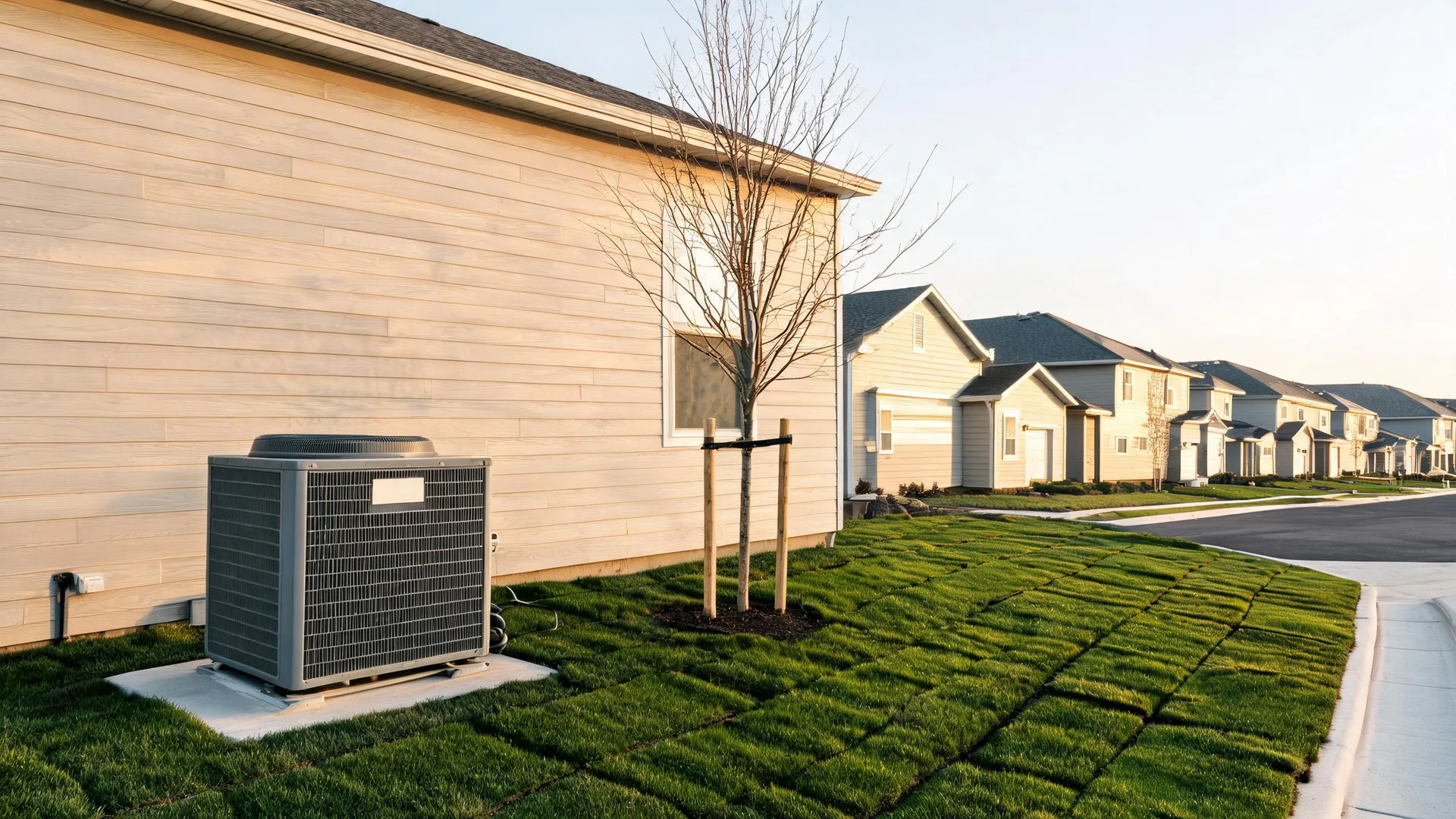
Robeson County sees real storm damage
Robeson County logged 127 severe weather events between 2015 and 2024, including 87 with damaging wind, 23 with hail, and 8 tornadoes. Six tropical storms or hurricanes came through in that same stretch.
Takes about a minute. No obligation.
Robeson County logged 127 severe weather events between 2015 and 2024, including 87 with damaging wind, 23 with hail, and 8 tornadoes. Six tropical storms or hurricanes came through in that same stretch.
A heat pump's outdoor unit sits outside year round, exposed to whatever wind and hail pass through. A quarter of North Carolina households lost power for a day or more in 2024, and a heat pump that loses power loses heat or cooling until it's back.
NOAA nClimDiv, 1991–2020 normals
Robeson County saw damaging wind 87 times between 2015 and 2024.
A heat pump's outdoor unit sits through all of it, summer humidity included.



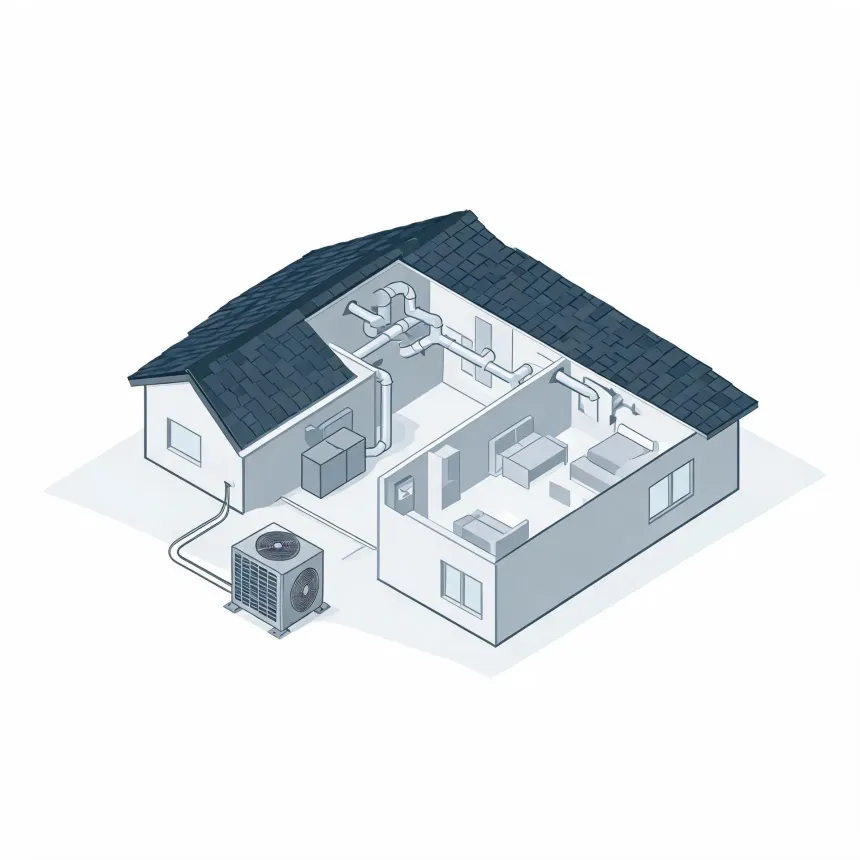
A technician starts outside at the condenser, checking the fan motor, the coil, and the refrigerant charge before touching anything inside. If the outdoor unit took a hit from wind or hail, bent fins or a cracked cabinet show up fast, and a bent fan blade will throw itself out of balance and wear the motor bearing early. Indoors, the check moves to the air handler: the blower wheel, the filter, and the reversing valve that switches the system between heat and cooling. A heat pump that blows cold air in heating mode often points to a stuck reversing valve or a thermostat calling for the wrong mode, not a dead unit. After a power outage, the first thing worth checking is the breaker and the disconnect box outside, since a tripped breaker or a disconnect left pulled will stop the whole system cold even when every part inside is fine. Once the obvious is ruled out, the tech pulls voltage and amperage readings on the compressor and capacitor, because a weak capacitor often shows up as a unit that hums but won't start.
Wind and hail have hit this county plenty of times over the years. If yours took a hit and the heat pump still runs, that doesn't mean it came through clean. Bent fins and a cracked cabinet aren't always obvious from the back door, and a fan blade thrown off balance will wear the motor bearing down early. Worth having someone check it now, while it's still running, rather than after it stops.
Find a contractor
That outdoor unit has been sitting through every one of those 87 wind events, not just the big named storms. Wind doesn't have to knock the unit over to do damage. It drives grit and debris into the coil fins and rocks the fan blade on its mount, and a blade that's even slightly bent starts wearing the motor bearing every time it spins. None of that shows up as a breakdown right away. It shows up months later as a compressor working harder to make up for weak airflow, or a motor that finally seizes. If the system's acting up now, there's a decent chance something it took years ago is only now wearing through.
A heat pump low on charge will still run, and that's the problem. The compressor keeps trying to move a full load of refrigerant that isn't there, running hotter and pulling harder on its own motor windings with every cycle. Left alone, a small leak that cost little to fix turns into a compressor replacement.
When airflow drops, from a dirty coil or a weak blower, the system doesn't shut itself off. It keeps calling for heat or cooling and leans on whatever part is still working to make up the difference. That part wears out next, and what started as one bad component turns into two.
A heat pump in trouble usually says so before it quits outright. Short cycling is one of the clearest signs: the system kicks on, runs a few minutes, and shuts off again instead of finishing a normal cycle. Ice on the outdoor coil in weather that isn't especially cold points to a refrigerant problem or an airflow problem, not a broken thermostat. Warm air out of the vents when it's set to heat, or the system blowing nonstop without ever reaching the set temperature, both mean it's running without actually keeping up. A hissing or bubbling sound near the lines usually means refrigerant escaping somewhere it shouldn't. Rising electric bills with no change in how the system's used often mean a part is struggling and pulling more current to do the same job it used to do easily.
Half the homes in this county were built in 1986 or earlier. A heat pump that came with a house that age has likely been replaced once already, and if it hasn't, it's closer to the end of its life than the start. That changes what a repair bill means. Putting money into a compressor or a coil on a unit that old is a bet that the rest of the system has years left in it too. Before paying for the big repair, ask the technician straight out how much life they think is left in the unit, not just whether the fix will hold.