


Two illuminated white colonial-style houses with wrap-around porches, flanked by oak trees draped in Spanish moss, photographed at night.

Heat Pump Repair in Louisburg, NC

Tell us about the job

Takes about a minute. No obligation.

RepairHeat PumpFranklin County, NC
Step 1 of 2

What ZIP code is the job in?

Franklin County saw 115 severe weather events between 2015 and 2024, most of it wind. A heat pump's outdoor unit sits through all of that, year after year. Hail can dent the fins around the coil and slow the airflow it needs. Wind-blown debris can do the same, or bend the fan itself. If your unit has been through a storm and still seems to run fine, it's worth having someone look anyway. Damage like that doesn't always show up as a problem right away.

7 months
October through April, your system heats
5 months
May through September, it cools
31°F
the average winter night it heats against
88°F
the average summer afternoon it cools against
Isometric cutaway illustration of a small house showing interior rooms with furniture, an indoor air handler with flexible ducting, and refrigerant lines running to an outdoor condenser unit beside the building.
Your system heats October through April and cools May through September.

NOAA nClimDiv, 1991–2020 normals

Louisburg winters are short and mild, so a heat pump here isn't fighting hard cold for long stretches.

A heat pump that's run an easier winter is usually still sound underneath, so most repairs are worth making.

October is when heat runs for the first time since spring, and that's when a heat pump that's been sitting shows what's wrong with it. A capacitor that weakened over the summer, a contactor with some wear on the contacts, these tend to fail right when the system switches over and asks more of them. September is worth a call if your heat pump struggled last winter or you noticed anything off when the weather turned. Catching it before the first cold snap means you're not without heat when you need it most.

Had storm damage this year? Get the outdoor unit checked

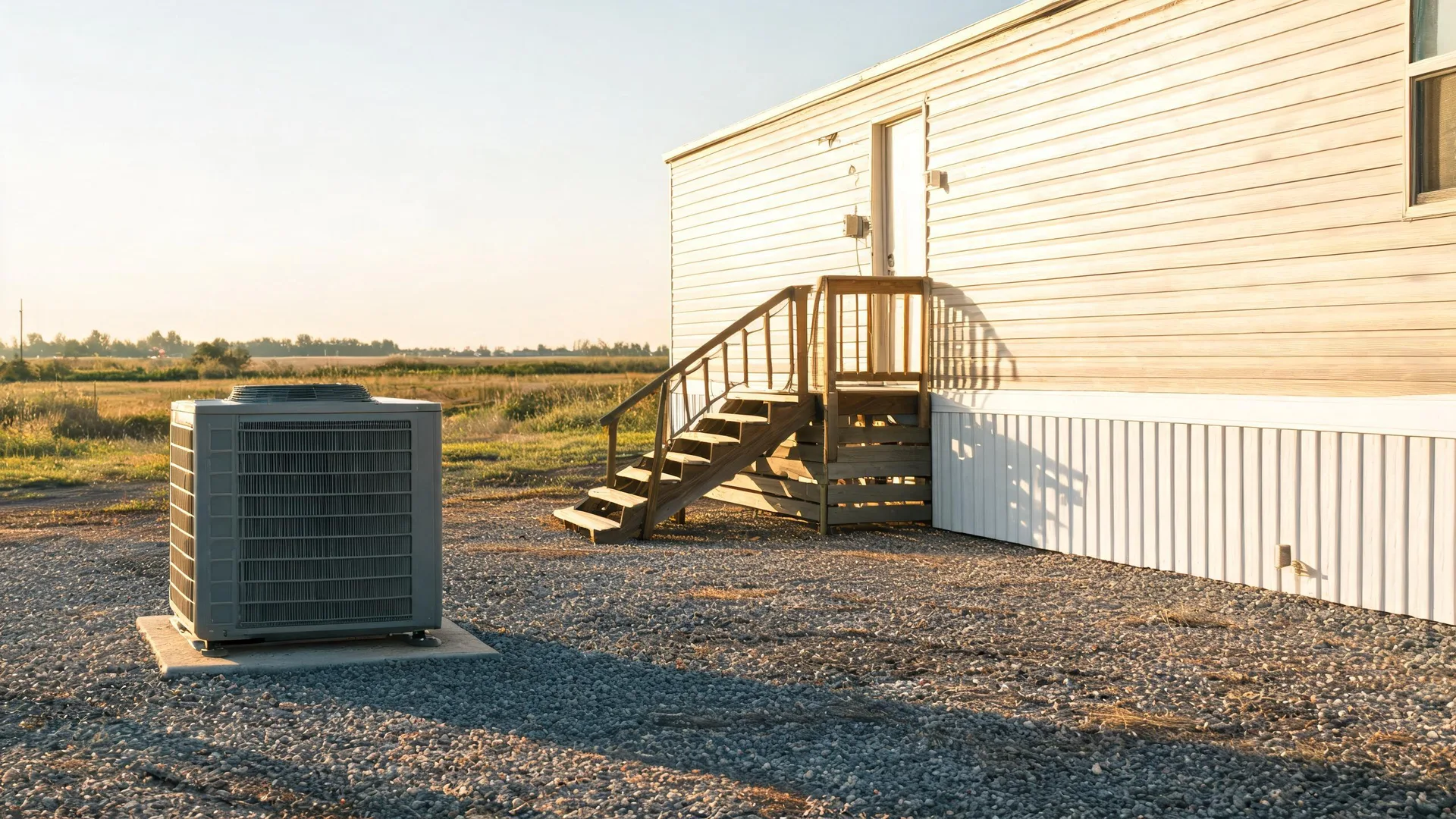
If your outdoor unit has been through a storm this year, have it looked at even if it still seems to run fine. A bent fan or a dented coil doesn't always show up as a problem right away.

Find a contractor
A residential heat pump outdoor unit mounted on a concrete pad next to a house with gray vinyl siding.

An easier winter, so repair is usually the right call

A short mild winter means fewer months where your heat pump has to run flat out to keep the house warm. When the system underneath hasn't been pushed that hard, a repair usually makes sense instead of a replacement. If it's acting up now, worn parts are more likely than a system that's given out.

What you can check outside

Look at the outdoor unit before you call anyone. Make sure nothing is blocking it, no leaves packed against the side, no bush grown up against the coil. Check that the fan on top spins freely and isn't rubbing or bent. If you see ice built up on the coil or the lines when it shouldn't be there, that's worth mentioning when you call, not something to chip off yourself.
What you can check inside

Check your thermostat is set to heat, not just on, and that the temperature you've set is actually above room temperature. Replace the air filter if it's been a while, a clogged filter chokes airflow and can make a heat pump run constantly without warming the house. Check the breaker for the system hasn't tripped. If air is blowing but it feels cool rather than warm, that's normal for a heat pump at the start of a cycle, but if it stays cool the whole time, that's a real problem.

A heat pump in trouble doesn't always announce itself with a bang. More often it's small things that add up. The system runs longer than it used to, hardly shutting off, or it short cycles the other way, kicking on and off without settling into a run. Air comes out of the vents weaker than you remember even with a clean filter. You hear something new, a rattle from the outdoor unit or a hum that wasn't there before or a clicking that keeps going instead of stopping once the system starts. Sometimes there's a smell, something burning or musty when the air first kicks on. Any one of these alone might be nothing. Lasting more than a day is worth a call.

Age is the first thing to weigh, though not the only one. A heat pump that's had most of its working life already is closer to the end than the start, and a repair now doesn't change that. One that's still young is usually worth fixing almost no matter what's wrong, since whatever failed is likely the only thing wrong with it. The other question is what actually broke. A capacitor, a contactor, a fan motor, these fail on their own, get replaced, and the system runs like it did before. A compressor is different. It's the heart of the system, and when it's failing, that's often a sign the whole unit has been under strain for a while, not an isolated part giving out. A system that keeps breaking in the same place is telling you something a single fix won't solve.