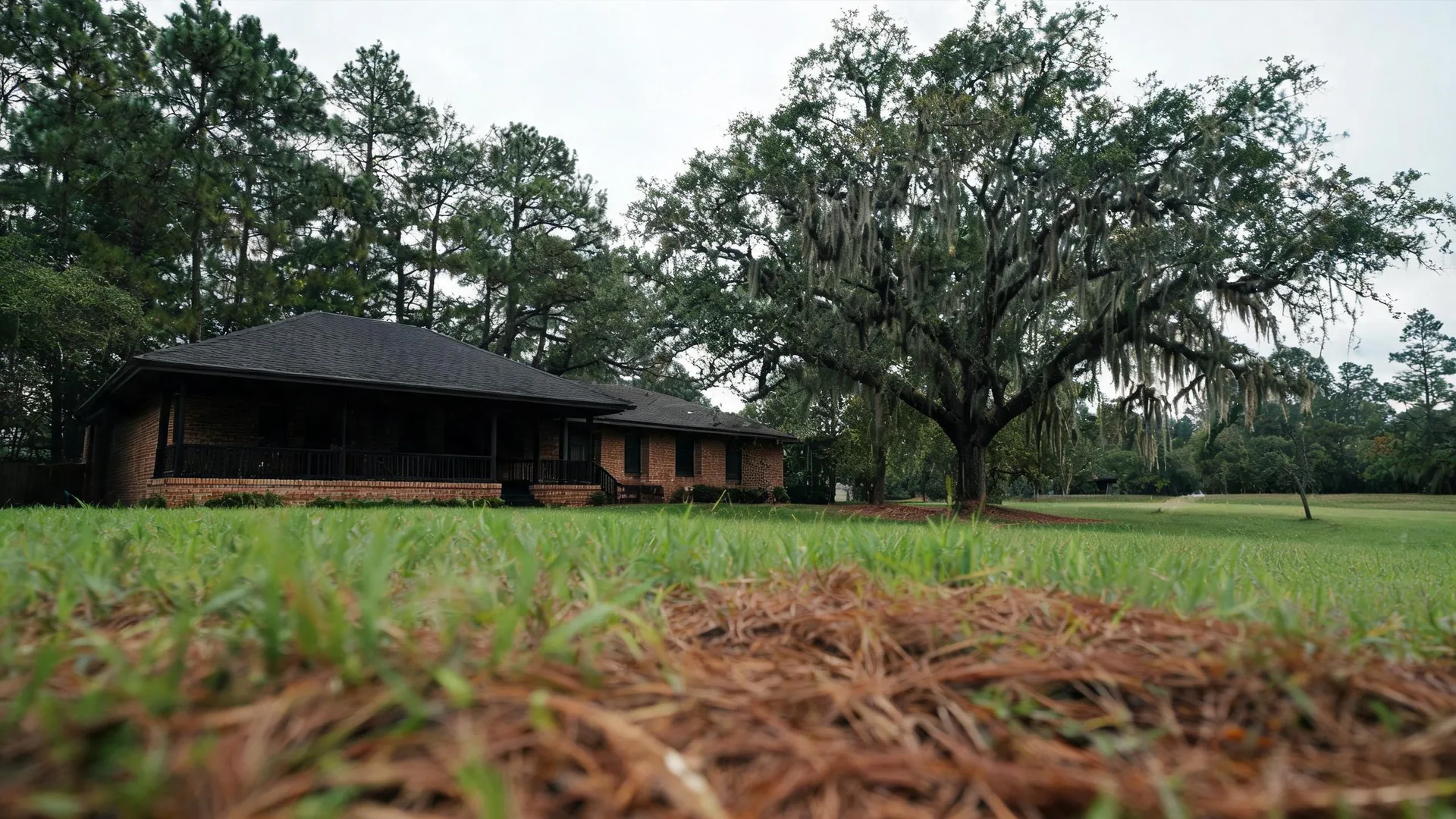




Low-angle view across a lawn with pine straw in the foreground toward a single-story brick house with a dark shingled roof and covered porch, beside a large moss-draped oak and pine trees under an overcast sky.

Heat Pump Repair in Lincolnton, NC

Tell us about the job

Takes about a minute. No obligation.

RepairHeat PumpLincoln County, NC
Step 1 of 2

What ZIP code is the job in?

Half the homes in Lincoln County were built in 1994 or later. That puts a lot of heat pumps well within their working life, not at the end of it. A system that's acting up in a house that age is usually dealing with one bad part, not a machine that's worn out. Replacing something on a unit like that is almost always the better move than replacing the whole system.

7 months
October through April, your system heats
5 months
May through September, it cools
31°F
the average winter night it heats against
87°F
the average summer afternoon it cools against
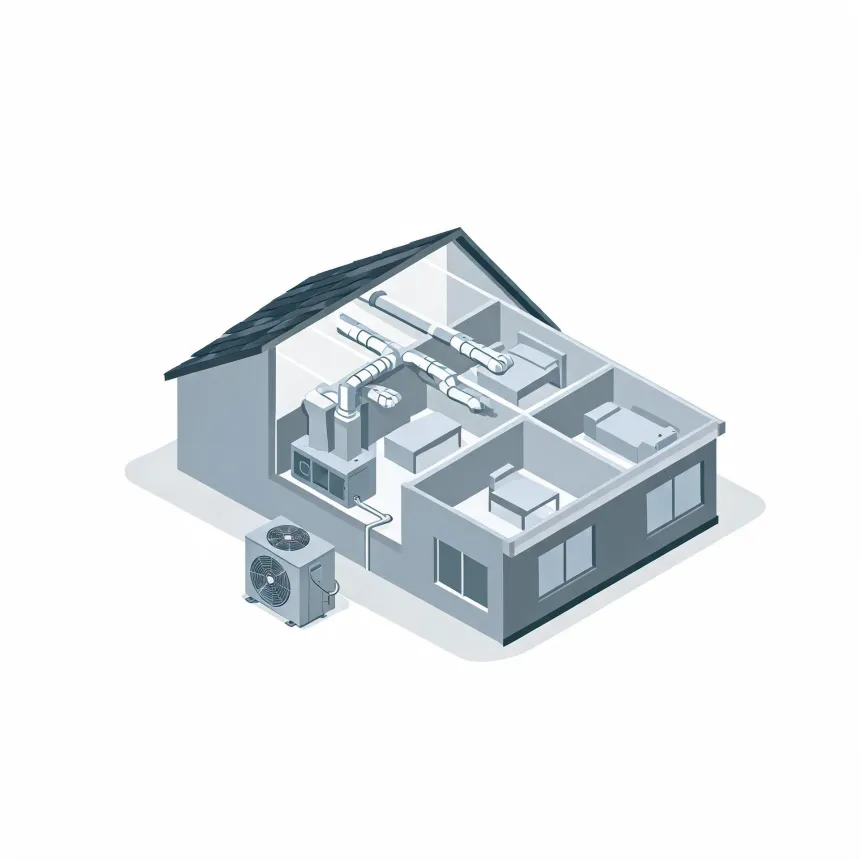
Isometric grayscale illustration of a cutaway house showing interior rooms, ceiling ductwork connected to an indoor air handler, and an outdoor condenser unit beside the exterior wall.
Your system heats October through April and cools May through September.

NOAA nClimDiv, 1991–2020 normals

A heat pump that runs long cycles without warming the house usually has a refrigerant or airflow problem, not a dying compressor.

Most of what goes wrong is a part worth fixing, like a contactor or a reversing valve stuck in one position.

Mild winters mean this heat pump isn't working as hard as you'd think

54 damaging wind events from 2015 to 2024
13 hail events from 2015 to 2024
Power here costs 13.06 cents per kilowatt-hour

October is when most homes here switch over from cooling to heat, and that first cold stretch is when a weak part finally gives out. A heat pump that limped through a mild September can still struggle the moment it has to run steady at 31 degrees overnight. A defrost board or a contactor can sit fine all summer with light use and then fail once the system has to cycle on through a cold night instead of running occasionally. If yours is blowing cool air or running nonstop once the heat kicks on in October, that's the part to get looked at before a cold snap makes it worse.

Fix it. This heat pump hasn't earned a replacement.

A heat pump that hasn't been fighting hard all year is usually a good candidate for repair rather than replacement. Get the part that's failing looked at and fixed.

Find a contractor
A gray air-source heat pump mounted on a concrete pad next to a house with gray vinyl siding, surrounded by gravel and flanked by green shrubs and white hydrangea flowers.

Still within its working life

Call a repair out rather than start pricing a new system. If the house was built in 1994 or later, the heat pump likely still has years of work left in it. Get the failing part fixed and let the system keep running. There's no reason to retire a unit that's still within its working life over one bad part.

Most failures are one part, not the whole system

A capacitor weakens and can't start the compressor or the fan motor. A contactor pits and sticks, so the outdoor unit won't shut off or won't turn on. A defrost sensor fails and ice builds up on the outdoor coil until airflow stops. None of these mean the compressor itself is bad. The compressor is the expensive part to replace and usually the last thing to fail, not the first.
What to check before the part fails completely

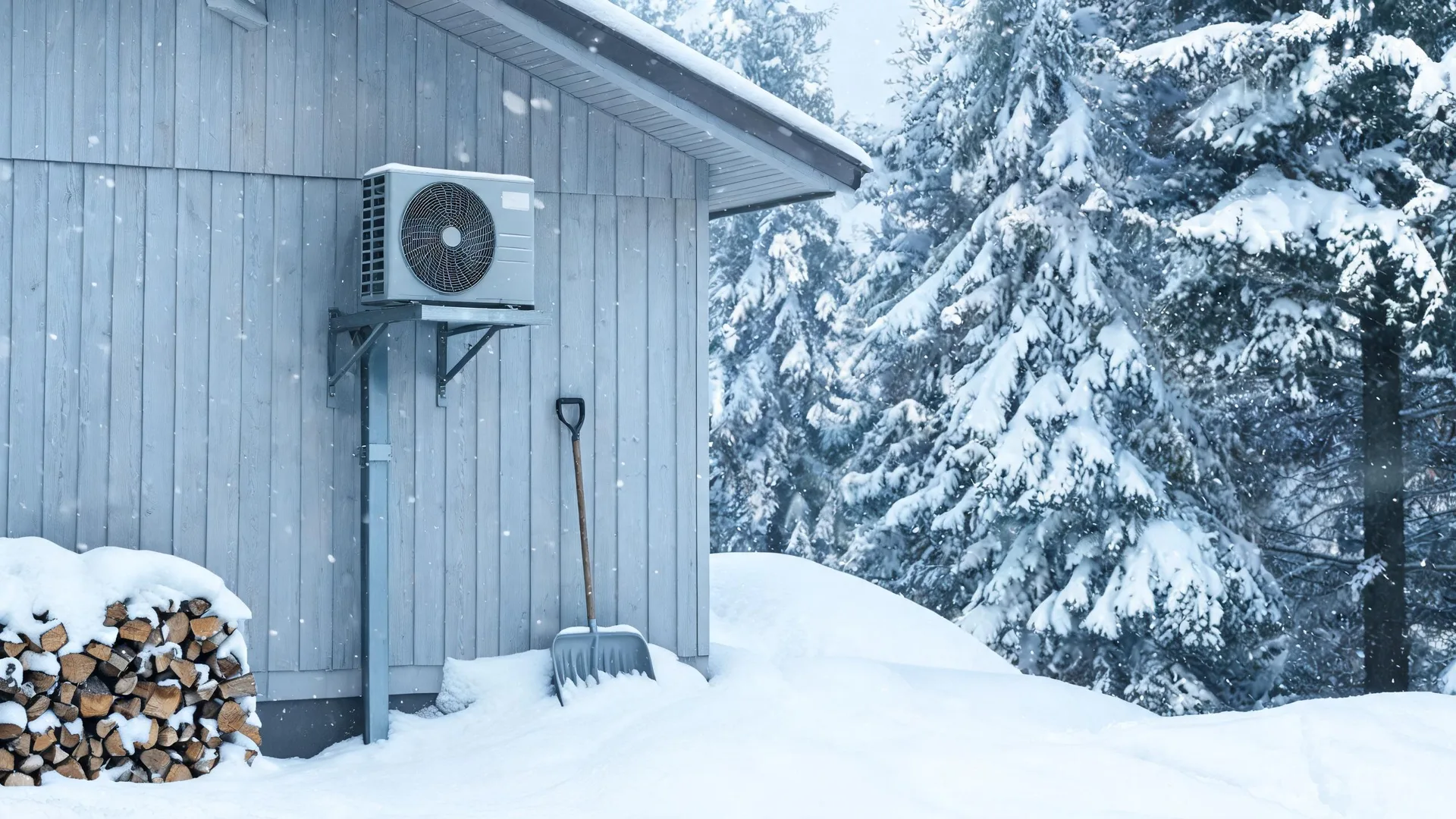
A heat pump icing over in winter or blowing warm air that isn't quite warm enough is usually still running, just running wrong. Dirty outdoor coils make the system work harder and stress the parts around the compressor. A clogged filter does the same thing from the inside. Catching a weak part while the system still runs is a smaller job than waiting for it to take something else down with it.

Before calling anyone, check the thermostat is set to heat and the temperature is actually set above room temperature. A few feet away, look at the air filter. If it's gray and clogged, swap it, since restricted airflow alone can make a heat pump ice up or struggle to keep up. Walk outside and look at the outdoor unit. If it's covered in ice or buried in leaves and debris, clear what you can reach and see if that changes anything after an hour. Check the breaker panel too. Heat pumps trip breakers when a part is drawing too much current, and a tripped breaker that won't reset points to a problem worth having looked at rather than reset repeatedly. If the outdoor fan isn't spinning at all while the unit hums, don't keep running it. That's a sign of a failing capacitor or motor, and letting it run can damage other parts.

A diagnostic visit starts outside at the outdoor unit, checking refrigerant pressures and seeing whether the compressor and fan are drawing the right current. From there it moves to the electrical parts, the capacitor, the contactor, the control board, testing each one rather than guessing. Inside, the tech checks the air handler, the filter, and airflow across the coil, since weak airflow shows up as symptoms that look like a refrigerant problem but aren't. Thermostat wiring gets checked too, since a bad signal can make a perfectly good system act like it's failing. Most of this is done with gauges and a multimeter, not by replacing parts to see what helps. The goal is to find the one part that's actually bad before anything gets opened up or swapped out.