A illuminated white antebellum-style house with a wraparound porch, white columns, and Spanish-moss-draped oak trees, photographed at dusk.

Heat Pump Repair in Lenoir, NC

Tell us about the job

Takes about a minute. No obligation.

RepairHeat PumpCaldwell County, NC
Step 1 of 2

What ZIP code is the job in?

Check the thermostat and the breaker first

Make sure the thermostat is set to the right mode and the temperature is actually calling for heat or cool. Then check the breaker box for the heat pump and the air handler. A tripped breaker or a thermostat bumped into the wrong setting looks exactly like a failed system, and either one takes a minute to rule out.


Look at the outdoor unit and the air filter

Walk outside and see if the outdoor unit is iced over, covered in debris, or blocked by anything growing against it. Then pull the air filter and hold it up to the light. A clogged filter starves the system of airflow and can shut it down on its own, and ice on the coil often traces back to that same restricted airflow.

7 months
October through April, your system heats
4 months
June through September, it cools
29°F
the average winter night it heats against
86°F
the average summer afternoon it cools against
Isometric cutaway illustration of a small house showing interior rooms with furniture, an indoor air handler with ductwork, and lines running to an outdoor condenser unit beside the building.
Your system heats October through April and cools June through September.

NOAA nClimDiv, 1991–2020 normals

A heat pump in Caldwell County isn't working as hard as one in a harsher climate, even with the humidity.

A system that hasn't been pushed to its limit is usually a system worth fixing rather than replacing.

Heat pump trouble shows up fast once the weather turns

Cooling runs June through September
Heat runs October through April
43 damaging wind events from 2015 to 2024

When a repair is on the table here, that's usually good news. Before a tech writes it off as too far gone, it's worth getting a second look, because a heat pump that's spent most of its life in a mild climate usually has less wear hiding inside it than the diagnosis might suggest. A compressor or a reversing valve that's logged fewer hard hours holds up better to a repair than one that's been run ragged. That's worth asking about directly: whether the part that failed is a sign of age catching up with the system, or just bad luck. Those are two different conversations, and here, age or a skipped service visit is the more likely story.

After a storm, have the outdoor unit checked even if it still runs

Caldwell County saw 104 severe weather events between 2015 and 2024, including 43 with damaging wind and 31 with hail. Hail dents coils and bends fins, and wind-blown debris can get into the outdoor unit without stopping it outright. A heat pump that still runs after a storm can be running on a damaged coil or a bent fan blade. If it's been through weather like that, get it looked at.

Find a contractor
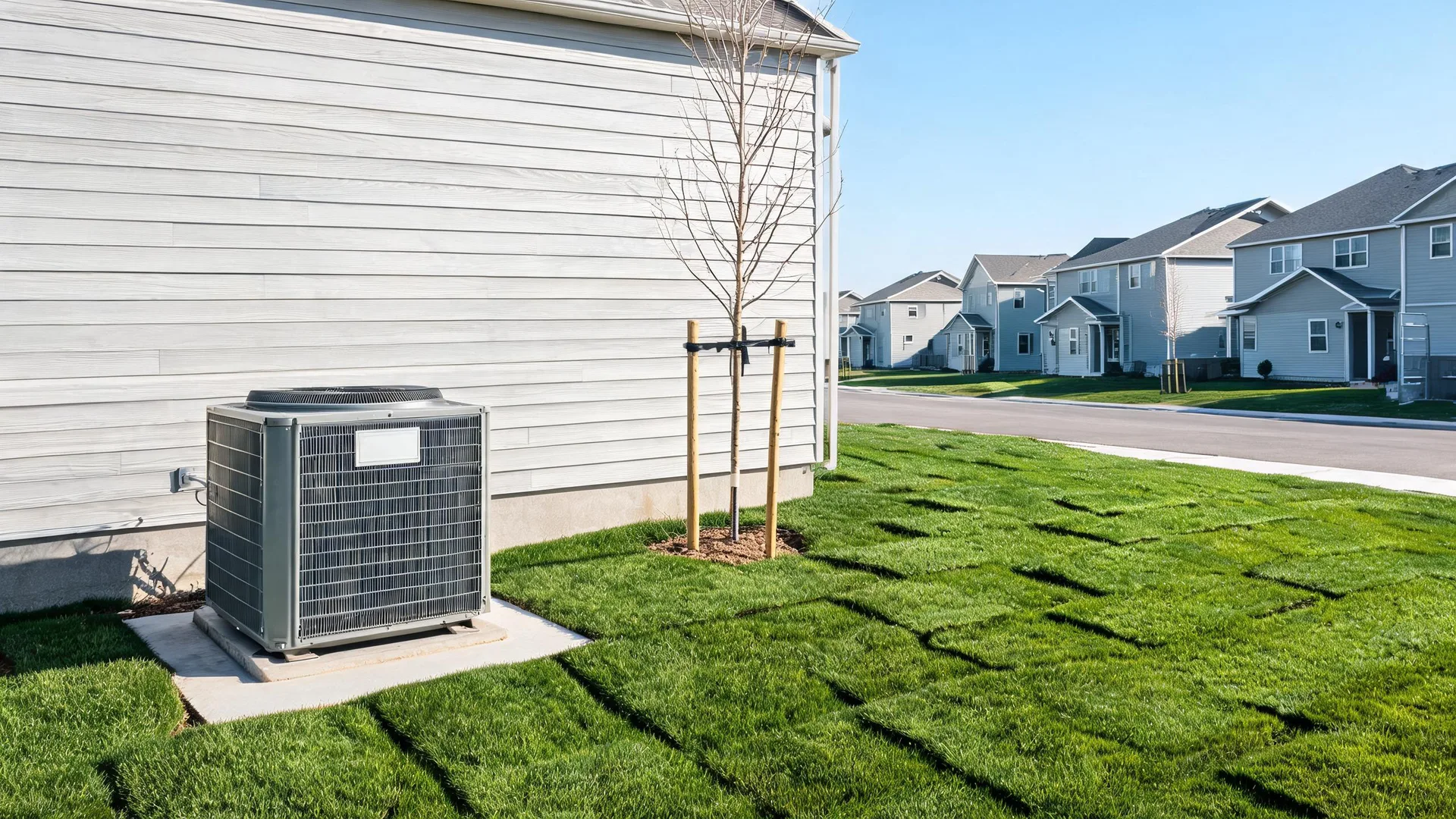
A gray air-source heat pump mounted on a concrete pad next to a house with gray vinyl siding, surrounded by gravel and flanked by green shrubs and white hydrangea flowers.

A small problem left running becomes a bigger one

A heat pump that's struggling doesn't fail cleanly. It fails by degrees, and every hour it keeps running in a bad state makes the next repair bigger. A compressor low on refrigerant charge keeps trying to build pressure it can't reach, and that strain heats the compressor windings each time it cycles. Keep calling for heat or cool and you're not getting comfort, you're just cooking a part that was already struggling. A reversing valve stuck halfway has the same problem: it keeps the system running in a mixed-up state, pushing refrigerant somewhere it shouldn't go, and that wears at seals that were fine the day before. Ice on the outdoor coil is another one. A little frost is normal, but if something's keeping the coil from defrosting properly, that ice builds, and a heat pump buried in ice loses what little heat exchange it had left while the compressor keeps pulling current trying to do a job the ice won't let it do. None of these show up as a dead system right away. They show up as a system that sounds wrong, runs long, or blows air that isn't quite right, and keeps doing that until something inside finally gives out for good. Shutting it off and calling someone the day it starts acting up almost always costs less, in parts and in wear, than running it another week on the theory that it's still working.

The reversing valve is usually the first thing to act up

It is what switches a heat pump between heat and cool, and it does that every single cycle, all year round. The valve has a sliding core that can stick from a weak solenoid or just years of wear. When it sticks, the system blows air that is not the temperature anyone asked for, or it gets stuck running one mode no matter what the thermostat says.

A failing part rarely fails alone

A weak run capacitor, a dirty outdoor coil, or a low refrigerant charge all make the compressor push harder to move the same amount of heat. Left alone, that strain breaks down the windings inside it over time. Finding the part that started the problem is what keeps a cheap fix from turning into a compressor replacement.

Most heat pump problems announce themselves before the system quits outright. Short cycling is one of the first things an owner notices: the unit kicks on, runs a few minutes, shuts off, then starts again shortly after. That pattern points to a refrigerant or airflow problem making the system think it's reached temperature when it hasn't. Air coming out lukewarm instead of properly hot or cold is another one, especially if it used to blow warmer or cooler than that. A hissing or bubbling sound near the lines usually means refrigerant escaping somewhere it shouldn't. Grinding or squealing from the outdoor unit points to a motor bearing or fan blade, not something that gets better on its own. And a system that runs constantly without ever satisfying the thermostat is working against something, whether that's a stuck valve, a dirty coil, or a compressor that's already losing capacity.

Age matters more than any single part failing. A heat pump that's old and starts needing a second or third repair in close succession is telling you something different than a newer one with a single bad capacitor. The compressor and the reversing valve are both built to last the life of the system, so if one of those goes on a newer unit, that's usually a defect or an install issue, not the system wearing out, and it's worth fixing. The same failure on an old unit often means the rest of the system is close behind it, even if nothing else has failed yet. Refrigerant leaks are worth weighing the same way. A fitting that worked loose can be repaired and the system goes back to normal. A coil that's corroding from the inside will keep leaking somewhere else after it's patched, and that's the system telling you it's done, not the tech failing to fix it right.