





A grey air-source heat pump outdoor unit mounted on a concrete pad next to a modern white-rendered residential house.

Heat Pump Repair in Hickory, NC

Tell us about the job

Takes about a minute. No obligation.

RepairHeat PumpCatawba County, NC
Step 1 of 2

What ZIP code is the job in?

A heat pump that's acting up isn't automatically on its way out. One failed part, a bad capacitor or a stuck reversing valve, is usually worth fixing, especially on a unit that's still fairly young. The math changes when the compressor itself is failing. That's the most expensive part in the system, and the labor to replace it rivals putting in a new unit. It also changes when a tech keeps getting called back for different problems in the same stretch of weather. That pattern means the system is wearing out everywhere at once, not just in the one part that broke this time. A repair quote tells you what's wrong today. It doesn't tell you what's going to fail next.

7 months
October through April, your system heats
5 months
May through September, it cools
31°F
the average winter night it heats against
87°F
the average summer afternoon it cools against
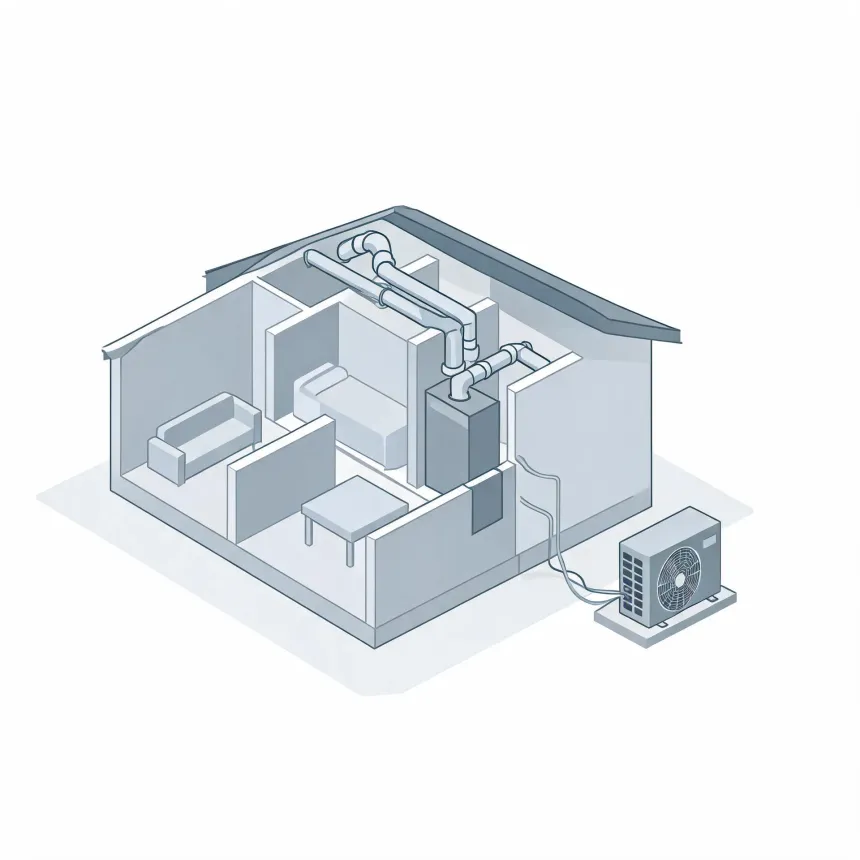
Isometric line illustration of a cutaway house showing interior rooms with furniture, ceiling ductwork connected to an indoor air handler, and a line running outside to an outdoor condenser unit.
Your system heats October through April and cools May through September.

NOAA nClimDiv, 1991–2020 normals

Heat here switches over in October, after running cooling since May.

A heat pump that limps through September often fails outright in its first cold week of work.

Winters here average 31°F. A heat pump that's otherwise sound doesn't fight much to earn a repair.

66 damaging wind events from 2015 to 2024
32 hail events from 2015 to 2024
9 winter storms from 2015 to 2024

Half the homes in Catawba County were built in 1985 or later. If that's your house, the heat pump likely isn't old enough to be the real problem. A reversing valve or capacitor failing on a system installed in the last decade or two is just a part wearing out, not the system wearing out. Worth checking the install date before anyone starts talking about replacement.

Get it looked at early

Problems tend to show up in the first weeks of the season, when the load hits a part that was already weak.

Find a contractor
A man in a dark shirt and brown pants, seen from behind, carries a waxed canvas tote bag up wooden porch steps toward an orange front door, with a potted shrub beside the entry.
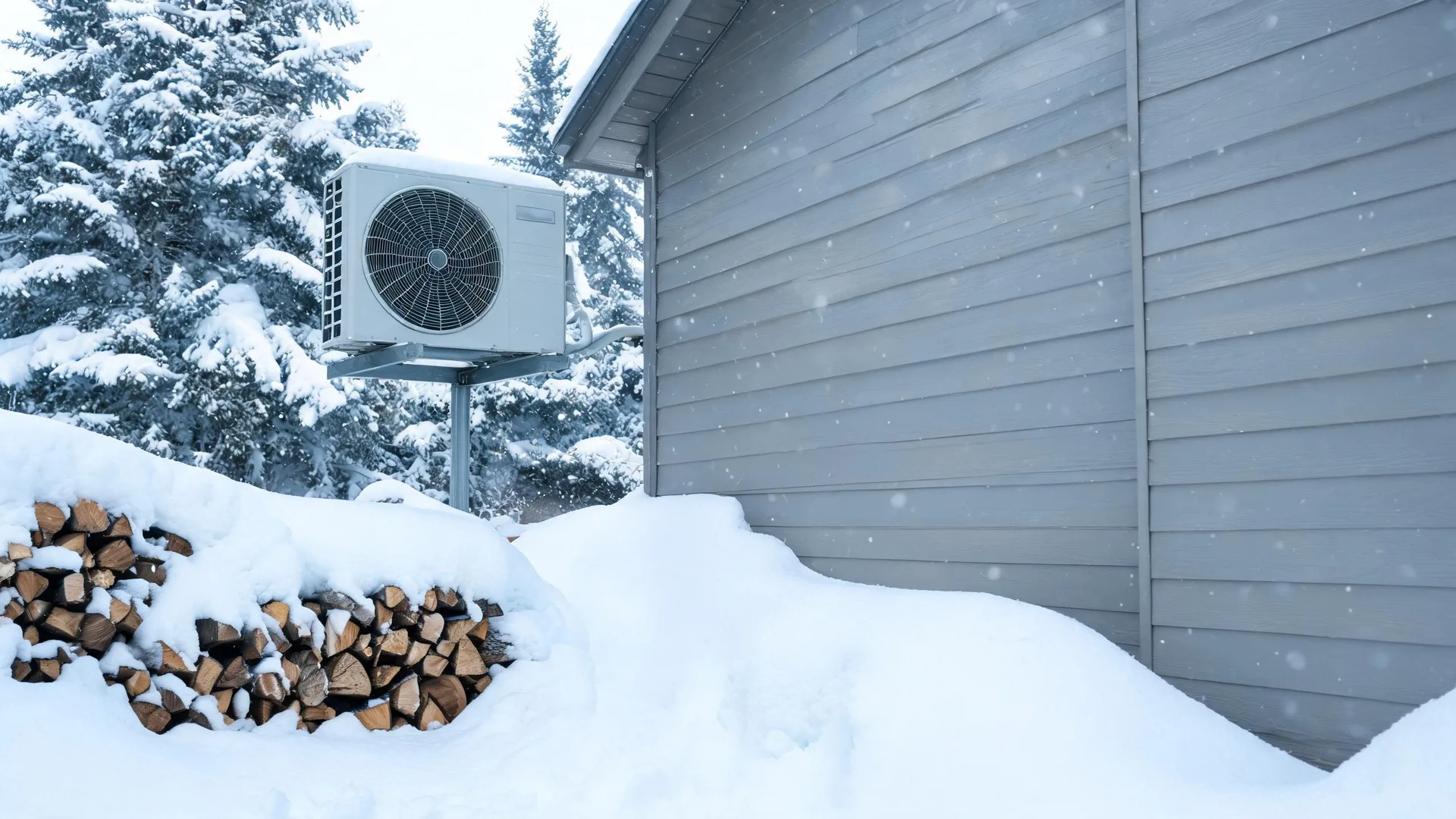
A residential heat pump outdoor unit mounted on a concrete pad next to a house with gray vinyl siding.

Find the install date before you decide anything

The install date is on the permit or the sticker inside the service panel. If the house was built in the last decade or two, that's the number worth finding before a repair turns into a sales pitch for a new unit.

A weak part strains everything around it

A failing capacitor makes the compressor pull harder to start. A low charge makes it run longer to hit the same temperature. The part that's actually bad is rarely the only part paying for it, and the longer the system runs that way, the more wear lands on the compressor itself.
A simple fault doesn't stay simple

A stuck reversing valve or a worn contactor is a straightforward repair on its own. Left alone through weeks of hard running, the same fault can take the compressor down with it. At that point it's not a part swap anymore, it's a decision about the whole system.

A heat pump in trouble usually says so before it quits. Air coming out lukewarm instead of hot, or the system running long stretches without ever quite hitting the thermostat setting. Ice building up on the outdoor unit when it has no business being there. A clicking or buzzing at startup that wasn't there before, or the outdoor fan not turning at all while the unit hums. Short cycling, where it kicks on and off every few minutes instead of running a normal stretch, is another one worth paying attention to. Any of these is worth a call before the next cold snap tests the part that's already struggling.

A diagnostic visit starts outside, with gauges on the refrigerant lines and a look at the outdoor coil and fan. Inside, the tech checks the air coming off the system and how it compares to what the thermostat is asking for. Electrical readings come next. The capacitor gets tested under load, the contactor gets checked for pitting, the reversing valve gets checked to see if it actually switches when it's told to. None of this is guesswork. Each reading either falls in range or it doesn't, and the ones that are off point straight at the part that's failing. A tech who's done this a while can usually name the problem before the last gauge comes off.