Wayne County gets hit often
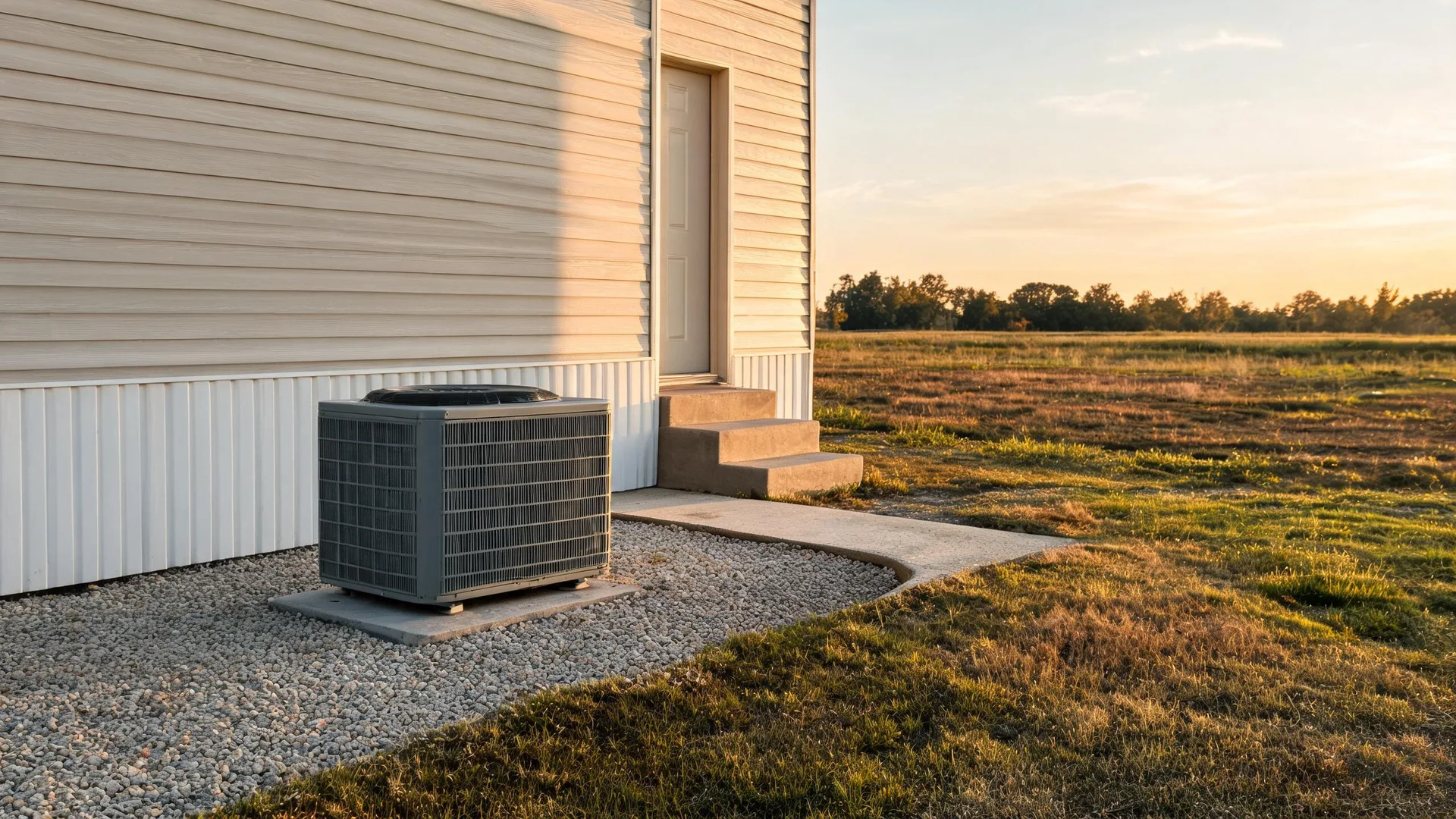
Wayne County recorded 109 severe weather events between 2015 and 2024, including 82 damaging wind events, 15 hail events and 4 tornadoes. That outdoor unit sits outside through all of it, with no wall around it.
Takes about a minute. No obligation.
Wayne County recorded 109 severe weather events between 2015 and 2024, including 82 damaging wind events, 15 hail events and 4 tornadoes. That outdoor unit sits outside through all of it, with no wall around it.
A quarter of North Carolina households were without power for 24 hours or more at some point in 2024. A heat pump that's working fine still needs electricity to run, for heat in the winter and for the compressor in the summer.
NOAA nClimDiv, 1991–2020 normals
A tech checks refrigerant charge, the reversing valve, the defrost board and the electrical connections before replacing anything.
A heat pump that trips a breaker or won't switch between heat and cool usually points to one of those, not a dead unit.



A heat pump that's struggling still moves on and off all day, and that's what turns a small problem into a bigger bill of work. A low refrigerant charge makes the compressor work harder to hit the same temperature, and running it low for weeks can wear the compressor itself, which costs a lot more than the leak that started it. A failing capacitor makes the compressor or fan motor draw down and strain on every start, and each hard start shortens what's left of its life. Ice on the outdoor coil is the clearest case: once frost builds up, airflow drops, so the system runs longer to do less, and that longer runtime pulls in more frost. None of these fix themselves by running more. The right move when something seems off is to shut it down and get it looked at, not to let it keep cycling while you wait.
If the outdoor unit took a direct hit from hail or flying debris, it can still run and still have damage underneath. Bent fins block airflow. A cracked fan blade throws itself further out of balance every time it turns. Getting it looked at after a storm catches that before it takes out the compressor.
Find a contractor
Before calling anyone, look at the thermostat first. Make sure it's set to the mode you want and the setpoint is actually past room temperature, not sitting right at it. Check the breaker panel for the outdoor unit and the air handler. A tripped breaker is a reset you can do yourself, but if it trips again after resetting, stop and leave it off. That's the system telling you something's wrong, not asking to be reset twice. Look at the outdoor unit and clear away leaves, mulch or anything stacked against it, since the coil needs open air on all sides to work. If you see ice anywhere on the outdoor unit, switch the system off and let it thaw completely before running it again. Check the air filter and swap it if it's gray or clogged, since restricted airflow is behind a lot of calls that turn out to be nothing worse than that. Walk through the house and feel the vents. Weak airflow in every room points at the blower or the filter. Weak airflow in just one or two rooms points at the ductwork instead. None of this tells you what's broken inside the unit, but it rules out the easy things before a tech has to.
A capacitor weakens, a contactor's points burn, a wire connection loosens from the vibration of the unit running for months. These parts fail before the compressor ever does. A heat pump that hums but won't start, or trips a breaker, usually comes down to one of these rather than the compressor itself.
Switching between heat and cool is what sets a heat pump apart from straight AC, and that switching happens at the reversing valve every time the system changes direction. A valve that sticks will often cool when it should heat, or run nonstop without reaching the setpoint. It takes more cycling than almost any other part, so it tends to show problems first.
A heat pump gives off warning signs before it quits outright, and most of them show up as sound or smell rather than a readout. A clicking at the outdoor unit that doesn't stop after startup usually means the contactor or capacitor is going. A burning or electrical smell from the air handler means stop running it and get it checked, don't wait to see if it clears. Short cycling, where the system turns on and off every few minutes instead of running a full cycle, points at a refrigerant or airflow problem, not something that fixes itself. Warm air out of the vents when it's set to heat, or cool air when it's set to cool, often means the reversing valve isn't switching like it should. A hissing or bubbling sound near the lines outside is refrigerant escaping, and that only gets worse with time, never better.
Age matters more than the symptom when you're deciding whether to fix a heat pump or replace it. A unit in its first half of life is usually worth repairing almost regardless of what broke, since a capacitor, contactor or reversing valve costs far less than the system itself. A unit near the end of its expected life is a different question, especially if this isn't its first repair. Compressor failure is the clearest line: a compressor replacement runs close to the price of a new outdoor unit, so most homeowners put that money toward a new system instead. Frequency counts too. A unit that's had one repair in several years is still a good unit. One that's had several in the last year or two is telling you the small parts are wearing out together, and more will follow. A tech can tell you what's failed and what it would take to fix it, but only you know how many repair calls you're willing to make on the same system.