This county sees real storms
Cumberland County had 132 severe weather events between 2015 and 2024, 103 of them damaging wind and 18 of them hail. Six tropical storms or hurricanes came through in that stretch too.
Takes about a minute. No obligation.
Cumberland County had 132 severe weather events between 2015 and 2024, 103 of them damaging wind and 18 of them hail. Six tropical storms or hurricanes came through in that stretch too.
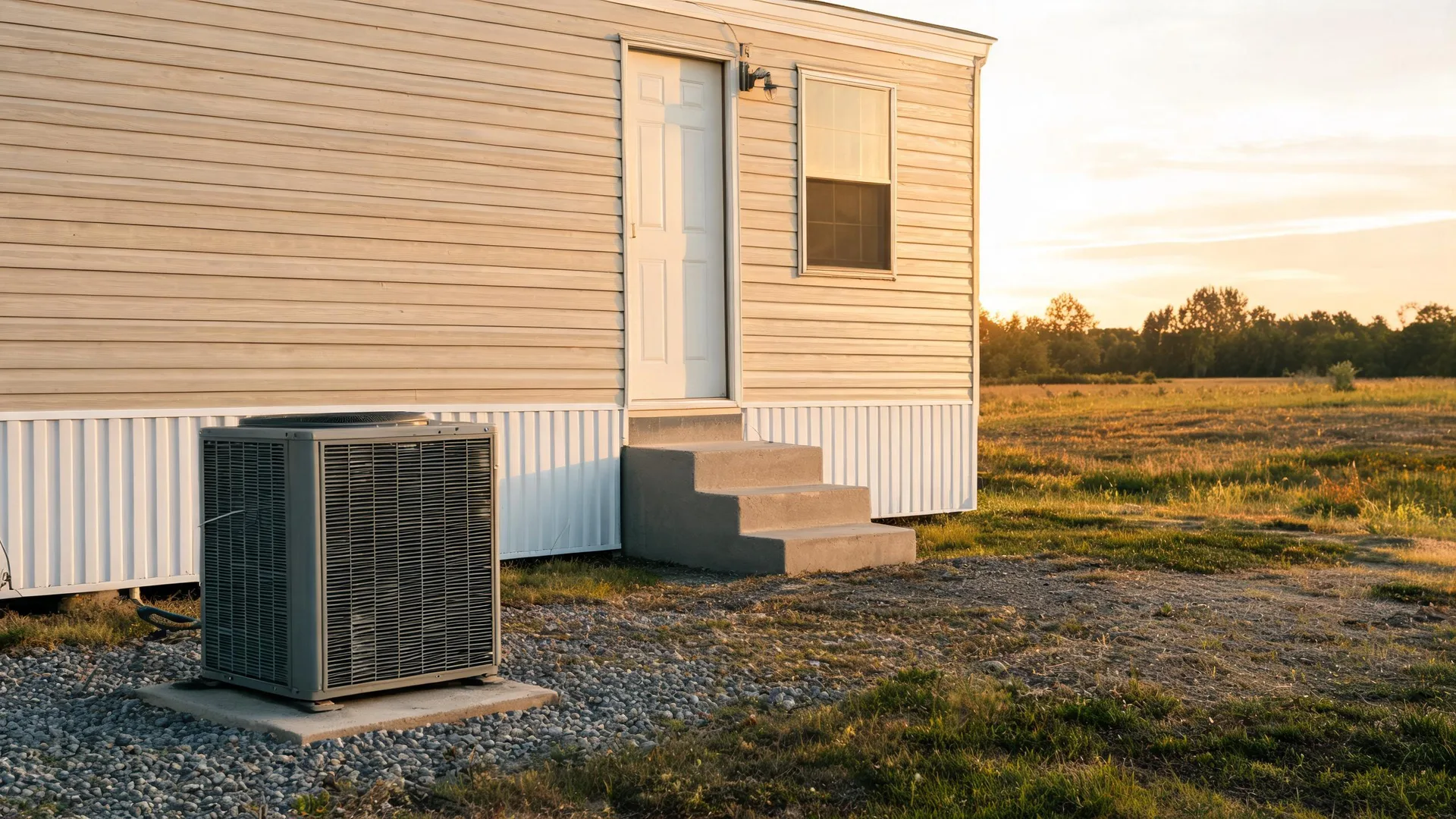
Your outdoor unit sits outside through all of that. Wind-driven debris and hail can bend the fins or damage the fan without stopping the system from running.

NOAA nClimDiv, 1991–2020 normals
Half the homes in Cumberland County were built in 1988 or later.
A heat pump that came with a newer house still has years of working life in it, and that's worth repairing.



Your heat pump does not get an easy season off. Summer air here sits heavy, with the dew point averaging 69 degrees across June, July and August, higher than most of the country sees. That means the system is pulling moisture out of the air as hard as it is cooling it, all summer long. Then winter asks it to run as a heater, with no break in between. A machine working both jobs year round wears on a different timeline than one that only has to cool. When something acts up, it is worth finding out which part gave out first instead of guessing.
If hail or wind came through recently, a heat pump can take a hit to the fins or the fan and keep running like nothing happened. It won't always show up until the system is under load, or until it quits. Get it looked at now, while you still have a choice in the matter.
Find a contractorA heat pump here does not get a real offseason. It runs as an AC through the muggy months, then switches straight over to heat, with no stretch of time off in between. That kind of schedule does not leave much room for a failing part to announce itself slowly. If yours is short cycling, running long without catching up to the thermostat, or making a sound it didn't used to make, get it looked at now instead of waiting to see if it clears up on its own.
A failing heat pump usually keeps running while it struggles. It blows air that is not quite cold enough or not quite warm enough. It cycles on and off more than it used to. It runs long stretches without the house ever reaching the set temperature. Ice builds up on the outdoor coil when it should not be there. None of these stop the system outright, which is why they get ignored until the day it does stop.
A clicking or buzzing sound when the unit starts, a breaker that trips more than once, a smell of burning when air comes through the vents, or the outdoor fan not spinning while the unit hums. Any of those points to an electrical part or the compressor itself, and running the system in that state can turn a repair into a replacement. Reduced airflow or weak heating can often wait a few days. Burning smells and tripped breakers cannot.
A heat pump fails for a short list of reasons, and most of them show up in the same few places. The reversing valve is the part that lets it switch between heating and cooling, and when it sticks, the system gets stuck in one mode or stops switching cleanly. The capacitor is what gets the compressor and fan motors started, and a weak one makes the fan struggle to spin or the compressor hum without starting at all. Low refrigerant almost always means a leak somewhere in the line, not the system burning it off, and running low puts strain on the compressor itself. The defrost board and sensor tell the unit when to melt frost off the outdoor coil in winter, and when that sensor fails, ice builds up and blocks airflow. The compressor is the part nobody wants to hear about, because by the time it fails the rest of the system usually has to come with it.
Before anyone comes out, there are a few things worth checking yourself. Look at the thermostat first. Make sure it is set to heat or cool as needed and that the batteries are not dead, since a blank or unresponsive display can look like a dead system when it is really just that. Check the circuit breaker for the unit, both inside and at the outdoor disconnect, since a tripped breaker will stop it cold and resetting it once is a fair test. Walk outside and look at the unit itself. Leaves, pine straw, a fallen branch or anything packed against the fins will choke airflow and make it work harder or not run right. Check the air filter inside, because a clogged one starves the system of airflow and can cause icing or weak output that looks like a bigger problem than it is. If the outdoor coil is caked in ice, turn the system off and let it thaw rather than chipping at it. None of this fixes a bad capacitor or a stuck reversing valve, but it rules out the simple stuff first.