







White two-story houses with wraparound porches and Spanish moss-draped oak trees photographed along a residential street at night.

Heat Pump Repair in Durham, NC

Tell us about the job

Takes about a minute. No obligation.

RepairHeat PumpDurham County, NC
Step 1 of 2

What ZIP code is the job in?

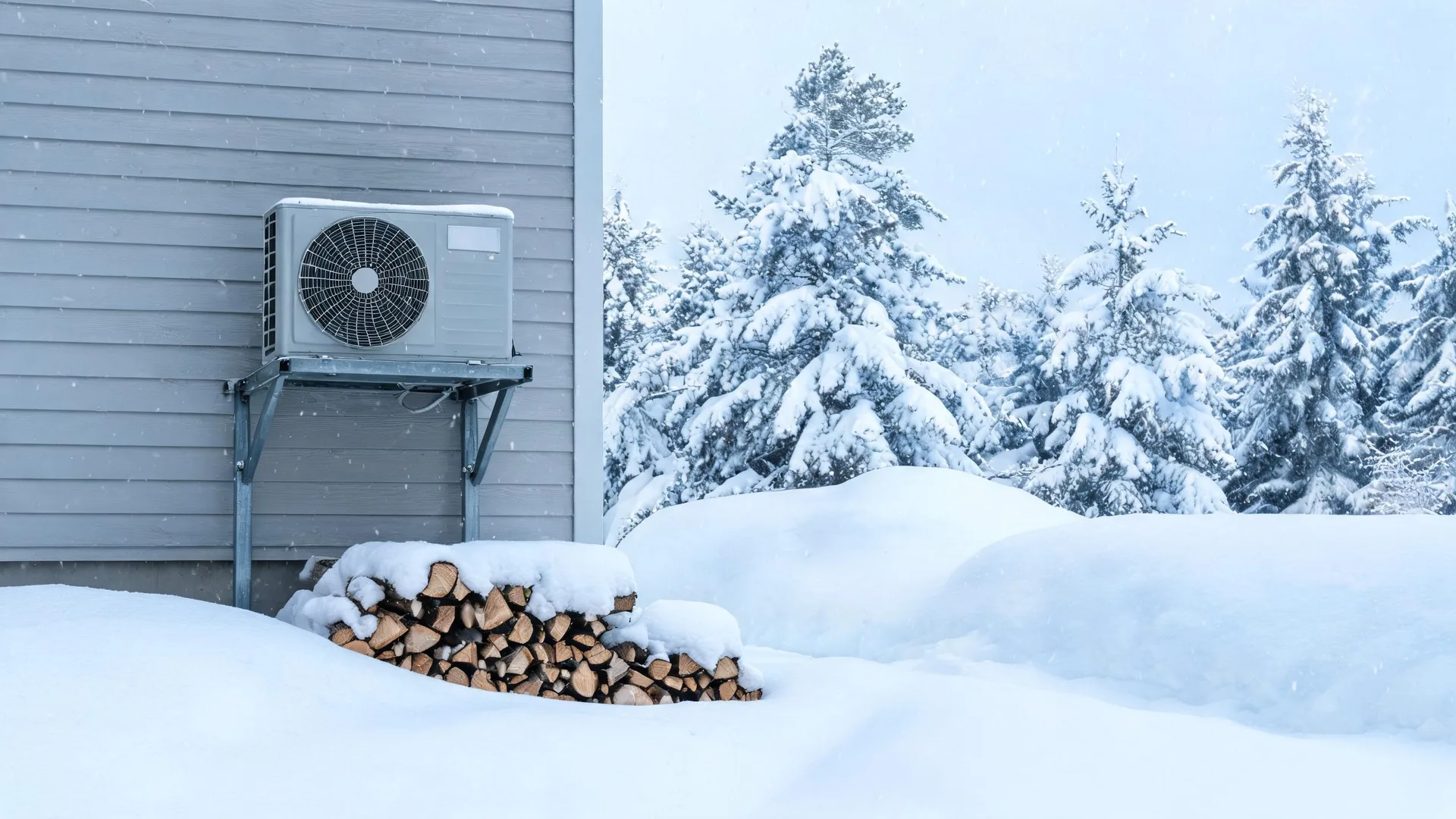
Durham County saw 143 severe weather events between 2015 and 2024, and damaging wind was behind most of them. Hail came through too. A heat pump's outdoor unit sits right in the path of both, with coil fins exposed to whatever the wind throws at them and hail can dent or bend. A dented coil does not always stop the system from running, so you can have reduced airflow or a slow refrigerant leak for months before it fails outright. If your unit came through a storm and still turns on, that is not the same as it being fine.

7 months
October through April, your system heats
5 months
May through September, it cools
31°F
the average winter night it heats against
88°F
the average summer afternoon it cools against
Isometric line illustration of a cutaway single-story house showing interior rooms with ducted air distribution, an indoor air handler, furniture, and an outdoor condenser unit connected by lines outside the wall.
Your system heats October through April and cools May through September.

NOAA nClimDiv, 1991–2020 normals

A breaker that keeps tripping means the system is drawing more power than it should, not that it needs a harder reset.

Flip it back once, and if it trips again, stop and let a tech find out why instead of forcing it.

Heat pumps work hardest in the first cold snap of October and the first hot stretch of May, right where a storm-weakened part gives out

Cooling runs May through September
Heat runs October through April
104 damaging wind events from 2015 to 2024
Half this county's homes are younger than your heat pump might beHalf the homes in Durham County were built in 1993 or later.

After wind or hail comes through, walk outside and look at the unit before you decide it's fine. Bent fins, a dented panel, or debris caught in the grille are worth a call even if the system is running right now. A tech can check the coil and the refrigerant charge in one visit and catch a slow leak before it turns into a system that won't start on the next cold morning. Durham sees damaging wind more than most counties, so this is worth doing after any storm that comes through strong, not just the ones that knock out power.

A newer house usually means a heat pump worth repairing

If your house went up in 1993 or later, your heat pump is probably no older than the house. A storm-damaged part on a system that age is usually worth fixing, not a reason to replace the whole unit.

Find a contractor
A man seen from behind in a dark jacket, tan work pants and boots climbs wooden porch steps toward an orange front door, carrying a waxed canvas tool bag, with a potted shrub beside the entry.
A gray heat pump outdoor unit mounted on a concrete pad next to the stone-accented exterior wall of a house.

It doesn't get a season off

A heat pump does not get a season off the way a furnace or an air conditioner does. It runs when the weather turns cold and it runs again when the weather turns hot, switching direction inside the reversing valve each time. That valve and the compressor behind it are working in both directions, all year. Short cycling wears on them fastest. If the system kicks on and off instead of settling into a full run, that is the compressor or the valve telling you something is wrong. Ice on the outdoor coil that does not clear during the defrost cycle points the same way. None of this gets better by waiting it out.

The reversing valve is the part that's hard to predict

Most heat pump problems announce themselves. A failing capacitor makes the outdoor fan slow to start or hum without turning. A dirty filter shows up as weak airflow at the vents. A stuck reversing valve is different. It can leave the system blowing cold air when it should be heating, or heating when it should be cooling, and from inside the house that just looks confusing rather than obviously broken. It's a part that fails less often than most, but when it does, the fix usually means the compressor has to come out, not just the valve.
A compressor that's struggling won't say so right away

The compressor is the part everything else depends on, and it rarely fails without warning first. Weak heating or cooling, a system that runs long and still doesn't reach temperature, or a breaker that trips under load are all signs the compressor is working harder than it should before it quits. Low refrigerant charge and electrical faults put that strain on it over time. Catching the cause early is what keeps a compressor problem from becoming a compressor replacement.

A refrigerant leak does not stay small on its own. The system keeps running low on charge, the compressor keeps working harder to make up for it, and heat transfer keeps getting worse at both coils. Ice that should melt off during the defrost cycle can start building up again before the next cycle finishes. A reversing valve that's starting to stick gets worse the same way, sticking a little longer each time until it stops moving at all. None of these announce themselves loudly. The system still turns on, still blows air, and still seems to be doing its job while the part underneath it keeps degrading. Letting it run doesn't give anything a chance to settle. It just means more hours of strain on a compressor that was already working past what it should.

Age is only part of the question. A heat pump that's been running a long time can still be worth fixing if what failed is a capacitor, a contactor, or a fan motor, the parts that wear out on their own schedule and get swapped without touching the rest of the system. What changes the math is the compressor. Once that's the part failing, you're paying to replace the one component that costs the most and outlasts everything else when it's healthy, on a system that's already old. A tech who tells you to repair one thing and replace another isn't being inconsistent. They're telling you which parts still have life left and which one doesn't.