Harnett County sees a lot of severe weather
Harnett County logged 107 severe weather events between 2015 and 2024. Damaging wind was behind most of them, with hail, tropical storms and a couple of tornadoes mixed in.
Takes about a minute. No obligation.
Harnett County logged 107 severe weather events between 2015 and 2024. Damaging wind was behind most of them, with hail, tropical storms and a couple of tornadoes mixed in.
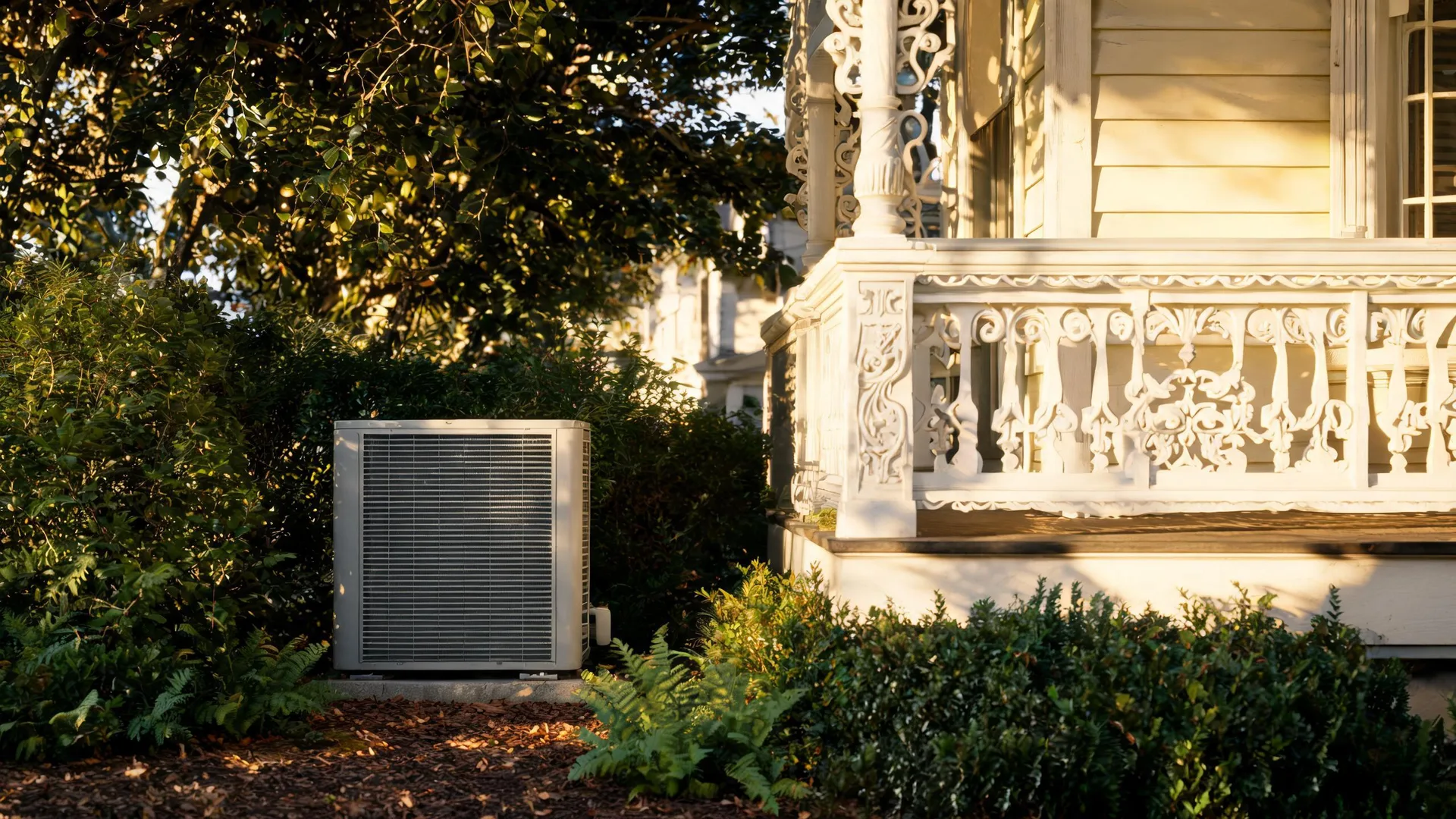
The outdoor unit of a heat pump has no walls around it. Wind-driven debris and hail can hit the coil and fan even in a storm that does no damage to the house itself. A unit that still runs after a storm can still have a bent coil fin or a fan blade knocked out of balance.

NOAA nClimDiv, 1991–2020 normals
Half the homes in Harnett County were built in 1997 or later.
A heat pump that came with a newer house still has working life in it, which is why repair is usually the right first call.

If your heat pump kept running after the last storm, that does not mean it came through clean. Walk out and look at the coil fins before you assume everything is fine. Hail dents them, and bent fins block airflow even when the fan still spins. Check the fan blade too. A blade knocked out of true will wobble instead of spinning flat, and that wears the motor bearing down faster than normal use would. A contractor can straighten light fin damage and true up or replace a bent blade before either one turns into a bigger repair.
Get the repair looked at instead of planning around a replacement. A heat pump that came with a newer house still has the working life to be worth fixing.
Find a contractor
A heat pump runs in both directions, so it gets no real break between seasons. In summer it moves heat out of the house. In winter it reverses and pulls heat from the outside air, which means the outdoor unit is working on the coldest days, not just the hot ones. That back and forth puts more hours on the reversing valve and the compressor than a straight air conditioner ever sees. Short cycles, where the unit kicks on and off every few minutes instead of running a full cycle, wear on the compressor and are often the first thing an owner notices before anything else sounds wrong. Ice that builds up on the outdoor coil and does not clear during the defrost cycle is another early sign, not normal frost but a solid layer that stays. Caught early, most of this is a repair. Left alone, the compressor is the part that ends up paying for it.
The reversing valve is what lets a heat pump switch between heating and cooling, and it tends to fail gradually rather than all at once. A valve going bad will sometimes stick halfway, blowing air that is neither hot nor cold, or it will stay stuck in one mode until the system is forced back the other way. Caught early, a sticking valve is a repair. Left alone, it can take the compressor with it.
A heat pump does not use up refrigerant the way a car uses oil. If the charge is low, it is low because it is leaking out somewhere in the coil or the line set. Adding refrigerant without finding the leak just buys a few weeks before the same symptoms come back, and running low on charge for long stretches is hard on the compressor.
A heat pump rarely fails outright. It starts with a small thing, a sound, a sticking valve, a coil that stays iced over past the defrost cycle, and the machine keeps running anyway because it still technically works. Running it through that is what turns a repair into a replacement. A compressor straining against a stuck reversing valve builds heat it was not built to handle, and that heat breaks down the oil that is supposed to protect it. A fan wobbling on a bent blade wears its bearing faster with every hour it keeps turning. None of these stop the system from running today. They just use up what was left of its working life while it does.
A diagnostic call starts outside at the unit itself, not with a clipboard of questions. A tech will pull the panel and check the capacitor and contactor before touching the refrigerant side, because a weak capacitor causes a lot of the same symptoms people blame on low charge. Gauges go on next to read the pressures, which say whether the charge is right and whether the compressor is moving refrigerant the way it should. The reversing valve gets tested by forcing the system between heating and cooling to see if it actually switches or just hesitates. Airflow gets checked too, both at the return and across the outdoor coil, since a weak fan or a dirty coil can look like a failing compressor from the symptoms alone. None of this takes guesswork. It takes going through the system in order until the reading that does not match the rest shows up.