White plantation-style houses with wraparound porches lit at night, surrounded by Spanish moss-draped live oak trees.

AC Maintenance in Burlington, NC

Tell us about the job

Takes about a minute. No obligation.

Tune-up, service, or cleaningCentral ACAlamance County, NC
Step 1 of 2

What ZIP code is the job in?

Weather here takes a toll on outdoor units

Alamance County saw 131 severe weather events between 2015 and 2024, including 105 damaging wind events and 12 hail events. An outdoor AC unit sits outside through all of it, exposed to wind-blown debris and hail.

Power doesn't always hold through a storm

A quarter of North Carolina households went at least 24 hours without power in 2024. When the power goes out in summer, the air conditioner stops with it, and a unit already carrying hidden damage is slower to recover once power comes back.

5 months
May through September, your air conditioner is on duty
87°F
the average summer afternoon it cools against
12 hail events
in ten years, and hail bends the fins on outdoor coils
105 wind events
in ten years, and wind drives debris into outdoor units
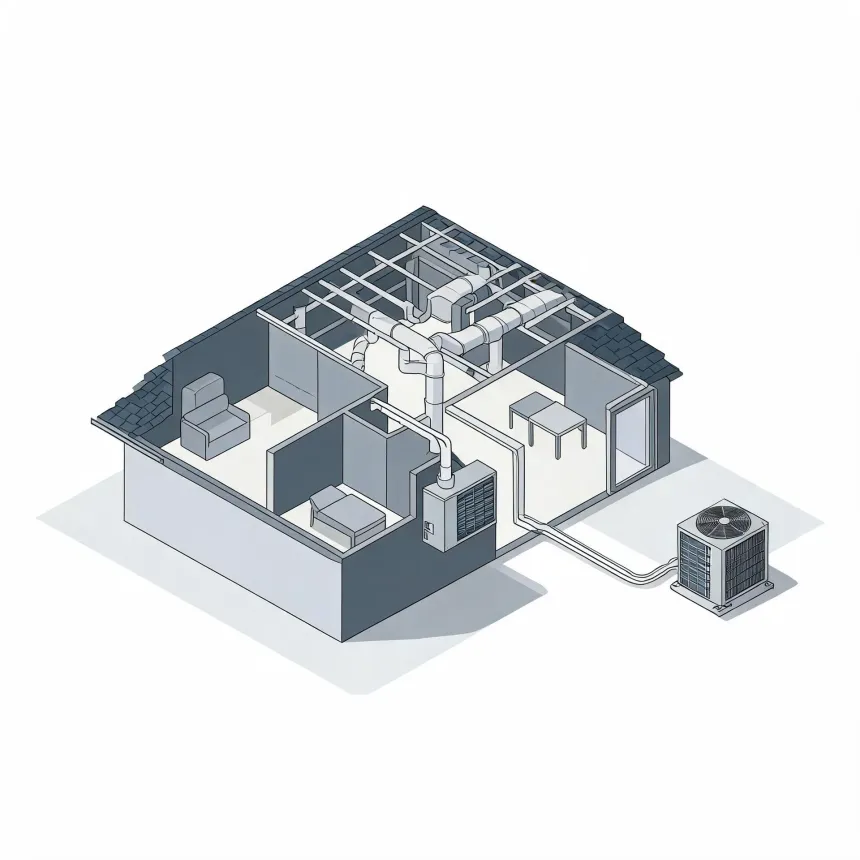
Isometric cutaway illustration of a house showing attic ductwork, an indoor air handler, and an outdoor condenser unit connected by lines.
Your air conditioner works hardest from June through August.

NOAA nClimDiv, 1991–2020 normals

May is the first month cooling runs in Alamance County.

April is when a tune-up should happen, before the system is asked to work.

Half the homes here were built by 1988, new enough that a yearly check is worth it

Half the homes here were built by 1988
Cooling runs May through September
Summer afternoons average 87°F

A system with years left on it is worth keeping that way. The yearly check is how a technician finds storm damage while it is still a small repair, a bent fin or a cracked line, instead of a failed compressor. It also catches the ordinary wear any AC gets: a weak capacitor, a dirty coil, refrigerant running low. None of that fixes itself, and left alone it shortens the years the unit has ahead of it.

Have the outdoor unit checked before the next storm finds what the last one left behind

After a storm, debris and hail can mark up the outdoor unit without stopping it, so nothing looks wrong from the kitchen window. A tune-up is when a technician actually looks it over, bent fins, a cracked line, anything the last front came through and left behind.

Find a contractor
A man in a cap, dark jacket and work pants carries a canvas tool bag as he walks up steps toward an orange front door of a house with gray siding and a potted shrub.
An outdoor air conditioning condenser unit mounted on a concrete pad beside a house, with electrical conduit running to a wall-mounted disconnect box.

What tells you the system needs a look before it quits

Watch how long the fan runs before the air coming out of the vents actually feels cold. A system working the way it should cycles off once the house reaches the set temperature. One that keeps running, or shuts off and on every few minutes, is telling you something inside it is struggling, usually the compressor straining to keep up or a refrigerant charge that has dropped. Listen for a hum from the outdoor unit when nothing is spinning, that's a capacitor failing to kick the fan motor over. Check the air coming from the vents against how the thermostat is set. A gap of several degrees between what the thermostat reads and what the air feels like means the system is losing ground somewhere between the coil and the room. Look at the outdoor unit itself. Bent fins across the coil face, a line running to it that looks kinked or cracked, these don't stop the unit from running, but they make it work harder for less cooling, and that strain adds up over the months it runs.

Keep the airflow clear

Change the air filter on a regular basis and keep an eye on it between changes. A clogged filter starves the system of airflow, which makes the coil work harder and can let it ice over. Keep the outdoor unit clear too. Grass clippings, leaves, and anything growing close to the cabinet block the airflow it needs to shed heat.

Know what to leave alone

Don't pull the outdoor unit's panels off or go near the electrical disconnect. The capacitors inside hold a charge even with the power off, and the refrigerant lines aren't something to open up or bend back into shape yourself. If the coil looks bent or the line looks cracked, that's a job for a technician, not a wrench at home.

An outdoor air conditioning condenser unit positioned beside a blue-sided house at sunset.

Book your AC tune-up in April, before homes here start needing cooling in May.

  1. Jan
  2. Feb
  3. Mar
  4. Apr
  5. May
  6. Jun
  7. Jul
  8. Aug
  9. Sep
  10. Oct
  11. Nov
  12. Dec

A tune-up checks the refrigerant charge, cleans the coils, tests the capacitor and tightens the electrical connections.

A tune-up starts with the coils. The indoor coil and the outdoor coil both shed heat, and a season of dust or grass clippings on either one makes the system work harder to do the same job. A technician cleans both, checks the refrigerant charge against what the system calls for, and corrects it if it's off. The capacitor and contactor get tested under load, since those are the parts most likely to fail outright rather than just lose efficiency. Electrical connections get tightened, because a loose one generates heat and that heat wears the connection further. The condensate drain gets checked too, since a clogged one backs up and can shut the system down or let water sit where it shouldn't. None of this is visible from inside the house. The system can look and sound normal while running on a weak capacitor or a low charge, right up until it doesn't.