Storms hit this county often
Chatham County recorded 149 severe weather events between 2015 and 2024, including 125 damaging wind events, 12 hail events, and a tornado. A quarter of North Carolina households lost power for a day or more in 2024.
Takes about a minute. No obligation.
Chatham County recorded 149 severe weather events between 2015 and 2024, including 125 damaging wind events, 12 hail events, and a tornado. A quarter of North Carolina households lost power for a day or more in 2024.
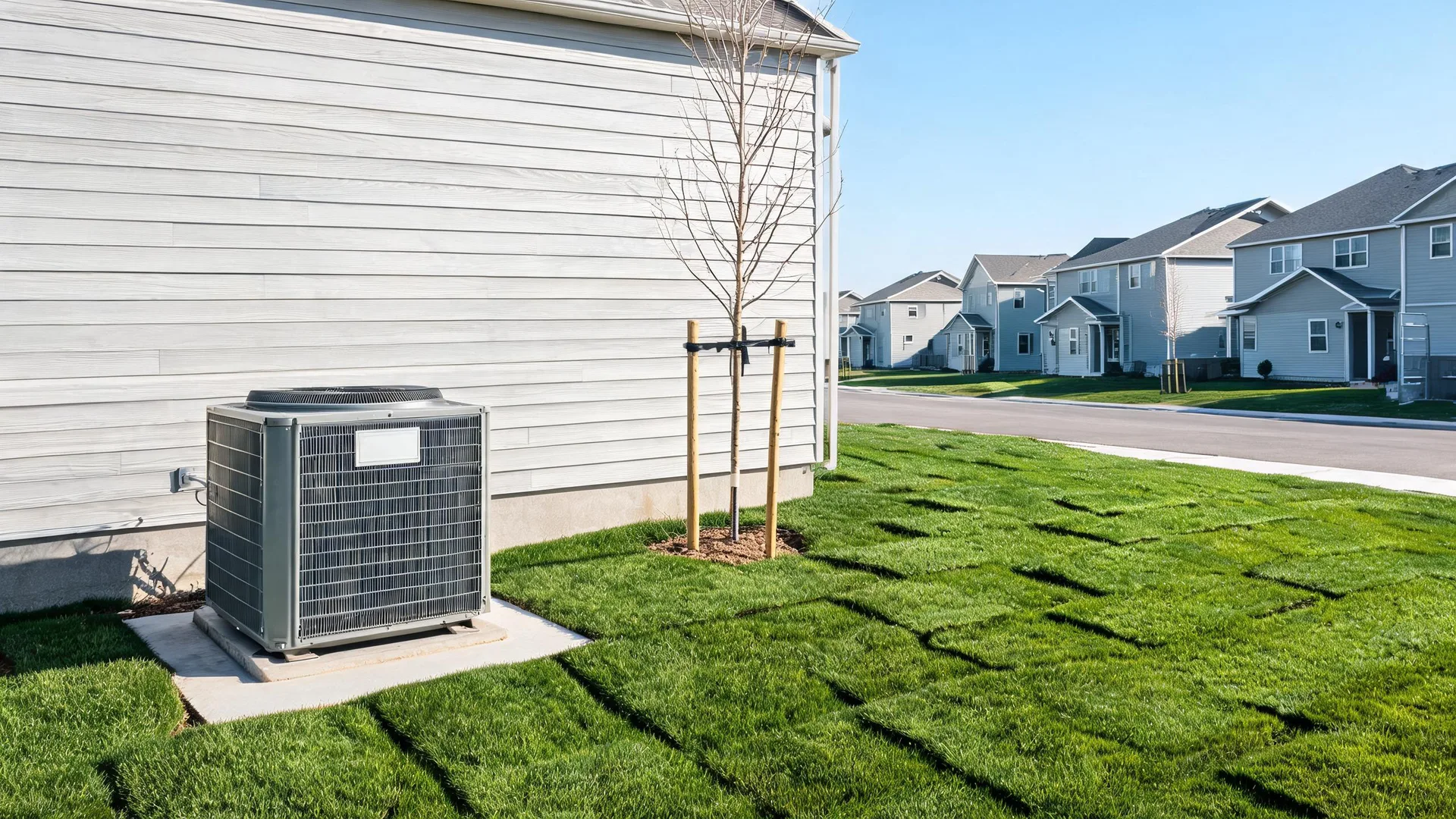
The outdoor unit takes whatever comes through the yard: wind-driven debris, hail, branches coming down. A new install is the time to decide where it sits and what shields it.

NOAA nClimDiv, 1991–2020 normals
Electricity here runs 14.86 cents a kilowatt-hour.
A new AC that wastes less power keeps that rate from adding up against you.




Chatham County falls under zone 3A in the 2021 energy code, built for warm, humid summers and a cooling season that runs long. That rating sets the floor for what can legally go into your home. Any split-system AC installed here has to hit at least 14.3 SEER2 if it's under 45,000 Btu/h, and 13.8 SEER2 at or above that size. That's higher than the national minimum of 13.4 SEER2 manufactured systems have to meet everywhere else. It narrows the lineup to equipment built for this kind of heat, not a unit sized for a milder state.
Where the new unit sits is a choice you make once, at install. Pick ground that drains and a spot clear of branches, and ask about a cage or a cover for hail and debris. If heat or hot water matter during an outage, this is the time to ask what backup options fit your system.
Find a contractorFive months a year, this system runs most of the day just to keep up. That's a lot of hours on the compressor and a lot of cycles on and off. Parts built for a milder climate wear faster under that kind of load, and the ones built for this one will still show their age sooner than they would somewhere cooler. A properly sized unit matters more here than in a place where the system gets to rest half the year. Go bigger than you need and it short-cycles, wearing itself out without ever running long enough to dry the air right. Go undersized and it runs flat out all summer and still can't keep the house where you want it. Either way shows up early, and it shows up on the unit that worked hardest to get you through August.
The refrigerant in that old system has to be recovered before anything gets disconnected. A licensed contractor pulls it with a recovery machine rather than letting it vent, then disconnects the line set, the electrical whip and the condensate drain. The indoor coil usually comes out too, since a new outdoor unit rarely matches up well with an old one.
Whatever the new unit sits on needs to be solid and level, so a cracked or sunken pad gets replaced rather than reused. The line set connecting indoor and outdoor units often gets replaced as well, since old copper sized for the old system may not be the right diameter for the new one. Reusing it without checking just carries old problems into the new install.
Estimates for a typical Chatham County home, from EIA household energy data, North Carolina fuel prices and NOAA climate normals. Your home will differ.
Installation starts with the new outdoor unit and indoor coil being set in place, then the line set gets connected and brazed, and the system gets pressure tested before anything runs. Once the lines hold pressure, the system gets evacuated with a vacuum pump to pull out air and moisture, since either one left behind ruins the refrigerant charge and can damage the compressor down the road. Only after that does the contractor weigh in the refrigerant charge, matched to the length of the line set and the specs of the unit. The electrical connections get made, the condensate drain gets tested to make sure it actually carries water away from the house, and the thermostat gets wired and set up. Before anyone leaves, the system runs through a full cycle so airflow, temperature drop and pressures can all be checked against what the equipment is supposed to do.