Storms come through here often
Cleveland County recorded 117 severe weather events between 2015 and 2024. That includes 70 damaging wind events, 28 hail events, and 9 tornadoes. A new air conditioner here needs to handle more than heat and humidity.
Takes about a minute. No obligation.
Cleveland County recorded 117 severe weather events between 2015 and 2024. That includes 70 damaging wind events, 28 hail events, and 9 tornadoes. A new air conditioner here needs to handle more than heat and humidity.
A quarter of North Carolina households went at least 24 hours without power in 2024. For a home that relies on electricity to heat and cool, a storm that knocks out power doesn't just turn off the lights.

NOAA nClimDiv, 1991–2020 normals
Electricity heats 74.4% of homes in Cleveland County.
Most of the air conditioners going into those homes are heat pumps or electric-only systems, so a power outage here doesn't just stop the cooling.



Any central air conditioner installed in Cleveland County has to meet 14.3 SEER2, the floor for the Southeast and a step above what's required in most of the country. That rating is based on zone 3A, the warm, humid climate class this county falls under. It rules out the lowest-efficiency units sold elsewhere, so the contractor sizing a system here is already working from a higher baseline. A federal tax credit is also available for qualifying high-efficiency equipment, worth checking against whatever system gets proposed.
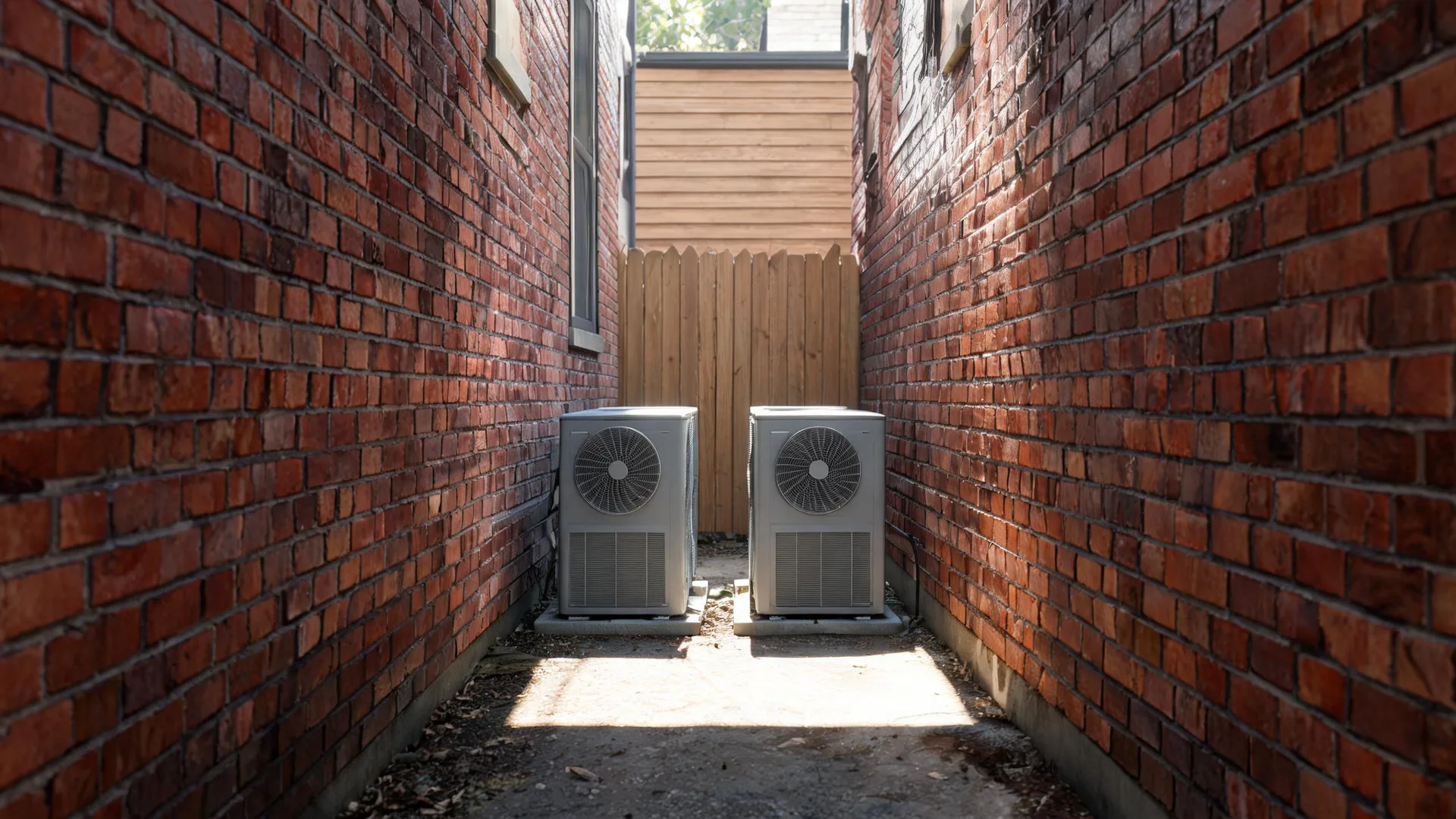
Where the new unit goes and how it's mounted is worth deciding now, before it's set in the ground. A pad that keeps it clear of runoff, placement away from falling limbs, that's part of the install, not an afterthought. If the home leans on electric heat and hot water, worth asking what happens to both when the power drops.
Find a contractor
Cooling here runs May through September, five months out of the year. April is the month before it starts, and that makes it the month to get the new unit in. Installed then, it gets checked and adjusted before the first hot stretch instead of being pushed into service on day one. Wait past April and the install happens after the heat has already set in, competing with every other homeowner whose system picked that week to fail.
A SEER2 rating comes from lab testing under set conditions, not from the attic or the crawlspace the unit actually runs in. Duct leaks, a return that's too small, or a coil that never gets cleaned all pull the real number down below what's on the label. The rating tells you what the equipment is capable of, not what it will deliver once it's installed.
The point of a higher SEER2 rating is that the compressor and fan move the same heat using less electricity. On a system that holds power as well as cooling capacity, that lower draw matters twice: less load on the unit day to day, and less strain on a generator or battery backup if the power is out and something else has to carry it.
Estimates for a typical Cleveland County home, from EIA household energy data, North Carolina fuel prices and NOAA climate normals. Your home will differ.
Installation starts with sizing, not with the equipment itself. A contractor works out the heat load for the house, the ductwork gets inspected, and only then does a unit get chosen to match. On the day itself, the old equipment comes out first, indoor and outdoor units both, along with the line set running between them. A new pad goes down for the outdoor unit if the old one is cracked or sitting wrong. Line sets get replaced or flushed, because oil and debris left behind from the old system will shorten the life of the new compressor. Once the new units are set, the refrigerant lines get connected, pressure tested, and pulled into a vacuum to clear out moisture and air before any refrigerant goes in. The system gets charged to the manufacturer's spec, not just topped off by feel. Last comes airflow: checking static pressure, adjusting dampers, confirming the thermostat is talking to the right equipment. A unit that's wired up and running cold isn't the same as one that's been set up correctly, and the difference shows up later in the electric bill and in how long the compressor lasts.