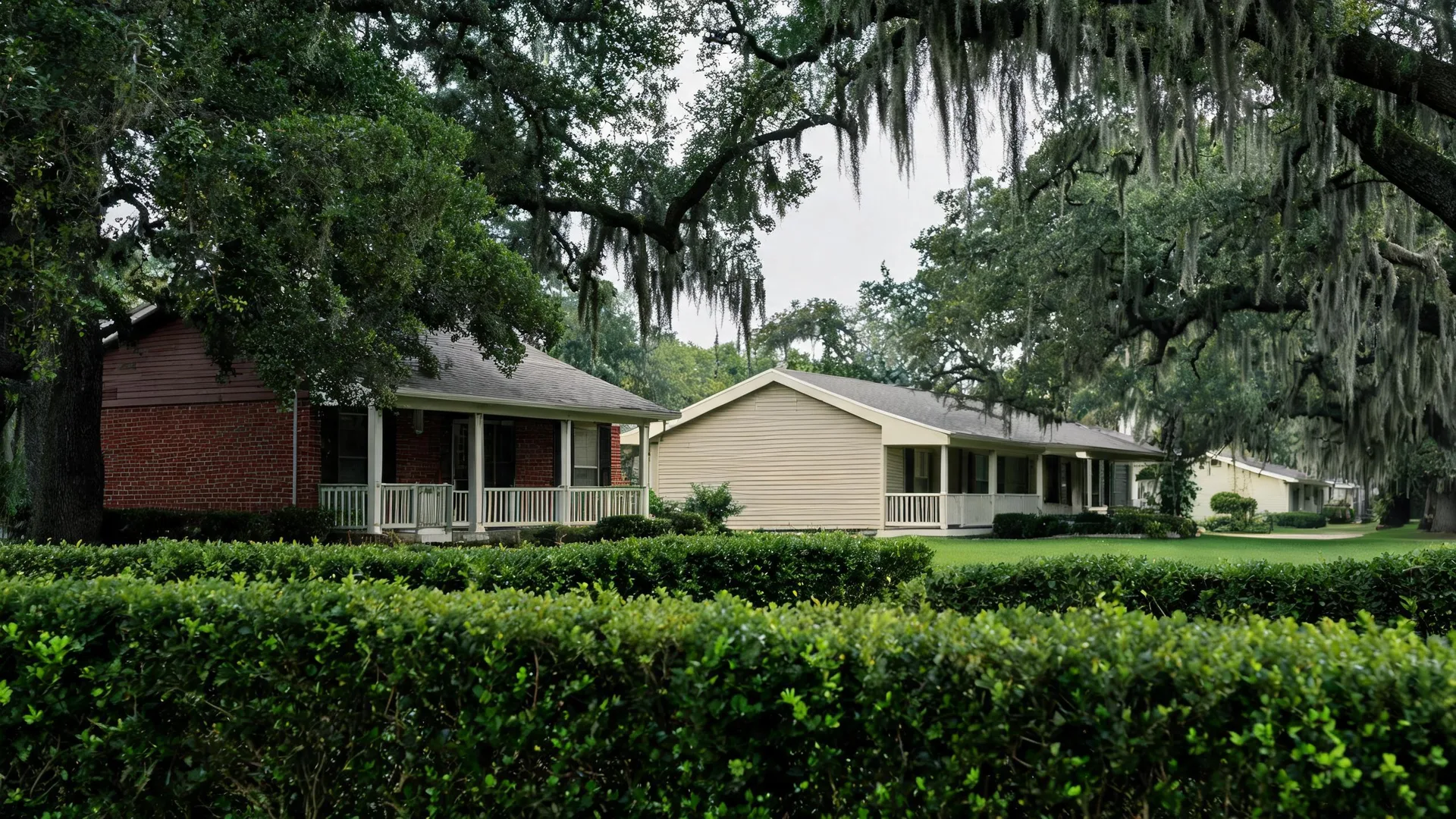
Single-story brick and cream-sided houses with covered porches behind a trimmed hedge and lawn, shaded by large oak trees draped with Spanish moss under an overcast sky.

AC Installation in Salisbury, NC

Tell us about the job

Takes about a minute. No obligation.

New system or replacementCentral ACRowan County, NC
Step 1 of 2

What ZIP code is the job in?

Rowan County sees real storm numbers

Rowan County recorded 128 severe weather events between 2015 and 2024, including 101 damaging wind events, 14 hail storms, 3 tornadoes and 7 winter storms. A quarter of North Carolina households lost power for a day or more in 2024.


A new AC has to handle what comes with the territory

An outdoor condenser sits outside through wind and hail, with nothing between it and the weather. And a power cut that lasts a day means no cooling and no hot water until it's back, not just an inconvenience in a county that sees storms this often.

5 months
May through September, your air conditioner is on duty
87°F
the average summer afternoon it cools against
14 hail events
in ten years, and hail bends the fins on outdoor coils
13.4 SEER2
the federal minimum any new unit must meet
Isometric line illustration of a cutaway single-story house showing interior rooms, ductwork, an indoor air handler or furnace, and a refrigerant line running to an outdoor condenser unit on a pad.
Your air conditioner works hardest from June through August.

NOAA nClimDiv, 1991–2020 normals

A unit sized wrong wears out the parts built to protect it.

Correct sizing means the contractor measures the house, not just the square footage.

Put in before May, so a summer storm isn't the first test it faces

Cooling runs May through September
Summer afternoons average 87°F
101 damaging wind events from 2015 to 2024
Most homes here run on electric heatElectricity heats 67.9% of Rowan County homes, more than any other fuel

Any split-system AC installed here below 45,000 Btu an hour has to hit 14.3 SEER2. That's the Southeast minimum, higher than what the rest of the country requires, because Rowan County falls under zone 3A, a warm, humid zone with a long cooling season. It narrows what a contractor can put in. A unit built only to the national floor doesn't qualify here, even if it's new. Some systems that meet this mark also qualify for a federal tax credit, worth checking against the model being installed.

Plan for the storm, not just the heat

Where the outdoor unit goes and how it's protected matters here. Walk the yard with the contractor before install and pick a spot that gives it some cover from wind and falling branches. Ask how the system handles a power cut, too, since storms here take the power out for a day or more often enough to plan around.

Find a contractor
A man in a gray T-shirt and tan work pants, carrying a canvas tool bag, climbs porch steps toward an orange front door beside a potted shrub.
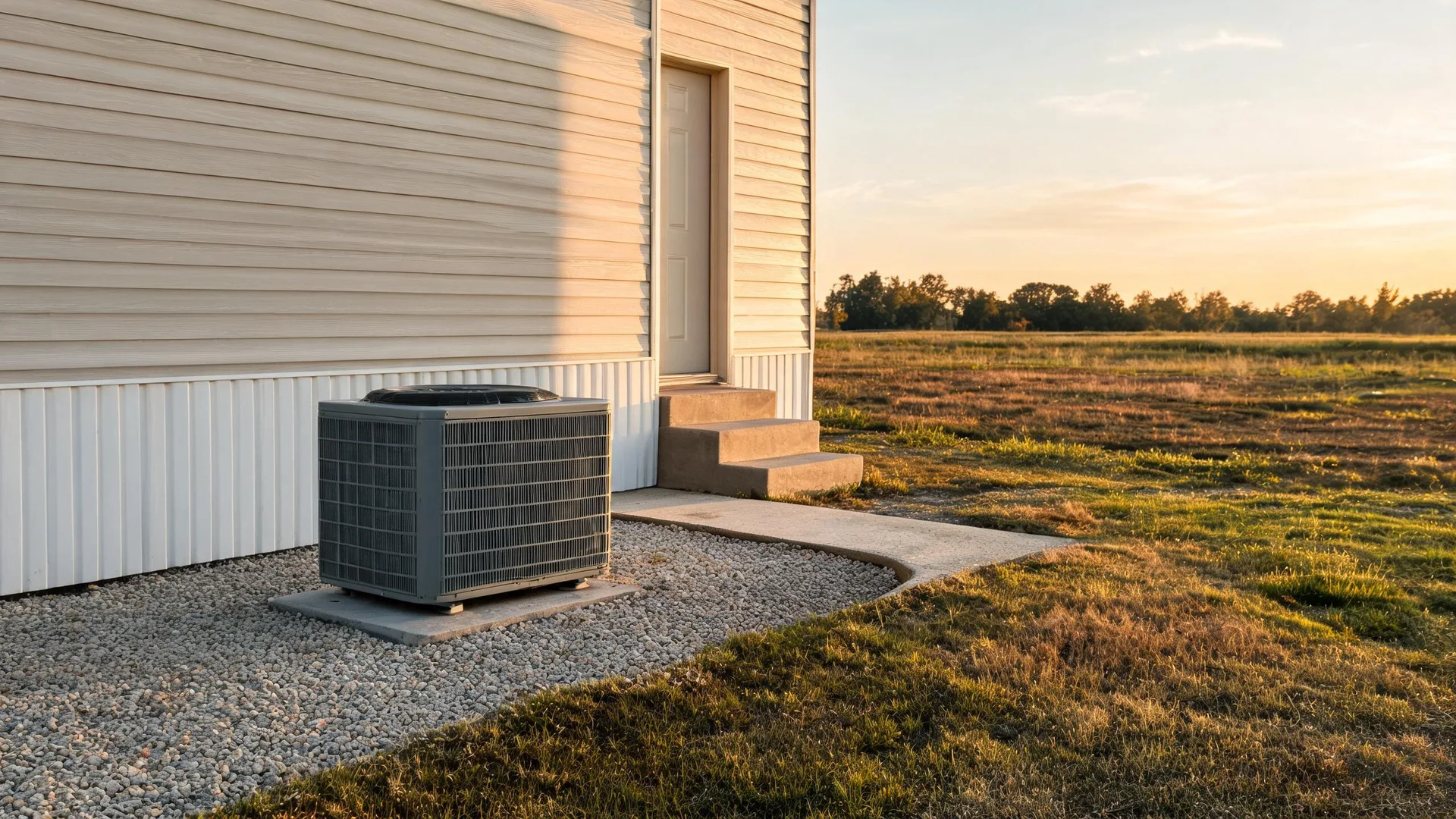
An outdoor air conditioning condenser unit mounted on a concrete pad surrounded by gravel, photographed against a partly cloudy blue sky.

The rating on the label is a ceiling, not a guarantee

The SEER2 number on the label tells you how much cooling a unit produces for the electricity it uses. A higher number means less power to reach the same temperature in the house. That number only holds up if the system runs the way it was designed to run. A unit that's too big for the space will short cycle, shutting off before it finishes a full cooling and dehumidifying run, and the rated efficiency never shows up on the bill. A unit that's sized right, with the refrigerant charge set correctly and good airflow across the coil, will actually perform closer to its rating over the life of the system. The number on the label is a ceiling, not a guarantee.

Equipment cost is only part of the bid

The condenser and air handler are one line on the invoice. Labor to set the line set, tie into the ductwork, run new electrical if the disconnect or breaker doesn't match the new unit, and commission the system all add to the job. Two contractors quoting the same model can land on different totals because they're not pricing the same amount of work.

What's already at the house changes the job

Ductwork that's undersized or leaky for a new system may need modification before the air handler can move the air it's rated for. An electrical panel that can't take the new unit's load needs an upgrade first. A pad or stand that's cracked or sitting wrong gets replaced. None of this shows up in a quote based on square footage alone, only in one based on a walkthrough.

An outdoor air conditioning condenser unit mounted on a concrete pad next to a blue-sided residential house at sunset.

Going above the federal minimum saves little here, about $20 a year.

  • A higher-efficiency unit$270 a year
  • A new unit at the federal minimum, 14.3 SEER2$290 a year

Estimates for a typical Rowan County home, from EIA household energy data, North Carolina fuel prices and NOAA climate normals. Your home will differ.

Installation day starts with the old equipment coming out, if there is any, and the site getting checked against the plan the contractor already walked through. The line set gets run between the condenser pad and the air handler, and if the old line set is reused it gets pressure tested first, since a leak there ruins the charge later. Ductwork connections get sealed where the air handler ties in. Electrical gets landed next, the disconnect box near the condenser and the breaker feeding it, then the system gets evacuated to pull moisture and air out of the lines before refrigerant goes in. Once it's charged, a tech runs the system and checks airflow across the coil, the temperature drop across the evaporator, and the pressures on both sides of the line. A system that's installed right gets commissioned, not just switched on, and that last check is what decides whether it runs the way the label says it will.