Single-story brick and white-sided houses behind a trimmed hedge and lawn, framed by overhanging oak branches draped with Spanish moss under an overcast sky.

AC Installation in Raleigh, NC

Tell us about the job

Takes about a minute. No obligation.

New system or replacementCentral ACWake County, NC
Step 1 of 2

What ZIP code is the job in?

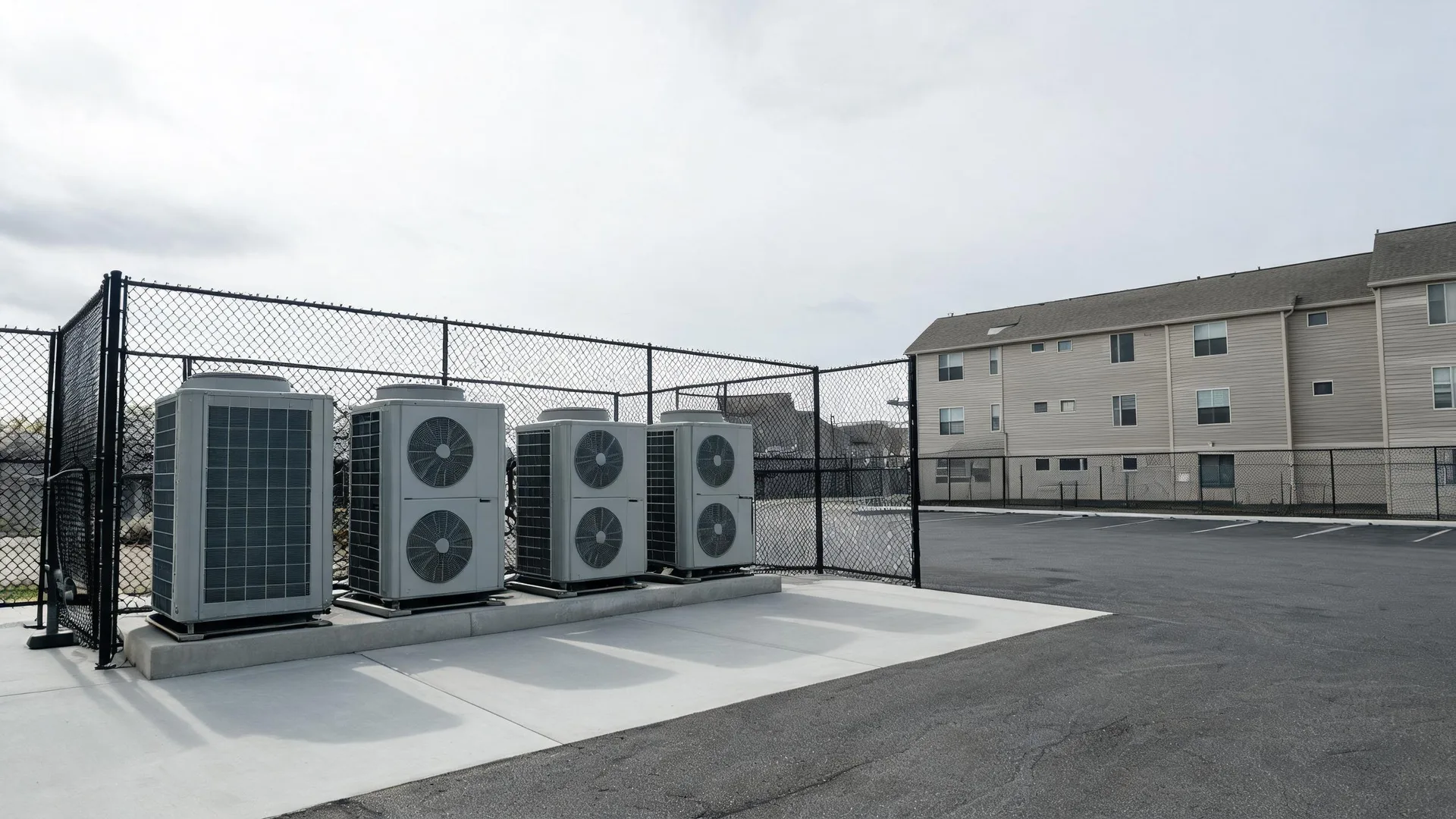
Weather here is hard on outdoor units

Wake County logged 458 severe weather events between 2015 and 2024, damaging wind and hail among them. A new condenser sits outside year round, so where the installer places it and what it's shielded by is worth thinking through before install day.


Power doesn't always hold

A quarter of North Carolina households went at least 24 hours without power in 2024. When the power's out, the new AC doesn't run no matter how good it is. Worth asking the installer about a surge protector for the unit, since outages also bring power spikes when service returns.

5 months
May through September, your air conditioner is on duty
88°F
the average summer afternoon it cools against
122 hail events
in ten years, and hail bends the fins on outdoor coils
13.4 SEER2
the federal minimum any new unit must meet
Isometric cutaway illustration of a single-story house showing interior rooms with ductwork and an air handler, connected by refrigerant lines to an outdoor condenser unit on the left.
Your air conditioner works hardest from June through August.

NOAA nClimDiv, 1991–2020 normals

Homes in Wake County run cooling May through September.

Put the new system in during April and it's already proven before the first hot week hits.

Most homes here run on electricity, so an electric AC install fits right in

54.8% of homes heat with electricity
Cooling runs May through September
Summer afternoons average 88°F

Wake County sits in climate zone 3A, warm with a short mild winter and summers that run long. Any new split-system AC installed here has to meet 14.3 SEER2 if it's under 45,000 Btu/h, which is the Southeast's regional minimum and higher than what manufacturers have to meet nationally. A unit built to the national floor isn't automatically legal to install here. The installer has to start from equipment rated for this region, not just whatever shows up on a national spec sheet. A federal tax credit is available on qualifying equipment, separate from this requirement.

Plan for storms

Storms and outages are common here. Plan where the outdoor unit goes, how it's protected, and how you'll keep heat and hot water in an outage.

Find a contractor
A gray cylindrical air conditioning condenser unit mounted on a concrete pad next to a light-colored vinyl-sided house exterior.

Five months a year, every year

Five months of cooling a year here, and the afternoon high averages 88 through June, July and August. That's the stretch a new system has to hold up under, every summer it's in the ground. A unit sized right for this load will cycle the way it's supposed to. One sized wrong, too big or too small, works harder than it should and shows wear sooner than the spec sheet suggests.

The size has to match the house

A contractor should run a load calculation on the rooms, windows and insulation before quoting a unit size. Go bigger than the house needs and the system short cycles, cooling fast then shutting off before it pulls the moisture out of the air. Go smaller and it runs long stretches without ever catching up on the hottest days. Either way the equipment wears faster than it should.

The ductwork decides more than the condenser does

If the existing ducts are undersized, leaky, or routed badly, a new high-efficiency condenser won't make up for it. Air has to actually reach the rooms it's meant to cool. Sealing or modifying ductwork is often part of a proper install, not an upsell, and it's worth asking the installer to inspect it before assuming the old ducts just carry over.

An outdoor air conditioning condenser unit mounted on a concrete pad next to a blue-sided residential house at sunset.

Going above the federal minimum saves little here, about $20 a year.

  • A higher-efficiency unit$300 a year
  • A new unit at the federal minimum, 14.3 SEER2$320 a year

Estimates for a typical Wake County home, from EIA household energy data, North Carolina fuel prices and NOAA climate normals. Your home will differ.

Install day starts with the old equipment coming out. The installer recovers the refrigerant from the old system, disconnects the lines, and pulls both the condenser and the indoor coil. If the line set or the pad underneath is being reused, it gets inspected first. A leak or a cracked pad causes problems for the new unit too. Setting the new condenser and mounting the coil usually goes faster than what comes next. The lines get evacuated to pull out air and moisture, then charged to the exact weight the manufacturer specs, not just run until the gauges look right. Once it's charged, the installer checks airflow at the vents, tests the thermostat, and runs the system through a full cooling cycle to see that it shuts off and restarts the way it should. A system that looks finished but was never run through a cycle hasn't actually been checked.