Electricity here runs 15.23 cents a kilowatt-hour
That is what homes in Moore County paid on average in 2025. Every ton of cooling an air conditioner moves gets billed at that rate, all summer long.
Takes about a minute. No obligation.
That is what homes in Moore County paid on average in 2025. Every ton of cooling an air conditioner moves gets billed at that rate, all summer long.
A new system that moves the same cooling for less electricity shows it on every bill, not just a few. At this rate, how the unit is sized and installed matters as much as the equipment itself.

NOAA nClimDiv, 1991–2020 normals
Moore County logged 167 severe weather events between 2015 and 2024, including 136 damaging wind events.
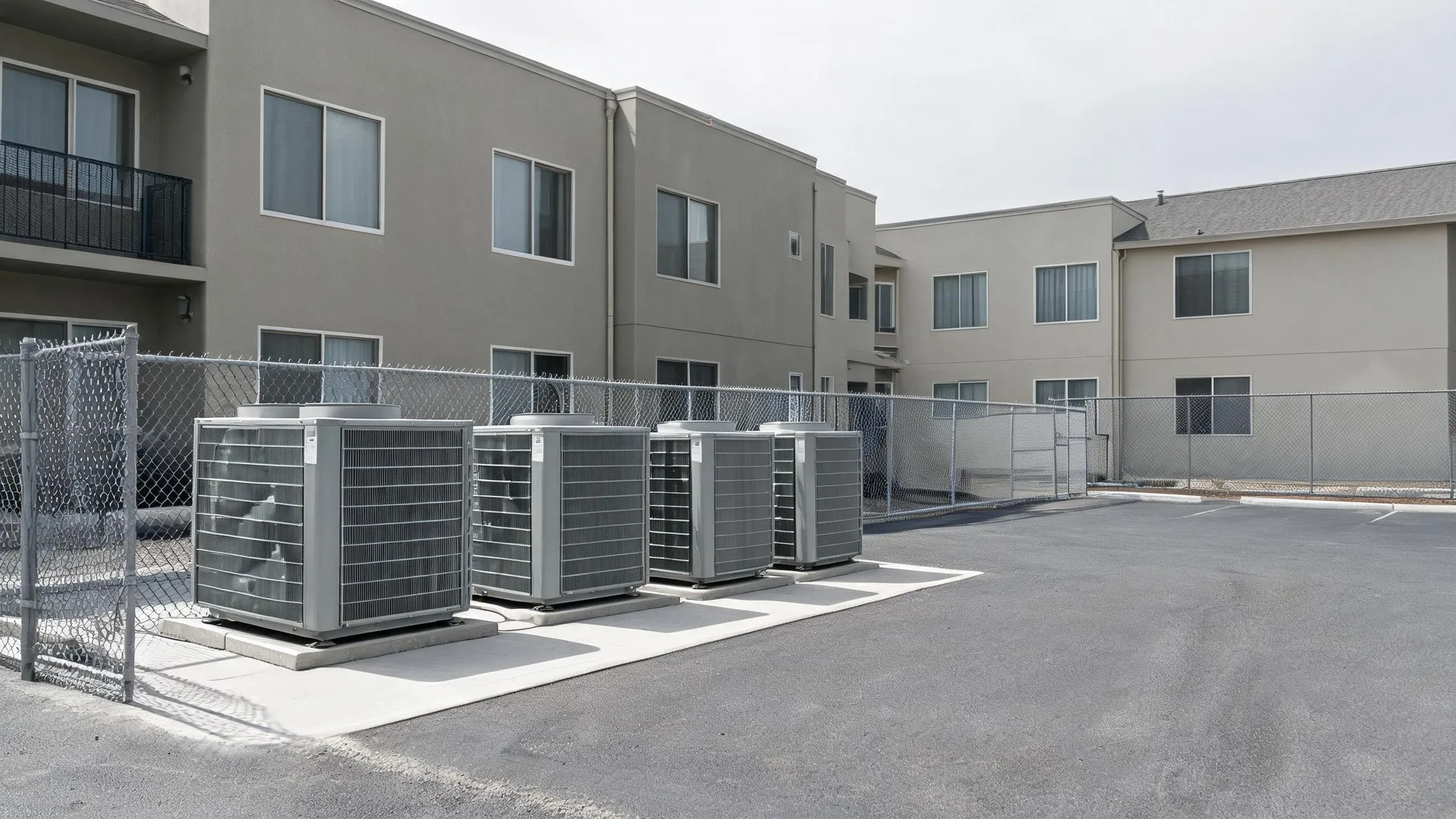
That outdoor unit needs a spot shielded from wind and falling debris, and a plan for staying cool when the power drops.




Moore County sits in climate zone 3A, which the energy code treats as warm and humid with a long cooling season. Any split-system air conditioner installed here under 45,000 Btu/h has to hit at least 14.3 SEER2, a higher bar than the national minimum of 13.4 that applies elsewhere in the country. At or above that size, the floor is 13.8 SEER2. This narrows what a contractor can legally put in your house, regardless of budget. A federal tax credit is available on qualifying equipment, separate from these minimums, worth checking against whatever system you're considering.
That per kilowatt-hour rate applies to every ton of cooling this system moves, for as long as it runs. Picking equipment with a strong SEER2 rating, sized and installed right, is what makes that rate work in your favor instead of against you.
Find a contractor
May through September, this system runs. That's five months a year it has to carry the load, every year it's in the house. Ask the contractor how they're sizing the unit, not just what brand they're selling. A unit too big for the house short cycles, kicking on and off all day without ever settling into a steady run. One sized right for the house runs longer, steadier stretches and wears more evenly across all five months. Get the sizing right at install and the equipment underneath it has a real chance to hold up.
SEER2 compares the cooling a system delivers against the electricity it uses to do it. A higher number means the compressor and coil are getting more cooling out of the same power draw. It's measured under set conditions in a lab, so it won't match what any one house sees, but it tells you how the equipment is built to perform against another unit with a lower number.
A high SEER2 unit connected to a duct system that's too small, or charged with the wrong amount of refrigerant, won't deliver what the label promises. The rating assumes correct airflow across the coil and a proper charge. Ask the contractor how they verify airflow and charge after the unit goes in, not just which model they're quoting.
Estimates for a typical Moore County home, from EIA household energy data, North Carolina fuel prices and NOAA climate normals. Your home will differ.
Installation starts with a load calculation, not a price quote. A contractor measures the house, the windows, the insulation, and figures out how much cooling it actually needs before anyone talks about equipment. From there it's a full day of physical work. The old unit comes out, along with the old line set in most cases, since reusing refrigerant lines can introduce contaminants into a new system. New line set gets run, the indoor coil goes in above or beside the furnace, and the outdoor unit gets set on a pad outside. Once everything's connected, the system gets evacuated to pull moisture and air out of the lines before refrigerant goes in. Then comes the part that matters most and gets skipped most often: checking airflow across the coil and confirming the refrigerant charge matches what the equipment calls for. A unit can be installed and running within hours, but running right is a separate thing from running.