






A illuminated white antebellum-style house with a wraparound porch, white columns, and Spanish-moss-draped oak trees, photographed at dusk.

AC Installation in Mount Airy, NC

Tell us about the job

Takes about a minute. No obligation.

New system or replacementCentral ACSurry County, NC
Step 1 of 2

What ZIP code is the job in?

Surry County saw 202 severe weather events between 2015 and 2024. Most of that was damaging wind, 158 times in that span, with 27 hail events and a handful of tornadoes and winter storms mixed in. An outdoor AC unit sits outside through all of it, exposed to wind-blown debris and hail. Power doesn't always hold up either. A quarter of North Carolina households went at least a full day without electricity in 2024. When a new system goes in here, where the outdoor unit sits and how it's protected matters as much as the size of the unit itself.

4 months
June through September, your air conditioner is on duty
85°F
the average summer afternoon it cools against
27 hail events
in ten years, and hail bends the fins on outdoor coils
13.4 SEER2
the federal minimum any new unit must meet
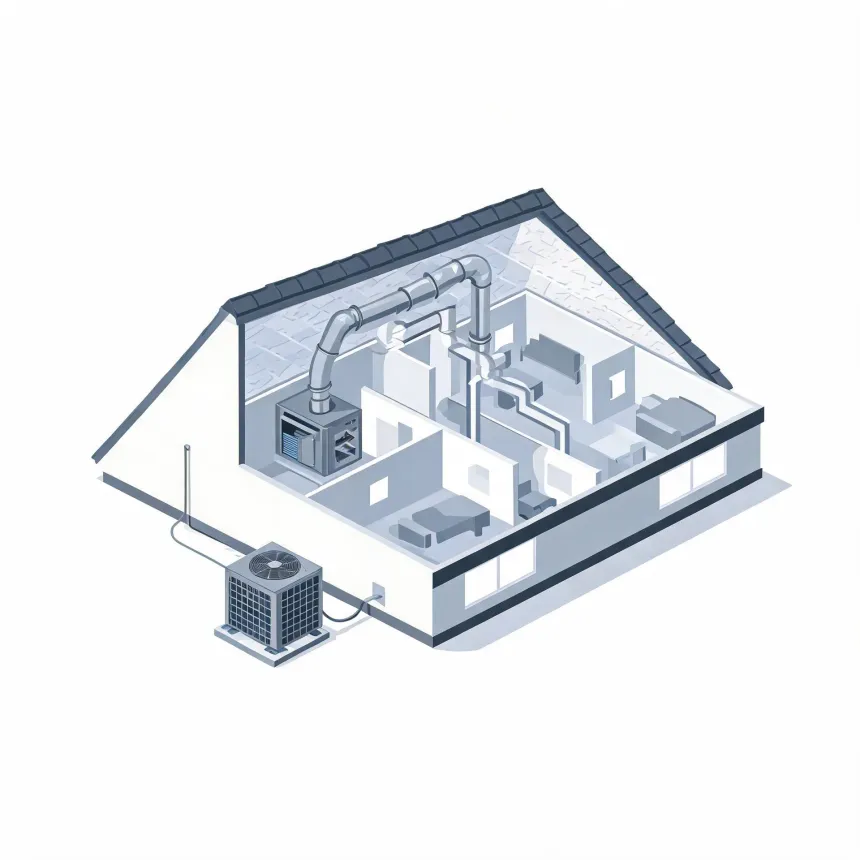
Isometric illustration of a cutaway house showing interior rooms, an attic furnace with large ducts, and an outdoor condenser unit connected by a line set, on a white background.
Your air conditioner works hardest from June through August.

NOAA nClimDiv, 1991–2020 normals

A condenser fan motor and control board are only rated to handle so much of a power surge before they fail.

Ask whether the new system has surge protection built in or added at install, because that's what decides if a lightning strike costs you a service call or a new board.

Get it installed before June, so a storm doesn't make the decision for you

Cooling runs June through September
Summer afternoons average 85°F
158 damaging wind events from 2015 to 2024
Most Homes Here Run on Electric HeatElectricity heats 73.9% of homes in Surry County, more than gas, propane and oil combined.

Surry County falls in climate zone 4A, which asks real work of both your furnace and your AC. That's why any new split system installed here has to hit 14.3 SEER2 if it's under 45,000 Btu/h, or 13.8 SEER2 at or above that size. That's higher than the federal minimum of 13.4 SEER2 that applies in most of the country. It limits what a contractor can legally put in your house, so don't expect the cheapest unit on a national price sheet to be on the table here. A system rated for this region is built to pull its weight in a humid summer, not just survive one.

Pick the spot before the next storm picks it for you

Walk the install site with the contractor and talk about where the outdoor unit will sit, what could blow into it, and whether it needs a guard or a pad that keeps it clear of runoff. Ask what happens to your cooling and your hot water if the power goes out for a day. That's a real question here, not a what-if.

Find a contractor
A man in a dark gray t-shirt and brown work pants, seen from behind, carries a worn leather tool bag up wooden porch steps toward an orange front door.
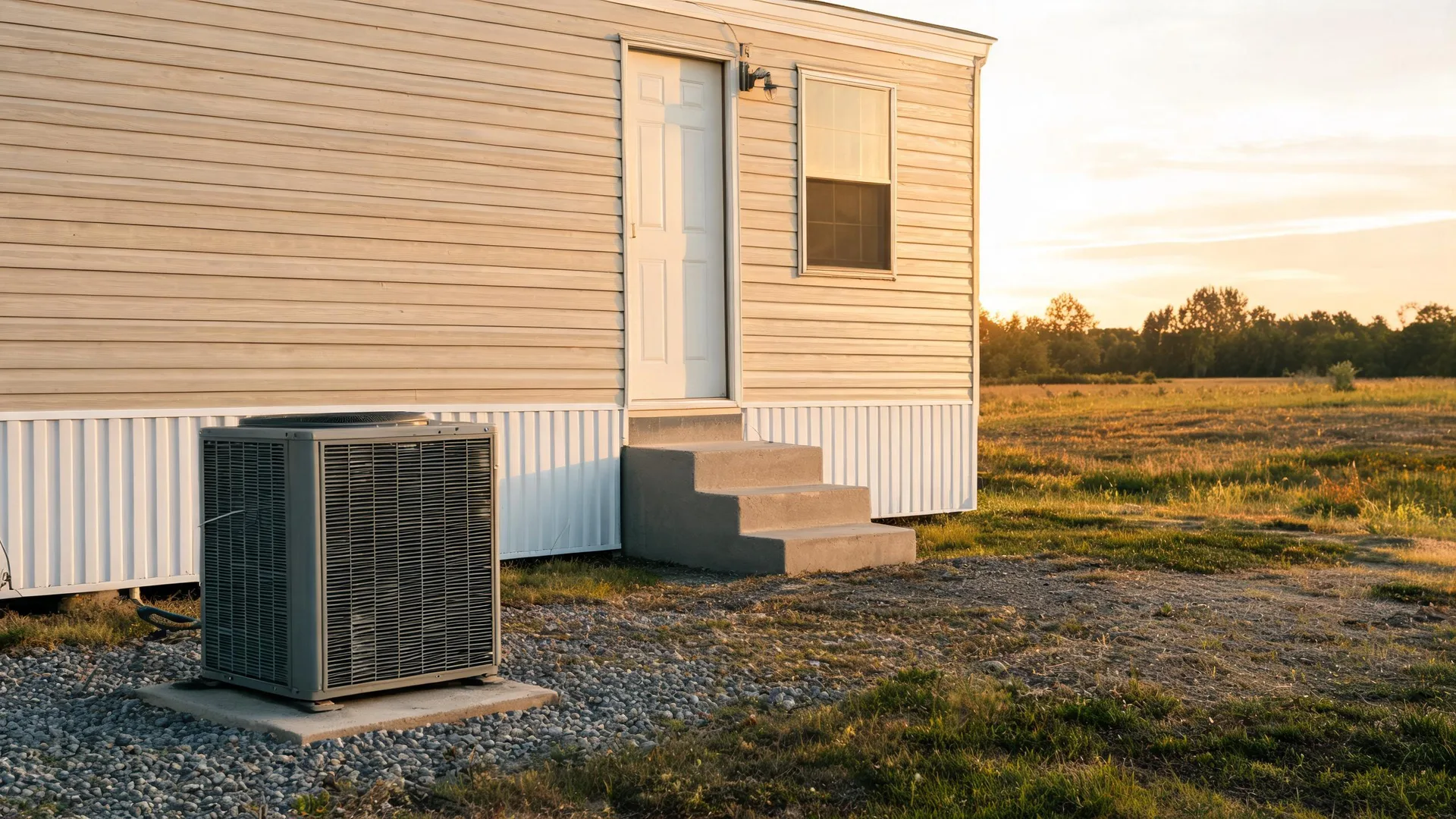
A gray cylindrical air conditioning condenser unit mounted on a concrete pad next to a light-colored vinyl-sided house exterior.

The number on the label is a ceiling, not a guarantee

SEER2 tells you how much cooling a system delivers for the power it draws, averaged out over a season of starting, stopping and running at partial load. A higher number means the compressor and fan are doing the same job for less electricity, not that the unit cools a bigger house or cools it faster. Two systems can be sized the same and sit side by side on a spec sheet, and the one with the higher rating is the one that costs less to run through a long cooling season. What the rating doesn't tell you is how that system holds up outside. A unit with a good rating still depends on clean coils, correct refrigerant charge and a fan that spins freely to hit that number. Let debris pack the outdoor coil or let the charge drift low, and the real efficiency drops below what's on the label no matter how high that label reads. The rating is a ceiling, not a guarantee, and a contractor who sizes and installs the system correctly is as much a part of hitting it as the equipment itself.

Sizing drives the price before anything else does

A contractor has to run a load calculation on the house, counting windows, insulation, ceiling height and duct layout, before pricing a system. A unit sized too big for the space cycles on and off too fast and never pulls the humidity down. One sized too small runs constantly and still can't keep up on the hottest days. Either mistake shows up later as a comfort problem or a shortened compressor life, so the calculation is worth more to the price than the brand on the box.

What's already in the house changes the job

If the ductwork, refrigerant line set and electrical disconnect are already sized right for the new system, installation is mostly a swap. If the old ducts are too narrow, the line set is the wrong diameter, or the breaker and wiring don't match what the new unit draws, those all have to be brought up to match before the system can run the way it's rated to. A straight swap and a full retrofit are two different jobs, even when the equipment itself is identical.

Overhead view of an outdoor AC condenser unit on a concrete pad next to a house with a dark shingle roof.

Going above the federal minimum saves little here, about $10 a year.

  • A higher-efficiency unit$210 a year
  • A new unit at the federal minimum, 14.3 SEER2$220 a year

Estimates for a typical Surry County home, from EIA household energy data, North Carolina fuel prices and NOAA climate normals. Your home will differ.

Install day starts outside, with the old outdoor unit disconnected and the line set drained before anything new goes in. Indoors, the coil above the furnace or air handler comes out next, since that half of the system gets replaced along with the condenser. The new line set gets connected, pressure tested, and pulled down into a vacuum to clear out air and moisture before any refrigerant goes in, because trapped moisture in the lines wears on the compressor from day one. Electrical work usually follows: a new disconnect box, correct breaker, and a condensate drain run with a slope that actually lets water leave the coil instead of sitting in the pan. Once everything is wired and charged, the system gets run through its paces, checking refrigerant charge against the manufacturer's numbers, airflow across the coil, and the temperature split between the air going in and the air coming out. A contractor who skips that last check is leaving the system to find its own balance instead of setting it.