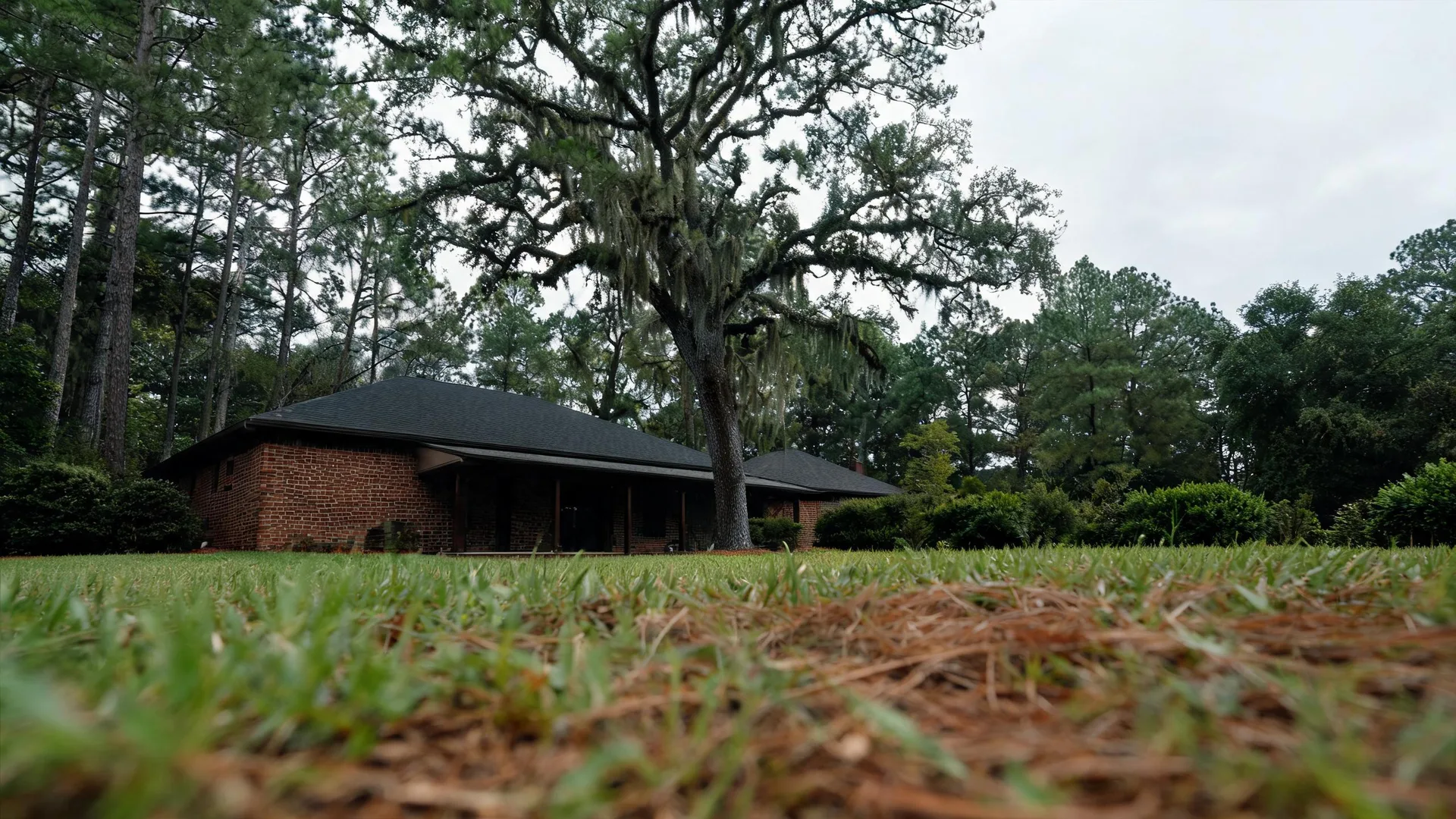
Low ground-level view across a lawn toward a single-story brick house with a dark shingled roof, framed by a large moss-draped oak and tall pine trees under an overcast sky.

AC Installation in Morganton, NC

Tell us about the job

Takes about a minute. No obligation.

New system or replacementCentral ACBurke County, NC
Step 1 of 2

What ZIP code is the job in?

Weather here does damage

Burke County logged 203 severe weather events between 2015 and 2024. That includes 112 damaging wind events, 57 hail events, 3 tornadoes and 4 tropical storms or hurricanes. An outdoor AC unit sits outside through all of it, exposed to wind-driven debris and hail.


The power goes out with it

A quarter of North Carolina households went at least 24 hours without power in 2024. A new AC install is also a chance to plan for that, since an outage means no cooling and, for most homes here, no heat either, since electricity runs both.

4 months
June through September, your air conditioner is on duty
86°F
the average summer afternoon it cools against
57 hail events
in ten years, and hail bends the fins on outdoor coils
13.4 SEER2
the federal minimum any new unit must meet
Isometric line illustration of a cutaway single-story house showing interior rooms, ducted air handler, ceiling ductwork, and an outdoor condenser unit connected by refrigerant lines.
Your air conditioner works hardest from June through August.

NOAA nClimDiv, 1991–2020 normals

Cooling here runs June through September.

May is the month to get a new system in, before the first hot stretch hits and installers get booked solid.

Power here is cheap. Paying it back fast isn't the point.

Power here costs 13.31 cents per kilowatt-hour
Climate zone 4A
Cooling runs June through September

Electricity heats 70.6% of homes in Burke County, more than every other fuel combined. Gas, propane and oil together don't come close. That means most of the systems installers run into here are electric, and a new AC usually pairs with an electric furnace or heat pump already in place. If your current setup runs on electricity, matching it keeps the install straightforward and keeps the new unit working with the ductwork and wiring already there. It also means the outage risk this page already laid out doesn't get any worse. A power cut already takes out heat for most homes here since electricity runs both. Adding electric cooling doesn't introduce a second fuel to worry about.

Plan this install around the outages, not just the heat

Where the new unit sits and how it's protected matters here. Ask about placement away from falling debris and what it takes to keep the system running when the power drops, since an outage means no cooling and no heat for most homes in Burke County.

Find a contractor
An outdoor residential air conditioning condenser unit mounted on a concrete pad, surrounded by gravel with a blue sky in the background.

What to ask before you pick one

Two systems can carry the same rating on paper and hold up differently once they're running. Ask what each one is built around. A compressor with a longer track record matters more than a feature list. Ask what the warranty actually covers, parts versus labor, and whether it survives if the unit loses power hard during a storm and comes back on rough. Ask how the outdoor unit is anchored and what's protecting the coil fins from debris, since that's the part sitting outside taking the weather. Ask what the installer does differently for a system that might sit through a power cut: does the compressor have any built in protection against a hard restart, and does the thermostat hold its settings through an outage or lose its memory and need to be reprogrammed. A system that runs quietly on a spec sheet still needs someone standing behind it when a breaker trips twice in one storm.

Sizing drives most of the cost

A system sized to the house, not just the square footage, is the biggest factor in what an install runs. Load calculations account for window placement, ceiling height, insulation and duct layout, not just floor area. A unit that's too big cools the air fast but never runs long enough to pull moisture out, so rooms feel damp even at the right temperature. A unit that's too small runs constantly and still can't keep up on the hottest days. Getting the size right costs nothing extra up front and keeps the system from working against itself for years after.

The ductwork decides how far the budget goes

A new outdoor unit is only half the job. If the existing ductwork is undersized, leaky, or was built for a different system, that has to be addressed before the new equipment can perform the way it's rated to. Installers check static pressure, the resistance the air meets moving through the ducts, before committing to a unit. Old duct runs that handled an older, lower-output system can choke a new one. Where the ducts are in good shape, the install goes faster and the equipment cost is most of what's on the invoice. Where they're not, that work shows up as part of the job, not as an extra.

Aerial view of a gray outdoor air conditioning condenser unit mounted on a concrete pad next to a house with vinyl siding.

Going above the federal minimum saves little here, about $20 a year.

  • A higher-efficiency unit$220 a year
  • A new unit at the federal minimum, 14.3 SEER2$240 a year

Estimates for a typical Burke County home, from EIA household energy data, North Carolina fuel prices and NOAA climate normals. Your home will differ.

Burke County falls in climate zone 4A, which asks real work of both your furnace and your AC. It's a humid zone, so the standard here reflects that. Any split-system central air conditioner installed in the Southeast now has to hit at least 14.3 SEER2 if it's under 45,000 Btu/h, or 13.8 SEER2 at or above that size. That's higher than what manufacturers have to meet nationally, so a unit built for a drier, milder region won't necessarily clear the bar here. It narrows what an installer can legally put in, which works in your favor when you're comparing quotes. A federal tax credit is available on qualifying equipment, on top of meeting the efficiency rule.