





An outdoor air conditioning condenser unit installed beside the exterior wall of a blue vinyl-sided house at sunset.

AC Installation in Morehead City, NC

Tell us about the job

Takes about a minute. No obligation.

New system or replacementCentral ACCarteret County, NC
Step 1 of 2

What ZIP code is the job in?

Carteret County saw 129 severe weather events between 2015 and 2024, most of them damaging wind. That matters for a new AC install because the outdoor unit sits outside year round, taking whatever comes through. A contractor can set the pad where it's less exposed and anchor the unit so wind doesn't shift it. Hail has hit the county too, and a unit tucked near a wall or under eave cover fares better than one standing in the open. Power cuts matter as well. A quarter of North Carolina households went at least a day without power in 2024, and an AC system does nothing without it.

5 months
May through September, your air conditioner is on duty
87°F
the average summer afternoon it cools against
13 hail events
in ten years, and hail bends the fins on outdoor coils
13.4 SEER2
the federal minimum any new unit must meet
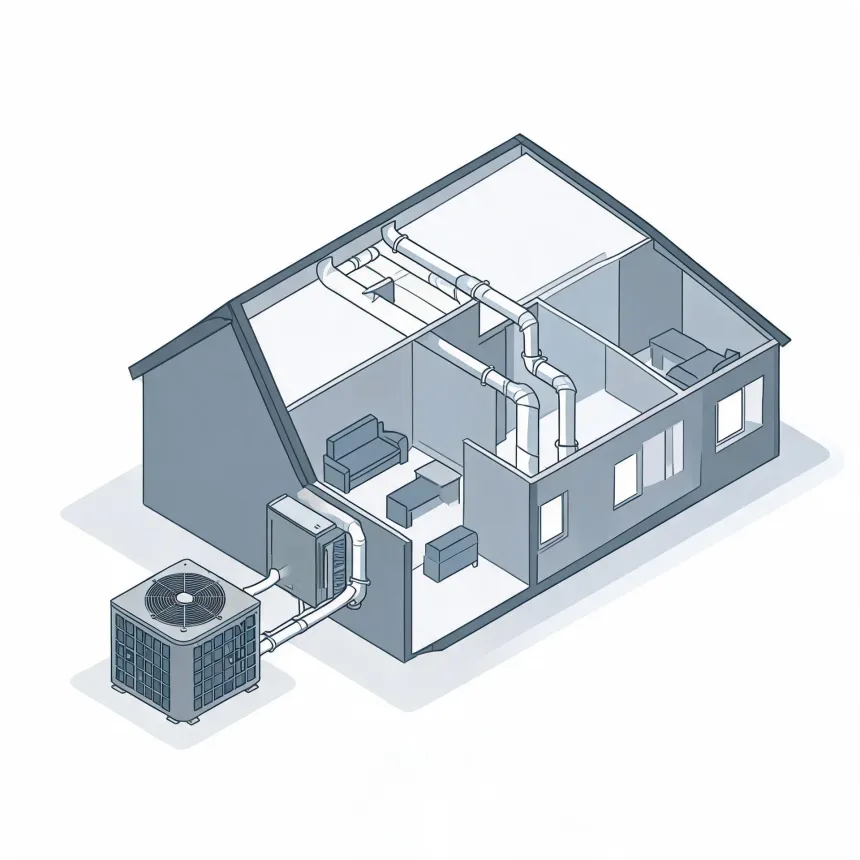
Isometric line illustration of a cutaway house showing interior rooms with ductwork, an indoor air handler, and an outdoor condenser unit connected by lines, on a white background.
Your air conditioner works hardest from June through September.

NOAA nClimDiv, 1991–2020 normals

The old condenser doesn't get hauled off before the new one goes in.

A contractor disconnects it, drains the refrigerant properly, and swaps it out the same day in most cases.

April is the month to get it done, before May brings the heat

Cooling runs May through September
Summer afternoons average 87°F
85 damaging wind events from 2015 to 2024
Most homes here run on electric heat86.5% of Carteret County homes heat with electricity, so a new AC usually pairs with a system already in place

Morehead City is in climate zone 3A, warm with a short mild winter and AC running most months of the year. That's why the Southeast has its own efficiency floor, higher than what the rest of the country requires. A split-system central air conditioner under 45,000 Btu/h installed here has to hit 14.3 SEER2 at minimum, not the 13.4 SEER2 that applies elsewhere. That number limits which units a contractor can legally install, whatever a homeowner found cheaper online. A federal tax credit is available on top of that for equipment that goes beyond the minimum.

The system you pick now sets your power bill for years

Electricity here runs 14.13 cents per kilowatt-hour, and a central air conditioner in this climate stays busy most months of the year. A unit that barely clears the minimum SEER2 rating will cost more to run than one built past it. The difference shows up on every bill for as long as the system is in place.

Find a contractor
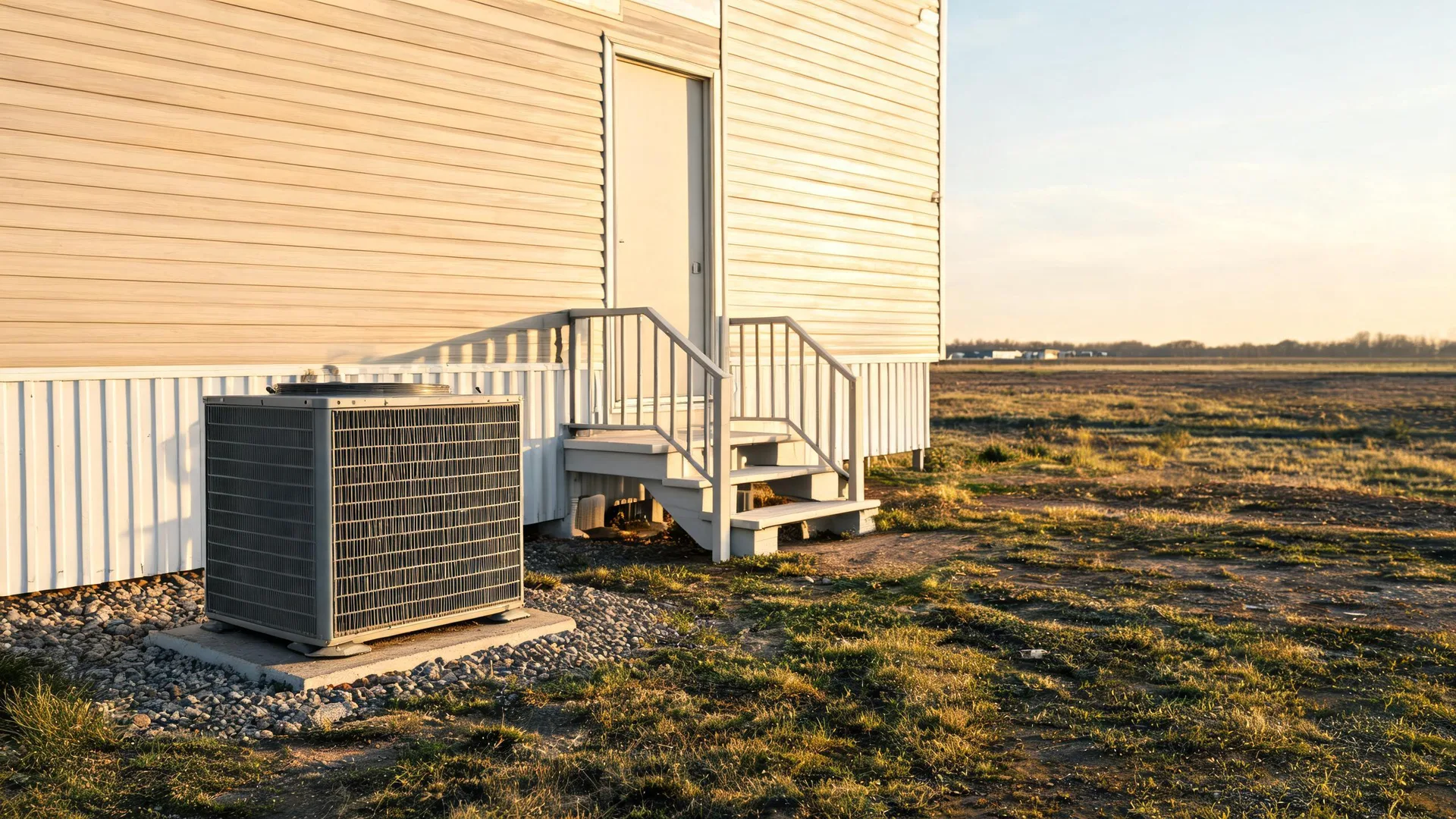
A gray metal air conditioning condenser unit mounted on a concrete pad in a flat grassy field under a partly cloudy sky.

Five months of 87 degree afternoons, every year

Cooling runs May through September here, five months of steady work, not a handful of hot afternoons. The afternoon high averages 87°F across June, July and August, and the outdoor unit sits in that heat the whole stretch, running most days to keep up. Wind adds to the load. Damaging wind has hit this county repeatedly over the past decade, and the unit takes that standing outside year round. A system sized right for this place keeps up without strain. One sized wrong starts showing it early.

Size drives the cost more than the brand on the unit

A contractor has to run a load calculation on the house, the windows, the insulation, the ductwork, before quoting a price. A bigger system costs more to install, but oversizing isn't free either. A unit too big for the space cycles on and off instead of running steady, which wears the compressor faster and leaves the air damp. The right size costs what it costs because it matches the house, not because of markup.

What's already there changes what has to be built

If the ductwork, the electrical disconnect and the line set are already in place and sized right, a contractor connects to them. If the old ducts are undersized or leaking, or the electrical panel can't handle the new unit's draw, that work gets added to the job before the new system ever runs. A straightforward swap and a full rebuild are different jobs wearing the same name.

Overhead view of a gray residential air conditioning condenser unit mounted on a concrete pad beside a house with asphalt shingle roofing.

Going above the federal minimum saves little here, about $20 a year.

  • A higher-efficiency unit$370 a year
  • A new unit at the federal minimum, 14.3 SEER2$390 a year

Estimates for a typical Carteret County home, from EIA household energy data, North Carolina fuel prices and NOAA climate normals. Your home will differ.

On install day, the old system comes out first. The contractor shuts off power, recovers the refrigerant from the lines, and disconnects the old condenser and indoor coil before anything new goes in. The line set gets checked. It gets reused if it's in good shape and replaced if it's not. The new outdoor unit goes on its pad, the indoor coil gets matched to it, and both connect to the ductwork already there. Once it's wired and the lines are charged, the contractor runs the system through a full cycle. That means checking the refrigerant charge, the airflow at the vents, and the temperature split between the air going in and the air coming out. A contractor doesn't call the job done until those numbers check out, not just because the unit turns on.