Weather here does damage
Iredell County recorded 146 severe weather events between 2015 and 2024. That included 105 damaging wind events, 22 hail events, 7 tornadoes and 9 winter storms. A new air conditioner here needs to handle more than heat.

Takes about a minute. No obligation.
Iredell County recorded 146 severe weather events between 2015 and 2024. That included 105 damaging wind events, 22 hail events, 7 tornadoes and 9 winter storms. A new air conditioner here needs to handle more than heat.
A quarter of North Carolina households lost power for 24 hours or more in 2024. A new system should go in with that in mind, from where the outdoor unit sits to how you plan to get by until the power is back.

NOAA nClimDiv, 1991–2020 normals
A unit sized too big cools the room fast and shuts off before it pulls the moisture out of the air.
Getting the size right means measuring the house, not matching the old unit or guessing by square footage.




Any split-system central air conditioner installed in Iredell County now has to meet 14.3 SEER2 if it's under 45,000 Btu/h, or 13.8 SEER2 at or above that size. That's the Southeast standard, higher than what's required in cooler parts of the country. It's set that way because the county falls in climate zone 3A, warm and humid with a cooling season that runs long. A unit built to a lower standard can't legally go in here, so the model lineup you're choosing from is already narrower than what a friend up north might see. Ask what SEER2 rating a quoted system carries before you compare prices on it.
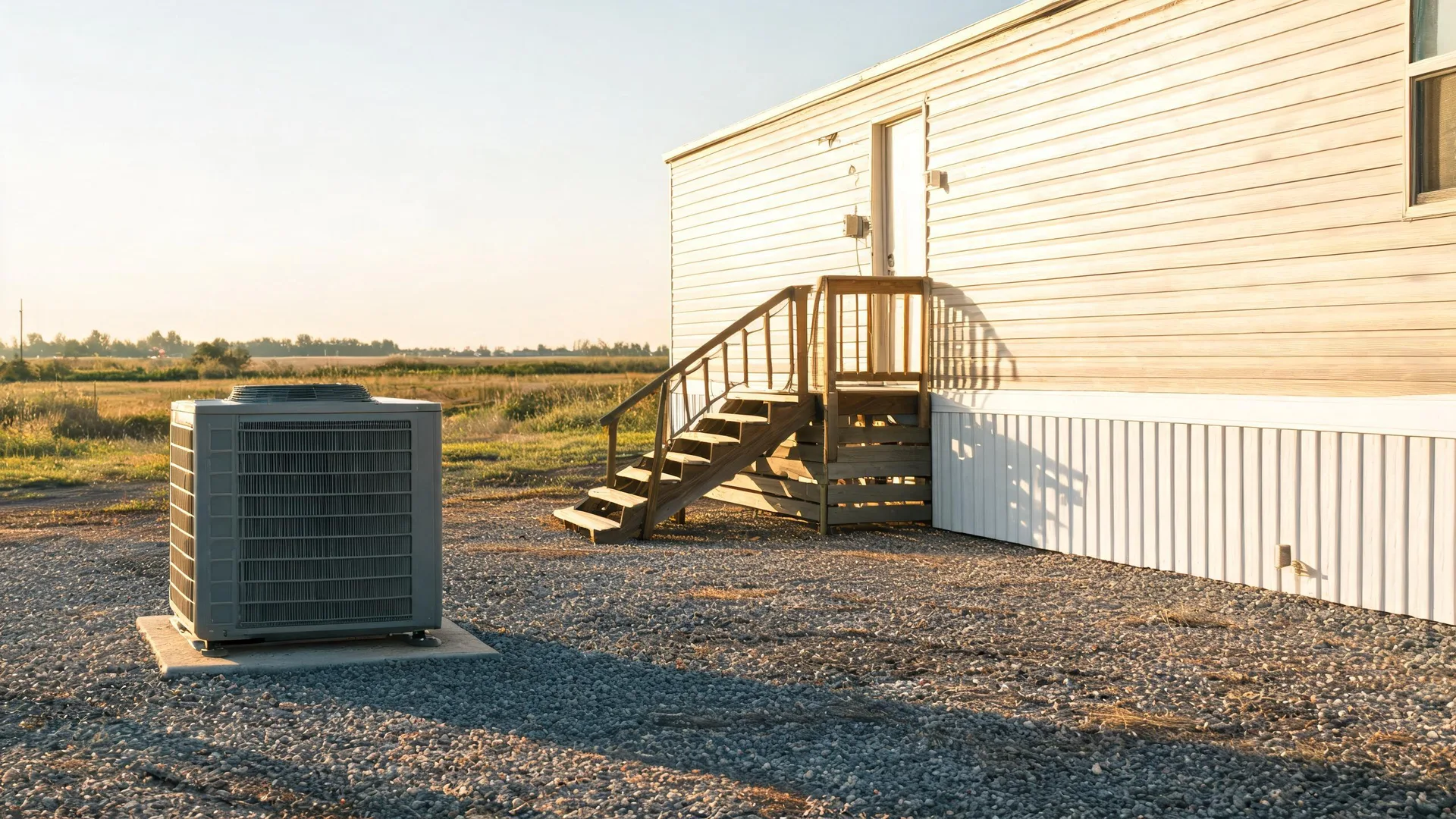
Where the new unit goes and how it's protected matters as much as the size on the spec sheet. Ask the installer to walk the yard with you before they set the pad, away from where wind-blown debris collects, clear of the drip line, with room to check it after a storm. If heat and hot water matter to you during an outage, this is the point to ask about backup power options, not after the unit is already set.
Find a contractorThe old system comes out once the new one is ready to take over, not before. A tech disconnects the power first, then recovers the refrigerant out of the lines rather than venting it, that's standard practice and the law. The old outdoor unit gets unbolted from its pad, the old indoor coil comes out of the plenum, and the line set usually gets replaced rather than reused, since old copper has flared ends and oil residue that don't pair well with new equipment. If the system is old enough to run on a phased-out refrigerant, that alone is often reason to replace the lines rather than test whether they hold. The thermostat usually gets swapped too, since a new system may not talk to an old one correctly. None of this touches your ductwork or your electrical panel unless something there needs attention to support the new unit.
A central air conditioner cannot run without power, full stop, no matter how good the unit is. If backup power matters to you, ask whether the system you're buying can work with a generator or battery setup, and what that takes. Some equipment needs an electrician to add a transfer switch or a dedicated circuit before a backup source can run it. That's a question for before installation, since wiring for it is far easier to plan up front than to add after the unit is set.
When power cuts out and comes back, most AC systems restart on their own, but not always cleanly. A compressor that kicks back on immediately, before pressure in the lines has settled, can trip a breaker or strain the motor. Many systems have a built-in delay for this, and some thermostats add their own. Ask whether the equipment you're comparing has that protection built in, or whether it depends on the thermostat to provide it.
Estimates for a typical Iredell County home, from EIA household energy data, North Carolina fuel prices and NOAA climate normals. Your home will differ.
Installation day starts with a walkthrough, not a wrench. The crew checks the spot for the new outdoor unit, confirms the ductwork can handle the airflow the new system needs, and looks over the electrical connection before anything gets disconnected. Once the old system is drained and pulled, they set the new pad, mount the outdoor unit, and run new line set to the indoor coil. The coil goes in the plenum, the refrigerant lines get connected and sealed, then the whole system gets charged and pressure tested before power ever reaches it. The last steps are the ones you'll actually notice: the thermostat gets programmed, the airflow gets checked at the vents, and the tech walks you through what the system does on startup and what it sounds like when it's running right. A clean install ends with them showing you the basics, not just handing you a remote and leaving.