A row of single-story cottages, one brick and the others light gray siding with covered porches, behind a trimmed hedge and lawn, under large oak branches draped with Spanish moss.

AC Installation in Louisburg, NC

Tell us about the job

Takes about a minute. No obligation.

New system or replacementCentral ACFranklin County, NC
Step 1 of 2

What ZIP code is the job in?

Weather here does real damage

Franklin County saw 115 severe weather events between 2015 and 2024. Damaging wind caused 85 of those, hail hit 13 times, and three tornadoes touched down in the same stretch. A new outdoor unit has to sit through that record, year after year.


The power doesn't always hold

A quarter of North Carolina households lost power for a day or more in 2024. An outage that long means no air conditioning until the grid comes back, and on electric heat, no heat either.

5 months
May through September, your air conditioner is on duty
88°F
the average summer afternoon it cools against
13 hail events
in ten years, and hail bends the fins on outdoor coils
13.4 SEER2
the federal minimum any new unit must meet
Isometric line illustration of a cutaway house showing interior rooms, ceiling ductwork connected to an indoor air handler, and an outdoor condenser unit linked by refrigerant lines.
Your air conditioner works hardest from June through August.

NOAA nClimDiv, 1991–2020 normals

Electricity heats 71.5% of homes in Franklin County.

Most of the systems going into Louisburg homes pair a heat pump or AC with electric heat, so this installation is following the common path, not setting one.

Power here runs 14.83 cents a kilowatt-hour, May through September

Power here costs 14.83 cents per kilowatt-hour
Climate zone 3A
Cooling runs May through September

May is when Franklin County starts running cooling, which makes April the month to get a new system in. Homes here run AC from May through September, five months of real use, so there's no slow ramp-up to catch a problem early. If something's off with a new install, the first hot week will show it. Getting the work done in April means that week happens with everything already tested, not during the first real heat of the year when a contractor's schedule is full of other people in the same spot.

Plan for the outage before you need it

This is the install where the outdoor unit's placement is worth getting right the first time. A condenser set where wind-blown debris or hail can reach it easily is one more thing to go wrong later. And since an outage can take out AC and heat both on an electric system, it's worth asking what backup options make sense before the install is finished, not after the power's already out.

Find a contractor
A man in a dark sweatshirt and brown work pants, seen from behind, climbs porch steps toward an orange-red front door while carrying a canvas tool bag, with a potted shrub in a terracotta planter to the right.
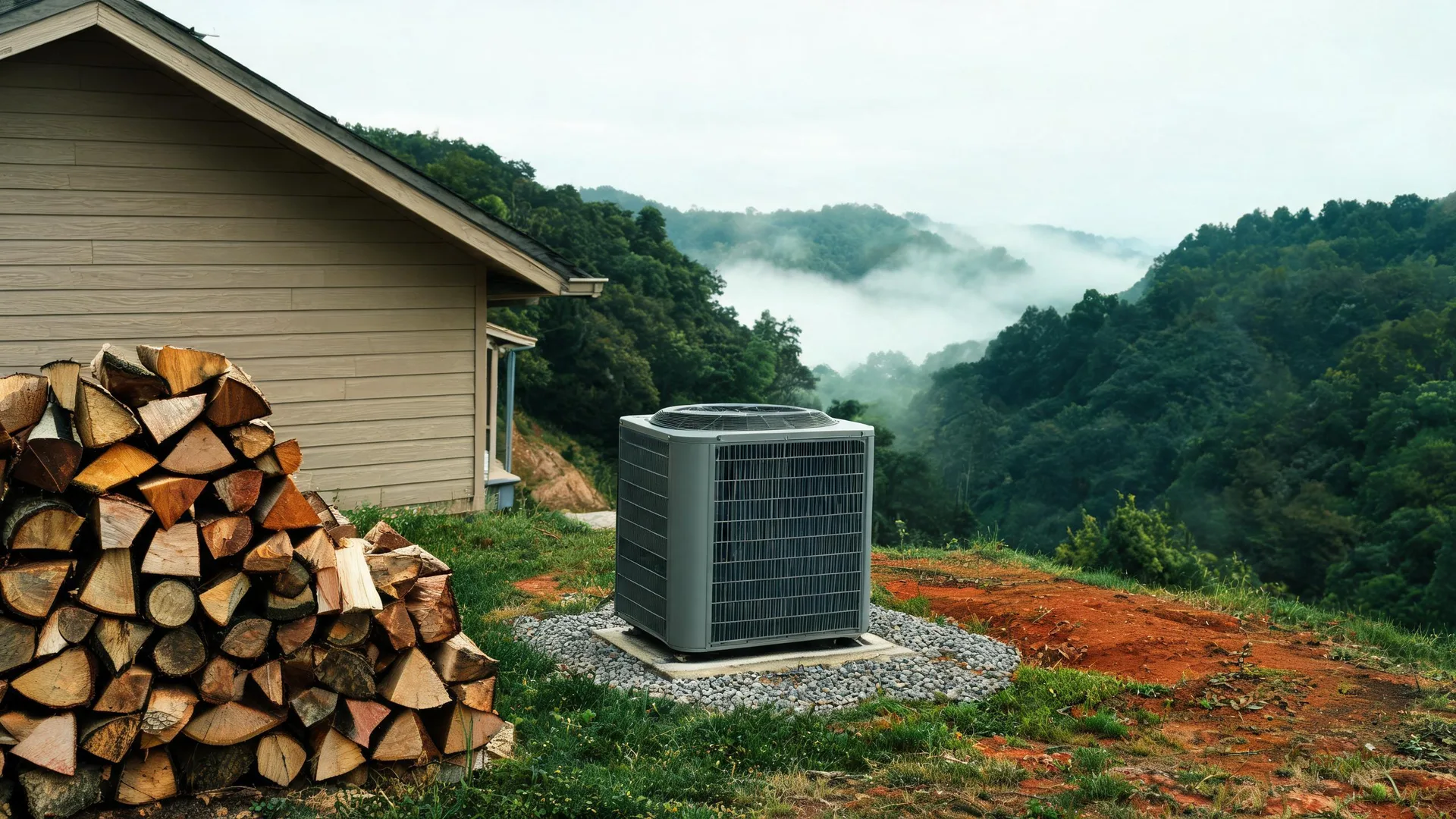
An outdoor air conditioning condenser unit mounted on a concrete pad beside a house, with electrical conduit running to a wall-mounted disconnect box.

The old unit doesn't linger

Once the new system is in and running, the old outdoor unit and indoor coil come out. A contractor will recover the refrigerant from the old lines before anything is disconnected. That refrigerant can't legally be vented into the air, so it gets pulled into a tank and taken off site. After that the old condenser gets unbolted from its pad, the old coil comes out of the plenum, and the line set gets replaced rather than reused in most cases, since old copper can hold contamination or the wrong oil for a new system. The pad underneath usually stays, or gets releveled if the ground has shifted under it. Whatever ductwork connects to the new coil gets checked for fit at the same time, since a new coil is not always the same size as the one it replaces. None of this is work the homeowner needs to plan around. It happens as part of the same visit that puts the new system in.

Ask what happens when the power drops

A standard split system has no way to run without grid power, no matter how good the equipment is. If backup power matters, that means a transfer switch, a generator big enough to carry the condenser's startup draw, or in some cases a battery setup sized for it. That's a separate conversation from the AC itself, and worth having before the install, since wiring for it later means opening walls that are already closed up.

Ask how the unit is secured to its pad

An outdoor condenser should be bolted down, not just set on its pad. Straps or brackets rated for wind keep it from shifting or tipping in a storm. Ask what the installer uses to anchor it and whether the mounting is rated for wind, not just resting on its own weight. A unit that rocks or lifts in high wind can tear its own refrigerant lines loose.

An outdoor air conditioning condenser unit mounted on a concrete pad next to a blue-sided residential house at sunset.

Going above the federal minimum saves little here, about $10 a year.

  • A higher-efficiency unit$290 a year
  • A new unit at the federal minimum, 14.3 SEER2$300 a year

Estimates for a typical Franklin County home, from EIA household energy data, North Carolina fuel prices and NOAA climate normals. Your home will differ.

Installation day starts with a load calculation, not a delivery truck. A contractor measures the home's square footage, window placement and insulation to size the system correctly before any equipment gets set. Once that's settled, the indoor coil goes in first if the air handler or furnace needs one, matched to the new outdoor condenser so the two are rated to work together. The line set connecting them gets run, pressure tested for leaks, then evacuated with a vacuum pump to pull out moisture and air before any refrigerant goes in. Electrical work follows: a disconnect box near the condenser, a dedicated circuit sized for its draw, and a condensate drain line set with the right pitch so water runs out instead of backing up into the coil. The last step is startup. A contractor checks refrigerant charge against the manufacturer's specs, confirms airflow across the coil, and tests the thermostat through a full cooling cycle before calling the job done.