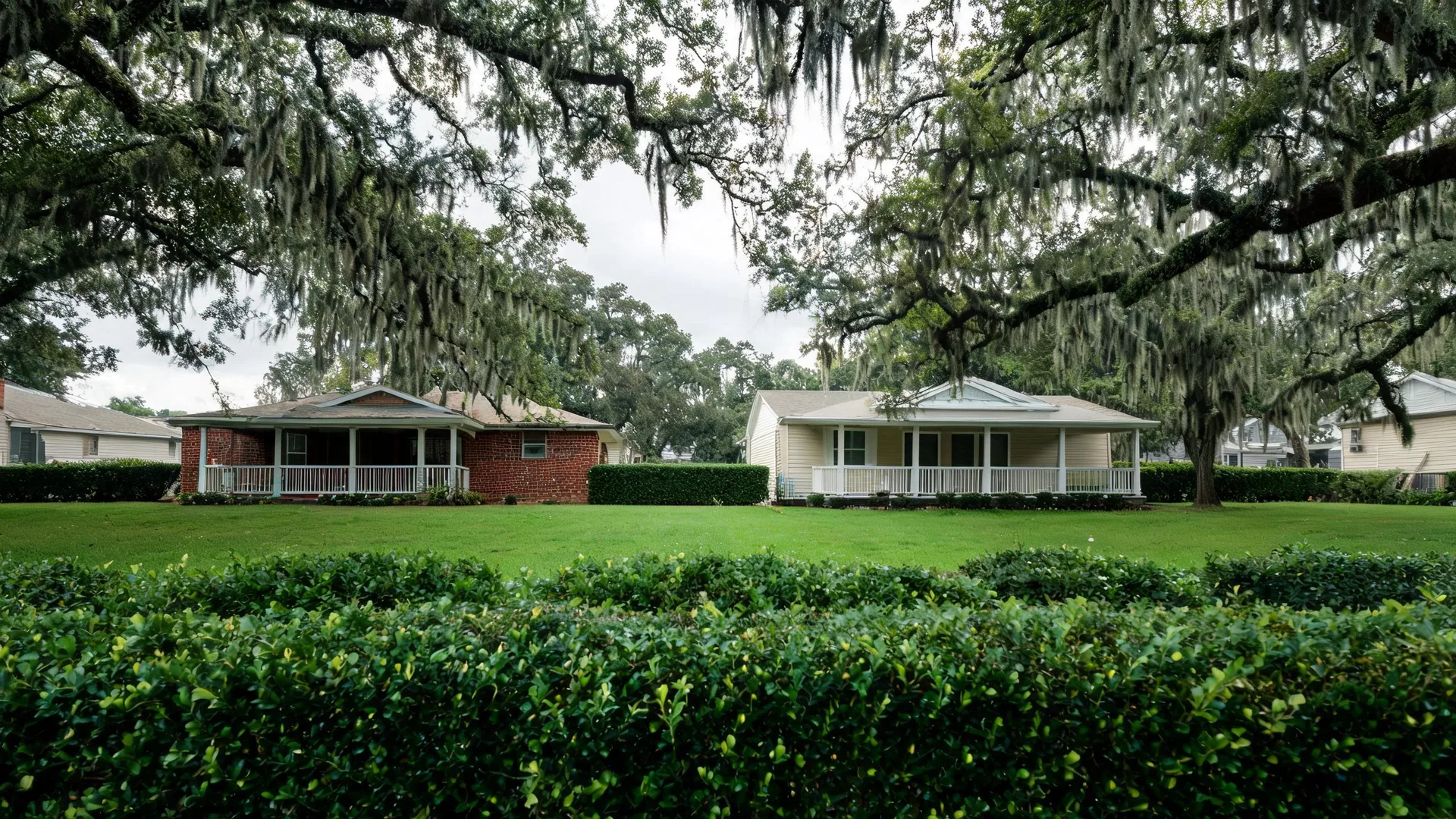




Two single-story houses, one brick and one with pale siding, both with covered porches, sit behind a mowed lawn and a trimmed hedge, framed by large oak branches draped with Spanish moss under an overcast sky.

AC Installation in Lincolnton, NC

Tell us about the job

Takes about a minute. No obligation.

New system or replacementCentral ACLincoln County, NC
Step 1 of 2

What ZIP code is the job in?

Electricity heats 74.3% of homes in Lincoln County, more than any other fuel. A lot of those homes run a heat pump rather than a furnace, since a heat pump handles both heating and cooling off the same electrical circuit the air conditioner would need anyway. If that's what you have now, a new heat pump system keeps the install straightforward, since the wiring and panel capacity are already sized for it. Gas heat is less common here, at 17.9%, so if that's your setup, the AC side of the job still works the same way. The outdoor unit cools the house regardless of what heats it.

5 months
May through September, your air conditioner is on duty
87°F
the average summer afternoon it cools against
13 hail events
in ten years, and hail bends the fins on outdoor coils
13.4 SEER2
the federal minimum any new unit must meet
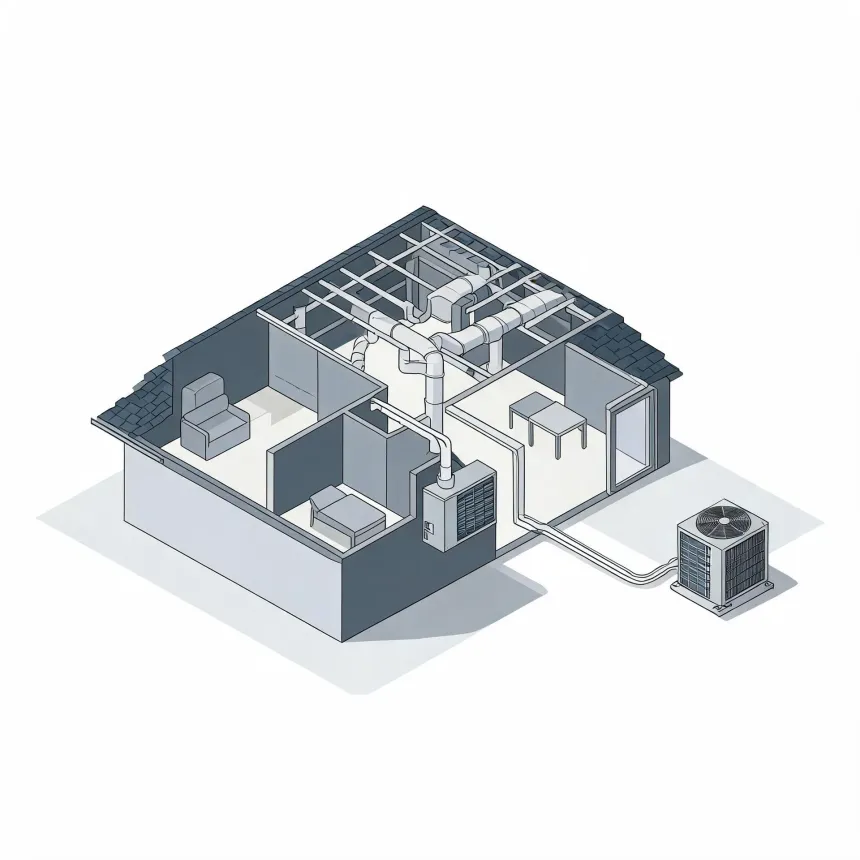
Isometric cutaway illustration of a house showing attic ductwork, an indoor air handler, and an outdoor condenser unit connected by lines.
Your air conditioner works hardest from June through August.

NOAA nClimDiv, 1991–2020 normals

Bigger than needed isn't better, it cycles on and off before it pulls the moisture out of the air.

A contractor sizes the unit to the house with a load calculation, not the square footage on the listing.

Lincolnton gets its share of rough weather, but none of it changes what size AC the house needs

82 severe weather events from 2015 to 2024
25% of homes statewide lost power a day or more in 2024
54 damaging wind events from 2015 to 2024

Any new AC going in here has to clear 14.3 SEER2 under the Southeast's regional rule, not the 13.4 national minimum that applies elsewhere. That higher number applies to units manufactured from January 2023 on, whether you're replacing a heat pump's outdoor unit or a straight AC paired with gas heat. Lincoln County is in climate zone 3A, warm and humid with winters that stay mild, so the AC here runs most months of the year. A contractor installing here will spec equipment that already meets the regional minimum. There's also a federal tax credit for qualifying high-efficiency equipment, worth asking about when you're comparing systems.

The right size, installed right, is the whole job

A standard SEER2 unit sized to your house, not the square footage, is the right call here. Lincoln County electricity ran 14.13 cents per kilowatt-hour in 2024, and that number holds whether the system is a standard match or an oversized one, so there's no cost case for paying more than the job needs.

Find a contractor
An outdoor air conditioning condenser unit mounted on a concrete pad beside a house, with electrical conduit running to a wall-mounted disconnect box.

May is when it starts earning its keep

Cooling runs May through September here, five months straight. An install that happens in April means the system is already set and tested before it has to work. Wait until the first hot week and you're choosing equipment under pressure, taking whatever's in stock instead of what fits the house. The outdoor unit you put in this spring is the one running every one of those five months, so getting the sizing and setup right before the season starts matters more than getting it done fast once it has.

Ask what the load calculation found

A contractor should be able to walk you through the room by room numbers that led to the equipment size, not just hand you a total tonnage. Square footage divided by a rule of thumb is not a load calculation. Ask what got measured. Window area, insulation, duct condition all factor in. The size they land on should come with an explanation you can follow.

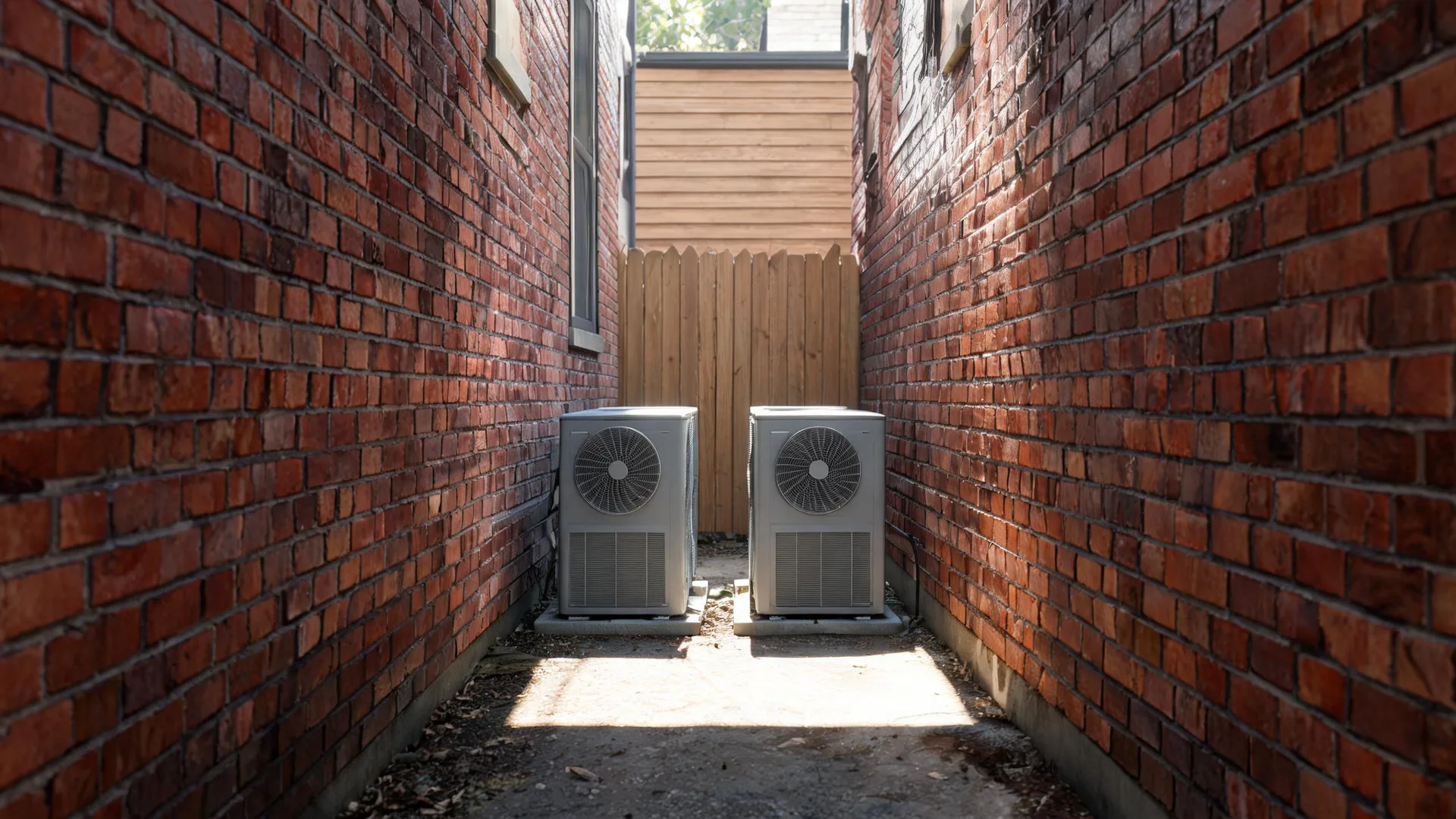
Ask what happens to the existing ductwork

The new outdoor unit only moves as much air as the ducts allow. A system sized right can still cool unevenly if the duct sizing and return air path were never checked. Ask whether the ducts were inspected or just reused as they are. Ask whether any duct changes are part of the quote or left out of it.

An overhead view of a residential air conditioning condenser unit mounted on a concrete pad next to a house with vinyl siding.

Going above the federal minimum saves little here, about $20 a year.

  • A higher-efficiency unit$270 a year
  • A new unit at the federal minimum, 14.3 SEER2$290 a year

Estimates for a typical Lincoln County home, from EIA household energy data, North Carolina fuel prices and NOAA climate normals. Your home will differ.

Install day starts with the old equipment coming out, not the new one going in. The line set gets disconnected, the old outdoor unit comes off its pad, and the indoor coil comes out of the plenum. If the new system uses a different refrigerant, the line set usually gets replaced rather than reused, since the old lines were sized and cleaned for a different gas. The new coil goes in, the new outdoor unit gets set on the pad, and the line set gets connected, pressure tested, and evacuated before any refrigerant goes in. That vacuum step matters. Any moisture or air left in the lines turns into problems months later, not that day. Once the system is charged, a tech checks refrigerant levels against the manufacturer's spec, confirms airflow at the vents, and checks that the thermostat is talking to the new equipment correctly. The job isn't done when the unit turns on. It's done when it's been checked against the numbers that unit is supposed to hit.